



On November 1, 2026, twenty years after construction work began, the Grand Egyptian Museum, or GEM, finally opened its doors. It is the sixth-largest museum in the world and the largest ever dedicated to a single civilization. During a Pharaonic inauguration attended by numerous heads of state, Egyptian President Abdel Fattah al-Sisi presented the new museum as a gift from Egypt to the rest of the world.
A History Marked by Obstacles
The story of the GEM began in 1992, when Egypt’s then Minister of Culture, Farouk Hosny, proposed the creation of a new museum to replace the old Cairo Museum, which had become obsolete. The project aimed to bring together Egypt’s invaluable archaeological treasures, previously scattered across various sites. The foundation stone was laid in 2002, but construction work effectively began only in 2005.
The project was beset with numerous obstacles and delays, notably due to the Arab Spring in 2011 and the Covid-19 pandemic. It also faced significant financial challenges, with the total cost exceeding one billion euros. Ultimately, on November 1, following close international cooperation—both financial and technical—the museum finally came to life with a grand inauguration.
A Museum Worthy of the Nearby Pyramids
The museum is located on the Giza Plateau, facing the pyramids, and covers an area of 500,000 square meters, equivalent to 70 football fields.
In 2002, UNESCO and the International Union of Architects jointly launched an international architectural competition for the museum’s design. Among 500 proposals, the Irish firm Heneghan Peng Architects was selected.
The museum’s entire architecture is inspired by the pyramids. Its triangular façade, rising 60 meters high, is composed of alabaster and translucent glass panels that evoke the color of desert sands and change appearance depending on the time of day or night. It is adorned with hieroglyphs and pyramid motifs engraved with the names of 140 pharaohs.
The façade is visually aligned with the three nearby pyramids, and the entire structure harmoniously integrates the sacred geometry of the pharaohs within a modern architectural framework. The museum also benefits from cutting-edge technology designed to preserve, enhance, illuminate, and protect its twelve galleries.
A Global Center for Conservation and Research
Beyond serving as a showcase for the extraordinary history of ancient Egypt, the GEM positions itself as a major scientific hub, featuring a world-class archaeological research and conservation center. Covering 32,000 square meters, it is the largest and most sophisticated center dedicated to the restoration of archaeological artifacts worldwide.
Operational since 2010, it includes 19 ultra-modern laboratories equipped with digital microscopes, X-ray and 3D imaging machines, spectroscopic technologies, and DNA identification systems. A total of 120 internationally trained conservators work there.
Thanks to these exceptional technical resources, the GEM has played a crucial role in the transfer and in situ restoration of more than 57,000 artifacts from various Egyptian sites. The center also offers training programs for Egyptian and international art conservators, reinforcing its status as a reference center for heritage preservation in the Middle East.
The complex also includes a conference center with a seating capacity of 1,000, designed to host international conferences and symposiums. It should also be noted that the museum was built with environmental sustainability in mind, using renewable energy sources that allow for energy savings of up to 60% and a reduction of water consumption by one third.
A Museum for the Future
The GEM does not merely preserve and restore the past; it reinvents it for future generations. It incorporates immersive technologies such as augmented reality, digital reconstructions, and interactive multimedia presentations, thereby adopting “the language of Generation Z,” according to Ahmed Ghoneim, Director General of the GEM. These innovations transform the traditional museum experience into a captivating journey through time.
The museum also includes a 5,000-square-meter children’s museum designed to encourage learning through play using interactive screens.
The GEM is therefore not only a sanctuary of heritage but also a vibrant space for intercultural dialogue and scientific research.
After this brief overview of the creation of this extraordinary museum, it is time to step inside and discover some of the countless treasures it houses.
This will be the focus of our next article: “Welcome to Ramses II.”
With the OIF, Francophone Literature Breaks Down Borders
Eva Gonzalès: Subtle Freedom Through the Brush
September News: The Battle of Lebanon
The Samir Kassir Festival, or the Lebanon Yet to Be Born
Why Habermas Remains Urgently Relevant
المزيد من Micha Moussallem
عرض الكل


المزيد في Culture
عرض الكل


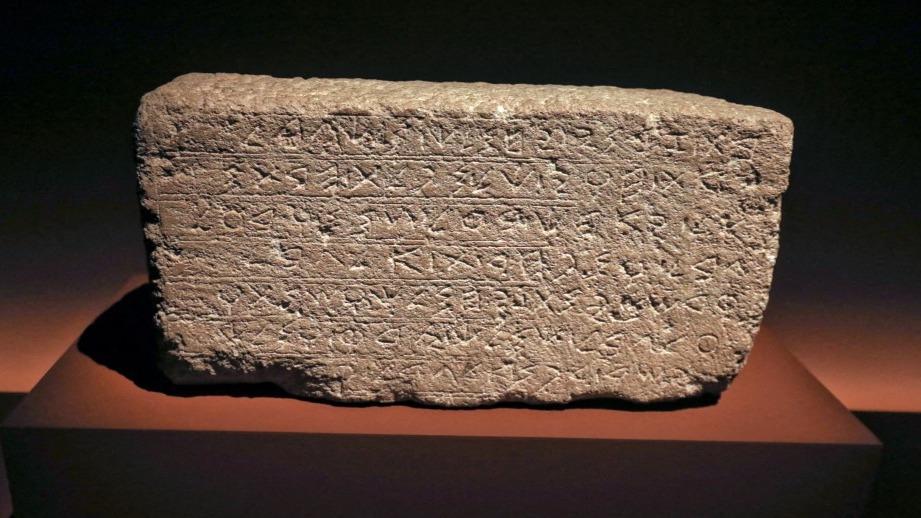

'Byblos' at the IMA: a cultural resistance in the face of war
الأحدث من Levant Time
عرض الكل


