

Beneath the Cobblestones, the Light

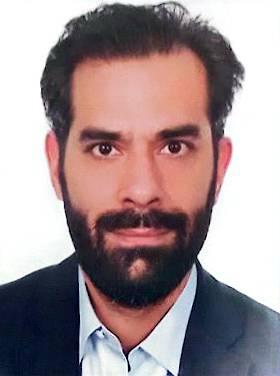
Sohmor. A town located in the western Bekaa, home to fifteen hundred households and between five and eight thousand residents. Given its size and population, the term "village" is the most geographically appropriate way to describe Sohmor.
Sohmor has been repeatedly targeted by Israeli bombardments, as if it were routine for them. If this village and its successive mayors have been a magnet for the Israeli army, its municipality has proven to be a true lightning rod.
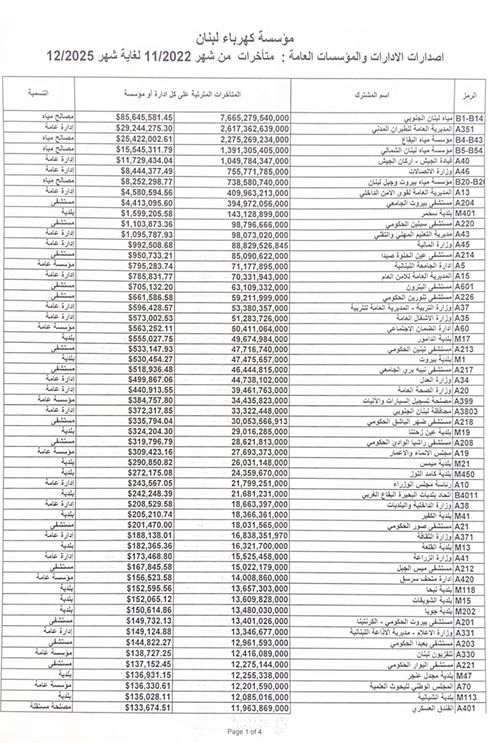

Among the top ten worst electricity bill defaulters listed by EDL are: the Southern Water Authority, the Bekaa Water Authority, and the municipality of Sohmor…
Indeed, according to a report published by EDL detailing unpaid bills between November 2022 and December 2025, the modest municipal building carries an outstanding balance of $1,599,205. A quick calculation based on a unit cost of 25 cents per kilowatt shows that during the aforementioned period, the municipality consumed 6,396,820 kWh — or 170,430 kWh per month.
Since numbers can be dull, a practical illustration helps: that monthly consumption is enough to continuously power 560 households in France — with emphasis on the word "continuously," a concept sorely lacking in the local electricity supply, which is even more elusive than the latest B-2 stealth bomber.
A municipal building that blazes so brightly it consumes three times more electricity than the Beirut headquarters itself — which already owes $530,000 in unpaid arrears.
When you discover that a modest town hall consumes more electricity than a dedicated artificial intelligence center — unless it has quietly decided to supply power to its own residents and surrounding villages — the question is no longer whether the figures published by EDL are false, but rather what story they are telling.
The real challenge, of course, is understanding the source of this electrical black hole. What if the answer lay, quite literally, underground? Buried beneath the surface, where Hezbollah has long made its home of choice.
In recent months, underground networks have been coming to light — proving that the famous slogan "we build, we protect" was no empty campaign promise, even if the infrastructure in question lies not above ground, but well below it.
A contemporary version of The Time Machine by H.G. Wells, in which the local Morlocks have spent the past two decades busily creating not just a state within a state, but an entire country beneath the country.
For years, political officials and relevant ministers — even those who chose to bury their heads in the sand — were perfectly aware of what was going on. After all, having your head buried in the ground does give you a rather clear view of what lies beneath.
Historians broadly agree that Lebanon possesses an exceptionally deep civilizational heritage. Today, more than ever, that description should be taken quite literally.
It becomes easier to understand why the State struggles to reassert its authority over Lebanese territory: it has simply been looking for it at the wrong level.
The Nobel Prizes and the Search for a Glimmer of Light in Human Behavior
Iran: Executions of young people, a favored tool of repression
A Chinese Perspective on Lebanon's Collapse
Dahr el-Baidar Explosives: Toward the End of Complacency?
Lebanese Moderation Needs a Project
More from Jawad Pakradouni
View All


More in Analyze
View All


Latest from Levant Time
View All


