

Lebanese cultural diplomacy: between influence, solidarity and resistance (1/2)

A Lebanese Pop-Up Store is being organized on May 30 and 31 in Paris at the Aalamuna gallery by the company ELFAN to promote Lebanese artists. This new ELFAN initiative is part of a broader global movement aimed at supporting Lebanese artists by developing Lebanese cultural presence in France and Europe. Before outlining the context of this new Lebanese Pop-Up, a brief overview of the ongoing global dynamics, in which Culture Minister Ghassan Salamé is participating, seems useful in several respects.
For several years, particularly since the events of 2019 and the explosion at Beirut port in August 2020, Lebanese culture has been experiencing growing momentum abroad. Clearly, Lebanese cultural initiatives outside Lebanon are not new: the diaspora has always played an essential role in promoting and showcasing Lebanese cultural identity. But today, this phenomenon appears to be taking on a new scale.
Many artists, creators, intellectuals, and cultural professionals have left Lebanon in recent years, sometimes out of necessity, sometimes to find opportunities that the country could no longer offer them. Because for a long time, culture in Lebanon has remained sidelined behind political, economic, and social emergencies. Yet despite this structural fragility, the Lebanese cultural scene continues to reinvent itself and reach out internationally.
In this context, it seems important to examine Lebanese cultural initiatives in France, where we have been witnessing a multiplication of events and projects related to Lebanon for several years. Today, cultural initiatives are multiplying to promote the country abroad, certainly, but also to support Lebanese artists, preserve Lebanon's heritage, and maintain a living connection with Lebanon during this difficult period of crisis and war.
A strong Lebanese presence
The prestigious Clermont-Ferrand International Short Film Festival is a striking example. Two years ago, Lebanon was highlighted there through a special focus dedicated to Lebanese cinema. Many directors, producers, and industry professionals attended the occasion and contributed to the program, illustrating the growing importance of Lebanese cinema on the international cultural stage.
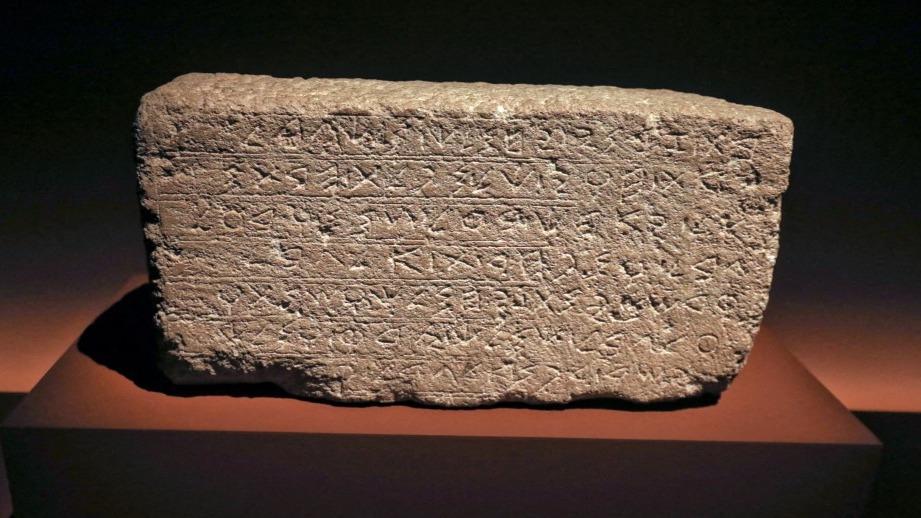
The Arab World Institute (IMA) also plays an important role in this dynamic of showcasing Lebanese heritage and creativity. The current exhibition on Byblos, postponed two years ago because of the war and eventually maintained despite the absence of certain works still held elsewhere, is also a significant example. Culture Minister Ghassan Salamé was present, illustrating the importance now placed on these cultural initiatives abroad.
In this same framework, the exhibition Photographing Lebanon's Heritage 1864-1970, after its Paris showing, is open to the public in Marseille until September. The concert by Ibrahim Maalouf and Hiba Tawaji at the IMA, accompanied by several artists from Lebanon, and the presence of Khaled Mouzanar and Nadine Labaki at the Cannes Film Festival—where Khaled Mouzanar was also part of the Un Certain Regard jury—demonstrate how much Lebanese cultural figures now occupy an important place on international stages.
This dynamic was also recently illustrated in Saint-Malo, where Lebanon was the guest of honor at the Étonnants Voyageurs festival. Lebanese writers, artists, and intellectuals participated in several discussions on memory, exile, and contemporary Lebanese creation. Ghassan Salamé was also present at this event.
"The more tragedies succeed one another, the more the Lebanese people have grown accustomed to expressing them. While I'm speaking to you, Lebanese painters are at the Venice Biennale, Lebanese filmmakers are at the Cannes Film Festival, and Lebanese writers are at the Saint-Malo festival," Ghassan Salamé aptly noted in his speech at the Saint-Malo festival. Minister Salamé has been continuing his travels and meetings abroad for several months to promote Lebanese cultural heritage and influence.
In parallel, numerous artistic events are designed as spaces of concrete solidarity with Lebanon. This is notably the case with Moments for Lebanon, an artistic and humanitarian initiative based in Paris, founded by a collective of Lebanese diaspora members, whose second edition is already planned in the City of Light in June 2026 to continue artistic and humanitarian mobilization around Lebanon.
ELFAN's new initiative
It is this broader dynamic that also drives ELFAN's work in promoting Lebanese artists. This company has set itself the mission, in particular, of training future cultural professionals so they can support and develop this rapidly growing sector. It is within this framework that a new Lebanese Pop-Up Store is being organized on May 30-31 in Paris at the Aalamuna gallery.
The event will bring together creators, artists, and entrepreneurs to highlight Lebanese expertise while simultaneously supporting Lebanon and the Lebanese Red Cross.
With the same goal in mind, a themed week dedicated to Lebanon will be organized next July in Clermont-Ferrand, at ELFAN's initiative, at the Atelier Reine Mathilde gallery. On the program: exhibitions by Lebanese painters; calligraphy and dabkeh workshops; film screenings; Lebanese brunch... The aim is to introduce Lebanese culture to a predominantly French audience, with the parallel objective of supporting the Lebanese Red Cross.
Faced with this proliferation of initiatives, an important question increasingly comes to mind in the cultural sphere: are we witnessing the establishment of Lebanese cultural diplomacy? Or is it rather a form of cultural resistance? Because unlike institutional cultural diplomacy, which is conceived and structured by the State, many of these projects are now born from individual or associative initiatives, at the local level or within the diaspora—somewhat like Lebanon itself. It is artists, collectives, or event organizers who carry Lebanon's visibility abroad, often without official support.
This reflection is moreover beginning to emerge even in discussions at the level of the Ministry of Culture. Minister Ghassan Salamé recently stated that "what saved culture in Lebanon is the fact that it is rooted in society and not in the State. When the State collapsed, culture continued to live." Yet his numerous appearances at these cultural events also show that culture is beginning to take on a significant place in the work and thinking of the Lebanese State.
Beyond international influence or the preservation of cultural identity, another essential question now arises: what can be the real contribution of culture and art to Lebanon's development? Can culture participate in economic reconstruction, the creation of opportunities, and maintaining the link between Lebanon and its diaspora?
These are reflections that also open up the debate on Lebanese cultural policy itself…
Next article: Lebanon's cultural policy
With the OIF, Francophone Literature Breaks Down Borders
Eva Gonzalès: Subtle Freedom Through the Brush
September News: The Battle of Lebanon
The Samir Kassir Festival, or the Lebanon Yet to Be Born
Why Habermas Remains Urgently Relevant
More from Fabienne Touma
View All

More in Culture
View All



'Byblos' at the IMA: a cultural resistance in the face of war
Latest from Levant Time
View All


