

The Houthis in Yemen: From Saada to Bab el-Mandeb (1)
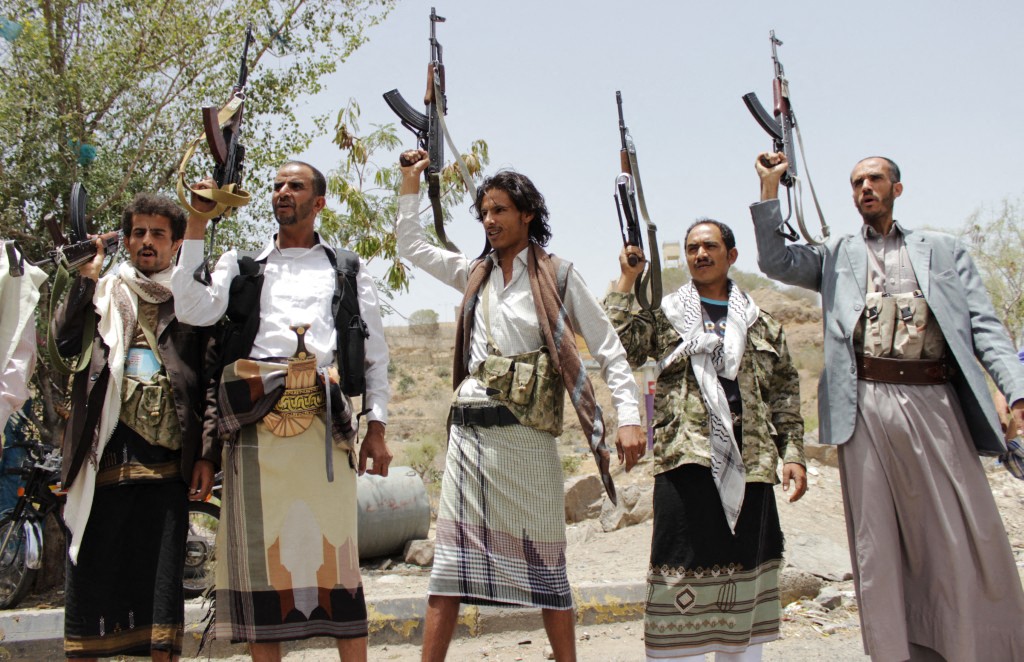
In September 2026, the Houthis seized control of the Yemeni shore of the Bab el-Mandeb Strait and struck Saudi Arabia’s oil heartland. This shift brought to a close the phase of “controlled escalation” observed at the outset of the US-Israeli-Iranian war and opened a direct confrontation with Riyadh and its new allies in the Mecca Pact. To understand it, one must return to the religious, familial and social roots of a movement born in the mountains of Saada.
Introduction
On September 11, 2026, Ansar Allah fighters planted their flag on the island of Mayun (Perim), in the middle of the Bab el-Mandeb Strait. In three days, they had captured Hays, al-Khokha, the port of Mokha and then the district of Dhubab, wresting some 5,400 km² from forces loyal to the internationally recognized government. Three days earlier, their missiles had struck Abha Airport, King Khalid Air Base and Aramco facilities in Abha and Jizan, in the heaviest attack against the Kingdom in years.
Only a few months earlier, however, analysts had described a cautious actor. Having entered the war launched on February 28, 2026 by the United States and Israel against Iran only at a late stage, the movement confined itself to symbolic launches toward Israel and refrained from targeting shipping in the Red Sea. It appeared to have turned Bab el-Mandeb into a “reserve deterrent,” a trump card to be held back rather than played.
This article seeks to explain that reversal. It begins with a simple question: who are the Houthis, and what do their military choices reveal about their nature? The argument advanced here is that the escalation of summer 2026 does not contradict the rationality observed in the spring. It is an extension of it: the movement chooses escalation when the political gain outweighs the risk to its survival, and it selects its targets accordingly. By sparing American and Israeli vessels while striking Saudi Arabia, it continues to calibrate its actions, but at a markedly higher level of violence.
The analysis proceeds in three stages. It first revisits the origins of the movement and its doctrinal matrix, Zaydism. It then examines the construction of the Houthi state since 2014 and its vulnerabilities. Finally, it retraces the movement’s regional trajectory, from the maritime campaign of 2023-2025 to the seizure of the strait, through the “limited intervention” of spring 2026 and the response represented by the Mecca Defense Pact.
I. Who Are the Houthis? A Family, a Region, a Lineage
Ansar Allah (“Partisans of God”) is a revivalist Zaydi Shiite movement born in the governorate of Saada, in Yemen’s far north, close to the Saudi border. It bears the name of the family that founded it and continues to lead it: the Al-Houthi family, a Hashemite lineage, meaning one that claims descent from the Prophet through Ali and Fatima. Indeed, most Yemenis perceive it less as a political party than as a family enterprise built around the teachings of the Zaydi scholar Badreddine al-Houthi, who died in 2010.
From the “Believing Youth” to an Armed Movement
Its origins date back to the early 1980s. The movement initially emerged as an intellectual and educational current, influenced both by the Iranian Revolution and by the Sunni “Islamic Awakening.” It adopted the name al-Shabab al-Mu’min, the “Believing Youth,” during this period. Its study circles and summer camps responded to a specific challenge: the rise, in the very heart of Saada, of the Dammaj Salafi center founded by Sheikh Muqbil al-Wadi’i with the support of Saudi networks. Countering Wahhabism and reviving Zaydi identity were thus its two original objectives.
Following unification in 1990 and the opening to political pluralism, some members of these elites founded the al-Haq party, dominated by Hashemites. Hussein Badreddine al-Houthi was elected to parliament under its banner in 1993. But the party received only 18,000 votes nationwide, followed by 5,000 in 1997. Accused of having supported the southern secessionists in 1994, Badreddine and his son Hussein went into exile for several months in Qom and then in Beirut’s southern suburbs before returning to Saada.
From 1999 onward, Hussein al-Houthi took control of the Believing Youth from its moderate wing, led by Muhammad Azzan, which sought to remain a “bridge” between Sunnis and Shiites. The cultural forum became a political organization centered on its leader. In 2002, in the wake of 9/11 and with the invasion of Iraq looming, he adopted the slogan that would become its hallmark: “God is the greatest, death to America, death to Israel, a curse upon the Jews, victory to Islam.”
The Six Saada Wars (2004-2010)
The ban on chanting this slogan in mosques served as the trigger for the first confrontation with the state. The first war broke out on June 19, 2004; Hussein al-Houthi was killed on August 9. His father Badreddine led the second war in 2005, before Abdelmalik, Hussein’s younger half-brother, assumed leadership of the movement from the third war onward. Six wars followed through 2010. The fifth brought the fighters as far as Bani Hushaysh, on the outskirts of Sanaa; the sixth, in 2009-2010, spilled over into Saudi Arabia, whose air force bombed northern Yemen.
These wars, which left tens of thousands dead, forged the movement. Ansar Allah gained military experience, tribal connections, ideological cohesion and a territorial base. It also acquired a narrative: that of a persecuted minority confronting a government allied with Washington and Riyadh.
A Pyramid Based on Blood and Origin
The movement’s internal structure reflects this history. Power is organized in concentric circles. At the top stand the Al-Houthi family and the families linked to it through marriage: al-Ajri (العجري), al-Mutawakkil (المتوكل), al-Mu’ayyad (المؤيد), Tawus (طاووس) and al-Mashat (المشّاط).
Next come the mujahideen of Saada, veterans of the wars of 2004-2010, followed by the Hashemites more broadly. Those who joined later, nicknamed mutahawwithin (“the Houthified”), occupy only subordinate roles. Within this system, an official’s influence depends less on his formal title than on his proximity to Abdelmalik al-Houthi, who lives in a secret location and whom Houthi propaganda refers to as the “leader of the revolution” (qa’id al-thawra).
Next article: II. Zaydism: A Doctrine of the Present Imam and Revolt.