

Music and Politics, an Ancient Union: The Origins (3/3)
From War Drums to Digital Platforms: A History of Sound and Power

This third installment introduces a series of essays offering a broad survey, both thematic and chronological, of the many ways in which music has interacted with the political sphere throughout history.
If Beethoven’s rebellion against Napoleon may be seen as something of a founding moment in the tension between music and political commitment, it does not, for all that, redefine the older and more ambiguous relationship between melody and power, whereby an ideology can carry entire masses of people along in its wake.
Nineteenth-century Europe illustrates with particular clarity how music can simultaneously build nations and become an instrument in their service. In this respect, Giuseppe Verdi offers a revealing example of music’s ability to carry entire peoples by giving musical form to collective trauma. In 1842, he composed the opera Nabucco, which recounts the destruction of the First Temple of Jerusalem by Nebuchadnezzar II and the captivity of its surviving inhabitants in Babylon.
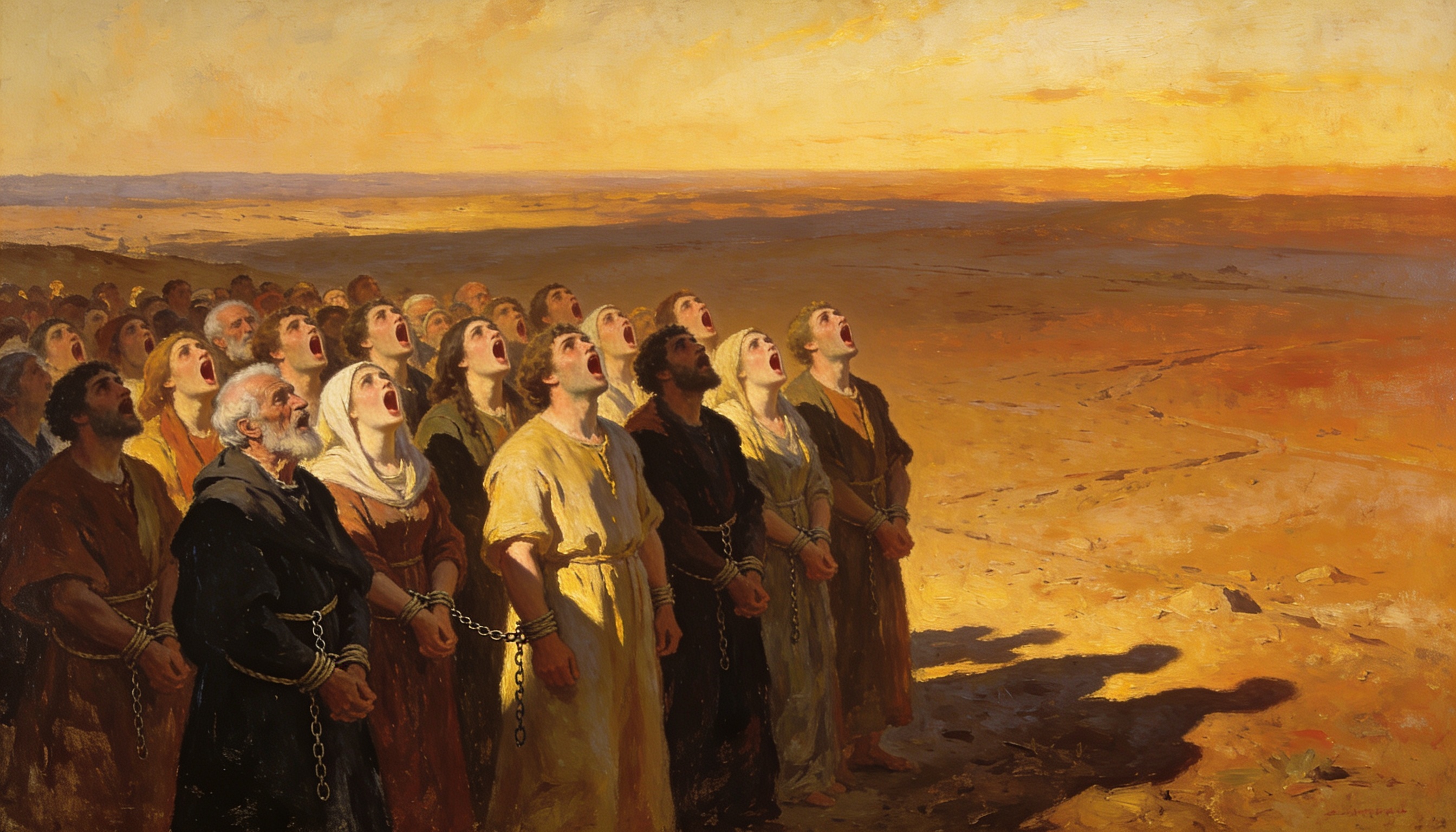
Va, pensiero, the nostalgic chorus of the exiled Hebrews, captured the hearts of the Milanese, who recognized in it the reflection of their own trauma as a people living under Austrian rule. As the chorus sings, “O my homeland, so beautiful and so lost!”, Jerusalem becomes a metaphor for all of Italy. Va, pensiero gradually emerged as one of the symbols of the Risorgimento. The beauty of Verdi’s music gave audible form to a collective suffering that had not yet found a political expression. National consciousness would come only later. Here, music precedes politics and provides it with its emotional and affective body.
Yet Verdi’s opera contains no deliberately political message in itself. Ultimately, the chorus speaks neither solely of the Jews nor solely of the Italians, but of exile. Its vocation is universal, and that is precisely why it has become the song of all those who have lost their homeland, their home, or their freedom, continuing to move profoundly different audiences nearly two centuries after its premiere. In this sense, the Italian patriotic reading of the opera gradually asserted itself over time, far more than at the moment of its creation. The “political context”, that collective consciousness rooted in a particular time and place, thus adopts the work as the emblematic anthem of a cause.
A Restless River
Even more fascinating is the melody capable of inspiring entirely different sentiments across borders while undergoing remarkably little musical change. The melody known as Fuggi, fuggi, fuggi da questo cielo, an Italian madrigal attributed in the early seventeenth century to the composer Giuseppe Cenci (though almost certainly older than he was), offers a striking example. A few decades after its appearance, it became better known, as an instrumental dance, under the titles Ballo di Mantova or Aria di Mantova, notably through the work of the composer Gasparo Zanetti in 1645. Or, more simply, as La Mantovana.
Its original text was nothing more than an allegory of the seasons, calling upon spring to drive away the harshness of winter. There was nothing political about its original intent. Its destiny, however, would prove profoundly political. Like a European river, the melody travelled across borders without a passport, assuming different identities and functions among different peoples. In Bohemia, Bedřich Smetana incorporated it into Vltava to celebrate the river as a symbol of the Czech nation under Habsburg rule, turning it into an act of cultural patriotism. In Romania, by contrast, it circulated simply as a folk song under the title Carul cu boi, with no particular political meaning. Then, toward the end of the nineteenth century, the Jewish pioneer Samuel Cohen adapted that same Romanian version to the poem Hatikvah, transforming the melody into the musical vehicle of the Zionist aspiration for a Jewish homeland, before it was ultimately adopted as the national anthem of the State of Israel.

Over the course of three centuries, the nostalgia of an Italian spring awakened Czech national feeling, became one of the emotional foundations of Zionism, and even served for a time as a lighthearted interlude for Romanians before the German progressive rock band Pell Mell transformed it, in 1972, into the remarkable Moldau, on its album Marburg. Three distinct national identities, three different collective memories, three political aspirations, sometimes contradictory, all carried by the very same melodic substance. This alone shows that music does not contain a fixed political meaning within itself. Rather, it is a kind of vessel that history fills and empties according to its own needs. Perhaps that is precisely where its power lies: in its extraordinary capacity to carry almost anything… and, for that very reason, to become the object of every form of power.
Playing Wagner Against Shostakovich
It is perhaps with Richard Wagner that this “availability” reaches its most dangerous, even cataclysmic, limit. Wagner’s œuvre is monumental, ambiguous, traversed alike by grandeur and peril. Epic. Excessive. In the hands of a deranged hypnotist of the masses, animated by supremacist delusions and an ecstatic desire for extermination, it becomes a dangerous hallucinogen. Woody Allen captured its lethal potential perfectly in one of his trademark sarcastic lines, when a character in Manhattan Murder Mystery (1993) remarks: "I can't listen to that much Wagner, ya know? I start to get the urge to conquer Poland." Yet it is Coppola who most powerfully grasps the pathological momentum of Wagnerism in Apocalypse Now (1979), where Lieutenant Colonel Kilgore revels in the spectacle of Vietnamese forests consumed by napalm while The Ride of the Valkyries thunders in the background.
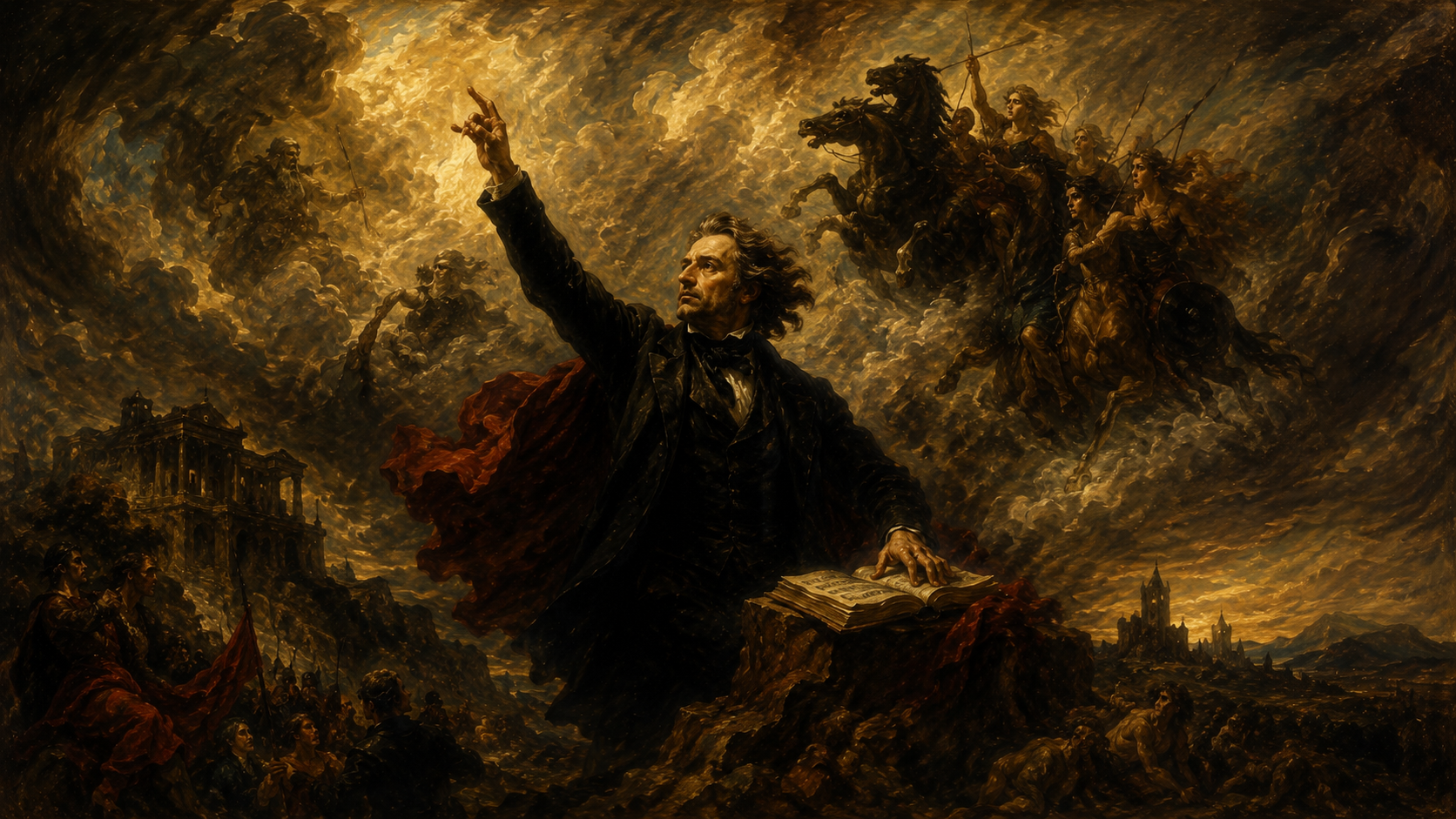
One might come to the German composer’s defense by arguing that he could never have foreseen that his work would become, for Adolf Hitler, the ideological equivalent, magnified a thousandfold, of the Beatles’ Helter Skelter, through which Charles Manson believed he heard a call to the satanic ritual that claimed Sharon Tate’s life in Los Angeles in August 1969. Yet what the Nazis made of Wagner cannot simply be dismissed as an accidental distortion. It may instead be read as the activation of one of the work’s own latent possibilities: its celebration of myth as the foundation of national community, its vision of the people as an organic and almost mystical entity, its distrust of rational mediation. Its conservatism. Its supremacism. Its antisemitism. If the Valkyries resounded during Nazi Party ceremonies, this was not propaganda in the ordinary sense of the word. Wagner had understood, before anyone else, that music could make people believe in what did not yet exist and forge a community through shared emotion long before that community existed in reality. The Third Reich carried that power to its catastrophic conclusion. Hitler restored to the Valkyries their original mythical face: that of bloodthirsty warrior figures, far removed from the heroic splendor with which German Romanticism had adorned them. In the end, Wagner inevitably brings us back to Beethoven’s act of rebellion against Napoleon and to the immense power that may rest in the hands of great artists. What would he have done had he witnessed his vision of German supremacy materializing in the crematoria of Auschwitz and Buchenwald? Would he, like the Austrian master, have rebelled? Or would he, too, have succumbed to the surrounding megalomania? The question deserves to be asked.
There is, however, another figure at the opposite end of the century, and at the opposite end of the political spectrum: Dmitri Shostakovich. Here, the movement is exactly reversed. To compose his Seventh Symphony under the bombs falling on Leningrad, and to have it performed in the besieged city by musicians who were themselves half dead from hunger, was this not to turn the most institutional form of Western music into an act of existential resistance?
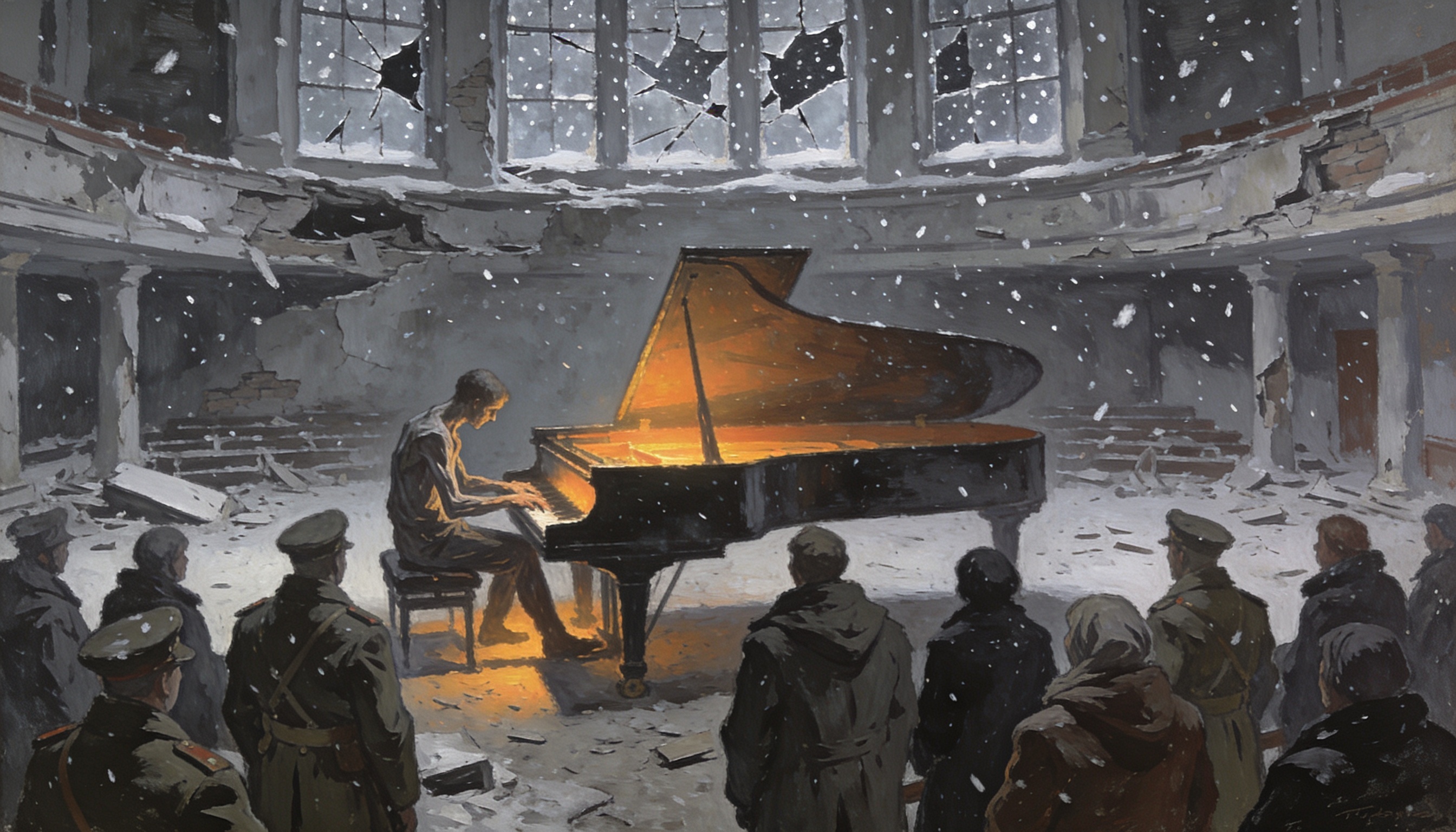
Where Wagner, perhaps unwittingly, opens a path toward nihilism and death, Shostakovich affirms that life endures precisely where power seeks to prove that it has already ended, filling with meaning the very time that war strives to empty of all substance.
From Versailles to Monoprix
Yet the tension between music as an instrument of power and music as resistance to power is by no means confined to great works of art. It is woven into the most ordinary and often the most invisible forms of a society’s sonic life.
National anthems are as much technologies of belonging as they are songs. They generate emotional unity where interests diverge, drawing individual bodies into an imagined community through the simple act of standing together and singing. They should be understood as political devices disguised as music, or, more precisely, as political devices that function precisely because they are experienced as music rather than ideology. One cannot argue with an anthem; one can only refuse to join in. And that refusal is immediately perceived as a political act. Jimi Hendrix understood this perfectly in 1969 at Woodstock, when he tore apart The Star-Spangled Banner with his electric guitar. Serge Gainsbourg grasped it just as clearly when, with his characteristic taste for provocation, he reinvented La Marseillaise as reggae under the title Aux armes et cætera (1979), provoking, during a concert in Strasbourg the following year, the fury of military veterans determined to bring his performance to an end.
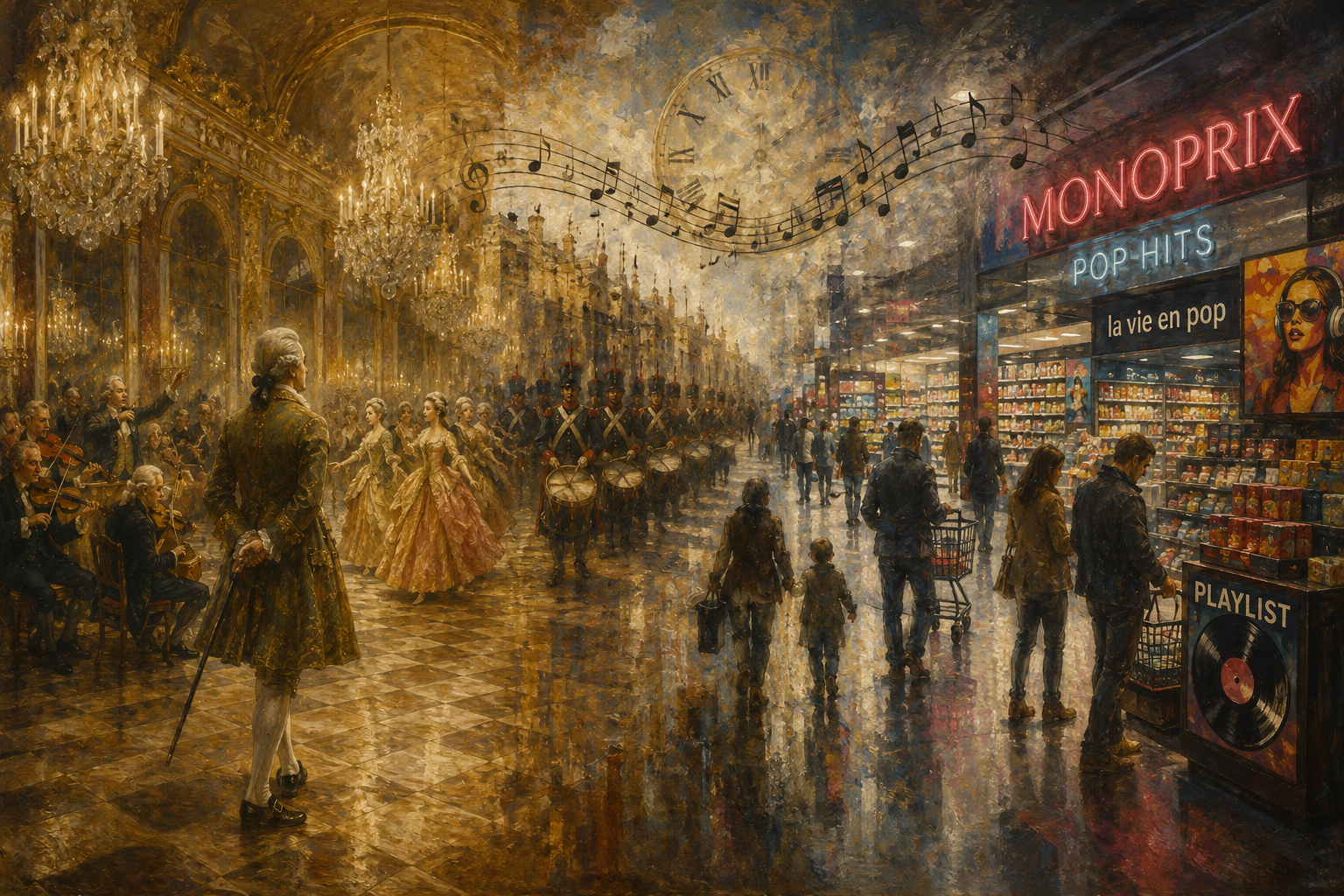
Military music follows exactly the same logic as national anthems, stripped to its barest expression. The drum that sets the soldiers’ pace also deprives them of their individual rhythm, absorbing them into a collective cadence that erases hesitation, fear… and personal judgment. To march to the beat of the drum is, in a sense, to entrust one’s body to the group while awaiting the moment it will be surrendered to death. And, on reflection, does the background music that fills today’s commercial spaces not operate according to the same principle, albeit on a different scale, regulating the pace of movement, sustaining an emotional state conducive to spending, and making a space feel welcoming while simultaneously making it easier to control? From the minuets of Versailles to the pop music of Monoprix, the same fundamental movement persists: enveloping bodies in sound so that it may take hold of them without ever asking their explicit consent.
Donald Trump vs. Leonard Cohen
Closer to our own time, an episode that might at first seem anecdotal reveals something essential about the persistence of this relationship. In the summer of 2026, Donald Trump once again, just as he had during his first presidency, attempted to appropriate Leonard Cohen’s Hallelujah for use at his political rallies, prompting another icy rebuke from the late singer’s family. Cohen had died on the eve of the 2016 presidential election.
What matters here is not so much the family’s entirely understandable indignation. Trump’s attempt to appropriate Hallelujah merely reenacts an age-old mechanism through which power seeks in music an emotional legitimacy that it is incapable of generating on its own. In 2026, Hallelujah is not, strictly speaking, a political song. Like so much of Cohen’s work, it is a meditative psalm about fractured grace, desire, and defeat. Yet its beauty and its universal recognition make it precisely what every form of power covets: a raw emotion that short-circuits judgment, galvanizes, and carries people away.
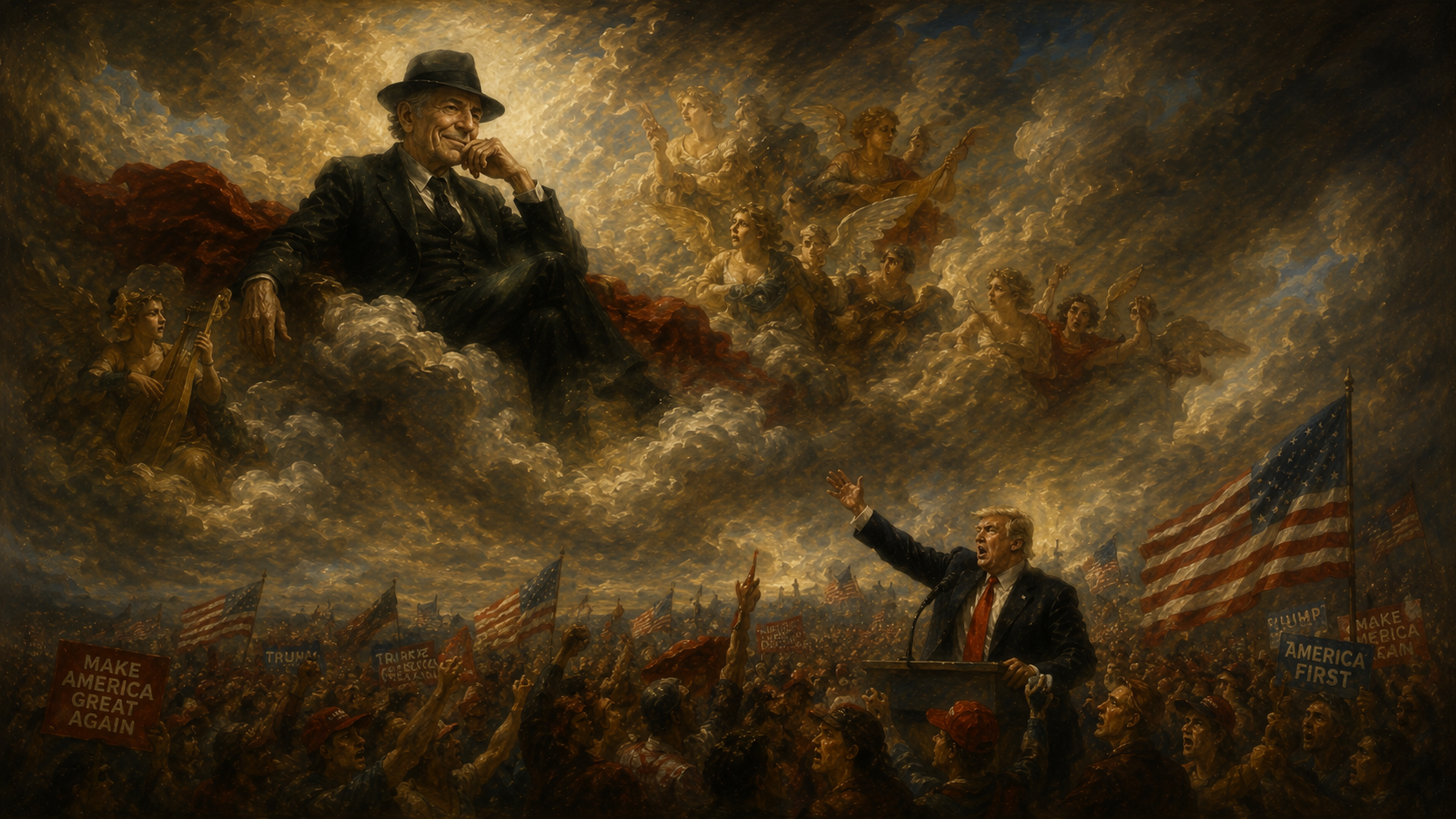
By seeking to appropriate Cohen’s quest for grace, Trump is attempting to drape himself in a measure of prestige before his supporters. In reality, however, he merely makes himself look ridiculous. More than anyone else, Cohen had, from the second half of the 1970s onward, turned his back on any politicization of his work and on any deviation from the spiritual calling that lay at the heart of his music. The Cohenian experience is, above all, a mystical one. One must first rise above oneself and open one’s heart before entering the Canadian songwriter’s ceremonial universe. Needless to say, such an experience is fundamentally beyond the reach of populism, especially when it is infused with supremacism, cynicism, and mercantilism. The proof is plain enough: to appropriate Hallelujah on the one hand while issuing death threats against Bruce Springsteen on the other, as the President of the United States is doing today, is rather like aspiring to the Nobel Peace Prize while simultaneously seeking the destruction of a civilization.
The Foundational Shock
Indeed, what the Trump episode, occurring in the United States of all places, ultimately reminds us is that while music has always served as an instrument of power, it has also, at the very same time, remained one of the rare spaces from which that power could be challenged from within its own forms. And it is precisely because sound travels differently from language, because it can be heard without necessarily being understood, because it crosses borders that writing cannot, because it acts upon the body before reaching consciousness, that it has so often carried forms of resistance beyond the full grasp of censorship.
The modern protest song, whose history this series seeks to retrace, was not born in the drawing rooms of Europe, amid the smoke-filled cabarets, or in the white countryside of North America. Nor does it descend in a direct line from medieval troubadours or Elizabethan ballads. It was born instead from a historical upheaval of unparalleled violence in the modern Western world: the uprooting of African musical traditions from their native soil, their passage through the brutality and humiliation of the slave trade, and their transplantation into a society that recognized them only as noise, as labor, or as a threat.
This upheaval produced something that nothing in the soundscape of eighteenth-century white America could possibly have anticipated. A refoundation. Modern music, in its ability to express what ordinary language cannot, to resist where direct speech becomes impossible, and to forge a collective body in dissent, was born out of that violence.
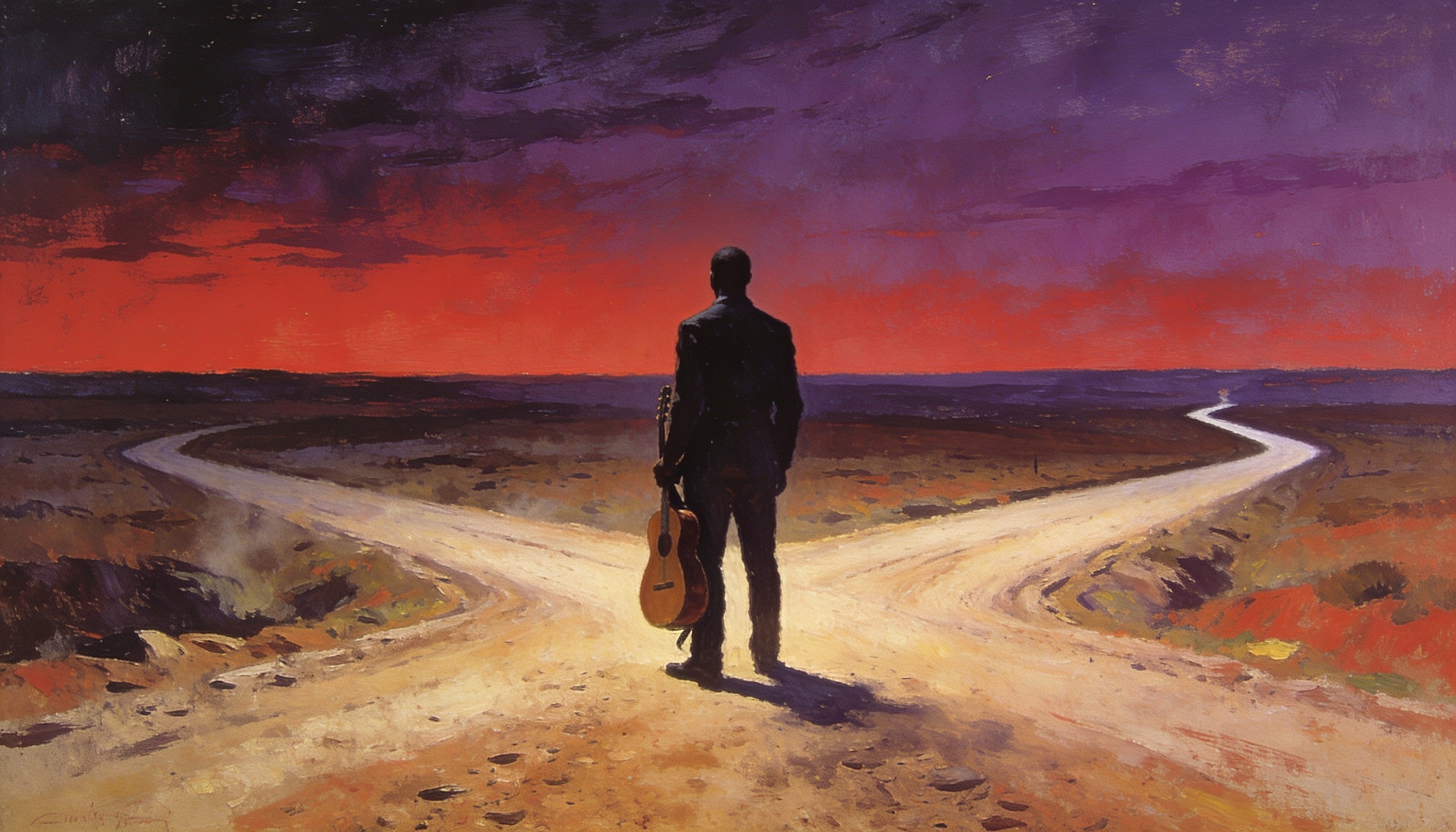
To understand how that came about, we must pause over what happened in the plantations, the Black churches, and the dusty crossroads of the Mississippi Delta, as well as over the legendary pact a so-called “mediocre” guitarist is said to have sealed with a mysterious, dark stranger on an imaginary night by the side of some forgotten road…
Nothing in the soundscape that preceded Black America prepared the world for what slavery was about to bring forth.
Music and Politics, an Ancient Marriage: Origins (2)
Music and Politics, an Ancient Marriage: Origins (1)
Más de Michel Hajji Georgiou
Ver todo


Lo último de Levant Time
Ver todo


