

The Sayyed Who Showed the Way
A Tribute to the Memory of Mohammed Hassan al-Amine

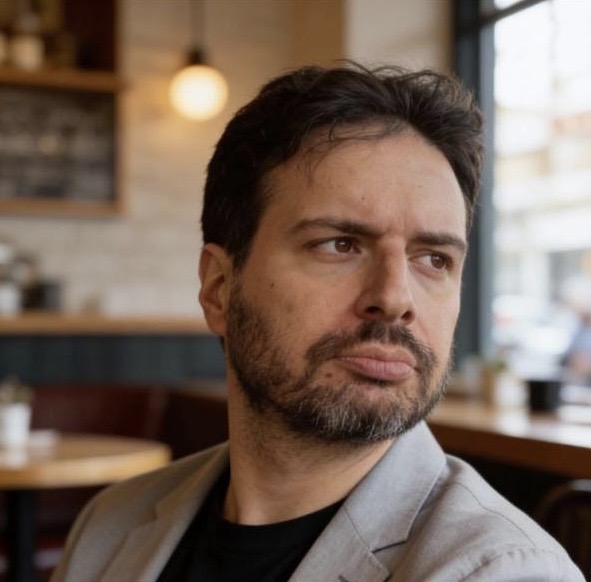
The spirit and legacy of the Ulama Mohammed Hassan al-Amine, leading authority of Lebanese-centered, statist, and Amelite Shiism, remain more relevant than ever, five years after his passing.
Five years ago, on 10 April 2021, the Shia scholar Mohammed Hassan al-Amine died in Sidon of COVID contracted at the age of seventy-five.
Lebanon had long been collapsing before his eyes — and it continued inexorably to come apart after him.
Perhaps paradoxically magnanimous on this occasion, the Grim Reaper granted this wise and gentle man — as it had, nearly a decade earlier, to his friend Hani Fahs — the opportunity to be spared further suffering in the face of the appalling spectacle of the continuing agony of the Land of the Cedar, and, with it, of the Shia community. No doubt finitude made him a gracious and final bow by removing him from this world before his darkest prophecies began to be fulfilled with such precision. Or perhaps this is simply that ultimate consolation which allows us to survive the disappearance of the fundamental landmarks that had gradually underpinned an entire vision of politics founded on moderation, coexistence and peace.
Five years later, the ruins of the country bear exactly the contours that Mohammed Hassan al-Amine had drawn. Rereading his texts today thus produces a form of belated gratitude for that courage of clairvoyance he had been compelled to deploy within his own community, against the praetorian guard that had appointed itself its protector, and in the name of an idea of his community that those guardians were methodically working to disfigure.
The Man from Najaf and Saida
Born in 1946 in Chakra, deep in Jabal Amel, into a family whose religious lineage stretched back several generations — the great Mohsen al-Amine, author of the Ayan al-Shia, counted among his ancestors —, he left at fourteen his outlying corner of the world for the scholarly alleyways of Najaf, where he spent twelve years absorbing fiqh, philosophy and tradition, without ever ceasing to read in parallel what the champions of prohibition rarely read: the history of religions, the great texts of the European Renaissance, Averroes revisited from the margins, or Jamal al-Din al-Afghani as an inexhaustible source of questioning. He returned in 1972 carrying a subtle blend of fertile doubt, of the capacity to separate the divine from the human without denying one in favour of the other, and of the conviction that fiqh without a deep knowledge of history amounts, in reality, to nothing more than an infinite extension, a tragic perpetuation of the past.
A religious court judge in Tyre, then in Saida, an intellectual presence in a predominantly Sunni city where he lived without retreating into communal insularity, Mohammad Hassan el-Amine convened the Multaqa al-Thulatha, Tuesday evening gatherings at his home where poets and politicians, clergy and lay intellectuals mingled, where Archbishop Salim Ghazal would come to spar with the sayyed in a friendship that nothing — neither confessional divisions nor political fractures — would ever manage to break.
From Saida, Mohammed Hassan al-Amine thus built a singular intellectual figure within the Lebanese Shia landscape, one that upheld, within an increasingly lethal and totalitarian communal environment, moderation, justice, freedom and a culture of life, and refused to sacrifice any of these in the name of doctrine, ideology or hollow populist pseudo-rhetoric. The man had understood perfectly that the question Lebanon has faced for centuries lies in this very dialectic: freeing religion from the politics that constantly seeks to confiscate it. A reformist to the marrow, in the spirit of the Lebanese Amelite tradition of which he was, in the wake of Imam Mohammed Mahdi Shamseddine, one of the most eminent authorities in Lebanon. The brown tide that was ravaging his surroundings? He was perfectly immune to it.
A Resister Against the Confiscated Resistance
Yet the sayyed was a resister. No one could call his legitimacy on this point into question. He had sheltered Ragheb Harb in his Saida home. He had hidden Abdel Latif al-Amine through the dark years of the Israeli occupation. He had been arrested in July 1984 and expelled to Beirut by Israeli military intelligence. But he believed unshakeably in the principle of a Lebanese national resistance, which he carefully and consistently distinguished from armed communal resistance.
This distinction rested on an architectural conviction, grounded in both anthropology and theology, according to which resistance has real value only when it is carried by a people and inscribed within a state project — rather than surrendered to a party-militia that always ends up, having monopolised war, monopolising peace, representation, and the life and death of those it claims to defend.
He said as much without equivocation, in an interview given to Sandra Noujeim of L’Orient-Le Jour in July 2015, at the moment when Hezbollah’s militia involvement in Syria was finishing the work of revealing its true nature beneath the layers of rhetoric that had concealed it: “The resistance in Lebanon cannot fulfil the conditions of its success without Lebanese unity, without an army capable of confronting the enemy and without state institutions that serve as a reference point for the Lebanese people.” And further on, with a frankness that, coming from a respected Shia sayyed, amounted to exemplary courage: “By becoming a prop for the Syrian regime, which is in no way different from the other repressive dictatorships of the region, the resistance is being progressively denaturated.” The moumanaa, that celebrated axis of resistance which Hezbollah’s propaganda brandished as a sacred standard? “Where is it exactly? I don’t see it.” The response, perfectly calm, shattered the founding Hezbollah myth of struggle on behalf of the oppressed.
The Diagnosis and Its Fulfilment
Hezbollah’s participation in the Syrian war was further proof that the party had transformed the Lebanese Shia community into fuel for a project that had ceased to be Shia in the sense of the Jabal Amel tradition, becoming instead Persian in its eschatological ends and mercenary in its earthly means. The summer of 2006 had already cost an enormous price, and the verdict remained highly debatable on the “divine victories” proclaimed by the Hezb. The Syrian decade had already begun to sign the true beginning of the end… before the missiles of September 2024, then those of March 2026, came to write its most brutal and most tragic chapter.
Mohammed Hassan al-Amine possessed that singular gift of formulating, without acrimony, truths that his interlocutors refused to hear, and of placing the diagnosis on the table without taking any pleasure in the wound it caused. That lucid sadness of the physician who watches the illness progress because the patient refuses treatment, and who nonetheless continues to repeat, day after day, the prescription, even knowing that those who listen are becoming ever fewer. Such was his philosophical stance, and such is what ran through his texts.
The wilayat al-faqih as the foundation of political legitimacy? He had spent an entire life demonstrating that government, in the Islamic tradition properly understood, falls within the realm of human affairs and not of divine mandate, that the dawla arises within the field of mubahaat, of permitted things, and that confusing sharia with the architecture of political power is to commit precisely the betrayal Muawiyah committed in his time: stealing justice in the name of justice. Democracy as the antithesis of Islam? He had taken care to show that democracy functions as a mechanism, that the Quranic principle of shura awaits only translation into institutions, and that fourteen centuries ago Muslims missed a historic opportunity to invent democracy before the Europeans.
Karbala Against Martyropathy
The sayyed is no longer here to witness the suicide of the warrior sect, which destroyed the whole of Jabal Amel along with itself, ceded it to the enemy and shamelessly provoked, for the greater glory of the faqih, the displacement of its entire population. Hezbollah today emerges from the ashes of its own military implosion. And yet, amid the still-smouldering ruins of this catastrophe, martyropathic rhetoric continues to function, as though the very gravity of the disaster were incapable of breaking the diabolical circle of the ideology of death — an ideology that al-Amine had fought all his life, in the name of a superior dignity of life, convinced that Shiism, as he conceived it from his readings in Najaf to his final conferences in Saida, presents itself first as a project of human liberation, before being instrumentalised as a programme of ritual sacrifice in the service of Tehran’s imperial ambitions.
Martyropathy — that structural cult of death which transforms defeat into spiritual victory and destruction into founding sacrifice — occupies the theological heart of Hezbollah’s logic, without anyone inside the system possessing the conceptual tools to escape it. This is what al-Amine had grasped in rereading Karbala as a call never to tolerate injustice, to refuse submission to the tyrant, and to distinguish testimony (shahada) from the compulsive pursuit of martyrdom (istishhad) erected into an end in itself. In his conferences of 1992 and 1993 in Teyr Debba, he turned the slogan “Every day is Ashura, every land is Karbala” against the dominant reading that the militia and its eulogists had made of it. This slogan, he explained, means that the struggle for justice arises in every age and in every place, and that the true homage paid to Imam Hussein is to build the world he called for. And therefore, that repeating the scene of his immolation without end betrays precisely what he wished to transmit. But how to convince a crowd nursed from birth on the fixed and anaesthetising idea that true life passes through martyrdom?
The Legacy and the Compass
What makes al-Amine’s thought irreplaceable in the Lebanon of today lies in the quality of the alternative he proposed and which remains to be built. A Shiism freed from the tutelage of a military apparatus that confiscated the decision of war and peace from an entire society without ever seeking its consent, and that imposed its fate on a community by establishing an armed hegemony in the service of a foreign project. The legacy of Mohammed Hassan al-Amine, now more than ever, is that of a luminous, radiant Lebanese Shia identity, whose primary anchor is Lebanon and the heritage of Jabal Amel, read anew without the political servitude that the wilayat al-faqih has imposed upon them since 1979. A vision of the State as a common project of justice and freedom, transcending sectarian allegiances, capable of embracing Lebanese plurality within a civil architecture founded on law and democracy, far from weapons, drug trafficking and the Mephistophelian practices inherited from the Assassins.
This Lebanese vision, Mohammed Hassan al-Amine — religious dignitary, philosopher, writer and poet — had built in the daily practice of a simple, austere, warm-hearted man who lived in a predominantly Sunni city, sat on interconfessional councils, welcomed with open arms, in the spirit of coexistence of Greater Lebanon, Maronite priests and lay intellectuals, who read Mohammed Arkoun with as much interest as Shahid Sadr, and who refused to allow his religious position and beliefs to dictate his relations with his fellow citizens.
The closeness, the hand-to-hand grappling with otherness, the conviction that Islam constitutes the heritage of human civilisation in the broadest sense — all of this made him a kind of scholar-cleric, a moujtahed-humanist, whose deep tradition could never impede his freedom to think and to be with and for others.
Shia al-ʻaql wal-damir — the Shia of reason and conscience.
This is the path that Mohammed Hassan al-Amine, following in the footsteps of his illustrious predecessors of Jabal Amil, offers to Lebanese Shia. It is a project for the future — for the Shia community, but equally for all Lebanese communities, currently disoriented and in the grip of the most violent identity convulsions, as is always the case in times of crisis.
Like his friends Mohammed Mahdi Shamseddine, Hani Fahs, Nassir al-Assaad and Mohammed Hussein Shamseddine, and so many others, the legacy of Mohammed Hassan al-Amine is there to remind us that the compass is the State of Greater Lebanon as a definitive homeland for all its sons and daughters, sovereign, free, independent and plural.
In the silence of eternity, he still waits — now more than ever — to be heard.
Michel el-Khoury, or the Nobility of Effacement
Mohammed Hussein Shamseddine, that Unknown Soldier
Mohammad Hussein Shamseddine, a Shia mind behind March 14
Salma Merchak, Resistance Through the Enlightenment
The story of Salma Mershak, who waited 5 years for justice for her son Lokman
Plus de Michel Hajji Georgiou
Voir tout


Les derniers articles de Levant Time
Voir tout


