

The Centrality of the Syriac Language in the Maronite Tradition (4/7)


Syriac has been kept alive in Lebanon through Maronite hymns. They have carried the language, along with all the heritage, consciousness, and imagination it has tirelessly conveyed down the centuries. These hymns are the most fully developed and best-preserved expression among the various manifestations of Syriac heritage. Their origins date back to the fourth and fifth centuries, with Saint Ephrem and Saint Jacob of Serugh. They accompanied the birth, development, and establishment of Eastern Christianity in this land.
They also carry within them an ancient Canaanite-Phoenician, Aramaic, and Mesopotamian legacy. Through their widespread use, these hymns have above all passed on the Syriac language throughout the parishes and in the hearts of the diaspora.
The Treasure
Syriac hymns safeguard the survival of an invaluable heritage that continues to resonate beneath the vaults of our churches and in parish processions. Eugène Roger, Jean de la Roque, Laurent d’Arvieux, Volney, Gérard de Nerval, Alphonse de Lamartine, Henri Lammens, Ernest Renan, as well as many Orientalists and missionaries, wrote of these Syriac hymns, which keep alive a language imbued with a distinct culture and spirituality.
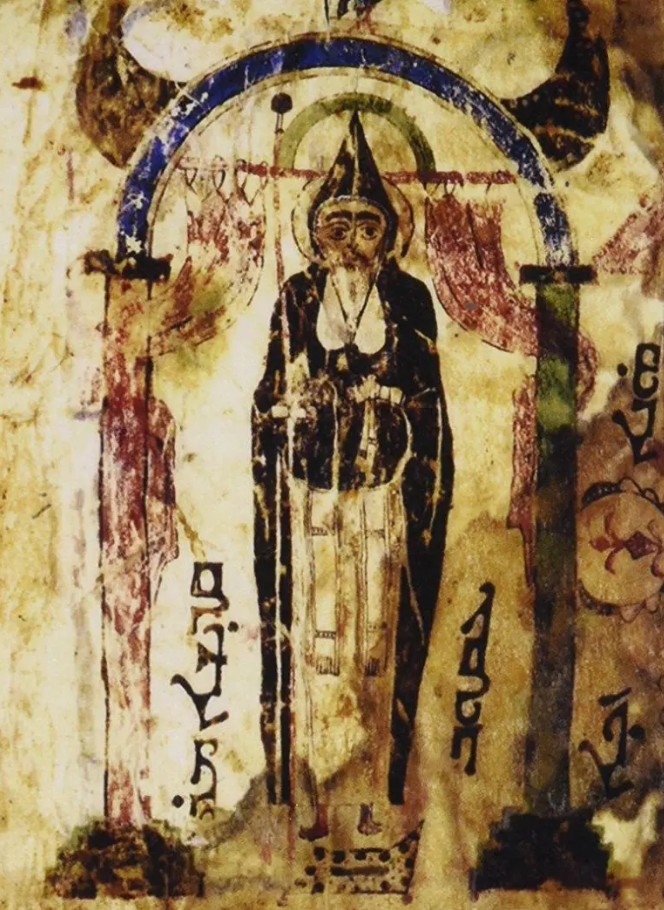
Saint Jacob of Serugh.
While schools have abandoned their national mission of transmitting culture and heritage, and the Church may have fallen short in promoting this legacy, Syriac chant remains the most enduring expression of continuity with a foundational past. It embodies a distinct identity and character and, consequently, the very meaning of existence. These hymns thus constitute a vibrant, living heritage.
The forest of Syriac chant forms a world unto itself, a vast treasury. Indeed, its repertoire is known as the Beit Gazo: the Treasure. “The early Middle Ages are scarcely the West; they are the forest of an East familiar with Syriac chants before receiving the Byzantine copes,” wrote André Malraux. It is a profusion of musical creativity reaching back to the depths of time, one that still animates Lebanon’s parishes and keeps this mountain alive through its trials and tribulations.
Sacred Syriac Maronite Chant
In music, as in architecture, literature, writing, painting, and sculpture, the Maronite tradition rests on the principle of austerity as a prerequisite for transparency and truth. Architecture tolerates sculpture only when it possesses scriptural significance and conveys a message of salvation. Writing eschews calligraphic virtuosity and seeks to remain as pure as the Word it embodies. Painting, in its iconographic dimension, is intended for spiritual contemplation rather than mere aesthetic enjoyment.
Guided by these same principles, Syriac chant and its music convey the Christian message with simplicity and humility. They embody a constant search for meaning and the absolute. The artist recedes before the work, and the singer lends his voice to a tradition greater than himself. Technical feats are deliberately set aside, as their excess is seen as an obstacle to transparency and, consequently, to receiving the divine.
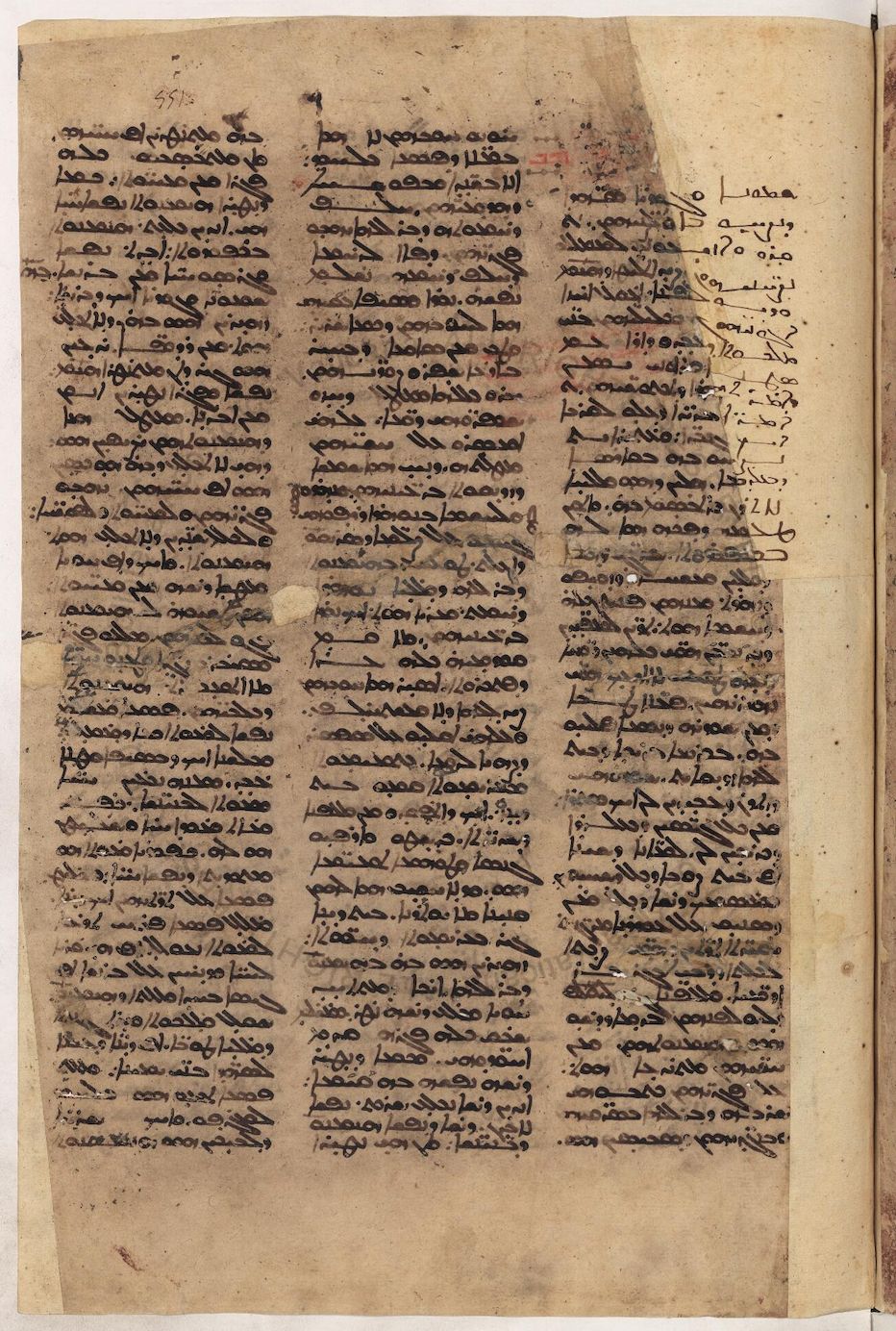
A Syriac manuscript by Saint Jacob of Serugh refers to King Abgar V (Abgar u-Komo) as “the son of the Arameans” in his Homily on Guria and Shamuna: “Two precious pearls who adorned the bride of my lord Abgar, son of the Arameans.”
Every tradition has a spirit of its own to which it must remain faithful. Vocal feats and technical virtuosity, though prized in certain cultures, have no place in the Maronite tradition. In the austere style of Maronite chant, sustaining the qolo—the voice, the model stanza, or Tonus princeps—is far more demanding than in more animated forms. Seeking to avoid this difficulty, some singers resort to virtuosity to conceal possible shortcomings.
Alterations
Purity is the foundation of Maronite chant in the Syriac language. It is lost, however, in Arabic translations. Indeed, it is technically difficult to replace a language such as Syriac or the Lebanese dialect, which have five vowels (a, é, i, o, ou), with Arabic, which recognizes only three vowel patterns (harakat).
The composer is then forced to compensate for this limitation with vocal ornamentation, thereby introducing a mannerism fundamentally alien to the spirit of Syriac Christianity, particularly in its eremitic Maronite form. Maronite theology seeks God in absolute truth, stripped of everything superfluous. It remains faithful to its ascetic monastic origins and its Old Testament heritage.
Several factors can thus distort Syriac chant when it is translated. First, rhythm often requires significant compromises to preserve the number of syllables: meaning is then sacrificed in order to insert words that fit the melodic rhythm. The use of Arabic may also encourage the introduction of Middle Eastern instruments, which unconsciously bring their own musical traditions with them. Finally, a lack of familiarity with Maronite culture, its values, and its spirit further compounds these distortions.
For all these reasons, understanding the cultural heritage and being firmly rooted in the tradition of the Syriac Maronite Church of Antioch are crucial. Syriac is not merely a liturgical language; it embodies the heritage of the ancestors and the living memory of a formative past that shaped Maronite spiritual and cultural identity.
Syriac carries the biblical and patristic texts, preserves the original melodies, and keeps the sacred formulas intact in all their poetic and theological power. A language of prayer inherited from the Fathers, it holds a poetic and theological treasure whose nuances cannot be translated. As the expression of a spirituality and a worldview, it cannot be replaced in either content or form.
The centrality of the Syriac language in the Maronite tradition: the place of faith (6/7)
A Young Lebanese Woman, an Aramaic Chant, and Leo XIV Moved to Tears
In France, Leo XIV is Reaping what John Paul II Sowed
The Centrality of the Syriac Language in the Maronite Tradition: The Place of the Liturgy (5/7)
Lebanon and Eastern Christians at the Heart of the Pope's Visit to France
More from Amine Jules Iskandar
View All


More in Religion
View All


Latest from Levant Time
View All


