

The Centrality of the Syriac Language in the Maronite Tradition: The Place of the Liturgy (5/7)
Human civilization has been built upon the capacity for transmission. Tradition – from the Latin tradere, meaning “to transmit” – lies at the heart of progress. To borrow Le Corbusier’s words, it is “the unbroken chain of all innovations and, by that very fact, the surest witness to the projection into the future”(1).
In Sacrosanctum Concilium(2), the Second Vatican Council recalls that “the liturgy expresses the faith of the Church as it has been transmitted through the centuries.”
The Liturgy
Tradition is transmitted through the liturgy, a true synthesis of all the arts. All the senses are involved: space, light and acoustics are conceived to serve the rite. As Father Pavel Florensky wrote, “in the church, space becomes theology”(3). The fragrance of incense is a symbol of prayer rising to God: “Let my prayer be counted as incense before you” (Ps 140:2). The coolness of the stone in ancient churches is itself the tactile memory of the centuries. The warmth of candles embodies the light of Christ, victorious over darkness. Song is prayer; “To sing is to pray twice,” according to the phrase attributed to Saint Augustine(4).
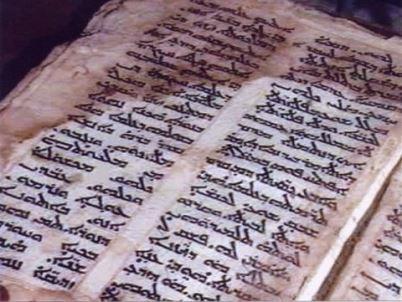
Liturgical tradition is not merely a matter of aesthetics; it expresses an identity of which language is the core. To lose the liturgical language is to weaken the awareness of belonging to a spiritually distinct people, but also to distort the message in its distinctiveness. Some translations of liturgical texts dangerously depart from the original Syriac meaning. At times, they do violence to the theological depth and poetic beauty of ancient formulations. To lose the language is to lose a unique way of addressing the divine.
Heritage thus lies at the heart of the transmission of faith and liturgy. It serves as a safeguard against the drift toward a spirituality devoid of meaning and discernment, and therefore easily instrumentalized. Simone Weil denounced uprootedness as one of the major ills of modernity, producing individuals vulnerable to all forms of ideological manipulation(5). Tradition thus provides the solid foundations and guiding principles needed to orient and sustain both the individual and society.
Rootedness
Alasdair MacIntyre argues that faith, morality and rationality are always rooted in a living tradition. To sever them from identity, history and culture in the name of an abstract universalism is to strip them of meaning(6). Faith remains intelligible only within a concrete context. There is, he argues, no “pure,” rootless universal spirituality. The universal can only be reached through the particular.
Tradition constitutes a living and evolving “conceptual lineage,” essential to practical rationality and morality, and opposed to today’s relativism and radical liberalism. The secularism promoted by the latter tends to confine faith to the individual sphere, isolated and disconnected from society, belonging and heritage. This absolute separation between faith and identity – a faith reduced to a personal opinion – becomes unintelligible and gives rise to a form of emotivism.
“When morality is detached from its social embodiment in practices and traditions, it fragments and loses all rational authority,” MacIntyre writes. Applied to spirituality, this approach shows that faith stripped of identity descends into sentimentality and becomes meaningless. Faith then gradually gives way to ideology.
Faith, therefore, is in no way opposed to reason. Rationality, like discernment, is instead a condition of faith. Sentimentality belongs to ideology, while morality, tradition and identity contribute to the spiritual formation that leads to genuine universalism.
The Universal
Language, history, culture and collective memory provide people with their bearings, the foundations of their identity and, consequently, their access to the universal. In his critique of false universalism, Charles Taylor argues that there is no access to the good, the true or the spiritual outside a cultural horizon that enables us to understand and assess the world. The attempt to create a universal spirituality by erasing identities leads to a loss of meaning and a false sense of neutrality(7). What is not rooted in an identity cannot claim universality; it produces nothing but an abstraction.
Taylor emphasizes the relational and embodied nature of identity, which makes discernment and knowledge of the good possible(8). Outside this framework, we are essentially confronted with an ideology of the supposedly neutral application of universal norms.
Denying identities in the name of the universal often amounts to imposing a dominant identity under the guise of neutrality. This is what threatens the Maronites when they underestimate the existential importance of their Syriac language. True universalism arises from the coexistence of rooted identities, not from their dilution. The denial of cultural and linguistic heritage produces nothing but an illusion: an abstraction that leads to the replacement of faith with ideology.
(1) – Le Corbusier, The Athens Charter, Paris, Éditions de Minuit, 1957.
(2) – Second Vatican Council, Sacrosanctum Concilium: Constitution on the Sacred Liturgy, December 4, 1963.
(3) – Pavel Florensky, The Pillar and Ground of the Truth, 1914; and Paul Florensky, The Pillar and Ground of the Truth, L’Âge d’Homme, 1994.
(4) – Saint Augustine, Bishop of Hippo, Confessions, Book IX, trans. L. Moreau, Ernest Flammarion, 1914.
(5) – Simone Weil, The Need for Roots: Prelude to a Declaration of Duties Towards Mankind, Paris, Gallimard, 1949, p. 41.
(6) – Alasdair MacIntyre, After Virtue: A Study in Moral Theory, Notre Dame, University of Notre Dame Press, 1981, pp. 222–225; and After Virtue: A Study in Moral Theory, PUF, 2013.
(7) – Charles Taylor, Multiculturalism and the Politics of Recognition, Princeton University Press, 1992; French edition: Multiculturalism: Difference and Democracy, Flammarion, 2009.
(8) – Ibid. Taylor writes: “My identity is defined by the commitments and affiliations that constitute the horizon from which I can determine what is good, what is worthwhile, and what I ought to do.”