

When An Artist from Old Florence Takes Up Her Brush (1)


Some people submit to fate, while others take their destiny into their own hands. That is all the more difficult when the person is a woman in a world dominated by men. And yet… some women refused to yield. They chose to fight, breaking the taboos and conventions of their time.
Throughout history, countless women have refused to be mere footnotes in the story of humanity. Whether they wielded a paintbrush, a pen, science, or their voice, they left their mark on their era with a boldness that was sometimes considered scandalous. Society wanted them to be muses; they became creators. It demanded obedience; they chose freedom. It sought to silence them; they spoke even louder and with even greater conviction.
From Artemisia Gentileschi, who defied Italian society and its courts five centuries ago, to George Sand, who traded the corset for the freedom to write; from the tormented Camille Claudel to the rigor and genius of Marie Curie, and the universal voice of Umm Kulthum… these women did not merely circumvent the conventions of their age—they shattered them. Sometimes they succeeded, sometimes they failed, but they never gave up.
This series of articles is a journey through time to meet these extraordinary women, driven by an unshakable determination and whose lives continue to inspire us today.
Artemisia Gentileschi: Revenge Through Art
In seventeenth-century Florence, painting was an exclusive male domain. Women were tolerated only as passive models or frozen allegorical figures. Yet Artemisia Gentileschi broke every barrier, armed with nothing but her paintbrush against injustice and misogyny.
The Shadow of Trauma
Born in Rome in 1593, Artemisia grew up in the workshop of her father, the painter Orazio Gentileschi. From an early age, she displayed an exceptional talent for painting. While Caravaggio's dramatic chiaroscuro seemed to flow through her veins, she infused it with an unprecedented emotional intensity and striking realism. Recognizing her remarkable gift, her father entrusted her artistic training to the painter Agostino Tassi.
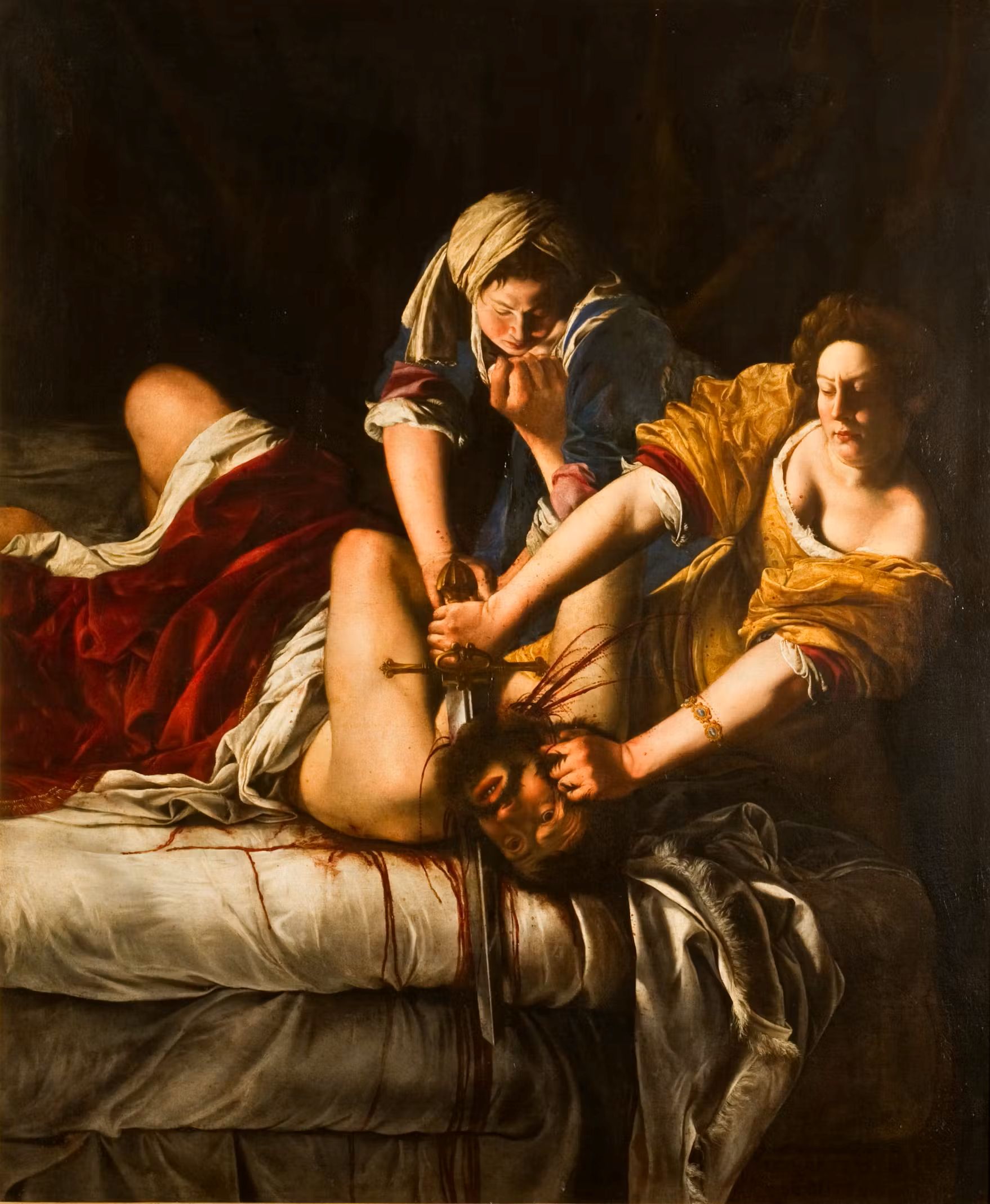
At the age of seventeen, Artemisia's life changed forever. She was raped by Agostino Tassi—the very man her father had chosen to mentor her.
At a time when the overwhelming majority of rape victims remained silent to avoid the disgrace of a public trial, Artemisia chose to fight. She agreed to testify before the courts, exposing herself to a double ordeal: the physical and psychological violence of the assault, followed by the humiliation of a months-long public trial during which she was subjected to examination and even tortured with thumb screws to "verify" the truthfulness of her testimony.
Where Renaissance society expected women to bury themselves in shame and silence, Artemisia confronted her attacker—and, through him, society itself.
To fully appreciate her courage, one need only observe that even today, five centuries later, many women still hesitate to report rape.
The Paintbrush of Justice
The guilty man, protected by powerful connections, never served the sentence to which he had been condemned. But Artemisia refused to be defeated. Her response to injustice was neither tears nor shame, but an unwavering determination to succeed as an artist—a determination that gave birth to masterpieces of extraordinary power and virtuosity. Her paintbrush became her weapon.
One of her most celebrated works, Judith Slaying Holofernes, stands as an act of absolute catharsis. Unlike traditional depictions of Judith, often portrayed as repulsed by her own deed despite carrying out God's will, Artemisia infused her heroine with her own physical strength and consuming rage.
As Judith severs Holofernes' head, her movements are precise, the blood gushes forth with astonishing anatomical realism, and her face reflects an unyielding determination.
"I will show you what a woman can do," Artemisia wrote in one of her letters.
She was not simply painting a biblical episode—she was symbolically executing her own tormentor. From that moment on, her canvases would repeatedly portray women endowed with the same strength, resolve, and courage.
A Queen Without a Crown
Artemisia Gentileschi transformed her deepest wound into an artistic celebration of female power. Armed only with her paintbrush, she has continued, through the figure of Judith, to symbolically execute her attacker for centuries.
Her tragedy could have destroyed her. Instead, she became the first woman admitted to the prestigious Academy of Drawing in Florence. She rose to stand alongside the greatest painters of the Renaissance, while kings and the Medici competed to acquire her works.
She did not merely survive her era or overcome its hardships—she took control of her own destiny. She dominated her time with remarkable brilliance, engraving her name forever into the history of Art through light, talent, and courage. Bravo, Artemisia!
Oum Kalthoum, Architect of Her Own Myth (2/2)
Oum Kalthoum, Architect of Her Own Myth (1/2)
Marie Curie: Beyond Prejudice, Uranium and Two Nobel Prizes (4)
Rebels, inspiring and inspired: Camille Claudel (3)
George Sand: A Man’s Name to Establish Herself as a Prolific Writer (2)
More from Micha Moussallem
View All


Latest from Levant Time
View All


