
Levant Time logo

Articles

News feature image
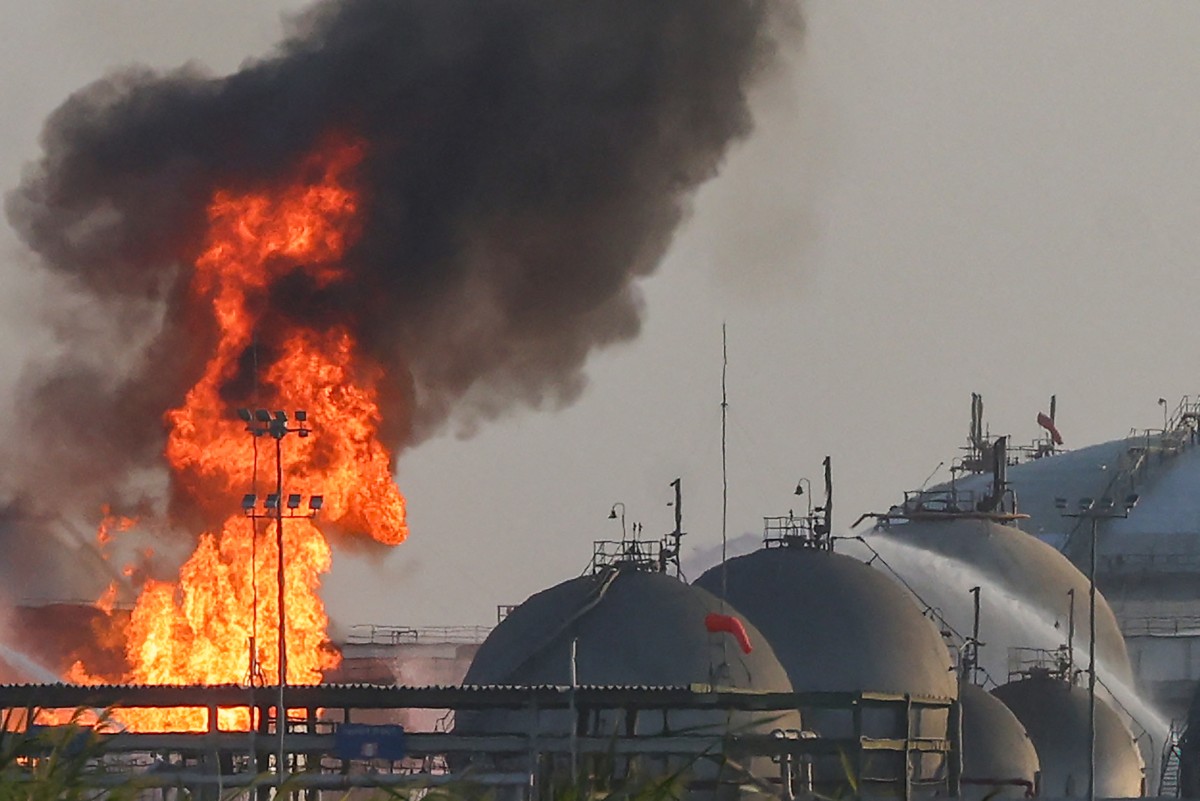
The pro-Iranian Houthi militias targeted Aramco oil facilities in Saudi Arabia last week. (AFP)
Weekly essentials
Author portrait
By LevantTime .
Published Oct 11, 2026 - 20:22
While the U.S.-Iran front remains more or less calm, two troubling signs marked the past week: the escalation on the Yemeni front and the seizure in Lebanon of a truck carrying explosives being transported by Hezbollah militiamen, which has raised fears of further suspected assassinations ordered by their Iranian patron. With Israel’s legislative elections approaching on October 27, and as the war in the Middle East weighs increasingly heavily on the U.S. midterm elections due to take place in early November, violence persists in the region—openly or covertly—on several fronts. Apart from occasional attacks on oil tankers in the Strait of Hormuz, the most worrying signs emerged elsewhere this week: in Saudi Arabia, where Houthi attacks are becoming increasingly deadly, and in Lebanon, where the arrest of pro-Iranian Hezbollah militiamen in possession of half a ton of explosives has revived fears of political assassinations.
Study
Author portrait
By Saoud Al-Mawla - Published Oct 11, 2026 - 15:12
News feature image
Photo MOHAMMED HUWAIS/AFP
VI. The War Against Iran (February-June 2026): the “Limited Intervention” A Late and Symbolic Entry On February 28, 2026, the United States and Israel attacked Iran. Very quickly, Tehran largely closed the Strait of Hormuz, reducing Gulf exports to a trickle. Many expected the Houthis to open a second front at Bab el-Mandeb. They did not. Their involvement was cautious, gradual and late: it was not until March 28, one month after the war began, that they fired their first missiles toward Israel, as though they had waited for the moment when their entry would have the greatest impact. Their operations were limited to missile and drone launches toward Israel. Their military effect was modest, given the distance and the effectiveness of Israeli air defenses. Above all, they avoided high-impact fronts: no campaign against shipping in the Red Sea, no strikes against the Gulf monarchies or regional energy infrastructure. The media dimension compensated for this: each launch sustained the image of a “resistance” force loyal to the Axis. These launches were suspended with the Islamabad Memorandum, concluded in June between Washington and Tehran.
Opinion
Author portrait
By Youssef Mouawad - Published Oct 11, 2026 - 12:53
News feature image
In the current Syrian context, a fundamental question arises with particular urgency: who called for the return of the Golan? Who else could it be but Syrian President Ahmed al-Charaa? But why on earth did the Syrian president reopen the Golan “cold case” when he had so many other priorities to deal with? In his view as a former jihadist, appealing to world opinion at the UN General Assembly meeting on September 23 was not merely a reminder of the Israeli-Syrian dispute dating back to June 1967. So what got into him, when in an interview the previous day he had stressed that direct Israeli-Syrian negotiations had taken place under U.S. auspices and that the two sides had reached 90% of a security agreement? (1)
More Articles
Sort By: NewestOldest
The Last Taboo Has Fallen: Lebanon Will Not Be the Last to Sign a Peace Agreement!

Direct negotiations between Lebanon and Israel have officially begun with the aim of reaching a peace agreement. Their fundamental condition is the disarmament of Hezbollah. Other points, both essential and secondary, are on the table, notably economic cooperation enabling both countries to move forward on the path to recovery, the reconstruction of South Lebanon, and security and stabilization on Israel's northern border. Before going into detail and analysis, before examining the various perspectives, and before reviewing the events that have led Lebanon to pay the heaviest price in the Arab-Israeli conflict for over half a century, a simple question arises: what is the alternative to peace with Israel, to Lebanon's recovery, and to the country's reconstruction? There is no clear answer. The state has been absent for decades, and the Iranian militia based in Lebanon decides, unilaterally, when to launch a war, when to conclude a truce, when to negotiate, when to support Gaza, when to provoke Israel, or when to destabilize neighboring Arab countries. It builds tunnels to continue the wars instead of constructing shelters and hospitals. Until the day Hezbollah trapped itself in a strategic dead end. The war it instigated to serve the Iranian project under the slogan of "unity of fronts" is one it can no longer end. Tehran has gradually withdrawn the cover it provided to Hezbollah. It seeks to buy time to preserve the regime and maintains Hezbollah for future use. But Israel now refuses to tolerate any continued threat posed by Hezbollah. He pushed this militia back north of the Litani River, which proved simpler than carrying out Nabih Berri's famous quip to his visitors, who were warning him about the deteriorating situation, suggesting that the Litani River should be moved to the border with Israel! As a result, Hezbollah is no longer acting according to the old rules of deterrence. In fact, it isn't reacting at all. It has endorsed a truce, but a truce is merely a respite between two wars. The Lebanese leaders, long absent and hesitant, even overwhelmed by the de facto reality, have finally woken up. They have taken the initiative, but hesitated, then failed to follow through. What they will not accomplish, Israel will do in their place—but the price to pay will be far higher.

The Levant in Turmoil: Lebanese and Syrian Perspectives (2/3)

The Levant has, over the past two years, witnessed profound and dramatic upheavals that have reshaped the region’s geopolitical landscape. The chain of events set in motion since Hamas’s deadly attack on Israel from the Gaza Strip on 7 October 2023 seems to have paved the way for the emergence of a new Middle East, as Israel’s Prime Minister, Benjamin Netanyahu, repeatedly asserts. As 2025 draws to a close, what overall picture, what prospects, and what political and security assessment can be made of this region? By stepping back and looking at the wider picture, it becomes easier to examine closely the developments under way and the sweeping changes that have unfolded across Lebanon, Syria, Israel, Gaza (and the Palestinian territories), as well as Iran.

Lebanon, a land of encounter, a land of Christian unity

“Thank you for coming” is probably one of the phrases Leo XIV heard most often during his stay in Lebanon. For many, the popular welcome given to the Pope came as a surprise. Leo XIV praised the “simplicity” of our faith. He must have rediscovered in Lebanon something of the faith of the peasants of Peru, that of a people untouched by the intellectual sophistication of the West. “Wow! Thank you to Peru, and especially to Chiclayo, for having so beautifully shaped this man of God, so full of zeal and compassion,” wrote a retired engineer on Facebook who spent three days glued to the television. Mother Marie Makhlouf, the superior of the Sisters of the Cross, and the two women who received the comfort of his embrace, in Bkerké and at the port, would certainly agree. Now, Pope Leo XIV knows Lebanon intimately, and the people saw the joy of the encounter on their faces.

A Policy of Denial and Collective Suicide
By
Jawad Pakradouni
Published

In the French baccalaureate history textbook, there's a chapter on page 138 entitled "The Birth of the State of Israel." However, strangely enough, it jumps from page 137 to page 140, with the two pages of the aforementioned chapter stuck together. This way, our children will be spared learning about the creation of a country that our own refuses to recognize, and therefore doesn't officially exist… Imagine the results on the baccalaureate exam if this topic is ever asked. Meanwhile, the army of this non-existent country is decimating everything in its path or during its overflights. One might conclude that we are being attacked by ghosts or spirits. We don't need regular forces or so-called paramilitary "resistance," but an exorcist.

Syria, Between Challenges and Opportunities: A New Beginning (1/4)

On December 8, 2024, the regime of Bashar al-Assad fell in Syria. After more than fifty years of bloody dictatorship and thirteen years of civil war that left more than 600,000 dead and displaced more than a quarter of the population, a new wind is blowing across Syria, bringing with it a wave of optimism. As in every country left in ruins after a civil war, in Syria, everything needs to be rebuilt. Thanks to its geographical location, its wealth of natural resources, and the support of the Gulf states, the new Syria of Ahmad el-Sharaa presents numerous opportunities. But at the same time, the country must face many challenges, particularly in terms of security and socio-political stability.

Lifting of Sanctions on Syria: early Signs of the Country’s Reconstruction

On November 6 th , the United Nations Security Council, driven by the United States, voted to lift UN sanctions against Syrian President Ahmad el-Chareh. This measure followed a similar decision earlier in the summer, when both the United States and the European Union ended their sanctions against Bashar el Assad’s Syria, which had been imposed during the civil war that began in 2011. The general lifting of sanctions will allow Syria to reintegrate into the Arab sphere and the global economy, paving the way for renewed investment and the reconstruction of the country. The Caesar Act The most emblematic measure among the sanctions targeting Assad’s Syria was the adoption of the Caesar Act by the United States in 2019. The law was named after a Syrian military photographer who smuggled out more than 50,000 photographs documenting abuses committed by the Baathist regime during the civil war.