
Levant Time logo

Articles

News feature image
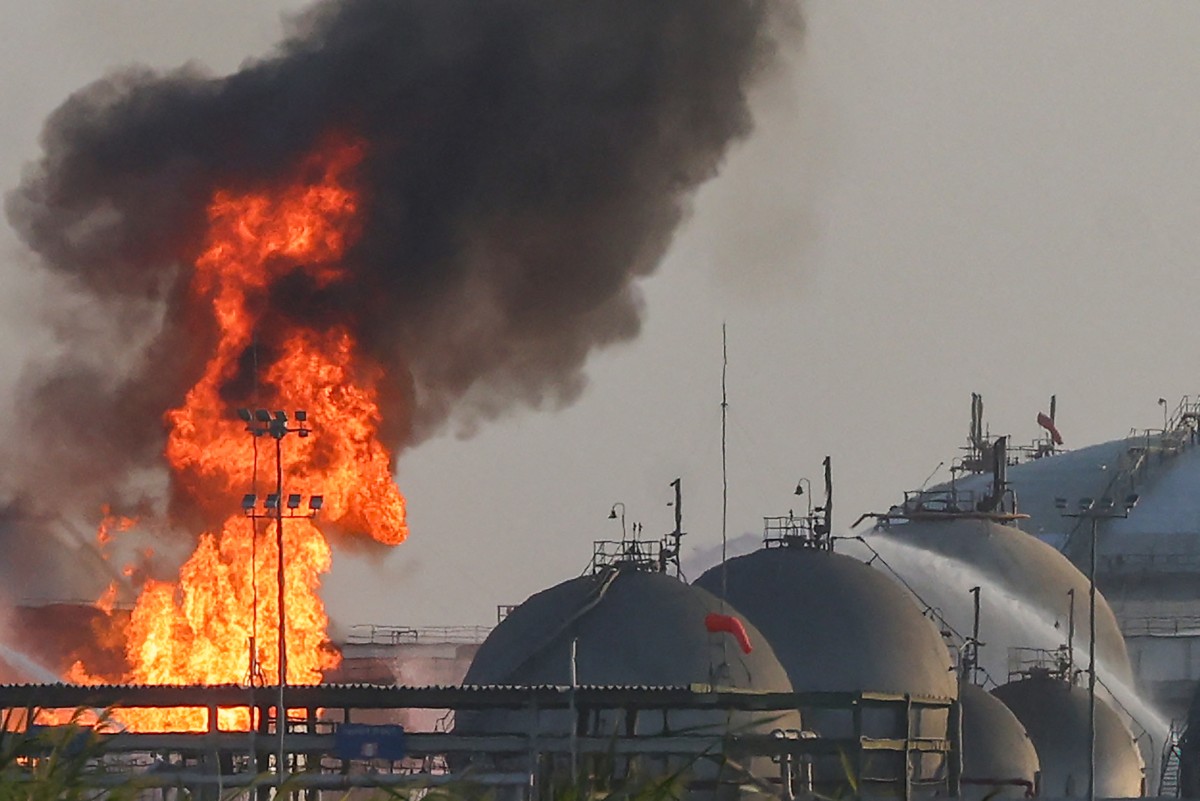
The pro-Iranian Houthi militias targeted Aramco oil facilities in Saudi Arabia last week. (AFP)
Weekly essentials
Author portrait
By LevantTime .
Published Oct 11, 2026 - 20:22
While the U.S.-Iran front remains more or less calm, two troubling signs marked the past week: the escalation on the Yemeni front and the seizure in Lebanon of a truck carrying explosives being transported by Hezbollah militiamen, which has raised fears of further suspected assassinations ordered by their Iranian patron. With Israel’s legislative elections approaching on October 27, and as the war in the Middle East weighs increasingly heavily on the U.S. midterm elections due to take place in early November, violence persists in the region—openly or covertly—on several fronts. Apart from occasional attacks on oil tankers in the Strait of Hormuz, the most worrying signs emerged elsewhere this week: in Saudi Arabia, where Houthi attacks are becoming increasingly deadly, and in Lebanon, where the arrest of pro-Iranian Hezbollah militiamen in possession of half a ton of explosives has revived fears of political assassinations.
Study
Author portrait
By Saoud Al-Mawla - Published Oct 11, 2026 - 15:12
News feature image
Photo MOHAMMED HUWAIS/AFP
VI. The War Against Iran (February-June 2026): the “Limited Intervention” A Late and Symbolic Entry On February 28, 2026, the United States and Israel attacked Iran. Very quickly, Tehran largely closed the Strait of Hormuz, reducing Gulf exports to a trickle. Many expected the Houthis to open a second front at Bab el-Mandeb. They did not. Their involvement was cautious, gradual and late: it was not until March 28, one month after the war began, that they fired their first missiles toward Israel, as though they had waited for the moment when their entry would have the greatest impact. Their operations were limited to missile and drone launches toward Israel. Their military effect was modest, given the distance and the effectiveness of Israeli air defenses. Above all, they avoided high-impact fronts: no campaign against shipping in the Red Sea, no strikes against the Gulf monarchies or regional energy infrastructure. The media dimension compensated for this: each launch sustained the image of a “resistance” force loyal to the Axis. These launches were suspended with the Islamabad Memorandum, concluded in June between Washington and Tehran.
Opinion
Author portrait
By Youssef Mouawad - Published Oct 11, 2026 - 12:53
News feature image
In the current Syrian context, a fundamental question arises with particular urgency: who called for the return of the Golan? Who else could it be but Syrian President Ahmed al-Charaa? But why on earth did the Syrian president reopen the Golan “cold case” when he had so many other priorities to deal with? In his view as a former jihadist, appealing to world opinion at the UN General Assembly meeting on September 23 was not merely a reminder of the Israeli-Syrian dispute dating back to June 1967. So what got into him, when in an interview the previous day he had stressed that direct Israeli-Syrian negotiations had taken place under U.S. auspices and that the two sides had reached 90% of a security agreement? (1)
More Articles
Sort By: NewestOldest
Leon XIV and the Lebanese Exception
By
Youssef Mouawad
Published

What a source of concern—and even of irritation—for Roman authorities, these Eastern Catholics do indeed generate! Had they vanished from the Levant, diplomatic relations between Rome and the Muslim countries of the Eastern Mediterranean would have been far smoother. That being said , things were never simple for Vatican diplomacy, on dealing deal with the Maronite community. Very early on, the Maronites asserted themselves politically as an autonomous entity rooted in a mountain stronghold, and what is more they never hesitated in insisting upon their distinctiveness. This set them apart from the other Christian communities of Syria and Iraq, which had long submitted to the rule of the majority and produced, for the most part, quiet individuals and compliant citizens.

The Pope in Lebanon: Without Peace, the “Message-Country” Will Not Survive

Pope Leo XIV is set to bring a powerful message to Lebanon: “Blessed are the peacemakers.” A unifying call, with deep religious resonance, that resonate cross its religious communities, while carrying a clear political weight for a country exhausted by decades of conflict – a nation for whom the time has come to leave the tunnels of violence behind and step into the light of peace. Firstly: Supporting the Christian Presence and Affirming Its National Role This message stems from the Holy See’s careful attention to what Lebanon has endured – and continues to endure – particularly its Christian population. For the Vatican, Lebanon is the most sensitive “laboratory” in the Middle East for Muslim–Christian coexistence, and a potential model of what John Paul II, three decades ago, described as a “message-country.”

/