
Levant Time logo

Articles

News feature image
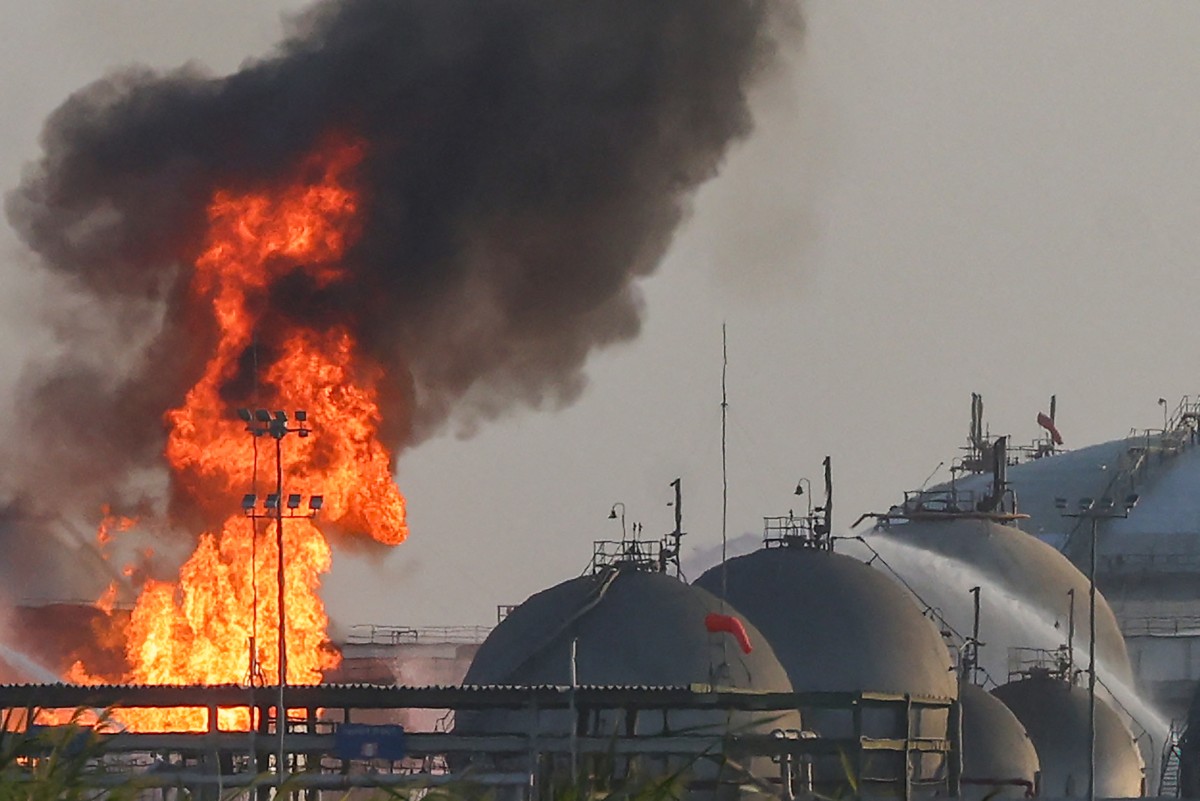
The pro-Iranian Houthi militias targeted Aramco oil facilities in Saudi Arabia last week. (AFP)
Weekly essentials
Author portrait
By LevantTime .
Published Oct 11, 2026 - 20:22
While the U.S.-Iran front remains more or less calm, two troubling signs marked the past week: the escalation on the Yemeni front and the seizure in Lebanon of a truck carrying explosives being transported by Hezbollah militiamen, which has raised fears of further suspected assassinations ordered by their Iranian patron. With Israel’s legislative elections approaching on October 27, and as the war in the Middle East weighs increasingly heavily on the U.S. midterm elections due to take place in early November, violence persists in the region—openly or covertly—on several fronts. Apart from occasional attacks on oil tankers in the Strait of Hormuz, the most worrying signs emerged elsewhere this week: in Saudi Arabia, where Houthi attacks are becoming increasingly deadly, and in Lebanon, where the arrest of pro-Iranian Hezbollah militiamen in possession of half a ton of explosives has revived fears of political assassinations.
Study
Author portrait
By Saoud Al-Mawla - Published Oct 11, 2026 - 15:12
News feature image
Photo MOHAMMED HUWAIS/AFP
VI. The War Against Iran (February-June 2026): the “Limited Intervention” A Late and Symbolic Entry On February 28, 2026, the United States and Israel attacked Iran. Very quickly, Tehran largely closed the Strait of Hormuz, reducing Gulf exports to a trickle. Many expected the Houthis to open a second front at Bab el-Mandeb. They did not. Their involvement was cautious, gradual and late: it was not until March 28, one month after the war began, that they fired their first missiles toward Israel, as though they had waited for the moment when their entry would have the greatest impact. Their operations were limited to missile and drone launches toward Israel. Their military effect was modest, given the distance and the effectiveness of Israeli air defenses. Above all, they avoided high-impact fronts: no campaign against shipping in the Red Sea, no strikes against the Gulf monarchies or regional energy infrastructure. The media dimension compensated for this: each launch sustained the image of a “resistance” force loyal to the Axis. These launches were suspended with the Islamabad Memorandum, concluded in June between Washington and Tehran.
Opinion
Author portrait
By Youssef Mouawad - Published Oct 11, 2026 - 12:53
News feature image
In the current Syrian context, a fundamental question arises with particular urgency: who called for the return of the Golan? Who else could it be but Syrian President Ahmed al-Charaa? But why on earth did the Syrian president reopen the Golan “cold case” when he had so many other priorities to deal with? In his view as a former jihadist, appealing to world opinion at the UN General Assembly meeting on September 23 was not merely a reminder of the Israeli-Syrian dispute dating back to June 1967. So what got into him, when in an interview the previous day he had stressed that direct Israeli-Syrian negotiations had taken place under U.S. auspices and that the two sides had reached 90% of a security agreement? (1)
More Articles
Sort By: NewestOldest
Bashar al-Assad Still Haunts Damascus
By
Michel Hajji Georgiou
Published

One year to the day, Bashar al-Assad collapsed, dragging down with him half a century of dynastic tyranny, disguised as modernist “secularism” and as a bulwark against chaos. Good riddance. Good riddance to a regime that turned Syrians into the raw material of an industry of terror, in the name of a pseudo-Arabism grafted onto the so-called “alliance of minorities,” alternately handed over to Iran and Russia, and, ultimately, so convenient for Israel. Good riddance to a power that transformed the Alawite community into both a human shield and a commercial asset, and that survived only by incarcerating “God Himself” in the underground hell of Saydnaya. Good riddance, too, to the comforting fiction according to which barbarism was the price to pay to avoid something far worse: chaos, Islamism, a war of all against all. Syria paid the highest price to prove that the worst option was him.

God's party must be disarmed, but above all "de-Hezbollahized"

Even under heavy bombardment, even upon being chased by Syrian revenge or international justice, Hezbollah’s zealots will never dissolve into the national melting pot. They will not behave like the partisans of the Amal Movement, who are so typically Lebanese in their flaws, their rhetoric, their compromises and convenient settlements. And there is indeed some reason for that, as our contemporary history offers a precedent that still raises doubts. No one has forgotten what happened to the Lebanese Forces upon accepting the Taif Agreement and laying down their arms. They paid the heavy price: their leader was imprisoned, and their cadres were persecuted and even liquidated.

Syria Between Challenges and Opportunities: Security, Reconstruction, and Reintegration (2/4)

In our previous article, we explored Syria’s various economic assets. Thanks to its fertile land and strategic location, Damascus holds major—yet largely untapped—economic potential. Moreover, the fall of Bashar al-Assad’s regime in December 2024, the rise of Ahmad al-Shareh to power, the lifting of U.S. and European sanctions, and the Syrian-Saudi summit held in July 2025 have launched a new dynamic of reconstruction and reintegration into the Arab sphere and international trade. But not everything is rosy in post-Assad Syria, and many challenges still lie ahead. Security The new leadership’s first and enduring challenge remains security. After more than 13 years of civil war, during which sectarian and ethnic factions fought relentlessly, the country is still plagued by sectarian-driven unrest, particularly along the coast and in Sweida. Added to this are recurring clashes along the Lebanese border with groups affiliated with Hezbollah, as well as Israeli airstrikes.

The Arab Gulf States and Their Cultural Rise
By
Micha Moussallem
Published

A quick glance at the developing cultural and artistic landscape in the Gulf countries reveals the colossal resources devoted to a wide range of often lavish and avant-garde projects aimed at promoting art and culture, on bases that may vary from one country to another. A similar enthusiasm is evident across the board, reflecting a shared desire for openness and exchange with the world of culture and art. All of these projects undoubtedly serve to promote a kind of "cultural diplomacy"—if one can call it that—and to boost the cultural influence of these countries on an international scale. However, it would be a mistake to reduce the achievements already made and those already planned to a mere marketing exercise. Beyond the somewhat grandiose scale of the projects underway, other, far more important motivations are at play.

The Levant: Let Us Dare to Hope for Peace
By
Jawad Pakradouni
Published

The following question was posed to one of the artificial intelligence programs: Has the Levant ever experienced a true period of peace since its existence? The answer is grim. The region has known periods of calm, but never lasting peace. The only period that can be described as stable was the Pax Romana , from the first to the third century. A peace imposed by the sword, a pax manu militari . A peace at the price of blood, the toll of which even artificial intelligence would be unable to assess. The various conflicts were motivated primarily by religious reasons, linked to other political or territorial considerations.

Europe Facing Its Demons
By
Michel Hajji Georgiou
Published

No — the war unleashed by Russia against Ukraine cannot be dismissed as a peripheral disturbance or reduced to a mere dispute over territory, whatever the assorted Putinists would have us believe. The Russian aggression exposes a deeper fracture: a clash between two visions of the world. On one side, freedom and the rule of law; on the other, the nostalgia for an imperial order, resurrected under the guise of a mythologized “golden age,” built upon domination and terror. What unfolds today upon Ukrainian soil is nothing less than the deliberate attempt to resurrect the imperial logic of Russia and to impose it as the political paradigm of this century. The battle for the Donbas is not a local skirmish. It is a test for the whole of Europe — for its courage, its memory, and its very future. Nothing less. The regime of Vladimir Putin does not merely seek to annex land. Putin aims to restore an imperial architecture with explicit historical referents: Peter the Great, Catherine II, and the idea of a “civilizational space” sanctified by the myth of the “Russian world,” wherein peoples are not political subjects but ethnic matter to be absorbed, reshaped, or erased.