
Levant Time logo

Articles

News feature image
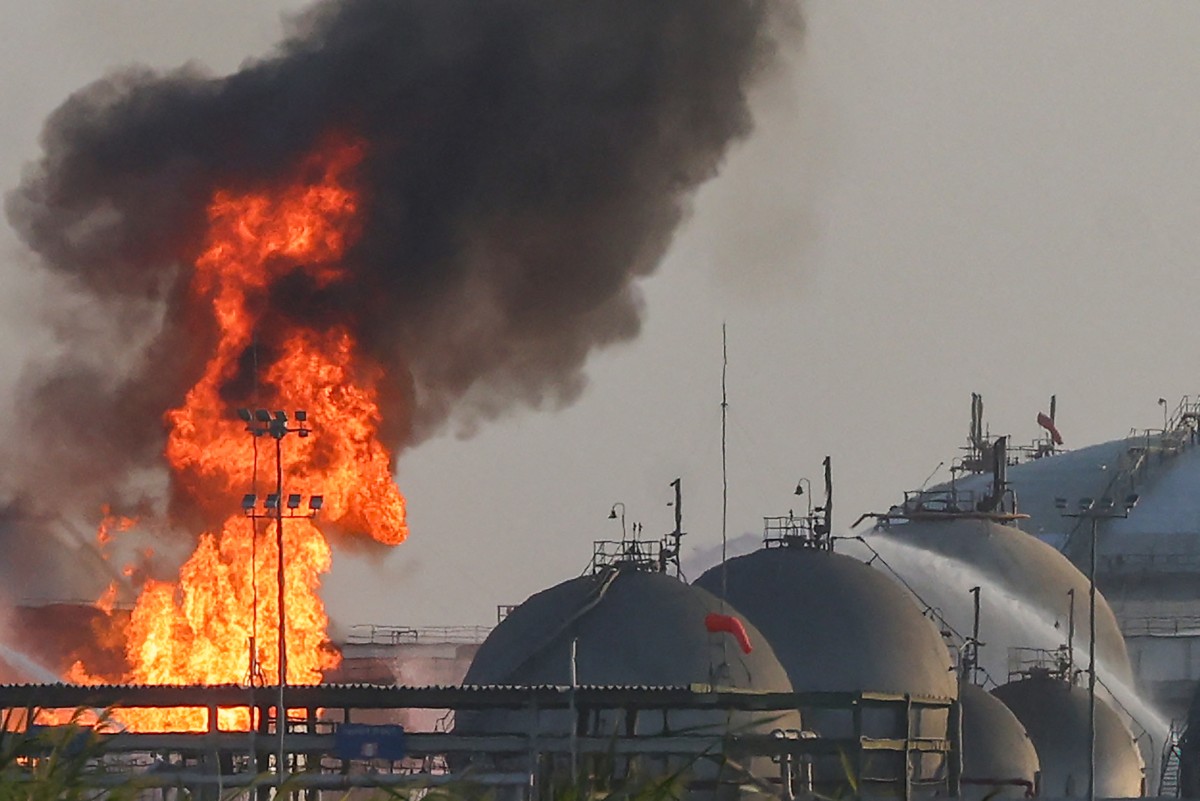
The pro-Iranian Houthi militias targeted Aramco oil facilities in Saudi Arabia last week. (AFP)
Weekly essentials
Author portrait
By LevantTime .
Published Oct 11, 2026 - 20:22
While the U.S.-Iran front remains more or less calm, two troubling signs marked the past week: the escalation on the Yemeni front and the seizure in Lebanon of a truck carrying explosives being transported by Hezbollah militiamen, which has raised fears of further suspected assassinations ordered by their Iranian patron. With Israel’s legislative elections approaching on October 27, and as the war in the Middle East weighs increasingly heavily on the U.S. midterm elections due to take place in early November, violence persists in the region—openly or covertly—on several fronts. Apart from occasional attacks on oil tankers in the Strait of Hormuz, the most worrying signs emerged elsewhere this week: in Saudi Arabia, where Houthi attacks are becoming increasingly deadly, and in Lebanon, where the arrest of pro-Iranian Hezbollah militiamen in possession of half a ton of explosives has revived fears of political assassinations.
Study
Author portrait
By Saoud Al-Mawla - Published Oct 11, 2026 - 15:12
News feature image
Photo MOHAMMED HUWAIS/AFP
VI. The War Against Iran (February-June 2026): the “Limited Intervention” A Late and Symbolic Entry On February 28, 2026, the United States and Israel attacked Iran. Very quickly, Tehran largely closed the Strait of Hormuz, reducing Gulf exports to a trickle. Many expected the Houthis to open a second front at Bab el-Mandeb. They did not. Their involvement was cautious, gradual and late: it was not until March 28, one month after the war began, that they fired their first missiles toward Israel, as though they had waited for the moment when their entry would have the greatest impact. Their operations were limited to missile and drone launches toward Israel. Their military effect was modest, given the distance and the effectiveness of Israeli air defenses. Above all, they avoided high-impact fronts: no campaign against shipping in the Red Sea, no strikes against the Gulf monarchies or regional energy infrastructure. The media dimension compensated for this: each launch sustained the image of a “resistance” force loyal to the Axis. These launches were suspended with the Islamabad Memorandum, concluded in June between Washington and Tehran.
Opinion
Author portrait
By Youssef Mouawad - Published Oct 11, 2026 - 12:53
News feature image
In the current Syrian context, a fundamental question arises with particular urgency: who called for the return of the Golan? Who else could it be but Syrian President Ahmed al-Charaa? But why on earth did the Syrian president reopen the Golan “cold case” when he had so many other priorities to deal with? In his view as a former jihadist, appealing to world opinion at the UN General Assembly meeting on September 23 was not merely a reminder of the Israeli-Syrian dispute dating back to June 1967. So what got into him, when in an interview the previous day he had stressed that direct Israeli-Syrian negotiations had taken place under U.S. auspices and that the two sides had reached 90% of a security agreement? (1)
More Articles
Sort By: NewestOldest
Pope Leo XIV: The Land of the Cedar Has Adopted You…!

Your Holiness, You kindly chose this country of the Levant as your first destination after your election as head of the Catholic Church. We thank you for that! Your presence here resembled the shadow of a white cloud gliding through a dark sky that has been overcast for far too long, letting its light shine upon this geographical space described in history books as the land of milk and honey, the land of hospitality and conviviality, the land of the eternal Cedar—majestic, strong, and unwavering. A land of encounter and exchange among cultures and diverse communities; a land of life, love, and peace, regularly attacked and often violated.

The Abrahamic Family House, for a world of tolerance and peace

In 2019, Pope Francis was the first pope to make an official visit to Abou Dhabi. During this visit, Pope Francis and the Grand Imam of Al Azhar, Dr. Ahmed Al Tayeb, made history by jointly signing a document on human fraternity calling for tolerance, universal peace, and reconciliation between all religions. To commemorate this historical visit and in line with the charter of human fraternity, the government of the United Arab Emirates decided to build on Saadiyat Island the Abrahamic Family House, an architectural space of nearly 6,000 square meters dedicated to the three monotheistic religions. Inaugurated in 2023, it includes a church, a mosque, and a synagogue, as well as a forum.

Nostra Aetate, cornerstone of interreligious dialogue – The Roots (1)

The Vatican and the global Catholic community, including Lebanon, are currently marking the 60th anniversary of Nostra Aetate , the declaration promulgated by Pope Paul VI on the Catholic Church’s relationship with non-Christian religions. In Lebanon, a conference was held in Bkerké on November 8 to commemorate the event. The statement has often been called prophetic , and rightly so. It was written at a moment when, despite growing contact between peoples through modern transport and communication, religion was increasingly being used as a tool of violence across the five continents. The culture of religious and racial hatred had reached its darkest point in Europe during World War II, with the Holocaust and the extermination of millions of Jews by the Nazis.

A message to the entire Levant
By
Riccardo Cristiano
Published

Pope Leo gave the Lebanese what belongs to the Lebanese: recognition of their great resilience. But if we try to read his words on the serious global problem he identified for everyone through Lebanese eyes—let's say Lebanese eyes only, since he addressed these words to the whole world—we would understand that this resilience should be investigated: “A kind of pessimism and sense of powerlessness seem to have taken hold, where people are no longer able to ask themselves what they can do to change the course of history. Major decisions appear to be taken by a select few, often to the detriment of the common good, as if this were an inevitable destiny”.

What Is Integral Ecology, According to Pope Francis?

As Pope Leo XIV visits Lebanon — and with the 30th UN Climate Change Conference in Belém, Brazil, ending with few tangible results — it is worth revisiting the concept of « Integral Ecology », a central idea in Pope Francis’s 2015 encyclical « Laudato Si’ ». The document outlines a deeply human and inclusive vision of ecology — one that calls for both spiritual renewal and social justice. The term integral ecology reflects a holistic approach to the relationship between humankind and the environment. It promotes a worldview where environmental, social, cultural, and spiritual dimensions are inseparable. As the French Catholic Church site explains, this concept rests on “the conviction that ecological conversion is not confined to environmental issues alone” but also draws on hope, respect for all life, and a commitment to human dignity and fraternity. The Church, in this view, bears a moral responsibility for the care of Creation.

The "Gathering of Lebanese Shia" to the Pope: in favor of the State’s monopoly on weapons

The “Gathering of Lebanese Shia” sent a message to Pope Leo XIV stating that the Lebanese State’s exclusive control of weapons “is the essential foundation for building a strong and just State.” Supporting peace “in accordance with Arab initiatives and international legitimacy,” the Gathering stressed its commitment to “acting exclusively under the authority of the State and the rule of law, and to supporting everything that strengthens its presence.” The “Gathering of Lebanese Shia” brings together academics, journalists, senior professionals, and Shiite citizens known for their sovereigntist stance, fundamentally opposed to Hezbollah’s political project.