
Levant Time logo

Articles

News feature image
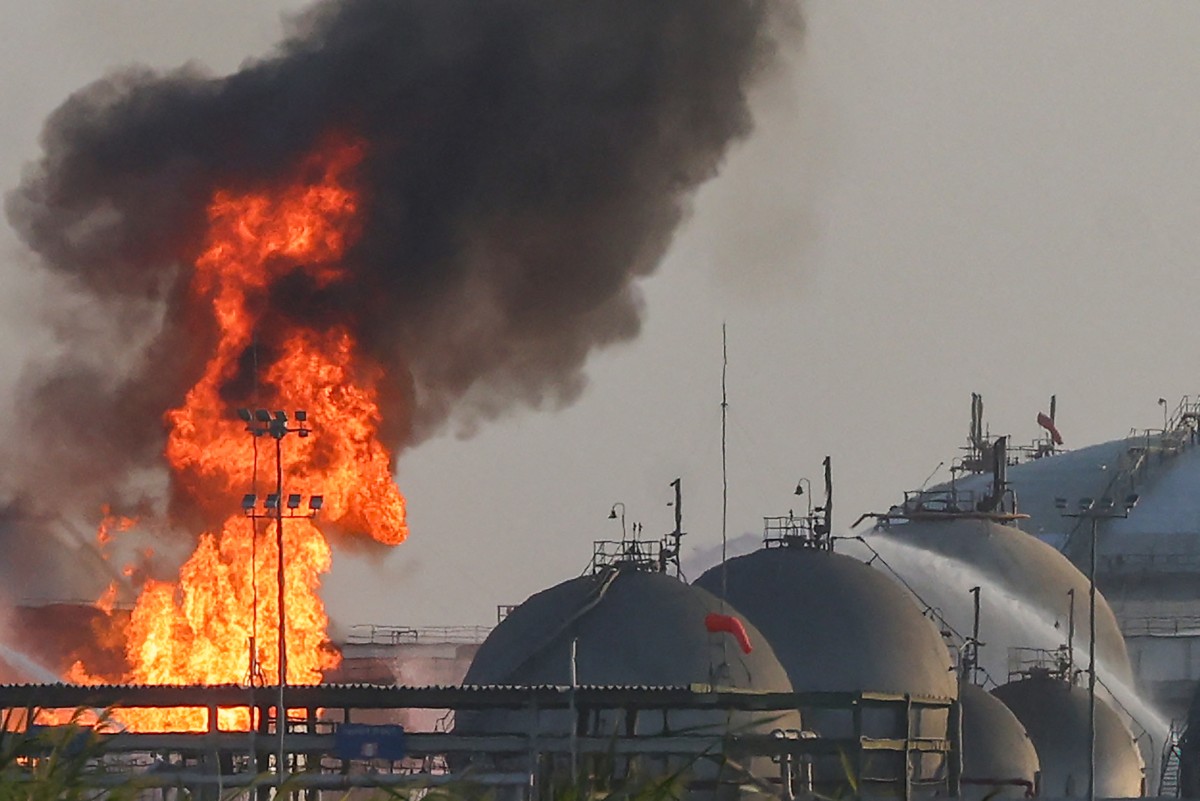
The pro-Iranian Houthi militias targeted Aramco oil facilities in Saudi Arabia last week. (AFP)
Weekly essentials
Author portrait
By LevantTime .
Published Oct 11, 2026 - 20:22
While the U.S.-Iran front remains more or less calm, two troubling signs marked the past week: the escalation on the Yemeni front and the seizure in Lebanon of a truck carrying explosives being transported by Hezbollah militiamen, which has raised fears of further suspected assassinations ordered by their Iranian patron. With Israel’s legislative elections approaching on October 27, and as the war in the Middle East weighs increasingly heavily on the U.S. midterm elections due to take place in early November, violence persists in the region—openly or covertly—on several fronts. Apart from occasional attacks on oil tankers in the Strait of Hormuz, the most worrying signs emerged elsewhere this week: in Saudi Arabia, where Houthi attacks are becoming increasingly deadly, and in Lebanon, where the arrest of pro-Iranian Hezbollah militiamen in possession of half a ton of explosives has revived fears of political assassinations.
Study
Author portrait
By Saoud Al-Mawla - Published Oct 11, 2026 - 15:12
News feature image
Photo MOHAMMED HUWAIS/AFP
VI. The War Against Iran (February-June 2026): the “Limited Intervention” A Late and Symbolic Entry On February 28, 2026, the United States and Israel attacked Iran. Very quickly, Tehran largely closed the Strait of Hormuz, reducing Gulf exports to a trickle. Many expected the Houthis to open a second front at Bab el-Mandeb. They did not. Their involvement was cautious, gradual and late: it was not until March 28, one month after the war began, that they fired their first missiles toward Israel, as though they had waited for the moment when their entry would have the greatest impact. Their operations were limited to missile and drone launches toward Israel. Their military effect was modest, given the distance and the effectiveness of Israeli air defenses. Above all, they avoided high-impact fronts: no campaign against shipping in the Red Sea, no strikes against the Gulf monarchies or regional energy infrastructure. The media dimension compensated for this: each launch sustained the image of a “resistance” force loyal to the Axis. These launches were suspended with the Islamabad Memorandum, concluded in June between Washington and Tehran.
Opinion
Author portrait
By Youssef Mouawad - Published Oct 11, 2026 - 12:53
News feature image
In the current Syrian context, a fundamental question arises with particular urgency: who called for the return of the Golan? Who else could it be but Syrian President Ahmed al-Charaa? But why on earth did the Syrian president reopen the Golan “cold case” when he had so many other priorities to deal with? In his view as a former jihadist, appealing to world opinion at the UN General Assembly meeting on September 23 was not merely a reminder of the Israeli-Syrian dispute dating back to June 1967. So what got into him, when in an interview the previous day he had stressed that direct Israeli-Syrian negotiations had taken place under U.S. auspices and that the two sides had reached 90% of a security agreement? (1)
More Articles
Sort By: NewestOldest
Jean-Claude Guillebaud and the Spiritual Question of Evil

All the thinkers and political leaders who continue to reflect on the unveiling of the countless facets of the Lebanese war, all those drawn to what Michel de Certeau called “cultural poaching, through which non-specialists and the dominated fashion a space of their own,” were struck by the passing, on November 8, of a friend and leading figure who was, and will remain, the essayist Jean-Claude Guillebaud (1944–2025). A journalist and editor, winner of the Albert Londres Prize in 1972, a great reporter and war correspondent (notably for Le Monde, Sud-Ouest, La Vie, among others) for more than two decades, and co-founder and president of Reporters Without Borders (RSF) from 1987 to 1993, Guillebaud authored some forty reports and essays, dazzling in the richness of their references. An editor with a luminous instinct, curious about everything, his books leave one with the impression that he had read everything, noted everything.

Between Europe and China, the Tone Is Changing
By
Jacques Mechelany
Published

On December 7, 2025, Emmanuel Macron did something no European leader had openly done in three decades of carefully managed relations with Beijing: he spoke plainly. Hours after returning from his fourth official visit to China, the French president stated in an interview with Les Échos that Europe’s trade relationship with China had become “unsustainable.” China, he warned, was “killing its own customers.” European industry, he said, was facing a question of “life or death.” This was not the language of diplomacy. It was the language of strategic alarm. For thirty years, Europe had wrapped its relationship with China in carefully chosen euphemisms: strategic partnership, mutually beneficial trade, win-win cooperation. Macron’s words marked a rupture. They acknowledged what had long been visible in the data but absent from political discourse: Europe has become the adjustment variable in a global economic system increasingly shaped by Chinese overcapacity and American protectionism.

The Gulf States: From Oil to Power (1/3)
By
Jean-Patrick Dayras
Published

Power is imposing one's will: to do, to make others do, to prevent doing, to compel others to do (Raymond Aron). The Gulf States emerged and grew wealthy thanks to the exploitation of their natural resources—oil and gas—particularly since what was later called the first oil shock of 1973. This shock was significant for what is commonly referred to as the West, namely North America and Europe, even though at that time in the 1970s a large part of Europe was not, by any means, part of the European Union and was still subject to the Soviet yoke and, equally, to that of communism for nearly another twenty years.

Spotlight on the regime's orientations
By
Jad Akhawi
Published

President Joseph Aoun's meeting with a delegation from "Journalists for Freedom" was not merely a protocolary occasion or a platform for conveying declared positions. Rather, it constituted a political event in its own right, its significance extending beyond the content of the speeches to what it reveals about the presidency's mindset, priorities, and the boundaries of engagement it chooses at this stage. The most important aspect of the meeting is not "what the president said," but why he said it, how he said it, and to whom. First: The meeting as a political act, not a media gathering The choice of a media delegation—neither partisan nor diplomatic—reflects a conscious decision to manage the political situation directly through public opinion. The presidency is not addressing a specific adversary, but rather an environment saturated with leaks and rumors, and it treats the media as a partner in shaping the political climate, not merely a conduit.

“Nostra aetate”: the spirit of truth working beyond the visible boundaries of the Church (4/4)

From biblical meals to the Eucharist, and, more recently, to the dialogue in Abu Dhabi, Christian fraternity is lived through conviviality and sharing. This is the fourth and final installment of our series. Christianity is, at its heart, convivial. One need only note how many of the Gospel’s most striking scenes unfold around a meal, and how much teaching the Lord delivers at the table. It is a place of shared hospitality, of upended social boundaries, of joyful fraternity and communion. At the Eucharist – the central event of Christian life – the table becomes an altar. It was over a meal that the idea for the 2019 Abu Dhabi Document on Human Fraternity was born, co-signed by Pope Francis and Sheikh Ahmad al-Tayyeb, Grand Imam of al-Azhar. According to America Today (1 December 2020; see also the Egyptian site albawaba), the meal took place in May 2016, following a working session in the Vatican Library. The discussion marked a renewal of dialogue between the Catholic Church and al-Azhar, the great Sunni institution, after several years of tension. Relations between the Holy See and al-Azhar had broken off following the attack on the Coptic cathedral in Alexandria on 1 January 2011: Benedict XVI had stressed the need to protect Christians in Egypt and across the Middle East – a statement that the Egyptian institution regarded as undue Western interference.

Why Disarmament Remains Unlikely
By
Youssef Mouawad
Published

Yahya Sinwar died without laying down his arms. For some who praise him, this fugitive fought with pride until his last breath. He may now serve as a model to emulate for Hezbollah’s fighters. Like him—and before him—there was Saddam Hussein, unflinching before the gallows. And with that, you expect Hezbollah to surrender its weapons and submit to conditions imposed upon him… Living Dangerously Al-silah zinat al-rijal (that is, “weapons are the adornment of men”), a slogan repeated in South Lebanon, a region where a whole generation has tasted the brotherhood of arms. Military operations have given combatants a taste for the “heroic life,” an addiction one does not escape unscathed. An addiction the majority of Lebanese do not share. Moreover, the emblematic figure of al-Hussein, who fell with weapons in hand, makes any idea of capitulation odious, if not impious.