
Levant Time logo

Articles

News feature image
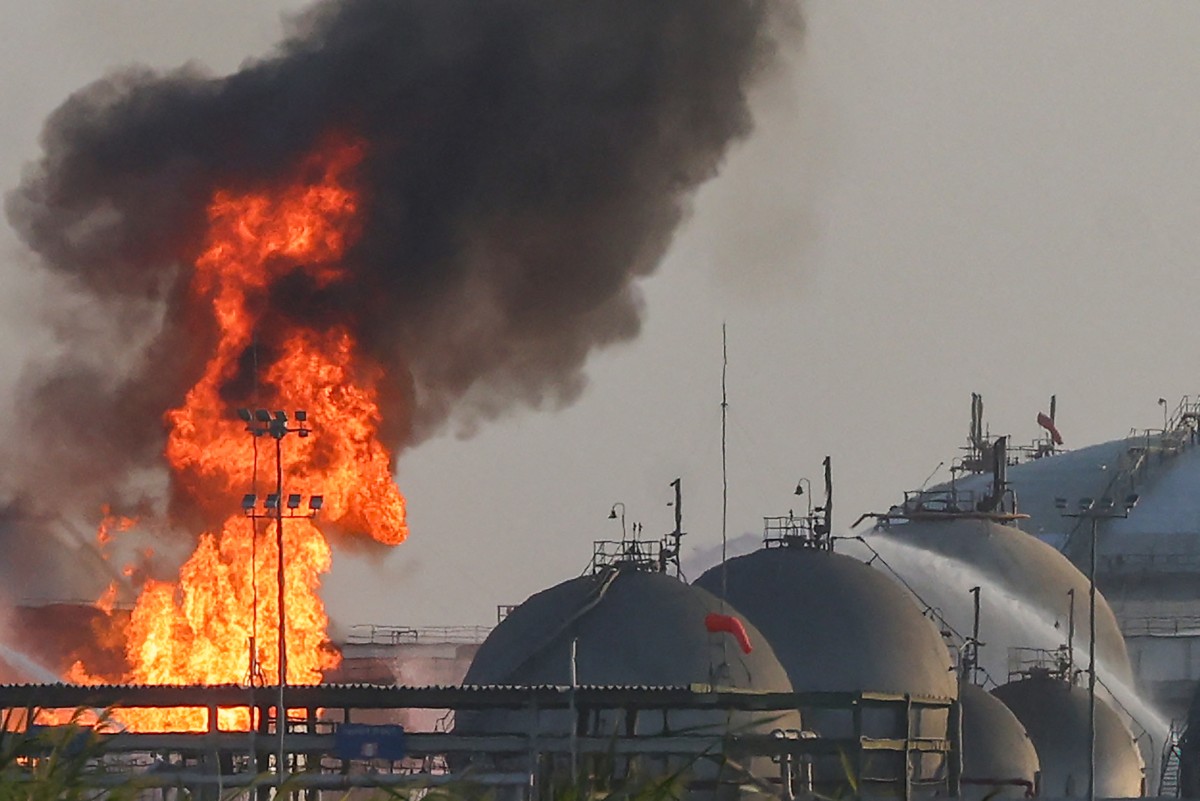
The pro-Iranian Houthi militias targeted Aramco oil facilities in Saudi Arabia last week. (AFP)
Weekly essentials
Author portrait
By LevantTime .
Published Oct 11, 2026 - 20:22
While the U.S.-Iran front remains more or less calm, two troubling signs marked the past week: the escalation on the Yemeni front and the seizure in Lebanon of a truck carrying explosives being transported by Hezbollah militiamen, which has raised fears of further suspected assassinations ordered by their Iranian patron. With Israel’s legislative elections approaching on October 27, and as the war in the Middle East weighs increasingly heavily on the U.S. midterm elections due to take place in early November, violence persists in the region—openly or covertly—on several fronts. Apart from occasional attacks on oil tankers in the Strait of Hormuz, the most worrying signs emerged elsewhere this week: in Saudi Arabia, where Houthi attacks are becoming increasingly deadly, and in Lebanon, where the arrest of pro-Iranian Hezbollah militiamen in possession of half a ton of explosives has revived fears of political assassinations.
Study
Author portrait
By Saoud Al-Mawla - Published Oct 11, 2026 - 15:12
News feature image
Photo MOHAMMED HUWAIS/AFP
VI. The War Against Iran (February-June 2026): the “Limited Intervention” A Late and Symbolic Entry On February 28, 2026, the United States and Israel attacked Iran. Very quickly, Tehran largely closed the Strait of Hormuz, reducing Gulf exports to a trickle. Many expected the Houthis to open a second front at Bab el-Mandeb. They did not. Their involvement was cautious, gradual and late: it was not until March 28, one month after the war began, that they fired their first missiles toward Israel, as though they had waited for the moment when their entry would have the greatest impact. Their operations were limited to missile and drone launches toward Israel. Their military effect was modest, given the distance and the effectiveness of Israeli air defenses. Above all, they avoided high-impact fronts: no campaign against shipping in the Red Sea, no strikes against the Gulf monarchies or regional energy infrastructure. The media dimension compensated for this: each launch sustained the image of a “resistance” force loyal to the Axis. These launches were suspended with the Islamabad Memorandum, concluded in June between Washington and Tehran.
Opinion
Author portrait
By Youssef Mouawad - Published Oct 11, 2026 - 12:53
News feature image
In the current Syrian context, a fundamental question arises with particular urgency: who called for the return of the Golan? Who else could it be but Syrian President Ahmed al-Charaa? But why on earth did the Syrian president reopen the Golan “cold case” when he had so many other priorities to deal with? In his view as a former jihadist, appealing to world opinion at the UN General Assembly meeting on September 23 was not merely a reminder of the Israeli-Syrian dispute dating back to June 1967. So what got into him, when in an interview the previous day he had stressed that direct Israeli-Syrian negotiations had taken place under U.S. auspices and that the two sides had reached 90% of a security agreement? (1)
More Articles
Sort By: NewestOldest
Feared Assad’s Prisons Become Sets for Series

From the past tragedies to the dramatic arts. The infamous locations from the era of the Assads, father and son, are now hosting cameras and other film equipments. Whether in Saydnaya or Mazzeh, actors and directors have replaced the torturers who zealously served the interests of the former Syrian regime. Many series currently in production have chosen to film scenes at military sites or security service headquarters that symbolized the reign of terror. Like the Mazzeh airfield, which housed a detention center for the Air Force intelligence service, notorious for its cruelty. The Air Force's "Mukhabarat" were the main pillar of the regime of former pilot Hafez al-Assad, who became president of the Syrian Arab Republic for several decades.

Why Do Youssef Raggi and Simon Karam Stir Discomfort?

Foreign Minister Youssef Raggi and former ambassador Simon Karam—Lebanon’s representative at the meetings of the ceasefire supervision mechanism with Israel—clearly unsettle pro-Hezbollah circles because they herald the long-overdue return of external sovereignty. That sovereignty means a state’s refusal to submit to any higher authority and its recognition by other states as an equal. Youssef Raggi and Simon Karam come at exactly the right moment—at a time when most Lebanese have grown disillusioned with everything. Many now look back with nostalgia to the period preceding the 1975 civil war, that blessed era when the Lebanese state was master in its own house, exercising both external and internal sovereignty—that is, exclusive authority over its territory and population.

Hezbollah: From Wilayat al-Faqih to the Raouché Rock
By
Michel Hajji Georgiou
Published

The Iranian party, Hezbollah, has never been a territorial resistance. It has been a militia of spatial expansion, using territory as an argument for legitimacy. It is time to acknowledge this, once and for all. Since its inception, Hezbollah has lived with a fundamental division: it is simultaneously the armed wing of an imperial project—that of the Iranian Wilayat al-Faqih as defined by Imam Khomeini—and an actor that claims to embody the “resistance” to liberate a national territory. “Space” first: that of the Shiite ummah, from Qom to Beirut, structured around a Supreme Leader whose decisions, in matters of war and peace, are binding. Then there is the “territory”: that of South Lebanon, the Bekaa Valley, and the disputed borders, where the party presents itself as a bulwark against Israel and the guardian of a national cause. This dichotomy is not new. Upon its establishment in 1984, under the guise of “resistance to the Israeli occupation,” Hezbollah began by eliminating a significant portion of the national resistance movement stemming from the Lebanese left—Mahdi Amel and his associates. It established itself on the margins: the Bekaa Valley, South Lebanon, and the southern suburbs of Beirut. There, it built a sprawling social infrastructure financed by Iran, and later supported by Assad’s Syria within the framework of the “alliance of minorities.”

Consensual…
By
Jawad Pakradouni
Published

This term is more relevant than ever in every country in the world and has returned to its original definition: an act can only be consensual, or consented to, if it is accepted by the other party. The first example that comes to mind is the sexual act, which dominates headlines, drives trends on social media, and can annihilate a career or a vocation. As long as it applies to an act between two individuals, the term has limited consequences. But when it becomes the foundation of a policy, a society, or even the pillar of a country, that is a completely different matter. In Lebanon, everything is consensual: its democracy, its rule of law, its very existence.

The global gathering of contemporary art, “Art Basel”, soon in Doha

For several years, the Gulf States have been investing enormous resources to transform the region into a world-class artistic, technological, and educational hub. Qatar is no exception and has been doubling its efforts to attract talents from around the globe while nurturing local skills. The Qatari state continues to launch ambitious projects, whether artistic, architectural, or sporting such as the FIFA World Cup held in Qatar in 2022.To achieve this goal, the government collaborates with internationally renowned artists, high-level cultural and educational institutions, and top local and international talents.

The Gulf States, from the regional to the international stage (2/3)

The Gulf States emerged and accumulated wealth through the exploitation of their energy resources, but they have also undergone, in rapidly successive stages, a profound transformation that has enabled them to assert themselves on the international stage. Eager not to remain merely “the Gulf States,” Saudi Arabia, Bahrain, the United Arab Emirates, Kuwait, Oman and Qatar sought to move beyond a purely regional status by building on the assets they had acquired, while multiplying and developing them through a process resembling a forced march—sometimes judged excessive or unrestrained, yet reflecting a determination that has allowed them to pursue their ambitions and achieve global recognition.