
Levant Time logo

Articles

News feature image
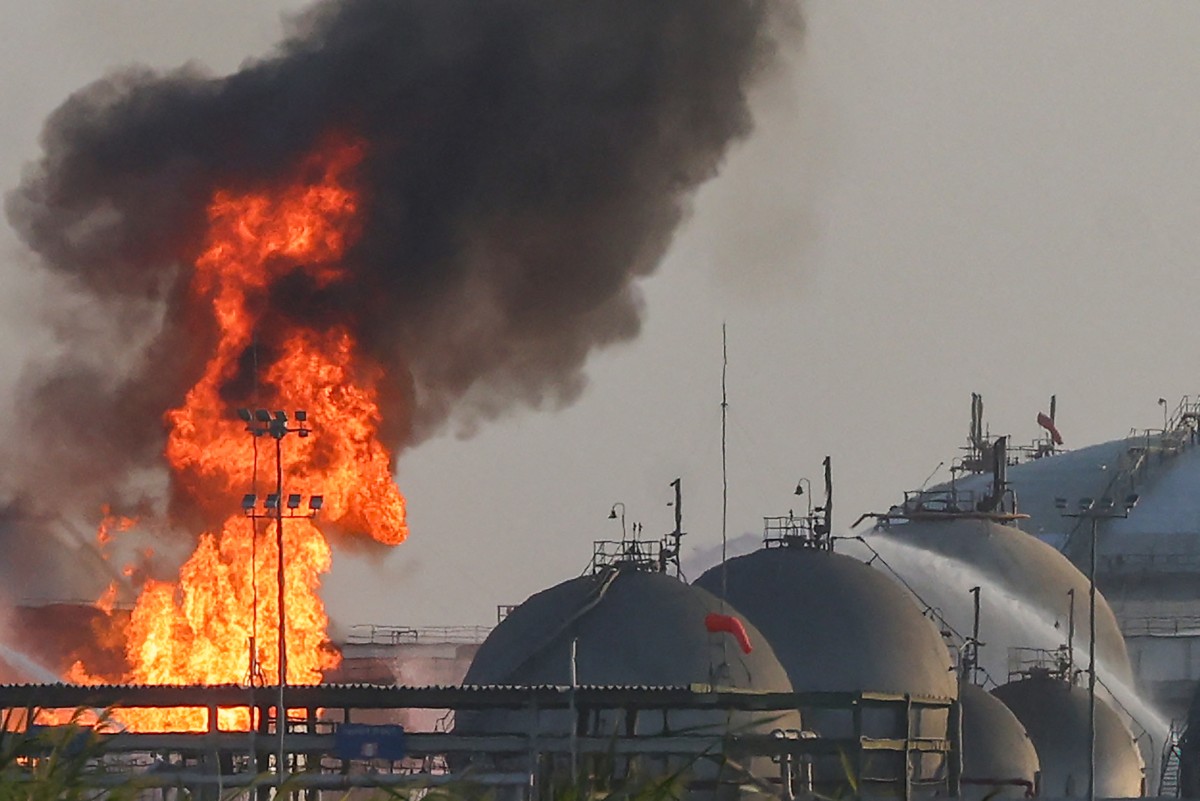
The pro-Iranian Houthi militias targeted Aramco oil facilities in Saudi Arabia last week. (AFP)
Weekly essentials
Author portrait
By LevantTime .
Published Oct 11, 2026 - 20:22
While the U.S.-Iran front remains more or less calm, two troubling signs marked the past week: the escalation on the Yemeni front and the seizure in Lebanon of a truck carrying explosives being transported by Hezbollah militiamen, which has raised fears of further suspected assassinations ordered by their Iranian patron. With Israel’s legislative elections approaching on October 27, and as the war in the Middle East weighs increasingly heavily on the U.S. midterm elections due to take place in early November, violence persists in the region—openly or covertly—on several fronts. Apart from occasional attacks on oil tankers in the Strait of Hormuz, the most worrying signs emerged elsewhere this week: in Saudi Arabia, where Houthi attacks are becoming increasingly deadly, and in Lebanon, where the arrest of pro-Iranian Hezbollah militiamen in possession of half a ton of explosives has revived fears of political assassinations.
Study
Author portrait
By Saoud Al-Mawla - Published Oct 11, 2026 - 15:12
News feature image
Photo MOHAMMED HUWAIS/AFP
VI. The War Against Iran (February-June 2026): the “Limited Intervention” A Late and Symbolic Entry On February 28, 2026, the United States and Israel attacked Iran. Very quickly, Tehran largely closed the Strait of Hormuz, reducing Gulf exports to a trickle. Many expected the Houthis to open a second front at Bab el-Mandeb. They did not. Their involvement was cautious, gradual and late: it was not until March 28, one month after the war began, that they fired their first missiles toward Israel, as though they had waited for the moment when their entry would have the greatest impact. Their operations were limited to missile and drone launches toward Israel. Their military effect was modest, given the distance and the effectiveness of Israeli air defenses. Above all, they avoided high-impact fronts: no campaign against shipping in the Red Sea, no strikes against the Gulf monarchies or regional energy infrastructure. The media dimension compensated for this: each launch sustained the image of a “resistance” force loyal to the Axis. These launches were suspended with the Islamabad Memorandum, concluded in June between Washington and Tehran.
Opinion
Author portrait
By Youssef Mouawad - Published Oct 11, 2026 - 12:53
News feature image
In the current Syrian context, a fundamental question arises with particular urgency: who called for the return of the Golan? Who else could it be but Syrian President Ahmed al-Charaa? But why on earth did the Syrian president reopen the Golan “cold case” when he had so many other priorities to deal with? In his view as a former jihadist, appealing to world opinion at the UN General Assembly meeting on September 23 was not merely a reminder of the Israeli-Syrian dispute dating back to June 1967. So what got into him, when in an interview the previous day he had stressed that direct Israeli-Syrian negotiations had taken place under U.S. auspices and that the two sides had reached 90% of a security agreement? (1)
More Articles
Sort By: NewestOldest
Misjudgment and Reversed Equation
By
Michel Touma
Published

A striking confirmation of the turning point reached by the Trump Administration in foreign policy — this, in essence and succinctly, is how several observers and analysts reacted to the United States’ National Security Strategy, released a few days ago by the White House. This major document, about thirty pages long and preceded by a foreword from President Donald Trump, sets out in detailed form the orientations and objectives Washington has defined regarding current developments in the world’s sensitive regions and the vital issues playing out on the international stage. The ideas presented by the administration’s team in the federal capital are not entirely surprising. They had already been the subject of active debate in various political and diplomatic circles, but it is likely the first time they have been assembled so comprehensively and methodically — theme by theme, region by region — in a single official document emanating from the highest levels of power.

Gebran Tueni, the School of Freedom
By
Michel Hajji Georgiou
Published

Twenty years ago, Gebran Tueini was literally pulverized in a car-bomb attack. His assassins from the Damascus–Tehran axis, together with their Lebanese accomplices, had placed him on the blacklist of “dangerous personalities” to be eliminated at all costs, insofar as the latter had managed, within a few years, to reconstitute a distinctly Lebanese idea of a plural and coherent front, one that guaranteed sovereignty and freedom. A compact front, capable of transcending the divisions inherited from the civil war and the sectarian compartmentalizations on which the axis had waltzed for decades in order to divide the Lebanese more effectively, and thereby establish itself as the authority responsible for settling the very conflicts it had itself created, according to the classic logic of the arsonist-firefighter.

The Dangerous Architecture of the AI Capex Bubble
By
Jacques Mechelany
Published

In 2006, credit markets priced U.S. housing risk as diversified. The subprime market was born. The mathematics looked safe. Reality delivered collapse — and the 2008 Global Financial Crisis. In 2025, a strikingly similar illusion has taken hold — this time in artificial intelligence. For now, AI has been largely a capital-expenditure phenomenon, dominated by a very small number of companies such as Nvidia and Oracle — the modern “shovel makers” — building chips and data centers to absorb nearly $1.5 trillion of cumulative investment by a handful of hyperscalers such as Microsoft, Meta, and Amazon. This unprecedented spending wave has driven stock prices to unimaginable heights.

"Nostra aetate”: Abu Dhabi and “Fratelli tutti”, the good fruits of dialogue (3/4)

“Nostra aetate” profoundly reshaped dialogue between Catholics and Muslims. From John Paul II to Pope Francis, the Holy See has pursued its work of encounter and fraternity. This is the third installment in our series. It is hard to overstate the impact of the 1965 declaration Nostra aetate on relations between the Catholic Church and the Arab-Muslim world. To grasp this fully, nothing is more helpful than reading the text itself, which presents no dogmatic difficulty. Here is the passage that concerns us directly: “(…) The Church regards with esteem also the Moslems. They adore the one God, living and subsisting in Himself; merciful and all- powerful, the Creator of heaven and earth,(5) who has spoken to men; they take pains to submit wholeheartedly to even His inscrutable decrees, just as Abraham, with whom the faith of Islam takes pleasure in linking itself, submitted to God. Though they do not acknowledge Jesus as God, they revere Him as a prophet. They also honor Mary, His virgin Mother; at times they even call on her with devotion. In addition, they await the day of judgment when God will render their deserts to all those who have been raised up from the dead. Finally, they value the moral life and worship God especially through prayer, almsgiving and fasting.

The Royal Opera House Muscat, between tradition and cutting-edge technology

The Muscat Opera House is one of the most iconic landmarks in Oman. It was built in 2011 at the request of Sultan Qaboos bin Said. Great lover of art and opera, the Sultan wanted to create a cultural exchange center between Oman and the rest of the world, as well as a platform to promote both global and local artistic performances. A symbol of Oman’s cultural diplomacy since its inauguration, the Royal Opera House Muscat is an architectural masterpiece which cleverly combines the classical style of opera houses with Omani architectural tradition. It successfully blends Islamic influences with contemporary design and high-tech requirements needed for such a building.

The Papal Visit and the Israeli Threat: Between Symbolism and Realities

The visit of Pope Leo XIV to Lebanon was not merely a passing religious or pastoral stop; it was a profoundly political moment in one of the region’s most sensitive phases. A visit that carried messages to Lebanon’s domestic scene as much as it carried messages outward — specifically to Israel, and to the international powers holding the threads of the regional game. Yet the question that resonated strongly after the Pope’s departure was this: Did the visit put an end to the idea of an Israeli attack on Lebanon? The answer is not simple. Between the immense symbolic value of the visit and the cold strategic calculations along the southern border, one clear truth emerges: the visit granted Lebanon a temporary psychological and political breathing space, but it did not erase the logic of war. Still, together with the escalating French diplomatic activity and the President’s visit to the Sultanate of Oman, it helped create a new political and diplomatic deterrence network — one that may slow down a decision for war, and perhaps even redraw its terms.