

The Troubling Testament of Ghassibé Keyrouz, Right-Hand Man of Nicolas Kluiters, SJ (3/3)bla

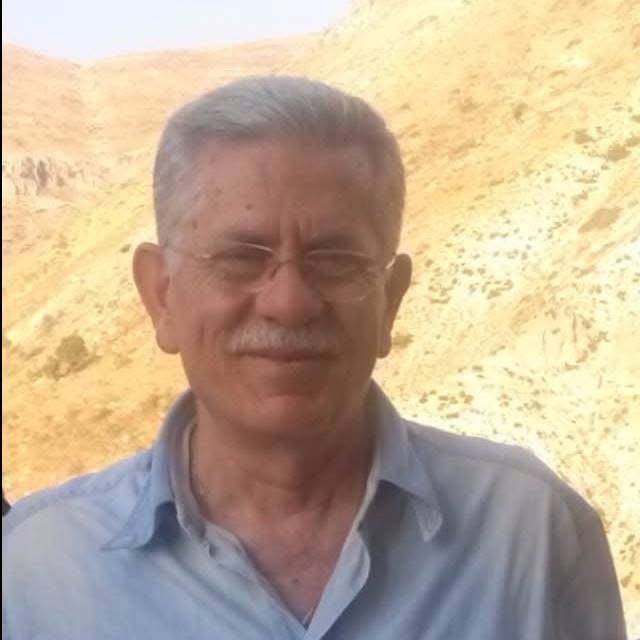
The feast of Saint Joseph (March 19), patron of the university that bears his name, brought to the mind of its new rector, Father François Boëdec, SJ, the memory of Alban de Jerphanion, the first Jesuit martyr of the seemingly endless war that erupted in Lebanon in 1975 – whose latest chapter, hoped to be the last, began unfolding in early March. Five other martyrs of that conflict fell after Father de Jerphanion. In tribute to their sacrifice, and with the publication of a new biography devoted to one of their holiest figures – the Dutch priest Nicolas Kluiters, whose cause for beatification is under way – this work is presented here, revealing previously unpublished details about the motivations of those who killed Father Nicolas. At the same time, it sheds light on the broader meaning of the gift he made to Lebanon, so that the country might endure as a model of “freedom and pluralism” for both East and West, at a moment when a heavily militarized nation threatens to strip it of a vital part of its territory, marked by the memory of Christ’s passage.
The offering of love made by Nicolas Kluiters, SJ, found an unexpected echo in that of a fellow seminarian – Ghassibé Keyrouz, a young man from the neighboring village of Nabha. Ten years his junior, Ghassibé had shown remarkable gifts as a catechist, and Nicolas had taken him under his wing, guiding him toward the priesthood. Ghassibé was killed in 1975, around Christmas, as he was on his way home to spend the holidays with his mother and sister. The day before, prompted by a mysterious premonition, he wrote and left on his desk, in his room at Notre-Dame de Jamhour College, a testamentary letter in which, sensing he might be abducted and killed, he forgave his future assailants in advance.
This remarkable letter quickly spread around the world. Here are its essential passages:
“In the name of the Father, and of the Son, and of the Holy Spirit:
“When I began writing this testament, it was as though another voice were speaking through me. These days, everyone – Lebanese and residents of Lebanon alike – lives in danger. As one of them, I see myself being kidnapped and killed on the road leading to my village of Nabha. And if this intuition proves true, I leave these words to my family, to the people of my village, and to my country. To my mother and my sisters, I say with full confidence: do not be sad or at least do not weep or grieve excessively. This absence, however long it may seem, is in truth short: We shall meet again, we shall surely meet again in the eternal dwelling of heaven. There is joy there, and sorrow if we are separated. Do not be afraid: God’s mercy will bring us all together again.
“I have only one request to make of you: forgive, with all your heart, those who have killed me. Pray with me that my blood – even if it is that of a sinner – may serve as a ransom (fidya) for Lebanon’s sin; that it may be united with that of all the victims who have fallen, from every side and every religious community, and offered as the price of peace, love, and concord, which have vanished from this country and even from the world. May my death teach people charity; may God comfort you, watch over you, and guide you through life. Do not be afraid; I do not regret this world at all. What grieves me is that you will be sad. Pray, pray, pray, and love your enemies.
“And to my country, I say: ‘The inhabitants of one house may hold different views; they do not hate one another. They may grow angry with each other, without becoming enemies; they may argue, without killing one another. Remember the days of harmony and charity; let go of those of anger and discord. Together we have eaten, drunk, and worked; together we have raised our prayers to the one God; together, we must also die. My father was the partner of a Metouali (Shiite) whom I called ‘Uncle Hussein’, a name I was found of using. They remained partners for seventy-five years without ever breaking their agreement or settling accounts. Remember this: one often cannot borrow a hundred pounds from one’s own brother; yet it is enough to turn to someone in the village – whether Metouali, Maronite, Sunni, or Druze – for them to come to one’s aid. Everyone knows this, yet sin blinds us. Each person must return to prayer, according to his belief and conscience, so that God may dispel anger and reduce to dust the schemes of the powerful of this world, on the soil of this country, which should not have to pay for their machinations with its blood…’
“In heaven, I will not rest as long as this situation in Lebanon endures.
“Let my funeral be a day of ordination, not of burial or sorrow.
“For my burial, let Father Boutros celebrate Mass, without a large gathering of priests or an official notice. If Abou-Khalil can fashion my coffin from a few old crates, that will suffice. No funeral meal. Let people forgive me… without gunfire. I am dust, yet by God’s power, I will partake in divine life. This is how it should be done.
“People will talk, but do not let that concern you. If only they had a shred of pity, they would not kill one another, nor allow the wolves to triumph over us… How deeply mistaken they are!”
An Olive Tree Watered with Blood
Nicolas was profoundly shaken by the violent death of Ghassibé Keyrouz, which occurred while he was temporarily in Europe. Keyrouz’s death would foreshadow Nicolas’s own fate, as well as that of five other Jesuits serving in Lebanon.
According to Christian Taoutel, archivist at USJ and head of its history department, the civil war also claimed the lives of Father Louis Dumas, who celebrated morning Mass and was shot by a sniper on October 25, 1975; Father Michel Allard, killed on January 15, 1976, when a shell destroyed his room; Father Alban de Jerphanion, kidnapped and murdered in March 1976 while escorting a visitor to the airport; and Father Finnegan, an American Jesuit, struck by a shell on February 26, 1984, while traveling from the Jesuit residence in Achrafieh to the Hôtel-Dieu de France to celebrate Mass. Father Finnegan treasured being with patients, insisting – even under bombardment – on visiting the sick in their rooms and sharing in their suffering. The war also claimed Father André Masse, director of the Saint Joseph University campus in Saida, who was shot on September 24, 1987, by two intruders who had entered his office, open to all. Father Joseph Nassar, SJ, who discovered André’s body bathed in blood, cleaned the floor after the initial aid and watered an olive tree he had planted with the mixture of water and blood.
Without seeking to confront the Syrian dictatorship or the monolithic Islamist ideology, even as Israel occupied part of Lebanon, Father Kluiters – an apostle of Jesus, of development, and of diversity – continued to move freely throughout the Bekaa. Indifferent to his own safety, he refused to confine himself to Barqa or accept any form of isolation that might distort Jesus’ message or render it exclusive. He was not merely serving Lebanon’s Christians, but the very principle of their “coexistence.” For this, he came to be regarded as a spy for Samir Geagea and was ultimately eliminated from a land that was no longer meant to be “a model of freedom and pluralism for East and West,” but had instead become a penal universe, a prison of thought, and a model of intolerance.
His death made Nicolas Kluiters a champion of kenosis of which the Jesuit provincial, Father Dany Younès, would speak during a ceremony honoring Father André Masse, who fell two years later. Echoing Christ’s words, “No one takes my life from me, but I lay it down of my own accord,” Dany Younès said, “Father André Masse relinquished his life to serve a country at war.” He added, “André did not come to die in Lebanon. Yes, his choice cost him his life. But that choice embodies a core value of the Society of Jesus and of Saint Joseph University. Education is always a form of emancipation, a pursuit of peace within a society at war. Remembering André Masse today urges us to nurture the same passion that animated him – the passion for humanity that challenges structures of oppression.”
No – neither André Masse, nor Nicolas Kluiters, nor any of the Society of Jesus’ members who fell victim to the war – “came to Lebanon to die.” On the contrary, they came to give life. They came so that the Lebanese – all Lebanese, without distinction of religion – might “have life and have it abundantly.” This truth must be underscored today, as a belligerent nation threatens to excise from Lebanon a territory sanctified by the passage of Christ, one that is dearer still than the Holy Valley, the Cedars, the Sea Castle, the Temple of Baalbek, and the Palace of Beiteddine combined.
Read More on the Same Topic:
– “He Died So That Lebanon Might Live,” the Ultimate Sacrifice of Father Nicolas Kluiters, SJ
– The Martyrdom of Nicolas Kluiters SJ, in Lebanon: Confronting Evil
Lionel Messi or the Re-enchantment of the World
Hassan Rifai, the Wise Rebel
Samir Kassir: Those Absences That Haunt Us
To My Brother Nassir al-Assaad
The Martyrdom of Nicolas Kluiters SJ, in Lebanon: Confronting Evil (2/3)
Mais de Fady Noun
Ver tudo


Mais em Homage
Ver tudo


O mais recente do Levant Time
Ver tudo


