

“Spiritual Desertification” in Syria: A Dire Reality (1/2)
Campaign launched to establish an International Day for Christians in the Middle East

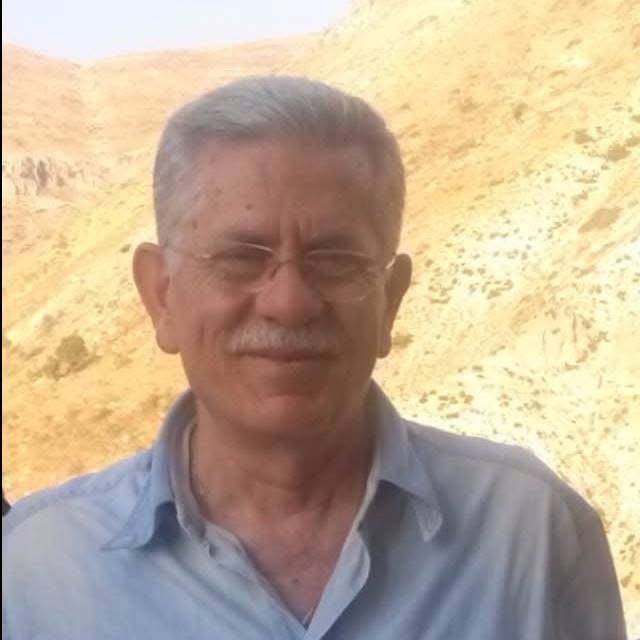
A grave situation is quietly unfolding in the Middle East, the cradle of Christianity. The region is being emptied of its Christian population. Similar processes were observed in Iraq after the 2003 U.S. invasion and in the Holy Land. Now, Syria is facing the same reality.
“The rupture is existential,” says Vincent Gelot, the representative for Lebanon, Syria, and Jordan of L’Œuvre d’Orient, a non-political organization affiliated with the French Catholic Church, which is currently campaigning to establish an International Day for Christians in the Middle East.
Using Syria as an example, Vincent Gelot says, "In fourteen years of war (2011–2025), the country has lost nearly 80 percent of its Christian population." Reliable estimates suggest that between 300,000 and 400,000 Syrian Christians remain in a population of roughly 26 to 27 million, he adds. In Aleppo, only about one-sixth of the Christians who lived there before the 2011 war are still present.
In Deir Ez-Zor, which has been 75 percent destroyed, the Christian population has fallen to just four, compared with 7,000 before the war. These figures are based on estimates rather than an official census. A reliable source within the secretariat of the Greek Orthodox Church, Syria’s largest church, suggests that the numbers are likely underestimated. However, it didn’t release any official figures. In any case, the exodus is expected to continue as long as political stability does not return and a strong economic recovery fails to materialize, according to a Maronite Church source.
In 1905, Christians accounted for about 15 percent of Syria’s population, roughly three million people, compared with 10 percent just before the conflict began in 2011. According to the figures provided by L’Œuvre d’Orient, that share has now dropped to less than 1 percent.
“This is a brutal decline that can only be compared to episodes of genocide or ethnic cleansing,” the head of L’Œuvre d’Orient emphasizes. “It is extremely rare for a local, indigenous community – in this case, Christians – to disappear so quickly and so violently.” He adds, “Of the 20 percent who remain, the community is largely elderly. More than half are over 50. In other words, the age pyramid is inverted, with a sharp drop in the number of young people relative to the elderly.”
An “Abandoned” Community
“Syrian Christians endured the war like the rest of the population, but they were also specifically targeted by ISIS. Structurally unarmed and lacking regional confessional support, the community was left to fend for itself, which explains the brutality of the exodus,” Vincent Gelot says. The June 23, 2025, attack on the Greek Orthodox Church of Saint Elias in Damascus, which killed at least 25 people and injured more than 60, starkly illustrates this vulnerability.
The Christians exodus has been compounded by three additional factors: the aftermath of the 2023 earthquake, international sanctions imposed on the Assad regime, and mandatory military service, which affected all young Syrians until the regime’s fall (in December 2024).
Based in Lebanon for the past ten years, Vincent Gelot, 37 years, lives there with his wife and their four children. He oversees 1,000 projects that sustain the social fabric of the three countries under his responsibility. He did not arrive in the Middle East in a suit and tie. "At 23, with barely a penny to his name, he set off alone in a 4L to encounter a Christian world on the brink of extinction. From the plains of Nineveh to the borders of Afghanistan, his journey lasted two years. This adventure was akin a conversion," writes journalist Guyonne de Montjou, who profiled him for the Aleteia website.
Since then, he has risen through the ranks and now oversees, within L’Œuvre d’Orient, nearly 18 million euros a year across the region under his responsibility, supporting hospitals, schools, clinics, refugee centers, support groups, and student incubators.
Central Role of Christian Institutions
The number of Christians in Syria should not be measured solely by their social and cultural impact. Institutions run by Christian congregations do not serve only Christians; they provide spaces for intercommunal dialogue and foster national cohesion. Their disappearance would greatly weaken the entire social fabric, as well as its openness to modernity.
A report by L’Œuvre d’Orient from the summer of 2025 highlights the “deep marginalization, marked by fear and persistent insecurity,” experienced by Christians in Syria and provides recommendations to the international community.
“Despite their fragile situation, Christians continue to serve other communities tirelessly. Through their four major hospitals, 57 schools across the country, and a vibrant network of associations, they help support the population and promote a return to employment,” the report states.
The centrality of the Syriac language in the Maronite tradition: the place of faith (6/7)
A Young Lebanese Woman, an Aramaic Chant, and Leo XIV Moved to Tears
In France, Leo XIV is Reaping what John Paul II Sowed
The Centrality of the Syriac Language in the Maronite Tradition: The Place of the Liturgy (5/7)
Lebanon and Eastern Christians at the Heart of the Pope's Visit to France
More from Fady Noun
View All


More in Religion
View All


Latest from Levant Time
View All


