


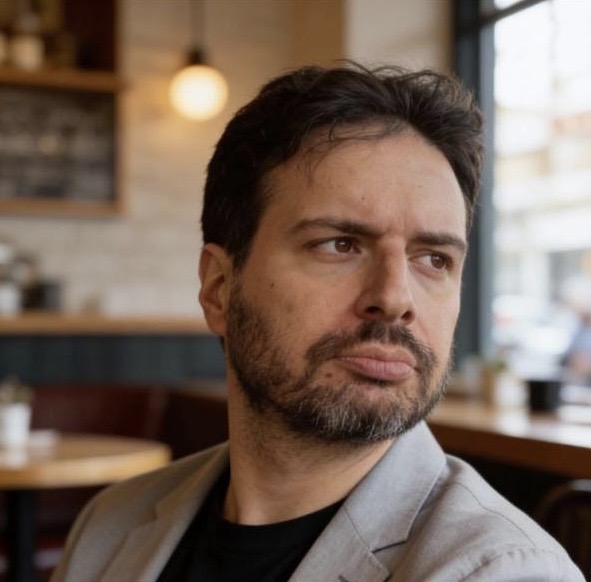
Fourteen years ago, on February 1, 2012, former MP and minister Nassib Lahoud passed away.
In these times when populism is wreaking havoc across the world, and Lebanon seems, once again, to have been a forerunner of the current wave, it feels necessary to evoke the memory of a man who, over the last three decades, carried and defended another vision, another practice of politics. All the more so in Lebanon, where gregarious passions naturally propel either the exalted “historic leader” or the disenchanted utilitarian fox draped in the rags of sectarianism, rather than composed statesmen with modern ideas and a deep, strategic understanding of public affairs.
Everywhere, in the Old World as in the New, a traditional leadership rooted in fear, enclosure and ethnocentric identitarianism now prevails over the language of openness, moderation and adherence to the values that once underpinned both the dignity of the human person and the very idea of an international community animated by the ideal of an order not founded on brute force, but on solidarity, justice, law and peace. How utopian all of this appears today.
In the Land of Cedars, the regression is even more spectacular, given the forms of pre-state allegiance, from clanism and feudalism to theocratic militia rule, all of it seasoned with the necessary dose of communitarianism meant to soothe the ontological anxieties of one and all. Duplicity dominates everywhere, including among the narcissistic predators who piously claim the banners of modernity and progressivism while merely reproducing, beneath their pseudo-reformist discourse, the familiar patterns of a traditionalism ossified in the sclerosis of nepotism, complete with its ancestral cargo of corruption, vices and lies. The habit does not make the monk, still less the statesman, and political babble still has bright days ahead.
In this long, very long political night, far from fading among the ghosts of memory, a figure like Nassib Lahoud, with his calm, lucidity, measure, rigor, institutional sense, panache, elegance and nobility, continues to shine brilliantly and to show the way.
For Nassib Lahoud was not a political leader like the others. He belonged to that exceedingly rare category who represented a model, a project for the future. A genuine wager in a country that prefers to surrender to a cynical political realism, dismissing as unrealistic all those who refuse to confuse politics with cunning, power with brutality, and the state with its simulacrum.
And yet, Nassib Lahoud was no dreamer. No more than Raymond Eddé, Albert Moukheiber, Fouad Boutros, Samir Frangieh, Hassan Rifai or Michel al-Khoury, to name only a few. His fundamental defect? He escaped the “political norms” inherited from the dislocation of the Lebanese state, from war, and from a voluntary servitude to the strongest, or the highest bidder.
He needed no spectacular outbursts, no sonic occupation of the public sphere, no hordes of supporters eager to surrender body and soul in order to fill a pathological craving for power and recognition. Nassib Lahoud was a dense presence, never invasive; an authority that did not seek to impose itself, because it had nothing to prove. His values spoke for him. His view of the human being, his ambition to restore the state, and his understanding of leadership as commanding by serving citizens rather than dominating them, made him a natural leader. He did not need to ground his legitimacy in feats of war, in tasteless little glories stained with blood. It is worth recalling this at a time when the past and its demons continue to poison the Lebanese political discourse, as though authority could be established in no other way than through fragmented, disjointed memories.
Yes, Nassib Lahoud belonged to that rare breed of men for whom politics was not a theatre, but an inner discipline. A stance. A restraint, even. Against loud virility and martial posturing, he embraced the path he had chosen: measure as strength, slowness as virtue, precision as morality. Each word was weighed out of a sense of gravity and responsibility. In truth, Nassib Lahoud respected the political space because he respected others. He respected his country too: its fragilities, its unstable balances, its irreducible pluralism, its sovereignty, its freedoms.
The experience of war taught him, early on, that Lebanon would not survive men in a hurry, nor men intoxicated with certainties, nor venal sellers of the homeland, weak and corruptible; still less men convinced they embodied destiny. Lebanon, to endure, needed arbiters more than chiefs, guardians more than conquerors. It needed a state capable of saying no, even to its own camps, and a unifying presidency, able to govern and arbitrate with the authority of the Constitution, without apoplectic displays, without power games.
That is why Nassib Lahoud was a statesman in the full, almost classical sense of the term. He belonged to that minority in Lebanon who could think sovereignty without hysteria, reform without resentment, identity without rigidity. His “Lebanism” was neither incantation nor fetish. It rested on a goldsmith’s equilibrium between freedom and rule, diversity and unity, Arab openness and national autonomy. A mature Lebanese identity, freed from complexes and fantasies, delivered from the fevers that had eaten away at the national being for decades, to the point of destruction, subjugation, shame… almost to disappearance.
In that sense, his political “failure”, should it be considered as one, was not merely his. It was the failure of the “system” which, at every decisive fork, chose to heed the sirens rather than common sense. How could it have been otherwise in a country where emotional mobilization has inevitably been favored over institutional construction, and where force, tempered with hypocrisy, has always been the means by which each community, and behind it each individual, exists in the face of another, real or imagined?
Nassib Lahoud was not pushed aside because he lacked clarity. He simply had too much of it for a political class already engaged in its own moral abdication.
From a distance, his figure may appear almost anachronistic. And yet it is searingly topical. At a time of generalized collapse, state disintegration, and institutions devoured by pre-state or predatory logics, we miss Nassib Lahoud precisely because he offered no miracle solutions, but a compass: an ethics of decision, a demanding idea of public office as service. Reference points.
Lebanon today suffers from a deficit of character and values. That is the endemic disease. Nassib Lahoud belonged to that rare lineage where politics is precisely a matter of character, in the almost ancient sense of the word: coherence between what one thinks, what one says, and what one does. In other words, a fidelity to oneself that is not narcissistic or pathological, but structuring.
It has often been said, after his death, that he was “the president Lebanon never had.”
That is true.
But it is more serious than that. He was the kind of president who terrified everyone: the mob, the warlords, the gutter-politics crowd, and the great “realists” who, out of convenience, prefer to anoint mediocrity.
And perhaps that is, in the end, our heaviest collective responsibility.
Be that as it may, Nassib Lahoud leaves us this silent, almost severe lesson: that of a man who preferred to lose rather than betray his idea of the state.
In a country where one too often wins by renouncing oneself, that lesson, the finest of all, the lesson of the “beautiful loser,” continues to unsettle.
And so much the better.
France: A Generation Sacrificed… in the Name of What?
Mohammad Hussein Shamseddine, the Amelit who laboured for "another Lebanon”
Raymond Eddé, in Praise of "Defeat"
Useful Enemy, Real Enemy
More from Michel Hajji Georgiou
View All


More in A Thousand Plateaus
View All


Latest from Levant Time
View All


