

Mohammad Hussein Shamseddine, the Amelit who laboured for "another Lebanon”

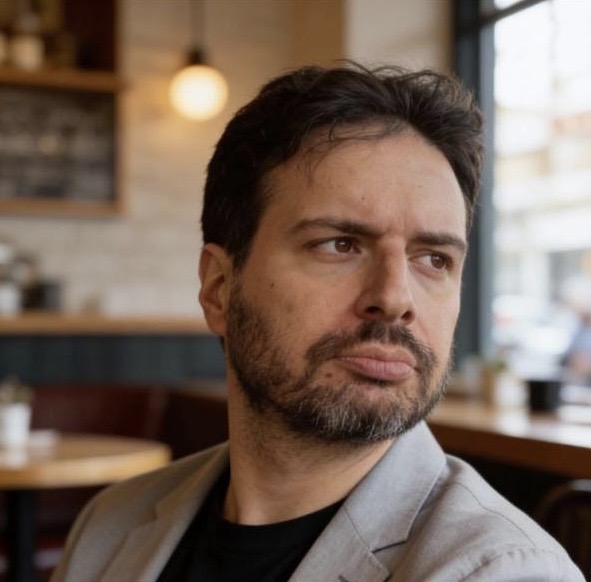
The following text is a translation of the speech delivered in Arabic by our colleague Michel Hajji Georgiou during a panel discussion organized on Friday, May 15, in Beirut by the news and analysis website Janoubiya, in tribute to the memory of the writer and political scientist Mohammad Hussein Shamseddine. The event featured the participation of our colleague Ali Mohammad Hassan al-Amine, director of Janoubiya, former minister Ibrahim Mohammad Mahdi Shamseddine, our contributor and political scientist Hisham Dibsi, and the writer and political scientist Hassan Bazih. The objective of the text is to place Shamseddine's thought and work within the continuity of the historical, political, and moral Libanist and statist heritage of the ulema of Jabal Amel.
Dear friends,
I would like, first of all, to thank Mr. Ali el-Amine for this initiative in paying tribute to our friend Mohammad Hussein Shamseddine, and for his invitation to this occasion, particularly in the presence of personalities of such stature, all of whom I hold in deep respect.
Mohammad Hussein is without doubt one of my masters, to whom I owe a great part of the experience I have gained and the formation of my understanding of the Lebanese idea over the past two decades, from the period that followed the declaration of the Maronite bishops in 2000 and led to the fourteenth of March 2005.
I would like to take this occasion — for Mohammad Hussein “lived the other” so fully that he no longer distinguished between his own work and that of his companions along the way — to salute the memory of those companions. To speak of Mohammad Hussein Chamseddine is to speak, at the same time, of Samir Frangieh, of Nassir al-Assaad, of Saoud al-Mawla, of Fares Souaid, of Tony Khawaja — the list goes on — and of all those who, living or departed, contributed to the founding of the Permanent Congress for Lebanese Dialogue in the early 1990s. It is to speak also of sayyed Hani Fahs and sayyed Mohammad Hassan al-Amine, and, at their head, of imam Mohammad Mahdi Shamseddine. The symbolism of the place where we gather requires us to salute their memory.
I ask the indulgence of those present, for in speaking of Mohammad Hussein I speak at the same time of a tradition from which I am still learning, slowly and carefully, thanks to my Shia friends and maestros: the tradition of Jabal Amel, that luminous and inexhaustible source of knowledge, wisdom and fiqh. A tradition more resilient than all the ordeals that have afflicted it in the past, and than those that tear at it today. The light of this authentically human Lebanese culture will without doubt outlast this new ordeal of fire and blood through which it once again passes.
Mohammad Hussein Shamseddine left as he had lived: on tiptoe, in calm and humility, without excessive eulogy or funeral oration. He did not wake on the morning when Lebanon was preparing, once again, to be sacrificed on the altar of two pathologies, one martyropathic, the other exterminatory. Like a teacher who has accomplished his mission, he departed without the quiet certainty that his legacy and his thought would outlive him. Like all those who fought for more than half a century so that the sovereign Grand Lebanon and its living together might endure, he left without even knowing whether Lebanon itself would survive.
This is assuredly one of the components of the Lebanese misfortune: a century after the founding of its State, Lebanon itself remains threatened with disappearance. And we now witness, before our eyes, how a part of its land, dear to my heart, this cradle of the culture I wish to speak of through Shamseddine, has been criminally reduced to ashes and dust.
Such is the curse of Lebanon. Such is the curse of Cain.
* * *
Mohammad, the maestro — for that is how one approached him — was not a mere thinker. He was an educator, a pedagogue, who engaged with those around him according to the level of their culture and their thought, offering his knowledge with a keen sense of service, free of any ostentatious display. Precise, rigorous, concise, not given to many words. But lavish with meaning. And he always left you with far more than the intellectual baggage you had brought to him.
He was even something more demanding than that: a political thinker who offered his work as a gift to others without claiming anything in return. All the political literature on which we built the dynamics of sovereignty and independence since the 1990s, from the documents of the Kornet Chehwan Gathering to those of the secretariat-general and the annual conferences of the March 14 movement, passing through the Beirut Appeal of 2004, was born at Mohammad’s table or passed through his hands, sprung from that mind inseparable from the minds of his colleagues.
* * *
Dear friends,
It is an honour for me that Ibrahim Chamseddine is among us this evening. Mohammad Hussein was one of the disciples of imam Mohammad Mahdi Chamseddine, from whom he inherited the conviction that wilayat al-umma takes precedence over wilayat al-faqih, and the certainty that the Shia path in Lebanon does not pass through Tehran but through the Lebanese National Pact.
This conviction was not born of political circumstance alone. It is a memory extending from Jabal Amel to the present, through an intellectual chain that began with sayyed Mohsen al-Amine, passed through imam Moussa al-Sadr, reached its depth with imam Mohammad Mahdi Shamseddine, and then found its critical translation in the reflections of sayyed Hani Fahs and sayyed Mohammad Hassan al-Amine, in whose symbolic legacy we are gathered this evening, in the presence of his son Ali.
This conceptual chain is not a mere chronicle of ideas. It constitutes a response to a question that Lebanese Shia are living today at the heart of the war: to what does imam Hussein point? What is the meaning of Karbala?
* * *
Sayyed Mohammad Hassan al-Amine asked this question at his conference in Teïrdebbâh in 1993, with the precision of one who knows the limits of certainty. His answer: Ashoura is a living memory, but one that dies from misuse. When it is reduced to a mere rite, to a “hat-stand on which to hang new sorrows,” to an occasion for releasing accumulated grief nourished by disappointment after disappointment, Karbala ceases to be a driving force and becomes a burden.
He warned against two equally mistaken paths: the first makes the present a repeated replica of history, under the illusion that “the mere evocation of Karbala suffices to create in our time a movement of total commitment to the causes of right and justice.” The second breaks entirely the link between present and past, reducing Karbala to a mere tragic narrative. The third path, his own, consists in reading the event within its historical conditions in order to extract what, of human motivations, has persisted across time: freedom, justice, dignity.
What, then, is the essence of Karbala in this reading?
Sayyed Mohammad Hassan al-Amine expressed it in an unforgettable way: Hussein had seen “the jewel of justice, unity, freedom and equality being stolen from religion in the name of religion itself.” He had seen Islam instrumentalised to cover its own contrary. He had seen jurists issuing fatwas, the Qur’an recited, the call to prayer ringing out, and behind all of this a power that pillaged, tyrannised and annihilated. And he had asked: “What could one who knew this terrifying truth possibly do?”
Hussein did not go to Karbala to seek death. He went because it was impossible for him to live against what he was. He refused allegiance to Yazid, though he could have pledged it and lived — but what kind of life? A life that accepts injustice as the condition of its own continuation. That choice was not available to him. The end was not death: it was the refusal of the lie. And death was what that refusal entailed, not what it sought. This is what he said himself: “I have not gone out in arrogance or pride, nor to spread corruption or commit injustice. I have gone out to seek reform in the community of my grandfather.”
One might object that the infallible imam knows his fate in advance, and that this foreknowledge makes death a choice rather than a consequence. The answer is that infallibility is not compulsion, but an absolute harmony between act and truth. Hussein did not accept death; he refused the lie, and death was what that refusal entailed. Christian experience illuminates this: Christ knows his fate and one does not say on that account that he sought death, but that he refused to betray the truth; foreknowledge of destiny does not make death an end, it makes it a testimony that there exists something greater than the fear of it. And the martyrdom of Hussein is what René Girard called the “pharmakos,” the sacrifice that does not reproduce violence but exposes its mechanism and annuls it.
There is a second theft that sayyed Mohammad Hassan al-Amine pointed to: the theft of the doctrine of free will. Muawiyya “was the first ruler in Islam to wield the axe of destruction against the highest doctrine that Islam had brought: the doctrine of choice,” transforming injustice into divine decree and contestation into impiety. And it is precisely against this that Hussein rose up: against the normalisation of injustice, its sacralisation and its elevation into the will of God.
This diagnosis acquires today an unbearable sharpness. Those who wage war in the name of Hussein reproduce what he resisted: they make war a fatality, martyrdom an obligation and opposition a betrayal. They steal the jewel once more, in the name of the jewel itself.
Allow me, in the presence of Ibrahim Shamseddine this evening, to recall what he said in Jeb Jennin in 2008, which I had reported in my writings of the time: “God does not need human beings to defend Him. No one can present himself on the Day of Judgement and say: ‘I sent you martyrs, and therefore I deserve paradise.’ The weak god who needs our blood does not deserve to be worshipped.”
Dear Ibrahim, it is as though you were describing what happens each day now…
* * *
From the beginning of the last century, sayyed Mohsen al-Amine had held that the rites which had transformed the remembrance of Kerbala into blood shed every year in the streets of the flagellation constituted a denaturation of the meaning of Husseinian martyrdom: they placed death at the centre of the scene when it is dignity that ought to be there. This position earned him accusations of heresy from certain circles among the ulamas of Jabal Amel themselves. He persevered nonetheless in the path of what he had discerned.
More than half a century later, sheikh Mohammad Jawad Moughnieh, a Lebanese Amilite jurist, was the first to respond to the Khomeinist wilayat al-faqih with an explicit, written jurisprudential treatment, affirming that political authority in the time of occultation belongs to the umma and not to the faqih. He wrote this in 1979, shortly before his death, at a moment when opposition to Khomeini was still possible.
Imam Mohammad Mahdi Shamseddine completed this circle in his testaments and in his work Nizam al-Hukm wal-Idara fi al-Islam, where he distinguished between the absolute wilayat al-faqih, the governance of the jurist over State and society, and the wilayat al-umma ʿala nafsiha in the time of occultation. In his testaments he required Lebanese Shia to make their national belonging the foundation, to hold Lebanon as a definitive homeland over which no other authority could prevail.
And it is Mohammad Hussein Shamseddine who transformed this vision into concrete political literature, at the heart of a Lebanese project that is national, human and universal.
* * *
If Mohsen al-Amine reformed the rite of memory, if Moussa al-Sadr restored to the Shia their social dignity, if Mohammad Jawad Moughnieh and Mohammad Mahdi Shamseddine laid the jurisprudential framework of refusal, if Mohammad Hassan al-Amine revealed how Hussein’s name is stolen to cover what Hussein combated, it is Mohammad Hussein Shamseddine who built with all these materials the political architecture: the project of the Lebanese State as an end in itself, a State belonging to all its sons, a State that guarantees diversity without absorbing it, that watches over communities and individuals within a natural cultural complementarity grounded in the right governance of the model of living together and the idea of composite identity and a culture of empathy. What makes Lebanon what René Maheu called “a style of civilisation.”
This political architecture rested on a philosophical cornerstone from which he never deviated: there is no purely Shia solution to the Shia question. The problems of each community in Lebanon are the problems of all Lebanese, and they are not resolved by the logic of confessional and identitarian withdrawal, but by that of the transversal national solution that transcends the community and touches society as a whole.
In this, Mohammad Hussein extends the logic of imam Mohammad Mahdi Shamseddine, the Amelit Lebanese logic: the State as the sole project, the only viable guarantor for all Lebanese components, beginning with the Shia. These words are not severed from reality: they constitute a direct response to all who today seek a “Shia solution to the Shia question,” or wager on a narrow sectarian exit that would “save” a community at the expense of the entity and the model of living together.
Consistent with himself and his vision of Lebanon, Mohammad worked with his companions to break down all barriers and to meld Amelit thought into Nasrallah Sfeir’s aspiration to freedom and Hassan Khaled’s to justice and equality. He thus shattered the spiral of symbolic violence inherited from the war, which most of the forces of occupation exploited to prevent any Lebanese reconciliation. This dynamic of reweaving national unity angered the tutelage power, which reacted violently on 7 May 2001, and reacted above all against the Beirut Appeal of 2004, whose assizes it prevented. But reconciliation triumphed over violence and hatred on the fourteenth of March 2005.
Mohammad Hussein did not, however, conceal his disillusionment with the way that period unfolded. He saw in the mediocrity of a Lebanese political class fleeing its responsibilities one of the fundamental causes of the retreat of the sovereignist project. This showed itself in the so-called “Orthodox” electoral law that accentuated sectarianism, then in the squalid dealings that brought Michel Aoun to the presidency and gave Hezbollah full latitude to act under the cover of legality.
Mohammad saw in this not mere tactical errors, but a political and moral bankruptcy: leaders at the head of their communities, through excess of irresponsibility and lack of faith in their own capacity to weave internal understandings, and through fear of the other, resort to a regional patron who supplies them with money, weapons and surpluses of power so that they may use these against their partners and dominate them. This is the irrefutable proof of a weakness that disguises itself under the label of strength, and leads only to catastrophe, defeat, then frustration and despondency.
Why this attachment to reconciliation in spite of all this? Mohammad had a golden rule he repeated, borrowed from Hamid Frangieh: “If the Lebanese agree on evil, it becomes good; and if they disagree about the good, it becomes evil.” Consensus was not for him one method among others: it was the condition of Lebanon’s very existence.
My friend Hisham Dibsi knows that Mohammad Hussein began his political life as a militant in the ranks of Fatah, and as the founder of the Lebanese Popular Organisation in South Lebanon. Like Samir Frangieh, he completed his “journey to the end of violence,” and, having believed in arms as levers of change, had turned his back on them through conviction. In writing about Samir Frangieh and Hani Fahs, he was in reality describing himself: that journey from red to white, from Fatah to the construction of an inclusive national culture.
He held that peace is not the mere absence of war, but “the highest degree of ethics and its most noble mission.”
* * *
On the very night when Hezbollah launched its absurd war, Mohammad Hussein Shamseddine left us. His departure nearly passed unnoticed in the tumult of what was unfolding.
But this coincidence carries a manifest meaning: what he had intellectually combated throughout his career, the reading of Hussein as a hero of death, Iran elevated to a reference, the jewel of justice once more stolen under the banner of the jewel itself — all of this exploded that night.
We are not merely commemorating today. We are affirming that Hussein died for life and not for death. We are affirming that Lebanese Shiism, that of Jabal Amel, of Mohsen al-Amine, of Moussa al-Sadr, of Mohammad Jawad Moughnieh, of Mohammad Mahdi Shamseddine, of Hani Fahs and of Mohammad Hassan al-Amine, is not the extension of an imperialist project, but a part of the fabric of this homeland, difficult yet necessary.
History will not forget that this slight man, seated with his cup of coffee, his cigarette and his pen as his sole instruments of work, was building, with his hands and his mind, in complete silence, the intellectual foundation of one single Lebanese project: a Lebanon founded not on the balance of forces, but on the force of balance.
This long night will assuredly eventually lift, and the light of balance, reason and living together will rise, so that the Grand Lebanon may once more become that unique “style of civilisation” of which Mohammad, Samir and their companions and inspirers always dreamed and for which they tirelessly laboured.
France: A Generation Sacrificed… in the Name of What?
Raymond Eddé, in Praise of "Defeat"
Useful Enemy, Real Enemy
The eternal return of tragedy?
Plus de Michel Hajji Georgiou
Voir tout


À lire aussi dans A Thousand Plateaus
Voir tout


Les derniers articles de Levant Time
Voir tout


