Levant Time logo

Articles

News feature image
Massive explosion caused by an Israeli strike near the town of Al-Mansouri in southern Lebanon. (AFP)
Weekly essentials
Author portrait
By LevantTime .
Published Sep 6, 2026 - 23:27
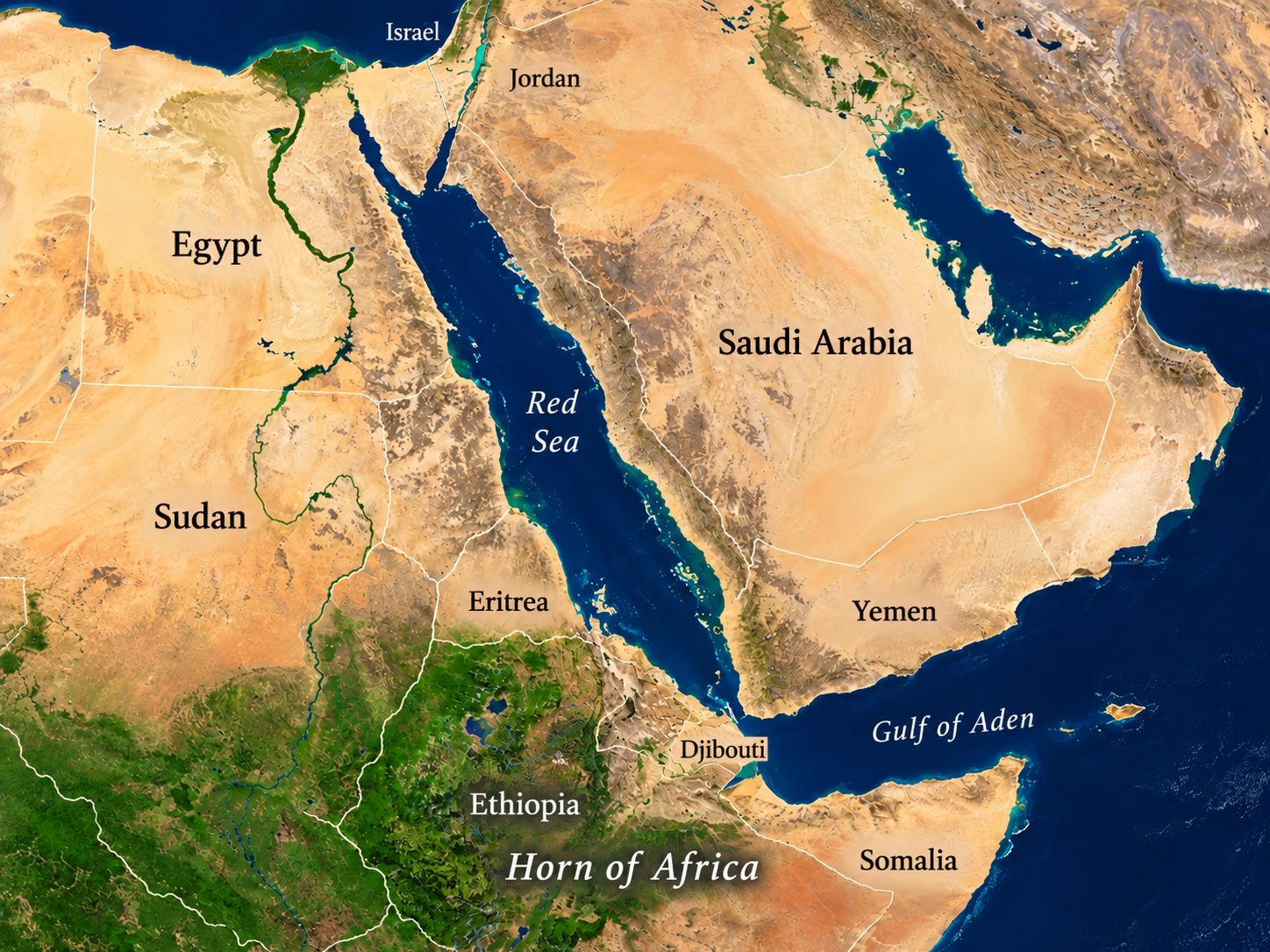
While the United States had appeared to be relying solely on economic warfare against Iran, the US military abruptly carried out strikes on Iranian territory on Tuesday in retaliation for attacks targeting oil tankers, setting off a spiral of violence over the course of the week. In Lebanon, Israel released several civilians held in its prisons, while its army seized the strategic Ali el-Taher hill and continued its heavy strikes in the area it controls in the south of the country. The week from August 31 to September 6 was marked by a sharp acceleration of events in the Middle East, after the previous one had seemed defined by relative stagnation. On the Iranian front, the US military carried out targeted strikes inside Iranian territory as early as Tuesday evening, the first in nearly a month. This screen grab, made on September 6, 2026 from undated video footage released the same day by US Central Command, shows what CENTCOM says is one of the Iranian oil tankers it destroyed in response to attempted missile attacks on naval vessels. (CENTCOM via AFP) However, the relatively limited pace of the strikes suggests that the US administration has opted for an escalation that remains controlled, while continuing its blockade and economic pressure on Tehran. Even so, tensions continued to rise throughout the week. Explosions were heard on Saturday on the highly strategic island of Kharg, through which most of Iran’s oil exports pass. US President Donald Trump, for his part, threatened to strike the Kuh-e Kolang nuclear site — “Pickaxe Mountain” in Persian — a heavily fortified facility located deep underground, not far from Natanz, Iran’s main uranium-enrichment site. Earlier in the week, he had enshrined the “tanker for tanker” equation, pledging to target an Iranian vessel every time the Islamic Revolutionary Guard Corps struck an oil tanker in the Strait of Hormuz. That is precisely what the US military did on Saturday, setting two Iranian vessels ablaze. Politically, Donald Trump further hardened his tone toward Tehran. After saying in an interview that talks had been permanently frozen “because an agreement with them is not worth the paper it is written on,” he said on Saturday that the “conflict” with Iran was not a “war,” but “something ordinary” for the United States. A way of rattling the Iranians while at the same time reassuring the US public ahead of the midterm elections. A port, along with storage facilities and warehouses, was damaged following a US military strike carried out on September 6, 2026 in Iran’s southern Hormozgan province, which borders the Strait of Hormuz. (AFP) At the same time, the US news outlet Axios published a report on Saturday suggesting that the United States is already looking beyond this conflict, which began on February 28. Citing US officials and other informed sources, the outlet said the Trump administration is developing a broader strategy for the post-war Middle East. According to the report, it would be based on creating a regional alignment aimed at containing Iran, bringing an end to the regional fallout from Hamas’s October 7, 2023 attacks in Gaza, and expanding the circle of normalization between Israel and countries in the region. The threat against Kuh-e Kolang, which brings the Iranian nuclear issue back to the fore, echoes an announcement by the International Atomic Energy Agency (IAEA), which said on September 1 that Iran had still not reopened its sites to inspectors following the strikes of May 2025. It should be recalled that despite the scale of the Israeli-American offensive against Iranian sites, it is almost certain that the stockpile of enriched uranium remains intact and has been moved to a safe location by the Iranian authorities, which remain committed to what they consider their right to develop a nuclear program. Following the IAEA announcement, the United States, together with France, Britain and Germany, said they intended to submit a resolution to the UN Security Council condemning Iran’s failure to comply with its non-proliferation commitments. This display of unity stands in contrast to the chill that has prevailed between Washington and its European allies since the beginning of the conflict. For their part, the Iranians appear to be responding to the upheaval in much the same way as before: by striking neighboring countries, notably Kuwait, the United Arab Emirates and Jordan, without directly targeting Israel. Heavy strikes in southern Lebanon On the Lebanese front, Israel is intensifying its destruction operations in villages in the south, even using explosive barrels in some cases. Lebanese President Joseph Aoun urged Washington and the international community to “put an end” to Israeli attacks on Lebanese territory, which killed seven people on Sunday against the backdrop of a fragile truce. The strikes hit several localities in the Nabatiyeh region. Twenty people were also wounded, including children, according to the Health Ministry. One strike also destroyed the former Ghandour hospital, which had been out of service for years. Release of detainees and capture of Ali el-Taher But the major event of the week in the south was the Israeli capture of the strategic Ali el-Taher hill in the Nabatiyeh region. The site served as a major Hezbollah headquarters, consisting of an extensive network of tunnels from which fighters from the Shiite party operated, along with, according to some reports, Iranian fighters. On Thursday evening, the Israelis announced that they had taken control of the complex. On Sunday, Israeli Defense Minister Israel Katz said that tunnels still had to be blown up. This military “success” may not have come as a surprise after weeks of bombardment, but Hezbollah’s reaction was more unexpected. After long insisting that it would refuse to give up this strategic hill — as had the Iranians, who had also threatened to intervene — the Shiite party ultimately sought to play down the significance of the development through its media outlets and allied networks, without officially confirming the loss of the site, which it had refused to preserve by handing it over to the Lebanese army. The other major surprise of the week was Israel’s release of five Lebanese and Syrian civilians held in its prisons. The move came following a visit to Tel Aviv by US Ambassador to Lebanon Michel Issa. According to the Israeli prime minister’s office, Thursday’s announcement “follows efforts by Israel and Lebanon to locate and repatriate the remains of leaders of the Jewish community who had been abducted and killed in Lebanon” between 1984 and 1986. Here too, Hezbollah’s reaction raises questions. While describing the move as positive but insufficient, the party once again turned on the Lebanese authorities, accusing them of “submission to the enemy” and holding them “responsible” for the disaster in the south. It even warned them against “internal conflicts.” Could the party’s military setbacks push it to turn increasingly toward the domestic front? Finally, the Israeli army made an important statement on Sunday, saying it was considering reducing its occupation zone in southern Lebanon, moving from the current “yellow zone” to a “grey zone.” Such a development would, according to this assessment, reflect a reduced threat from Hezbollah. The measure has not yet been approved by Israel’s political leadership. Yemen and Palestine The week was also particularly tense in Yemen, where clashes between Houthi rebels and government forces continued to intensify, culminating in an especially deadly Saturday in which more than 60 people were killed in a single day, bringing the death toll since Thursday to around 200. The Houthi offensive is aimed in particular at taking control of areas bordering the Bab el-Mandeb passage, which would give this Iranian ally additional leverage over another major strategic chokepoint after the Strait of Hormuz. In Palestine, particularly troubling comments by Israel Katz on Gaza marked the week. He claimed, without providing evidence, that most of the territory’s residents wanted to leave, stressing that Israel was “ready for such an evacuation” on a mass scale. A sign that the ordeal of Gaza’s residents may be far from over. Finally, it is worth noting that the IAEA announced on September 1 that facilities discovered in Deir el-Zor, Syria, indicate that Bashar al-Assad’s former regime had secretly been preparing an advanced nuclear program that could have led to the production of an atomic weapon with the help of North Korean experts.
Homage
Author portrait
By Michel Hajji Georgiou - Published Sep 6, 2026 - 13:31
News feature image
The Argentine player, who brought his international career to an end on August 31, 2026, was nothing less than a magician of the stadiums. His journey, made of wonders, falls and redemption, may tell us something about our undiminished need for enchantment in a world that nevertheless claims to have rid itself of it. Announced a few weeks after the 2026 World Cup final lost to Spain, Lionel Messi’s international retirement inevitably stirred an emotion for which it is difficult to find many equivalents in the recent history of football. One would probably have to go back to Maradona, or perhaps to Cruyff or Pelé, to recover that sense that, with the retirement of a player, something disappears that extends far beyond the sport itself, as though a certain way of inhabiting football, perhaps even of believing in it, were also coming to an end. Far from the glacis of reason Enough of the endless statistics and the unbearable, tedious and sterile quarrels over “who is the greatest of all time.” The author of these lines has never been a fanatic of the round ball, nor, for that matter, of vertical rankings or hierarchies of merit in general, and consequently appreciates the talent of each player with the same sense of wonder as an eleven-year-old child. Besides, this particularly contemporary obsession with numbers ruins all the pleasure of the spectacle. And with good reason: the approach that consists in adding up goals, assists, Ballons d’Or, Champions Leagues, Copa América titles, World Cups… can only be reductive. On another register, it is not entirely unrelated to German-American philosopher Eric Voegelin’s critique of the modern Gnostic temptation: that of a form of knowledge convinced that it can imprison reality within a system and abolish whatever resists it. Records are probably one indicator of Lionel Messi’s genius. Yet so many other great players who made stadiums and hearts tremble, without achieving half of what he did, nevertheless remain eternal in our memories. What made them truly singular lies elsewhere, far from the glacis of reason. Something else was at work around them. Something belonging to a certain profound sense of transcendence that understanding can never fully grasp. This has been true of Lionel Messi for more than twenty years, since the day when, under the gaze of the “icon” Diego Maradona, he made his first appearance, in June 2006, on the World Cup stage in the colors of the Albiceleste against Serbia and Montenegro. That ineffable element that constitutes Messi’s genius, as it does that of others, may indeed touch upon one of modernity’s strangest paradoxes: the persistence of magic in a world that has constructed itself precisely against it. The disenchanted world Max Weber used the expression “disenchantment of the world” to describe the slow process by which Western modernity gradually subjected existence to rationalization, calculation, predictability and causal explanation. The world was no longer supposed to be traversed by obscure powers, signs, supernatural interventions or invisible wills; it was, at least in principle, to become intelligible. Unfortunately, modern sport, and more broadly the modern world inherited from globalization, fits perfectly within this dynamic. Today’s football, and not football alone, is probably one of the most quantified objects imaginable. The slightest gesture is measured, and everything is carefully calculated and modeled. From mathematics to artificial intelligence, raw talent now depends more on science than on enchantment. What is human in its spontaneous, even wild, relationship with the invisible that springs from the heart is disappearing before our eyes, in favor of the squaring of the VAR circle. It is, in a sense, the murder of sport in the name of greater rigor and fairness… even though the euthanasia of this share of sublime spontaneity ultimately produces glaring injustices of its own. One need only revisit some of the controversial decisions of the 2026 World Cup to see it. Paradox of paradoxes, Lionel Messi was himself, at the outset, a child of this technical modernity, to which he certainly owes part of his exceptional career. His body, too small by expected standards, was corrected through hormone treatment. Identified very early, his talent was taken in hand by an institution that organized his training, nutrition, physical development and integration into an already globalized sporting machine. Nothing, in appearance, could have been further removed from the old heroic narrative. At first sight, the story seems closer to dystopias in the vein of Gattaca than to myths and messianic narratives. And yet the old narrative did indeed return, and with an almost embarrassing insistence. Since the beginning of his career, Lionel Messi has been placed under the microscope. But the more people labored to explain and demystify him, the less they succeeded in entirely dissipating the impression produced by some of his gestures. The man simply cannot be circumscribed and reduced to an accumulation of data. At an age when most great players retreat into the shadows, he continues to surprise. To astonish, even, by bringing to sport that element of the senseless which escapes the quasi-robotic hypersystematization of the world. It is probably there that one must seek this elsewhere that characterizes Messi. In the survival of magic at a time when even the spaces that once allowed the positive expression of a humanity made of flesh and blood are gradually being “disciplined” by the hypnotic attraction of a new puritanical Gnosis in the name of modernity. The Messiah made by the machine Although he emerged, in a sense, from the machinery of the Matrix, Lionel Messi constitutes in himself a challenge to this ready-to-wear model. A kind of alter ego of Neo from The Matrix, thrown into a simulation governed by parameters that claim to calculate everything. The Argentine’s destiny gradually took on, almost despite himself, the form of a messianic narrative. The pun on his name would be too easy had it not been ceaselessly revived by his own story: that of the fragile child whose body seemed intent on denying him the fulfillment to which his talent destined him. Then that of exile at a very young age to Barcelona, adoption by a foreign city, an almost unreal ascent, worldwide recognition, followed by this strange difficulty in being recognized by his own… For a long time, Argentina maintained a relationship of hainamoration with its prodigal child. His results, his talent, his brilliance mattered little… he still had to answer one merciless question: why wasn’t he Maradona? The comparison was admittedly inevitable, but it was also profoundly unfair. Everything separated the two men in their way of being in the world. Maradona carried Argentina with everything in it that was passionate, contradictory, excessive and theatrical. He spoke, provoked, fought, fell, returned, mingled football with his private life, his anger, his political commitments… all the way to his own destruction. His very body seemed to become one of the places where the contradictions of his country were played out. Maradona was the very incarnation of what the world expected from football: a rebellious soul, sometimes pushing the game to the point of immorality, but within a kind of footballing gigantomachy. Maradona was epic. And, above all, he had placed his country at the summit of world football in 1986. Messi offered none of that. He was silent, at times almost absent from the story others were constructing around him, an absence long interpreted as a flaw. Almost erased, devoid of personality. That, moreover, was what the two giants Maradona and Pelé reproached him for: a lack of leadership, being too smooth. A kind of miracle test-tube baby of the stadiums. The boy from Rosario was also criticized for not singing the anthem loudly enough, for not being Argentine enough, for having been “manufactured” by Barcelona, and then, naturally, for failing to win with the national team what he won almost continuously with his club. The unfulfilled prophecy The dramatic loss to Germany in the 2014 World Cup final, followed by the Copa América finals of 2015 and 2016, had gradually transformed that suspicion into an accusation. When he missed his penalty against Chile in 2016 and subsequently announced that he was leaving the national team, he was nevertheless already one of the greatest players in football history. Yet his story remained strangely unfinished. The sense of incompletion had little to do with his honors. It concerned instead that quasi-archaic necessity continually imposed upon modern heroes: to bring their initiatory journey to completion. In Argentina’s colors, Messi shone, then fell heavily. But he did not rise again. He did not fulfill the prophecy. And, in the eyes of his people, this reinforced the sense of hainamoration: a fallen god remains a god, after all. But with the added burden of what his worshippers regard as an intolerable substratum of humanity and, therefore, something perfectly detestable: his flaws, his weaknesses. Argentines loved Maradona despite his spectacular downfall and his fallible humanity. But that was because he had “earned” the right to such a downfall, because it had somehow become acceptable after Mexico 1986. Messi, by contrast, did not yet have the right to fall, because he had not yet reached the summit. No, the prophecy had not been fulfilled. It was even becoming a caricature. So Messi returned. But he still had to wait for his redemption. It took the 2021 Copa América at the Maracanã for this relationship of suspicion, expectation and disappointment with his public and his people truly to begin changing. And above all it took the 2022 World Cup for the story to acquire that almost excessively perfect form that no one would have dared write without appearing to indulge in a screenwriter’s contrivance. Strangely, Maradona had died in 2020. It was as though a kind of oppressive national curse had been lifted. At the same time, the Argentine people needed a substitute father figure, and the pressure was thereby only redoubled. But perhaps mixed with a little tenderness this time? What happened in Qatar in 2022 is all the more interesting because Messi himself appeared slightly different. He protested more, answered provocations, lost his temper, spoke with a violence of which few had thought him capable, and even let slip that now famous “¿Qué mirás, bobo?” at the Dutch, to Argentina’s amusement. Buenos Aires finally discovered, belatedly, what it had always expected from him. A little Maradona in a great deal of Messi. But Messi did not become Maradona. And perhaps that was precisely where the true reconciliation occurred: Argentina stopped asking him to be. From 2022 onward, Messi no longer needed to embody another model of national genius. For his country too, he could finally become what he had already been everywhere else: Messi. Simply. The final act of the prophecy Granted, the triumph of 2022 could have constituted a perfect ending. But, as with Maradona, the final act of heroic prophecy is the fall. No one really expected anything extraordinary from Messi anymore in 2026. At 39, he was widely regarded as one of the “tired heroes.” The fall from the Capitol had come with the bitter episode of his departure from FC Barcelona and his misadventure at PSG. He was now playing only in the American league, in Miami’s colors… on the periphery of the footballing world, in the distant lands of soccer. And the new generation was already there, ready to send its ancestors off to Bicêtre. Yet this 2026 World Cup, which seemed destined to be nothing more than an epilogue, turned into one last sensational blaze of glory. Argentina reached the final once again, with Messi, at 39, restored as its “historic leader” and its recourse in decisive moments, achieving something not unlike what Roberto Baggio had done for Italy in 1994, at… 27: a perpetual deus ex machina. Baggio failed at the gates of triumph against Brazil after practically carrying Italy all the way to Pasadena. His penalty, sent over the crossbar, would leave behind one of the cruelest images in World Cup history: a man standing motionless, head bowed, hands on his hips, while Brazil celebrated its victory. The man who had “died standing.” The Italian imp never knew apotheosis. Yet this symbolic death, far from erasing his tournament, eventually became part of his legend. History was kinder to Messi, despite a campaign of hatred directed at him, mixed with accusations of cheating and favoritism, against a backdrop of controversial refereeing decisions and acts of unsporting conduct by his team, just as it had once been with Maradona. Kinder still, in fact. A final in a sixth World Cup on the verge of retirement, capped by an outstanding individual performance? That is precisely where the magic of the Messi phenomenon lies, and where it defies reason and its avalanche of statistics. Genius cannot be imprisoned within a sum of parameters and variables. Even optimal physical condition cannot by itself explain what the entire world witnessed. And what does it matter if his story reminds us that the hero, however mythical, cannot abolish the sinister influence of Saturn. The re-enchantment of the world For beyond the prophecy fulfilled, from ascent to fall, with its share of happiness and misfortune, the Argentine offered the world one final lap that belongs to art, if not to a form of Homeric poetry. With Lionel Messi’s withdrawal from the international stage, a little of the world’s magic disappears… until another providential hero returns to enchant the stadiums. For more than twenty years, Messi embodied the coexistence of two worlds we had thought incompatible: that of the extreme rationalization of modern sport and that, far older, of the hero, the sign, expectation and enchantment. When Messi leaves, something of this contradiction suddenly becomes visible. Other prodigies have already emerged, but perhaps, at the very moment when one of its last great representatives leaves the stage, we discover just how much we continue to need transcendence. The modern world has therefore probably not abolished enchantment. It has merely displaced it. For ninety minutes at a time, this man called Lionel Messi, who embodied it on football pitches, now leaves after having accomplished everything. And even more.
Analyze

Have We Become Stupider?

Or Are We Experiencing a Transformation in the Structure of Knowledge?
Author portrait
By Mona Fayad - Published Sep 5, 2026 - 20:01
News feature image
The question “Has the world become stupider?” frequently returns in contemporary debates about digital media, search engines, and social networks. On the surface, it seems simple. Yet behind it lies a deeper issue concerning the very nature of knowledge: how it is produced, how it is transmitted, and how it is consumed. Perhaps “Have we become stupider?” is not the most accurate question. A better one might be: Is knowledge still being transmitted in a way that allows it to be understood and made productive? Do most readers still go back to the original texts? Or do they turn instead to summaries and to what is said about those texts through material circulating among readers? One key to understanding this phenomenon lies in the work of British psychologist Frederic Bartlett, who conducted a series of experiments in the 1930s on what he called “serial reproduction.” In these experiments, one person would be asked to hear a story and then retell it to someone else, who would in turn retell it to a third person, and so on. The results were striking: with each new transmission, the story was not conveyed as it had originally been told, but was reformulated. Some details were omitted, others were exaggerated, and still others were replaced by elements that better suited the recipient’s background, experience, and culture. By the time the chain had passed through enough people, the original story had become something entirely different. This simple model reveals a fundamental truth: memory is not a neutral container, but a mechanism of reconstruction. When knowledge passes through multiple intermediaries, it is not “preserved” but “reproduced.” Here we begin to see the resemblance to our contemporary world, and with it the fear that we may be becoming stupider. In the age of digital media, knowledge no longer travels through oral transmission, but through chains of mediation: an article is summarized, then quoted, then reposted as a short post, before being further reduced to a sentence or a headline. In this context, we might borrow a metaphor that appeared in a journalistic text: a library whose books are gradually replaced by summaries, then by summaries of summaries, until the reader is left facing layer upon layer of reduction. We might call this the “raccoon chain”: the raccoon does not read the original, but rummages through what remains of it. It is worth clarifying that the choice of the “raccoon” is not arbitrary. The metaphor symbolically condenses a cognitive condition that is becoming increasingly entrenched. This animal, which lives on the fringes of cities and rummages through garbage bins, does not produce its own food but feeds on the leftovers of what others have produced. Despite its practical intelligence and its ability to pry things apart, pick through them, and seize what is useful, it does not understand what lies before it. It treats things simply as material available for immediate use. This is what knowledge begins to look like in an age of serial reduction: texts are shortened, then shortened again, until all that remains are scraps of meaning, rearranged and circulated without any genuine connection to their source. At that point, we have not merely moved away from the original. We have entered a new phase in the production of information or knowledge, in which the cognitive actor is no longer a reader or a thinker, but a collector of fragments of meaning who redistributes them in forms designed for rapid consumption. “Raccoon culture,” then, is not merely a description of superficiality. It is an accurate description of the degradation of the knowledge chain itself: from creation to summary, from understanding to formal processing, from ideas to something resembling only their faded trace. Yet this phenomenon cannot be understood apart from the technological structure that governs it. Here Marshall McLuhan becomes relevant, with his famous formulation: “The medium is the message.” The problem lies not only in content, but also in the form through which that content is transmitted. Contemporary digital media do not simply convey information. They reshape it according to the logic of speed, condensation, and fragmentation. Long texts become unsuitable for consumption, while an idea becomes acceptable only if it can be compressed into a few shareable lines. This transformation produces a striking paradox: we live in a time when access to knowledge is no longer difficult. It is excessively easy. And with that excessive ease comes what might be called a “cognitive illusion”: reading a brief passage or a quick summary can be enough to make a person feel that they have grasped an idea. Yet this feeling of possession is not necessarily accompanied by deep understanding, or by the ability to reconstruct or critique that knowledge. This is where we encounter what might be called the “semi-educated”: people who possess the signs of knowledge but not its structure, its vocabulary but not its internal logic. The problem becomes even more complex when viewed through the lens of attention. Instead of remaining in a state of sustained concentration, as in traditional reading or prolonged reflection, the mind now exists under continuous informational bombardment: notifications, clips, headlines, and successive waves of content. This does not merely fragment attention. It reshapes it according to a logic of constant jumping between short units of meaning, rather than the gradual and cumulative construction of an idea. I am reminded here of a joke that we used to tell and that was widely circulated during the days of popular demonstrations. It vividly illustrates the process of reduction and reshaping of content. After the occupation of Palestine, many popular demonstrations took to the streets chanting, “Down with the Balfour Declaration!” The joke was that by the end of the demonstration, the slogan had become, in Arabic, “Let one fall from above,” a completely different phrase that retained something of the original slogan’s rhythm and sound. This image may help bring us closer to what happens in everyday language when knowledge is transformed into short messages that are collectively repeated. A demonstration begins with a precise political slogan. Through repetition, collective immersion, and sonic rhythm, it gradually turns into a completely different formula. The new version may preserve the rhythm and emotional charge of the original, while losing its meaning and original significance. What remains is no longer the meaning, but the emotional energy of the phrase. Here, in another form, we encounter what Bartlett observed: what matters is not merely what was said, but how it was retold and how it was reinterpreted within a changing social context. If we bring these strands together, we might say that what we are experiencing today is not so much a “collapse of intelligence” as a transformation in the conditions under which intelligence operates. The human mind has not changed radically, but the environment in which it functions has changed profoundly: from an environment that allowed slow accumulation to one that imposes the rapid and fragmented reproduction of knowledge. This transformation creates a permanent tension between two kinds of thinking: reflective thought, which requires time, and rapid thought, which demands an immediate response. Seen in this light, the question “Have we become stupider?” is partly misleading. It may be more accurate to say that we are increasingly exposed to conditions that make deep thinking less stable, or less possible, and knowledge more vulnerable to fragmentation and recycling. As for stupidity, if the term can be used, it may not be a quality of the mind at all, but rather a side effect and a characteristic of the cultural structure that has emerged. It is a technology that reshapes our relationship with the world. Thus, rather than seeing this as a decline in human capacities, we might understand it as a transformation in the “knowledge environment”: an environment in which it has become easy to know something, but harder to truly understand it in depth.
More Articles
Sort By: NewestOldest
Pope Leo XIV and the Lesson of History
By
Yakzan Takki
Published

Nearly a year after assuming the Apostolic See at the Vatican, Pope Leo XIV met with American Secretary of State Marco Rubio in the first meeting between him and a senior official of President Donald Trump's administration, amid an atmosphere of mounting tensions fuelled by mutual declarations on the war against Iran and immigration policies. The first American pope in the history of the Catholic Church demonstrated firm and classical positions of the Church in promoting the values of peace and dialogue, and had to face the criticism of President Trump, who claimed that he "exposed the Church, Catholics and peoples to danger", holding that the Pope's positions suggested he "saw no objection to Iran acquiring nuclear weapons". Leo hastened to deny these accusations, reaffirming the Church's rejection of nuclear weapons and dismissing Trump's statements as "inaccurate". Throughout his journey across the African continent, Leo displayed great wisdom and measured caution, clearly unwilling to engage in a polyphonic duel with the American president. He exercised his freedom of speech with the goodwill of righteous men, addressing all matters generally but particularly those in which certainty is lacking and where doubt remains as to America's resort to power politics, thereby reminding the world of the Catholic Church's conviction in the supremacy of spiritual authority over temporal power. Two themes ran through all the stops of his visit, from Turkey to Lebanon, through Algeria and on to the Mediterranean port of Marseille: peace, and the rejection of a war that has returned to hammer at the eastern and southern gates, borne along by an unbridled Trumpian fortune that destroys, in the manner of Machiavelli in his day, the familiar landmarks of the world. The Church therefore holds itself apart from another bias to which commentators are prone, that of conducting itself according to the morality of the political man, and more decisively still, from proclaiming that the true enemy of the classical intellectual and theological heritage of the Church is silence, or the declaration of neutrality on the values of pluralism, democracy, the common good and its credible representation, far more than relativism in political positions or in consciousness. The Pope thus cuts through with his rejection of the very idea of war, invoking the beatitude of the peacemakers, and in his condemnation of any attempt to isolate the pluralist dynamic of Europe, animated by its demographic vitality, from the rest of the planet, as well as in his denunciation of the extractive and unjust methods practised at the expense of peoples in their entirety. He addresses them, at best, individually at times, on the question of peace, for every human being carries within him a part of virtue and wisdom, and when they gather together, they form a single man with multiple feet, multiple hands, and multiple senses, in the manner of Aristotle measuring this "moral competence of the people". In Algeria, in the presence of President Abdelmadjid Tebboune, the Pope urged "those who hold power in this country to strengthen a vibrant, dynamic and free civil society", five years after the suppression of the Hirak movement for democracy. "Do not be afraid of opposition. Do not stifle the visions of youth", he was to repeat later in Angola. In Cameroon, before General Paul Biya, who has held power for more than four decades, he also expressed his consternation at a world "invaded by force, held in the grip of a handful of tyrants and corruption". He further denounced "the hidden face of the environmental and social destruction wrought by the feverish race for raw materials and rare earths", which fuels wars and interference across the African continent. He also warned against "the perverted use of artificial intelligence to fuel polarisation, conflicts, fears and violence bearing down on the belonging and social, political or community identity of minorities, unable to bear the weight of closed intellectual systems". In Lebanon, the Pope bore witness to a profound fatigue and a sense of "no way out" in the face of what appeared to be the imminent resumption of war. He did not conceal his anger at the Israeli war, nor his bitterness at Hezbollah's decision to plunge into it, affirming to his clergy and to the Christian community in particular that their rootedness in the East represented a genuine mission in the very logic of religious and political existence. He knew that the suffering of the population had been relegated to second place in favour of major geopolitical calculations. He measured the depth of the anxiety felt by the Lebanese people, and by Christians in particular, when certain events in Syria and the region took on an almost catastrophic dimension. For the risk of communal tensions and fractures extended beyond the cleavages between different religious communities: it ran through each one of them. These messages inscribe Leo XIV in continuity with Pope Francis, with the determination not to let them be extinguished by the turbulence of the world. They make themselves heard and resonate in his raising of his voice and in the manner in which he addresses those who hold political power, without deference or complacency, and without yielding to Trump's repeated provocations, Trump who did not accept being called to account by the successor of Saint Peter over his wars in the Middle East, and attempted to defuse matters with mockery of "the Pope's weakness", going so far as to post on his social network Truth Social an image bearing a Christic iconography in which he appears as a thaumaturge, clad in the white robe and red mantle of the Redeemer. The Pope thus found himself in the position of his predecessor John Paul II, who in 1978 had launched his celebrated phrase "Be not afraid" during his inauguration Mass, a message of hope carried by the former Bishop of Krakow, in a Poland that was to know the earthquakes leading to the dismemberment of the Soviet Union. Forty-eight years on, that call finds its echo in the one raised by the American churchman, who declares that he feels no "fear" before the American president nor before his Vice-President J. D. Vance, who saw fit to give Leo XIV a lesson in theology, in an external political posture devoid of credibility, marked by illogic and incoherence in the face of the acceleration of history and the overturning of the world under the weight of multiple and entangled crises since "the Trumpian ascent". These positions are not isolated, as Europeans discover their own isolation according to Hubert Védrine and will have to embark upon a "conceptual revolution" by "abandoning the pretence of being the centre of the world", within a near-chaotic system taking shape according to the great French anthropologist Maurice Godelier, who calls for a "moral rearmament" in order to "better respond to those who persist in thinking about surpassing the West or fighting it". For four cycles of Western dominance over the world's destiny since the sixteenth century have come to an end: the reassertion of the United States on capitalism and democracy since 1917, the world order of 1945, and finally globalisation, which began in 1979 and closed in 2022 with Russia's invasion of Ukraine. A new age of empires is taking shape today in an unstable and heterogeneous geopolitical world, where violence frees itself from the institutions and rules that sought to contain it, and where peace becomes impossible whilst war is omnipresent. Democracies are in retreat and face an existential threat under the effect of American liberalism's drift towards injustice and inequality and its convergence with the principles of authoritarian regimes, leaving Europe encircled between the vital threat posed by Russia, China's economic dominance, the pressure of a Turkey mobilising Islam to rebuild the Ottoman Empire, and the hostility of the South nurtured by the colonial past. The Church does not find itself disarmed or weakened for all that. It has not succumbed to the illusions of the end of history, nor to the sway of large markets, nor to the politics of force that remains the monopoly of the great powers in Russia's invasion of Ukraine, the genocide perpetrated in Gaza, the unilateral initiatives of the United States aimed at overthrowing regimes in Venezuela and now in Iran, all operations undertaken without seeking the slightest semblance of international approval, as with the weaponisation of trade, technology and even migration flows, increasingly used as levers of coercion against competitors or in service of their own geopolitical interests. A portion of the world chooses silence and ambiguity rather than defending international law, seeking to avoid any confrontation, and thus slides towards appeasement. This is an error, by the standards of the Catholic Church

Syrians, seek justice - but true justice!
By
Youssef Mouawad
Published

A gallows had been erected by protesters in front of the Palace of Justice in Damascus. It was Sunday, April 27th, in the Syrian capital: a large crowd was present at the first hearing of trials intended to determine the fate of criminals from Bashar al-Assad's fallen regime. The protesters were crying for revenge: they would not have hesitated to carry out their own justice! This speaks to the overheated general atmosphere that could cast doubt on the course of future developments. A special tribunal for Syria, modeled on the one established for former Yugoslavia, would have raised fewer concerns. None of this bodes well for the Alawite community that held the reins of power for over 50 years and is blamed for the repression that wreaked havoc on the population. Current Situation It was therefore to be expected that the current Syrian judicial system would reflect the state of a country still healing the wounds of civil war. This war remains omnipresent in the minds of survivors, and its events will continue to haunt individuals and various groups for a long time to come. Another factor that also works against fairness and reconciliation: Syrian justice, taken as a whole, had not been truly 'independent' since the Baath party came to power. In fact, since the 1960s, judges were under the thumb of the regime—and that says it all! Five decades of subjection to the regime of Hafez and Bashar al-Assad would not generate a class of judges with integrity, professionally qualified to judge, and fiercely independent. To this we must add, as one observer notes, that the judicial machinery has been constituted at this precise moment around a 'heterogeneous constellation of mechanisms: unprecedented national transitional justice processes, local truth-seeking initiatives that are often informal, both reactive and fragile, promises of future trials, as well as an unprecedented diversification of international judicial activity'. A Two-Tiered Justice System Indeed, it must not be forgotten that trials of the fallen regime's criminals had begun in Europe before the first hearing took place in Damascus last month. Under the principle of 'universal jurisdiction,' certain European countries were able to prosecute crimes that were not committed on their territories. While France issued arrest warrants against Bashar al-Assad, his brother Maher, and others, German courts in Koblenz, Stuttgart, and Frankfurt did not hesitate to condemn Syrian officials to prison sentences, two of them to life imprisonment. Lucky men, these fugitives who had appeared before European justice: they did not risk the death penalty and their detention conditions remained far more acceptable than those prevailing in the prisons of Damascus. An Eye for an Eye? All the more reason to fear the application of the law of retaliation in what should now be called the 'Damascus Trials'—trials that will detail the horrors of the overthrown regime. The next hearing will be held on May 10th: it will rule on the fate of Major General Atef Najib, cousin of President Bashar al-Assad and former head of political security in Deraa, the birthplace of the 2011 uprising. So, how can one ensure serenity in the courtrooms when the crimes of this torturer of children are revealed in detail? And to what extent will Ahmad al-Shara's government be able to contain the groundswell of demands coming from Aleppo, Homs, and Hama for immediate executions on Marjeh Square?* *This same square where Arab nationalists were hanged in 1916 and the spy Eli Cohen in 1965.

For Tehran, the Strait of Hormuz is worth an atomic bomb

As a brief naval confrontation between American and Iranian forces unfolded in the Strait of Hormuz, an adviser to Iran's supreme leader, Mojtaba Khamenei, declared on Friday that this maritime passage, through which 20% of the world's crude oil transits, represented 'an opportunity as valuable as an atomic bomb'. 'We have neglected for years the advantage that the Strait of Hormuz represents. Having a position that allows us to influence the global economy with a single decision is a major opportunity,' said Mohammad Mokhber, who is considered close to the hardline faction of the clerical regime. This statement raises questions about Iran's true strategy, as every declaration is scrutinized in light of suspicions—whether founded or not—of divisions within the ruling elite in Tehran. This rift becomes apparent whenever the moderate positions of the Iranian regime's 'doves' are contradicted by inflammatory statements from Revolutionary Guards officials. In the contested strait, from Thursday night to Friday, American forces claimed to have 'retaliated' after three of their guided-missile destroyers came under attack from 'missiles, drones and small boats' while transiting through Hormuz toward the Gulf of Oman. Tehran denounced 'a blatant violation of international law and the ceasefire,' while an Iranian official reported ten sailors wounded and five missing following an American attack on an Iranian cargo ship. The attack on American ships was dismissed as a 'minor incident' by U.S. President Donald Trump, who judged that it did not undermine the maintenance of the ceasefire. However, clashes continued on Friday, further threatening the truce, as Washington still awaits a response from Tehran to its latest proposal aimed at sustainably ending hostilities. As usual, Iran's Foreign Ministry spokesman, Ismail Baghaei, indicated that Iran was 'still studying the proposal,' projecting a stance of firmness or apparent composure, even as the country has suffered significant destruction and its economy is drained. Lebanese-Israeli Negotiations in Washington In Lebanon, President Joseph Aoun received diplomat Simon Karam and 'gave him his directives' before his departure for Washington, where a meeting with the Israeli delegation is scheduled for May 14, according to a statement from the presidency. The Lebanese ambassador to Washington, the deputy chargé d'affaires, and 'a military official' will be part of the delegation, the same source clarified. 'Lebanon expects three essential objectives from these negotiations: to consolidate the ceasefire, to secure Israel's withdrawal (...) and to extend the state's full sovereignty over national territory,' said Foreign Minister Youssef Raggi. The first meeting between the two countries, which do not maintain diplomatic relations, took place on April 14 in Washington. It was the first such encounter since 1993. Following the second meeting held at the White House, U.S. President Donald Trump announced a three-week extension of the ceasefire that has been in effect since April 17 between the two countries. In southern Lebanon, Hezbollah, which drew Lebanon into the war on March 2 in support of its Iranian ally, claimed on Friday two attacks against military bases in northern Israel, in response to Israeli strikes carried out in Lebanon that killed ten people that same day. Hezbollah had previously stated it launched missiles against a military base near the city of Nahariya, in retaliation for Israeli strikes. Israeli bombardments killed ten people on Friday, including two children and three women, in four localities in southern Lebanon, according to the Lebanese Ministry of Health. Civil Defense also announced earlier the death of one of its rescue workers, killed in a strike.

Torn Asunder
By
Michel Hajji Georgiou
Published

That the various factions in Lebanon should be directly concerned by the existential battle currently unfolding there is entirely natural. The contrary would be unhealthy. Yet between apathy and unbridled enthusiasm, or even blind enlistment, there lies a whole emotional spectrum which, as usual, is obscured in favour of alignments that are deadly for the country — alignments with a conflict that inhabits it, but that utterly surpasses it. As has always been the case, for that matter. The Lebanese body is immunodeficient. It attracts every virus, every disease. Hence its propensity to flirt permanently with death. And, contrary to the traumatic notions of identitarian supremacism that resurface with remarkable convenience at every period of crisis, the source of Lebanon's ontological weakness is not pluralism, but an archaic political culture. A confederation of tribes governed by charismatic leaders who, a hundred years after the founding of Greater Lebanon, still baulk at building a state and managing public affairs in a sound and rational manner, and who persist in aligning themselves with the strongest power in accordance with regional and international shifts. That is not the question. Mimetic reactions have invariably destroyed this country since its creation. They are precisely the product of a race for domination, even hegemony, in which individual anxieties carried over to a communal body are superimposed on the search for an external force to compensate for an inability to establish total domination within. Two logics have been proposed to break this vicious circle. The first is a divorce between the communities or between the different regions — a kind of return to pre-Greater Lebanon formulas. This presupposes above all a common will to separate, and no doubt population movements if the underlying nature of the project is communitarian. The second is the construction of a national legitimacy respectful of pluralism, founded on five fundamentals: freedom, justice, equality, coexistence, citizenship. But this too presupposes a will — one that must be vast, individual, and transversal. Otherwise the communal reflex will never be broken, and the tribal chiefs will continue to govern the country like a loya jirga dependent on regional upheavals, playing, as skilled seismologists within, on the tectonic plates between Lebanon's communal groups. These two projects have been competing in Lebanon since 1920, the third — that of fusion into a larger whole — having been abandoned. The Taëf Constitution nonetheless stipulates in its preamble that Lebanon in its current borders is a definitive homeland for all its sons. Are the principal Lebanese political formations of today, after the failure of 14th-of-March transversalism, of that mind? The question deserves to be asked and answered, without pretence. But the most alarming thing is not the debate about the fate of Greater Lebanon itself, but the way in which Lebanon's constituent parts have chosen to conduct it — in the worst possible circumstances on the ground — in a manifest hatred of one another, compounded by a will to vengeance that resonates like the cataclysmic return of a deep repressed. In this context, it is difficult not to return to this will toward mimetic 'reprisals' or 'revenge,' and to the mechanism that governs it: a return to a fantasmatic mythic age when one was the strongest, which one has lost and which is once again within reach. This is the expression of a profound pathological delusion. History may repeat itself in appearance, but times have changed, and in the Near East, equilibria are fragile. Partial, supremacist or separatist projects are tenuous, if not mad — not because they are risky, but because they depend on factors that are never in the hands of those who defend them tooth and nail. In Lebanon, one does not decide, or very little. Especially if one is not united transversally — and this is not a matter of a few dissident figures willing to 'step out' of their communal positions, out of interest or conviction, to join the opposing camp in an illusion of a trans-communal front. The 14th of March 2005 is proof of this. The United States did not want — David Satterfield had said so openly — a Syrian withdrawal from Lebanon. It took place because of that enormous demonstration which was the work of a plural political and civic will. In Lebanon, one attempts to adapt as best one can, to navigate by sight to prevent the vessel from sinking entirely. This vessel needs a steady and moderate captain to manage the navigation through troubled waters. And that captain is the State — notwithstanding all its failings — because today it is the only compass, the only space that can bring us together. And it deserves to receive the broadest possible support in its perilous mission, without being battered and torn asunder by the ambitions, the euphoria and the frantic nostalgic fits of one faction or another.

Hezbollah-Israel: An Endless War in Whose Interests? (5)

This series of articles will allow for a better understanding of the current situation in light of the past, moving beyond impassioned, ideological, or romanticized rhetoric that misses the mark, leaving the reader to draw their own conclusions. Furthermore, it is high time to seriously counter the sterile rhetoric of resistance, not with counter-rhetoric, but with serious work by promoting the rule of law, which can only be established through sovereignty. In the previous four installments, we revisited the events that shaped Hezbollah’s rise following the Taif Agreement, its first two wars with Israel, and the grinding war of attrition it has waged for more than a decade. Stage 7: Hezbollah-Israel Talks in Berlin Following German mediation with Iran, at the request of Israeli prime minister Ehud Barak, Hezbollah and Israel entered into indirect talks in Berlin over a possible Israeli withdrawal from Lebanon. The first round took place on March 1 and 2, 2000, followed by a second on March 7. German mediators shuttled between the two delegations. The Israeli delegation was headed by Uri Lubrani, then Israel’s coordinator of operations in Lebanon. Acting on Barak’s instructions, Lubrani agreed during the second round of negotiations to meet all of Hezbollah’s demands: the Israeli army would carry out an unconditional withdrawal, and the South Lebanon Army (SLA) would be left to its fate. In return, Hezbollah would take control of the border area and ensure calm along it. Washington and Tehran – both represented at the talks by senior envoys – endorsed the arrangement, as did France, which was informed at a later stage. According to Yossef Bodansky (1) , the Iranian representative at the negotiations initially refused to believe the extent of the Israeli concessions until they were confirmed by the German mediators. Still according to Bodansky, who recounts the episode in his book The High Cost of Peace , Barak and Lubrani kept the agreement reached with Hezbollah secret for two months, informing the Israeli military only on the eve of the withdrawal. The SLA, likewise kept in the dark, was coordinating troop rotations with the Israeli army in the security zone, under the assumption that General Antoine Lahd’s (2) forces would eventually take over positions there. Lahd himself, having been told that the withdrawal would take place in July 2000, as publicly state by Barak, was making preparations accordingly. He had obtained assurances of financial and logistical support from Tel Aviv, as well as promises of air cover after the withdrawal. Until May 23, the day before Israeli troops pulled out, Barak continued to maneuver carefully to keep the SLA entirely unaware of the Berlin agreement. He was determined to fulfill his campaign promises and extricate Israel from the Lebanese quagmire without facing domestic pressure or appeals from Lahd, above all in order to negotiate a peace agreement with Syria without the burden of military pressure in South Lebanon. By that stage, Hezbollah’s military capabilities had been significantly strengthened through weapons shipments from Tehran via Syria. Israel, reassured by this arrangement, appeared prepared to leave the security zone in Hezbollah’s hands, convinced the group would maintain calm along the border. Syria, however, found itself deprived of a key instrument of pressure on Israel, while Lebanon remained the principal loser. The real beneficiary was, in fact, Iran, which had just secured a powerful lever in Lebanon and even in Syria. Washington and Tel Aviv seemed to have accepted the existence of the mullahs’ regime, judging that the risks, whatever they might be, would be reduced following Israel’s withdrawal. Washington failed to perceive that this regime, still reeling from its eight-year war of attrition against Saddam Hussein’s Iraq, remained capable of disseminating its ideology among the region’s minorities – not only to consolidate its influence there, but also to sustain internal tensions, divert these states’ attention from their domestic challenges, and, above all, prevent the re-emergence of a strong Iraq on Iran’s doorstep. Moreover, in order to further polarize an Arab world moving tentatively toward peace with Israel, the mullahs sought to derail that process by inflaming already existing anti-Israeli sentiment. Their ambition was to assume leadership of the fight against the Jewish state through Hezbollah, Hamas, and Hafez al-Assad’s Syria, to reinforce Iran’s role as an indispensable regional power, and to ensure the survival of their own regime. Israeli-Syrian peace talks ultimately collapsed on March 26, three weeks after the Berlin agreement, following the failure of the Geneva meeting between Hafez al-Assad and U.S. President Bill Clinton, who proved unable to bridge the gap between Damascus and Tel Aviv. Stage 8: May 24, 2000 – Israel’s Complete Withdrawal from South Lebanon The withdrawal of the Israeli army from South Lebanon took place in a rushed and almost chaotic manner, the order to pull out having been issued only the day before. On the night of May 23–24, 2000, Israeli forces unilaterally evacuated South Lebanon. Domestically in Israel, the end of the occupation brought an end to daily casualties, but in much of the world – and particularly in Lebanon – the departure was widely perceived as a victory for Hezbollah. From that point on, Iran found itself endowed with a direct line of confrontation with Israeli territory through Hezbollah, while also gaining near-direct influence over Lebanon’s internal affairs. Contrary to the initial fears sparked by a statement by former Hezbollah Secretary-General Hassan Nasrallah, who had threatened to “kill the members of the SLA in their beds,” the Israeli withdrawal was not followed by a campaign of violent reprisals by Hezbollah against civilians in the former security zone. However, some properties belonging to SLA members were looted or taken over, including General Lahd’s residence. In parallel, Hezbollah and Amal Movement officials met with Christian religious leaders in South Lebanon to reassure them that the “victory” belonged to all Lebanese, not to a single faction. This initiative formed part of a broader strategy of calculated restraint, adopted by Hezbollah to refine its public image and strengthen its national legitimacy. The Fate of the SLA’s Men When the Israeli army withdrew, around 7,000 members of the South Lebanon Army (SLA) and their families fled to Israel, fearing reprisals. Some later emigrated to Canada, the United States, and Europe. Others eventually returned to Lebanon, including roughly 2,700 who were tried on charges of collaboration, despite the fact that the SLA had originally emerged from the ranks of the legitimate Lebanese army. This force had originally been established under an official directive issued in 1976, with the mission of securing part of the border area against armed Palestinian organizations. Cut off from its command structure and later backed by Israel, it gradually evolved into an autonomous force, first adopting the name “Free Lebanon Army” before becoming the South Lebanon Army. The prison sentences handed down to those who returned ranged from several months to three years behind bars. These Lebanese believed they had been legitimately defending their land and their communities. Under Lebanese law, however, they were deemed collaborators, while for Hezbollah they were viewed as agents of Israel. An estimated 3,500 former SLA members still live in Israel. Officially registered as “Lebanese” in Israel, they were granted Israeli citizenship in 2004. All still have relatives in Lebanon, most of them in villages located only a few kilometers from the border. (to be continued) ( 1) American political scientist and author. He served as director of the United States House Task Force on Terrorism and Unconventional Warfare from 1988 to 2004 and authored several books on the Middle East. (2) Commander of the South Lebanon Army (SLA) at the time and former general in the Lebanese army. Read also: Hezbollah-Israel: An Endless War in Whose Interests? (4) Hezbollah-Israel: An Endless War in Whose Interests? (3) Hezbollah-Israel: An Endless War in Whose Interests? (2) Hezbollah-Israel: An Endless War in Whose Interests? (1)

"We Want to Uproot You"
By
Mona Fayad
Published

When I used to travel to Canada, I was always provoked by Israeli propaganda that claimed falafel, tabbouleh and hummus as part of traditional Jewish-Israeli heritage. It was an appropriation of culinary traditions that have belonged to the Levant for centuries, and not merely the theft of a patrimony: it was the confiscation of an identity and a memory. No people in history has invested in memory as the Jews did in the aftermath of the Holocaust. They built one of the most powerful systems of memorial preservation the world has ever seen, turning memory into a total apparatus: material, pedagogical and legal, designed to be indelible. They catalogued personal belongings in museums, gathering thousands of objects that had belonged to the victims: shoes, bags bearing the names of their owners, eyeglasses, hair shorn from prisoners, clothing and small personal items (combs, watches, rings); all in order to attest that the victims were real individuals, and not merely numbers. They turned to archives and documents, railway deportation records, nominal lists, official Nazi decrees, letters and diaries, to transform memory into a legal and historical proof that could not be denied. They preserved the sites of the crime, erected memorials, recorded survivors' testimonies in sound and image, then integrated all of this into school curricula, producing films and works of literature. They turned memory into a sensory and cultural experience, and protected it through the law rather than through sentiment alone. Can someone who knows all of this about the power and importance of memory genuinely claim not to know what destroying it means for others? Is it not precisely because they know what destruction means that they "destroy" everything? If memory is what gives a human being their name, their history and their right to say "I was here," then to erase it is the shortest path to reducing that person to a number, by the very people who once fought to turn victims from numbers back into names. The destruction of villages and towns in southern Lebanon thus goes well beyond a military operation, and cannot be reduced to the language of statistics: the number of buildings razed, the cost of losses. What is happening runs far deeper. We are confronted with an organised attempt to strike at something more precious than stone: memory. When the great mosque, the heritage houses and even the cemeteries are levelled, the purpose goes beyond the erasure of landmarks: it is the witness itself that is to be eliminated. This is not random destruction. It is a systematic assault against life as such: homes, schools, mosques, markets, and everything that testifies that human beings once lived here, loved, learned, built meaning for their existence, and were also buried here. This is an openly declared act of uprooting: uprooting people from their places, and uprooting places from their memory. It is the erasure of a collective biography: that of generations who lived and learned, of students' voices, of teachers who carried a vocation, of a local history that took shape in silence over decades and centuries. And when a mosque or a heritage house is destroyed, the loss cannot be measured in concrete, but in the history, the meaning and the sense of belonging that those walls contained. Contrary to what is often assumed, memory is not an abstract idea. It is bound to place: to stone, to sanctuary and tomb, to the staircase and the neighbourhood, to names that repeat themselves from generation to generation. To destroy a place is, in its very essence, to destroy memory. History teaches us that peoples who experience an unstable relationship with the land, as is the case for Israelis in occupied Palestine, tend to reshape place in accordance with their own narrative. Not only through construction, but above all through erasure. For the elimination of the other's traces is never accidental: it is a bid for control of the narrative. Who was here? And who has the right to say "this land is mine"? We are witnessing a pattern of violence that surpasses war to reach something deeper: an assault against the human being, against their memory, against the values that make life in common possible. A moral collapse that redefines the relationship with the other on the sole basis of force and violence. Attacks on civilian sites constitute a manifest violation of the principles of international humanitarian law. The destruction of cultural and religious property can only be characterised as grave violations, rising to the level of war crimes under internationally recognised standards. There are, moreover, the acts of looting reported by Israeli media themselves: soldiers entering houses and leaving with personal belongings, jewellery, and even family photographs. Such acts cannot be dismissed as mere details. What depth of moral degradation must be reached for a family photograph, a bedcover or a private keepsake to become a spoil of war? What is at issue here is not individual misconduct, but behaviour that reveals a mentality: treating a place as an emptiness, and its inhabitants as though they had never existed. International law names this act "pillage" (pillage), expressly prohibited and constitutive of a war crime under the rules of international humanitarian law and the Geneva Conventions, because it touches not only on property, but on the dignity of civilians and their fundamental rights. A family photograph is not a stolen object: it is a document of identity. Its theft goes beyond the material to become a violation of private life, and thus intersects with the violation of the right to human dignity. The message, here, is unambiguous: we do not want only your land, we want to erase your traces upon it. The most dangerous blow of all, however, concerns the disappearance of property boundaries, the erasure of landmarks and the destruction of cadastral records and land registries. The damage then becomes a long-term threat to rights, no less grave than the bombardment itself. Destruction becomes a future legal problem: who owns what? Where does property begin and where does it end? It is a systematic undermining and erasure of civil rights and private property, as though the war waged by the Israelis were not content with immediate destruction alone, but extended to sow lasting disputes within the society itself. Once the destruction of memory asserts itself as a recurring pattern: targeting of civilian infrastructure, mass destruction with no discernible military necessity, systematic pillage, we are no longer speaking of mere excesses, but of acts that fall within the framework of crimes against humanity. And the question, at this stage, is no longer only technical or legal: it is moral. For the values supposed to govern the conduct of war, even in its most extreme circumstances, collapse the moment the civilian, their memory and their property become a legitimate target. Yet these attempts run up against a fundamental truth: memory does not erase itself easily. Stone can be broken, but it is difficult to uproot meaning. Memory is admittedly like glass, its fractures resist repair, but neither does it disappear entirely. It endures in people, in language, in longing, and in the act of rebuilding itself. The question lies not only in what is destroyed, but in how we respond. Repeating ready-made formulas like "we will rebuild better than before" is not enough; it may even be a form of flight. True reconstruction begins with the acknowledgement of loss: there is a real fracture, there are things that cannot be entirely repaired, there is something irreplaceable that has been lost. What the South needs today, therefore, is not only reconstruction, but the protection of its memory: documenting what has been destroyed and recording the violations, preserving names and evidence, redrawing maps and consolidating rights through legal channels, safeguarding narratives and pursuing those responsible within international frameworks. For the battle, in the final account, is not only over the land, but over the meaning of that land. And whoever succeeds in protecting their memory succeeds in enduring.