
Levant Time logo

Articles

News feature image
Strategia

The Red Sea and the Horn of Africa: The Shifting Balance of Power in the Middle East (1/6)

Gulf rivalries, African vulnerabilities, and prospects for regional security
Author portrait
By Khalil Helou
Published Oct 22, 2026 - 14:59
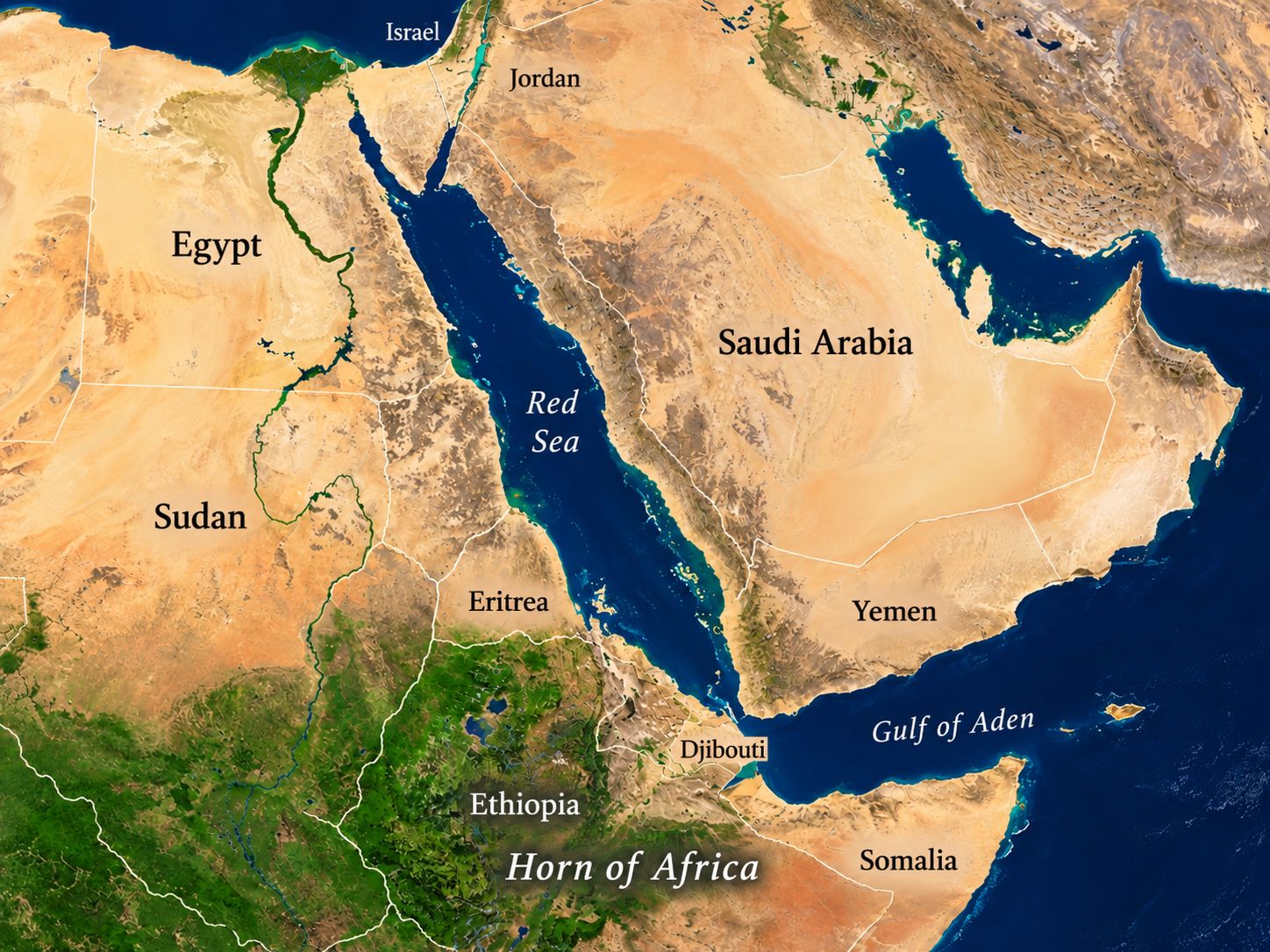
The Red Sea, the Bab el-Mandeb Strait, the Gulf of Aden and the Horn of Africa form a strategic space contiguous with the rest of the Middle East. Treating them as separate theaters obscures the mechanisms through which a local war, rivalry over ports or a maritime attack simultaneously affects the Arabian Peninsula, East Africa and international trade. Stretching between the Indian Ocean and the Mediterranean, this corridor links, through the Suez Canal, economies whose interests are interdependent but whose means of protection and political priorities remain profoundly different. Local actors in this space include the states of the Horn of Africa and its surrounding areas—Somalia, Ethiopia, Eritrea, Djibouti and Sudan—as well as Yemen on the Arabian shore. They also include authorities and forces without state status, notably the breakaway territory of Somaliland, which claims independence from Somalia; the Houthis in Yemen, who see themselves as the state; the Rapid Support Forces (RSF) in Sudan; and the armed group Al-Shabaab in Somalia. Regional powers—Saudi Arabia, the United Arab Emirates, Egypt, Turkey, Israel and Iran—intervene through investment, diplomatic partnerships, and military and security support. Moreover, as coastal states, Saudi Arabia and Egypt are both directly affected and capable of projecting influence beyond their borders.
The New World
Author portrait
By Khairallah Khairallah - Published Oct 22, 2026 - 14:28
News feature image
Campaign rally for Benjamin Netanyahu in Dimona, Israel, on October 21, 2026. (Photo: ILIA YEFIMOVICH / AFP)
The political deadlock gripping the region today, at every level, is the product of years of investment in extremism, violence, and terrorism, in which several actors have converged, from the Israeli right to Iran, including the Islamic Republic’s instruments in the region, notably Hamas and Hezbollah. The former Syrian regime was hardly removed from these forces. It was an honorary member of the Tehran-led “resistance front,” having ensured long years of calm and stability along the front in the Golan Heights, occupied since 1967. Against this backdrop, Israel heads into its general elections with several questions looming, including whether Benjamin Netanyahu will have a political future after the vote. The question is particularly pressing given that the man who has served as prime minister for so many years is already on trial for corruption, proceedings whose consequences could weigh even more heavily on his future if he loses power.
Today's Essential

Sisi Stresses the Defensive Nature of Support for Riyadh

Egypt condemns Turkish-Libyan maritime agreement that threatens its sovereign rights
Author portrait
By LevantTime . - Published Oct 22, 2026 - 00:02
News feature image
Egyptian President Abdel Fattah al-Sisi stressed on Wednesday that the military support offered to his Saudi ally against Yemen's pro-Iranian Houthis was strictly defensive, saying no attack on Yemen was planned. “The aim is to defend the kingdom's territory and borders, as well as those of any other Arab state, if Egypt is asked to do so,” the president said in a speech, as Tehran issued a warning to Cairo. Any military involvement would mark a break with Egypt's cautious diplomacy, which in recent years has prioritized safeguarding its own national security. But Riyadh, which has also received pledges of defensive support from France and the United Kingdom, has long been a key ally of Cairo.
More Articles
Sort By: NewestOldest
Leon XIV and the Lebanese Exception
By
Youssef Mouawad
Published

What a source of concern—and even of irritation—for Roman authorities, these Eastern Catholics do indeed generate! Had they vanished from the Levant, diplomatic relations between Rome and the Muslim countries of the Eastern Mediterranean would have been far smoother. That being said , things were never simple for Vatican diplomacy, on dealing deal with the Maronite community. Very early on, the Maronites asserted themselves politically as an autonomous entity rooted in a mountain stronghold, and what is more they never hesitated in insisting upon their distinctiveness. This set them apart from the other Christian communities of Syria and Iraq, which had long submitted to the rule of the majority and produced, for the most part, quiet individuals and compliant citizens.

The Pope in Lebanon: Without Peace, the “Message-Country” Will Not Survive

Pope Leo XIV is set to bring a powerful message to Lebanon: “Blessed are the peacemakers.” A unifying call, with deep religious resonance, that resonate cross its religious communities, while carrying a clear political weight for a country exhausted by decades of conflict – a nation for whom the time has come to leave the tunnels of violence behind and step into the light of peace. Firstly: Supporting the Christian Presence and Affirming Its National Role This message stems from the Holy See’s careful attention to what Lebanon has endured – and continues to endure – particularly its Christian population. For the Vatican, Lebanon is the most sensitive “laboratory” in the Middle East for Muslim–Christian coexistence, and a potential model of what John Paul II, three decades ago, described as a “message-country.”

/