
Levant Time logo

Articles

News feature image
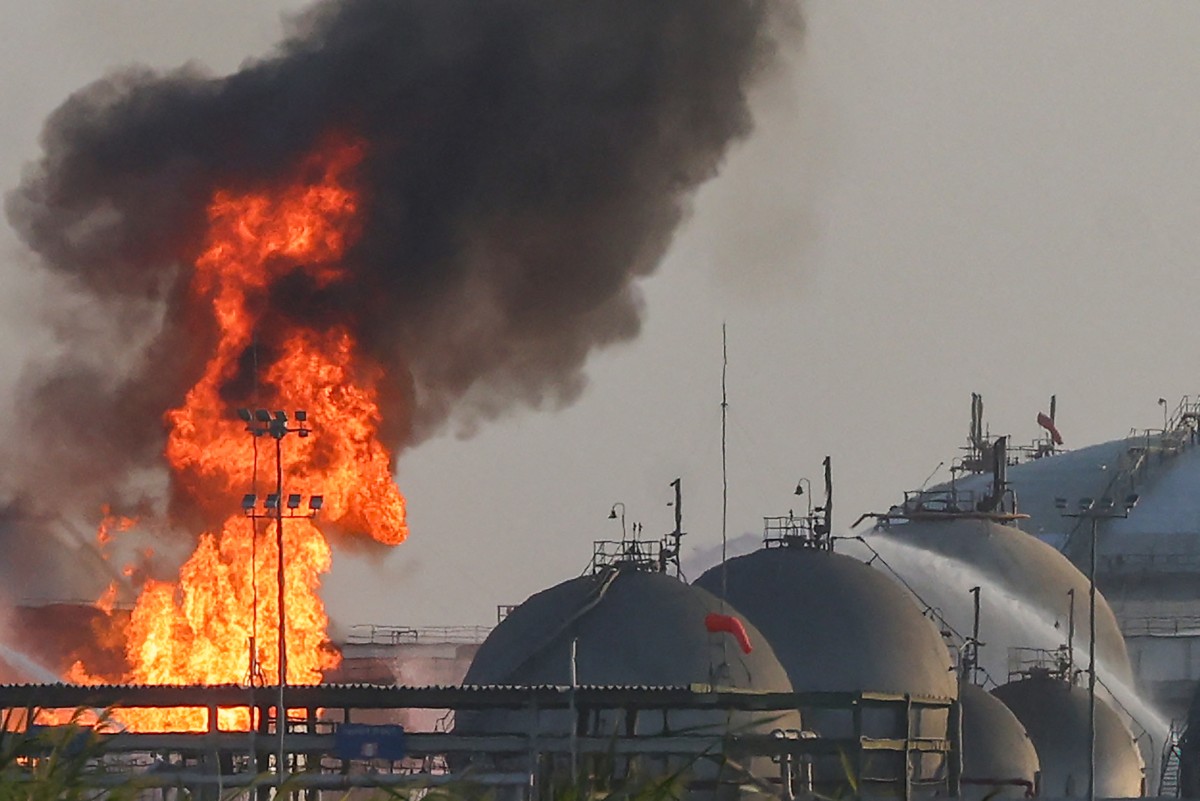
The pro-Iranian Houthi militias targeted Aramco oil facilities in Saudi Arabia last week. (AFP)
Weekly essentials
Author portrait
By LevantTime .
Published Oct 11, 2026 - 20:22
While the U.S.-Iran front remains more or less calm, two troubling signs marked the past week: the escalation on the Yemeni front and the seizure in Lebanon of a truck carrying explosives being transported by Hezbollah militiamen, which has raised fears of further suspected assassinations ordered by their Iranian patron. With Israel’s legislative elections approaching on October 27, and as the war in the Middle East weighs increasingly heavily on the U.S. midterm elections due to take place in early November, violence persists in the region—openly or covertly—on several fronts. Apart from occasional attacks on oil tankers in the Strait of Hormuz, the most worrying signs emerged elsewhere this week: in Saudi Arabia, where Houthi attacks are becoming increasingly deadly, and in Lebanon, where the arrest of pro-Iranian Hezbollah militiamen in possession of half a ton of explosives has revived fears of political assassinations.
Study
Author portrait
By Saoud Al-Mawla - Published Oct 11, 2026 - 15:12
News feature image
Photo MOHAMMED HUWAIS/AFP
VI. The War Against Iran (February-June 2026): the “Limited Intervention” A Late and Symbolic Entry On February 28, 2026, the United States and Israel attacked Iran. Very quickly, Tehran largely closed the Strait of Hormuz, reducing Gulf exports to a trickle. Many expected the Houthis to open a second front at Bab el-Mandeb. They did not. Their involvement was cautious, gradual and late: it was not until March 28, one month after the war began, that they fired their first missiles toward Israel, as though they had waited for the moment when their entry would have the greatest impact. Their operations were limited to missile and drone launches toward Israel. Their military effect was modest, given the distance and the effectiveness of Israeli air defenses. Above all, they avoided high-impact fronts: no campaign against shipping in the Red Sea, no strikes against the Gulf monarchies or regional energy infrastructure. The media dimension compensated for this: each launch sustained the image of a “resistance” force loyal to the Axis. These launches were suspended with the Islamabad Memorandum, concluded in June between Washington and Tehran.
Opinion
Author portrait
By Youssef Mouawad - Published Oct 11, 2026 - 12:53
News feature image
In the current Syrian context, a fundamental question arises with particular urgency: who called for the return of the Golan? Who else could it be but Syrian President Ahmed al-Charaa? But why on earth did the Syrian president reopen the Golan “cold case” when he had so many other priorities to deal with? In his view as a former jihadist, appealing to world opinion at the UN General Assembly meeting on September 23 was not merely a reminder of the Israeli-Syrian dispute dating back to June 1967. So what got into him, when in an interview the previous day he had stressed that direct Israeli-Syrian negotiations had taken place under U.S. auspices and that the two sides had reached 90% of a security agreement? (1)
More Articles
Sort By: NewestOldest
Miscount in Toynbee’s Prediction
By
Nabil Manuel Younes
Published

In 1957, the historian and philosopher of history Arnold Toynbee delivered a lecture at the Cénacle Libanais entitled « Le Liban, expression de l’Histoire ». After exploring the complexity of Lebanese history and its interactions with surrounding civilisations, and after analysing how Lebanon—owing to its geographic position and its multi-confessional composition —has long served as a meeting point as well as a battleground for competing religions and identities, Toynbee concluded his talk with a remarkably prescient warning. He said: If, in the Levant, the frontier between the two global empires—American and Russian—were to be drawn along the crest of Mount Anti-Lebanon, the Lebanese Republic would risk sharing the fate of the State of Israel. Like Israel, Lebanon would not be viable if it were to find itself in a permanent state of hostility with its neighbors to the East.

Del Toro: Exorcising the Man from His Monster
By
Michel Hajji Georgiou
Published

Is it true that a filmmaker essentially explores a single theme—or a single universe—through the whole of their work, in the sense that everything ultimately forms a coherent whole, as Jean-Luc Godard suggested? Guillermo del Toro seems to fit this theory perfectly. The Mexican director, who has just delivered (on Netflix) his own version of one of cinema's most exploited figures—Mary Shelley's Frankenstein —appears driven by a foundational, almost obsessive, even prophetic intuition that is indeed detectable throughout his entire body of work and gives him a rare coherence. For del Toro, the monster is never the monster. Deformed otherness, scarred flesh, unnatural anatomy are never synonymous with actual monstrosity in his work. Quite the opposite: in the Mexican director's vision, the monster is the most human figure of all—one bearing the weight of suffering, loneliness, rejection, humiliation, but also love. Admittedly, he is far from the first to venture onto this terrain. But in an increasingly dehumanized world, his project rings with an even more striking truth.

In Nicaea, the Pope Preaches the Creed of Christian Unity

The city of Iznik, ancient Nicaea, marked a key stop on Pope Leo XIV’s visit to Turkey, as the pontiff led a service dedicated to Christian unity on the shores of Lake Iznik, south of Istanbul. The ceremony brought together Orthodox and Protestant leaders for a prayer service among the ruins of a submerged 4th-century basilica. The Mass commemorated the 1,700th anniversary of the First Ecumenical Council of Nicaea, convened in 325, twelve years after the Roman Empire legalized Christianity. Standing beside Patriarch Bartholomew I of Constantinople and other church leaders, Pope Leo XIV recited the Nicene Creed — a statement of faith still recited by millions of Christians worldwide. The creed was first adopted at the very council that gathered in Nicaea almost 17 centuries ago.

From Leo XIII to Leo XIV (Open Letter)
By
Amine Jules Iskandar
Published

By treating borders and constitutions as sacred and untouchable, today’s Lebanese politics forget that these tools exist for one purpose: the well-being of the human person — the one Your Holiness came to listen to in their suffering. Most Holy Father, During your visit to Lebanon, a grand national scene will be prepared to show prosperity and joy, where the splendor of religious sites will outshine that of state institutions. But has Your Holiness come to see the life of palaces, or the life of a people worn down by fifty years of conflict, poverty and exodus, with no light on the horizon? Allow us, Holy Father, to share words that you will not hear in official halls. Lebanon is exhausted. No society can survive endless wars and crises by treating only the symptoms without ever diagnosing the cause. There is, undoubtedly, corruption at the national level, and the expansionist ambitions of our neighbors at the regional level. But there is also a structural problem rooted in the very formation of our state.

The Levant in Turmoil: An Elusive Peace (1/3)
By
Jean-Patrick Dayras
Published

The Levant unmistakably reached a crucial tipping point on 7 October 2023, as Hamas launched a deadly attack on Israeli territory from the Gaza Strip. The circumstances and repercussions of this swift and bloody offensive sent a seismic shock through Gaza and Israel, of course, but also across other key centers of the Levant, notably Lebanon and Syria, and, by extension, Iran and Yemen. The devastating impact of Hamas’s attack on Gaza and its population has once again brought the entire Israeli-Palestinian conflict to the forefront. Some had hoped that the events of 7 October 2023 might lead to a breakthrough in the longstanding Middle Eastern conflict, which has blighted the region for over seven decades. At this stage, this is far from being the case, at least in appearance. It is particularly regrettable that the Palestinian Authority has been unable to regain the initiative and embark on a swift and promising dialogue with Israel.

Baptized a “message-country,” Lebanon awaits the communion of peace

Pope Leo XIV has chosen Lebanon – baptized by his predecessor, Saint John Paul II, as a “message-country” – for his first apostolic trip outside Italy. Under the theme “Blessed are the peacemakers,” the visit pierces through Lebanon’s war-scarred history like a ray of light. “Blessed are the peacemakers”: four words that set the tone. They leave their mark on the unfolding events and the course of history itself, as well as on the schedule of the visit, which is packed with official and ecumenical meetings, culminating in the solemn Mass to be celebrated along Beirut’s seafront. Yet, one must ask: does Lebanon truly need a communion of peace?