
Levant Time logo

Articles

News feature image
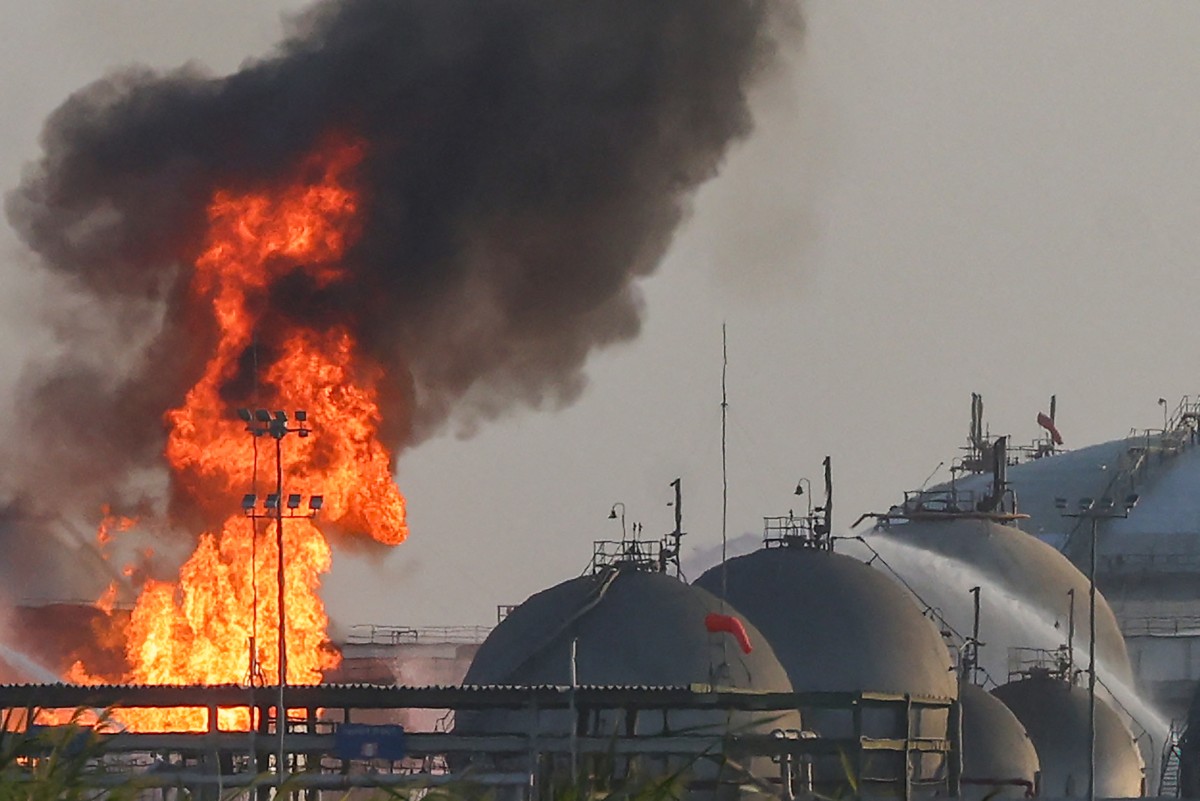
The pro-Iranian Houthi militias targeted Aramco oil facilities in Saudi Arabia last week. (AFP)
Weekly essentials
Author portrait
By LevantTime .
Published Oct 11, 2026 - 20:22
While the U.S.-Iran front remains more or less calm, two troubling signs marked the past week: the escalation on the Yemeni front and the seizure in Lebanon of a truck carrying explosives being transported by Hezbollah militiamen, which has raised fears of further suspected assassinations ordered by their Iranian patron. With Israel’s legislative elections approaching on October 27, and as the war in the Middle East weighs increasingly heavily on the U.S. midterm elections due to take place in early November, violence persists in the region—openly or covertly—on several fronts. Apart from occasional attacks on oil tankers in the Strait of Hormuz, the most worrying signs emerged elsewhere this week: in Saudi Arabia, where Houthi attacks are becoming increasingly deadly, and in Lebanon, where the arrest of pro-Iranian Hezbollah militiamen in possession of half a ton of explosives has revived fears of political assassinations.
Study
Author portrait
By Saoud Al-Mawla - Published Oct 11, 2026 - 15:12
News feature image
Photo MOHAMMED HUWAIS/AFP
VI. The War Against Iran (February-June 2026): the “Limited Intervention” A Late and Symbolic Entry On February 28, 2026, the United States and Israel attacked Iran. Very quickly, Tehran largely closed the Strait of Hormuz, reducing Gulf exports to a trickle. Many expected the Houthis to open a second front at Bab el-Mandeb. They did not. Their involvement was cautious, gradual and late: it was not until March 28, one month after the war began, that they fired their first missiles toward Israel, as though they had waited for the moment when their entry would have the greatest impact. Their operations were limited to missile and drone launches toward Israel. Their military effect was modest, given the distance and the effectiveness of Israeli air defenses. Above all, they avoided high-impact fronts: no campaign against shipping in the Red Sea, no strikes against the Gulf monarchies or regional energy infrastructure. The media dimension compensated for this: each launch sustained the image of a “resistance” force loyal to the Axis. These launches were suspended with the Islamabad Memorandum, concluded in June between Washington and Tehran.
Opinion
Author portrait
By Youssef Mouawad - Published Oct 11, 2026 - 12:53
News feature image
In the current Syrian context, a fundamental question arises with particular urgency: who called for the return of the Golan? Who else could it be but Syrian President Ahmed al-Charaa? But why on earth did the Syrian president reopen the Golan “cold case” when he had so many other priorities to deal with? In his view as a former jihadist, appealing to world opinion at the UN General Assembly meeting on September 23 was not merely a reminder of the Israeli-Syrian dispute dating back to June 1967. So what got into him, when in an interview the previous day he had stressed that direct Israeli-Syrian negotiations had taken place under U.S. auspices and that the two sides had reached 90% of a security agreement? (1)
More Articles
Sort By: NewestOldest
Why Lebanon Urgently Needs a Comprehensive Law to Protect Women

In Lebanon, women remain acutely vulnerable to a wide range of abuses and acts of violence, largely because there is still no political will to enact meaningful legislative reform to dismantle entrenched discrimination. The figures speak for themselves: up to November 2025, 89% of all reports made to hotline 1745 – dedicated to domestic violence – came from women. In 57.5% of these cases, the aggressor was the husband. In 2024 alone, at least 17 women were killed; in 60% of those cases, the perpetrator was their spouse. Confronted with this alarming reality and staying true to its mission since its creation in 2005, Kafa – an NGO fighting gender-based violence and exploitation – is calling for the adoption of a comprehensive law, an “essential tool”, it argues, to prevent and combat this phenomenon. To highlight the urgency of such legislation, the organization launched “Ayb”, or “Shame on You”, on 25 November, marking the start of the international “Sixteen Days of Activism Against Gender-Based Violence Against Women and Girls”, which runs until 10 December, International Human Rights Day.

Syria, Between Challenges and Opportunities: commitments to large-scale investments (3/4)

In our two previous articles, we examined Syria’s various assets as well as the numerous challenges it faces. Since the fall of Bashar al-Assad’s regime, the country has entered a new era, bringing with it huge opportunities. The formation of a new government led by Ahmad al-Charaa, and Donald Trump’s announcement of the lifting of U.S. sanctions, has triggered Syria’s reconstruction. Since then, donations, investments, and capital have poured into the country. It is therefore worth looking at the sectors that would benefit most from these capital inflows and the impact they could have on Syria’s future economic development.

Môrice Awwad, the man who returned to language its maternal womb

Passing away on December 9, 2019, Môrice Awwad remains an exception in the Lebanese cultural and literary landscape. This is the portrait of a rebellious man — shortlisted in 2015 for the Nobel Prize in Literature — and of his visceral relationship with the mother tongue, the vernacular, Lebanese, which he turned into his banner, his matrix-territory, and his reason for being. Môrice Awwad was born in 1934 into a Greater Lebanon still at its first hesitant steps, yet already traversed by the tension of everything to come: independence, the golden age, then violence and the return to servitude. But it is not his birth that matters so much as the birth of language inside him. One must imagine that Awwad was immersed — almost literally — in a Lebanese linguistic placenta, strange as the image may be, in the entrails of his mother. “I remember hearing my mother cry when I was still inside her,” he would later write. From childhood on, in the house in Bsalim, a bond forms — and it will never come undone: the language of his mother — spoken Lebanese — becomes his first home. The only one that will never crack.

“Nostra aetate”: A Gesture That Says It All (2/4)

In our first article, we looked at the circumstances that gave rise to Nostra aetate , the Vatican II declaration on the Church’s relationship with non-Christian religions. Clear and precise, the text leaves nothing in the shadows and avoids a different “substitution”: replacing the Church’s mission with dialogue. But that is another story. Regarding the Jews, Nostra aetate explicitly rejects the notion of collective responsibility for Christ’s death, as some have interpreted passages of the Gospel, including the crowd’s cry: “His blood be on us and on our children!” It makes clear that “what happened during the Passion cannot be ascribed indiscriminately either to all the Jews then living, or to the Jews of today.”

The Levant in Turmoil: Iran Caught in the Tornado (3/3)

The two years following Hamas’s 7 October 2023 attack on Israel have marked a decisive turning point not only for the Levant region but for the entire Middle East. In this ongoing regional upheaval, Iran has not escaped unscathed; indeed, it has been severely affected. In a context of heightened geopolitical turbulence, the Islamic Republic of Iran now faces a dual challenge: to regain its prestige on an international level, and, simultaneously, to restructure itself internally so as to be prepared for the various scenarios that could rapidly emerge on the horizon. Bluster on the international stage is no longer an option. Iran’s dual support for the Houthis and Hezbollah, in particular, must be carefully weighed in light of the risks involved, foremost among them those posed by President Donald Trump, who, for the time being, remains the most powerful figure on the international stage. Should China – his main competitor – force him into a direct, fierce confrontation with them, one could then expect President Trump to settle any dispute in a manner that safeguards his reputation and almost unassailable position. China has no desire to intervene in a Middle Eastern powder keg; it prefers to wait for the right moment to exploit the situation to its advantage.

Open Letter to Leo XIV: Rekindling the Torch of Francis
By
Michel Hajji Georgiou
Published

Holy Father, at the moment when you are about to set foot on the soil of Lebanon and Turkey, on the threshold of this wounded Levant that was once one of the cradles of believing humanity, we dare to write to you. The aim is not to add one more voice to the concert of protocol speeches. That would be of absolutely no interest. Empty formulas, glittering but soulless, you will hear in abundance during your visit. This letter asks of you something at once simple and vertiginous: to take up the torch. The torch of Francis. That of an integral humanism which strove, against all odds, to grasp the Gospel in its most naked form: the dignity of every human being, fraternity as the only possible horizon of politics, religion freed from identitarian idols.