
Levant Time logo

Articles

News feature image
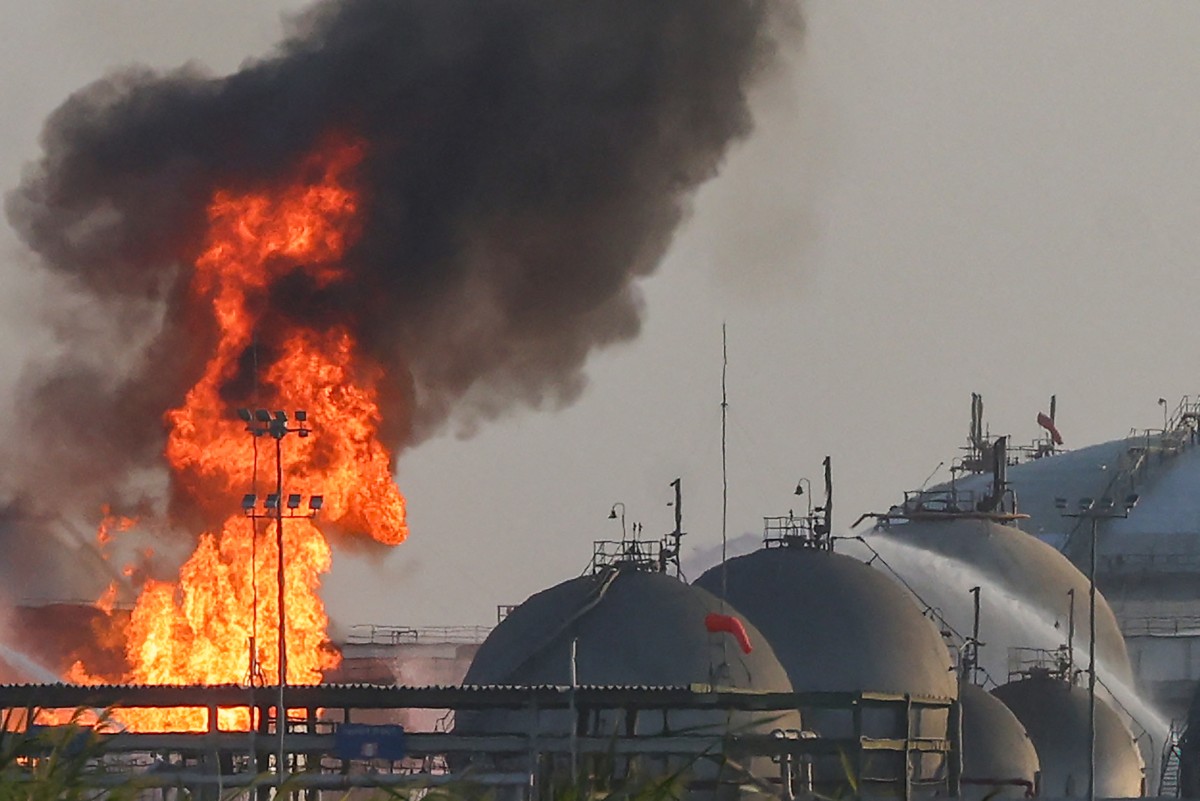
The pro-Iranian Houthi militias targeted Aramco oil facilities in Saudi Arabia last week. (AFP)
Weekly essentials
Author portrait
By LevantTime .
Published Oct 11, 2026 - 20:22
While the U.S.-Iran front remains more or less calm, two troubling signs marked the past week: the escalation on the Yemeni front and the seizure in Lebanon of a truck carrying explosives being transported by Hezbollah militiamen, which has raised fears of further suspected assassinations ordered by their Iranian patron. With Israel’s legislative elections approaching on October 27, and as the war in the Middle East weighs increasingly heavily on the U.S. midterm elections due to take place in early November, violence persists in the region—openly or covertly—on several fronts. Apart from occasional attacks on oil tankers in the Strait of Hormuz, the most worrying signs emerged elsewhere this week: in Saudi Arabia, where Houthi attacks are becoming increasingly deadly, and in Lebanon, where the arrest of pro-Iranian Hezbollah militiamen in possession of half a ton of explosives has revived fears of political assassinations.
Study
Author portrait
By Saoud Al-Mawla - Published Oct 11, 2026 - 15:12
News feature image
Photo MOHAMMED HUWAIS/AFP
VI. The War Against Iran (February-June 2026): the “Limited Intervention” A Late and Symbolic Entry On February 28, 2026, the United States and Israel attacked Iran. Very quickly, Tehran largely closed the Strait of Hormuz, reducing Gulf exports to a trickle. Many expected the Houthis to open a second front at Bab el-Mandeb. They did not. Their involvement was cautious, gradual and late: it was not until March 28, one month after the war began, that they fired their first missiles toward Israel, as though they had waited for the moment when their entry would have the greatest impact. Their operations were limited to missile and drone launches toward Israel. Their military effect was modest, given the distance and the effectiveness of Israeli air defenses. Above all, they avoided high-impact fronts: no campaign against shipping in the Red Sea, no strikes against the Gulf monarchies or regional energy infrastructure. The media dimension compensated for this: each launch sustained the image of a “resistance” force loyal to the Axis. These launches were suspended with the Islamabad Memorandum, concluded in June between Washington and Tehran.
Opinion
Author portrait
By Youssef Mouawad - Published Oct 11, 2026 - 12:53
News feature image
In the current Syrian context, a fundamental question arises with particular urgency: who called for the return of the Golan? Who else could it be but Syrian President Ahmed al-Charaa? But why on earth did the Syrian president reopen the Golan “cold case” when he had so many other priorities to deal with? In his view as a former jihadist, appealing to world opinion at the UN General Assembly meeting on September 23 was not merely a reminder of the Israeli-Syrian dispute dating back to June 1967. So what got into him, when in an interview the previous day he had stressed that direct Israeli-Syrian negotiations had taken place under U.S. auspices and that the two sides had reached 90% of a security agreement? (1)
More Articles
Sort By: NewestOldest
Re-anchoring Lebanon’s Shiites in the Lebanese Project
By
Michel Hajji Georgiou
Published

The history of Lebanese Shiism is too often told backwards, or worse, flattened by a teleological reading that presents Hezbollah as the natural culmination of a long religious and political continuum. Nothing could be further from the truth. Scholarly work on the ulama of Jabal Amel, on the contrary, allows us to reconstruct a very different genealogy—one rooted in doctrinal pluralism, a conscious relationship to the state, and a non-theocratic conception of religious authority. It is precisely this tradition that has been broken. Historically, Ameli Shiism developed within the framework of wilayat al-umma : a community of believers endowed with moral and spiritual autonomy, but not with a project of political domination. The choice of marja‘iyya was free and plural, often oriented toward Najaf, within a deliberately distanced relationship between clerical authority and political power. This tradition acknowledged the diversity of religious authorities, rejected doctrinal centralization, and, above all, did not seek to govern society in the name of the sacred.

Leo XIV in Annaya, a Particular Dimension for the Maronites

At a time of rising regional particularisms, under the effect of the war in Gaza, the Pope's recent visit to Lebanon, particularly to Annaya, takes on a special dimension for Maronites. It should be an opportunity for this community to activate its historical research on an academic level and to refresh its memory on the "missionary" nature of its presence in Lebanon as a historical core of Lebanese identity. Pope Leo XIV's recent visit to Annaya on December 1, 2025, should be the first groundbreaking of a Maronite historical project “revisited.” Beyond the person of Saint Charbel, the Pope indeed went to the source of the Lebanese Maronite Order (OLM), which encapsulates the essence of the Maronite Church. In Annaya, we are also at the source of Greater Lebanon, of which John Paul II affirmed that “its historical roots are religious in nature.” Here we touch upon its genesis.

"The Iranian Empire”: Anatomy of a Fall (1/5)
By
Michel Hajji Georgiou
Published

The year 2025 was a pivotal year in the Middle East, as it shattered a project that had been in gestation since the early 1980s - including the al-Daawa party in Iraq, Hezbollah in Lebanon, and the Assad regime in Syria - Michel Seurat had been one of the first to discuss it in his articles. Later, in the 2000s, Hamas in Gaza and the Houthis in Yemen joined this dynamic, which also attempted to establish itself in Bahrain during the Arab Spring of 2011. It was, incidentally, in 2005-2006, after the overthrow of Saddam Hussein in Iraq, the assassination of Rafic Hariri, the July 2006 war, and the gradual subjugation of Fatah by Hamas in Gaza, that the Iranian “Shiite crescent” project truly took shape… before receiving de facto legitimacy in 2015 through the Joint Comprehensive Plan of Action on Iranian nuclear, a golden “gift” from Barack Obama that benefited the imperialist ambitions of the mullahs.

Iranian Women Defy Oppression Unveiled
By
LevantTime .
Published

Is the mullahs' regime loosening its grip on the mandatory wearing of the Islamic veil, or is it granting a temporary relaxation to appease an exasperated population? One thing is certain: in recent years, women have increasingly defied the strict rules of the Islamic Republic, and a wind of freedom is blowing through the streets of Iran. Women dancing at parties or chatting in cafes... without headscarves. Images unimaginable until recently are multiplying. Braids, curly hair, or bleached hair are now making their mark in public spaces, alongside more traditional women wearing the hijab or the chador.

When a Sovereign Minister is Condemned and Populist Outbursts are Rewarded

In Lebanon, politics is no longer measured by results or the extent to which national interests are protected, but rather by the loudness of one's voice, the intensity of one's rhetoric, and the ability of an official to appease the instincts of a divided and exhausted public. In this climate, any minister who chooses calm, cool-headed thinking, and working without grandstanding becomes a potential target of constant accusation. This is precisely what Foreign Minister Youssef Raggi is facing, as he is subjected to a campaign of criticism inseparable from a deeper crisis afflicting the very concept of the state.

The commodity super cycle: the new gold rush
By
Jacques Mechelany
Published

For the past two years, investors have watched gold and silver climb relentlessly — at times with disbelief. Since December 2023, gold has more than doubled, rising from roughly $2,000 to around $4,300, while silver has surged from about $26 to $63, with momentum accelerating sharply in the second half of 2025. If current levels hold into year-end, both metals are on track to register their strongest annual performance since 1979 — the opening chapter of the last great precious-metals cycle. And the “shiny metals” have not been alone. Platinum and palladium have also rallied sharply, copper is up roughly 50%, and a broad range of strategic minerals is enjoying a banner year.