
Levant Time logo

Articles

News feature image
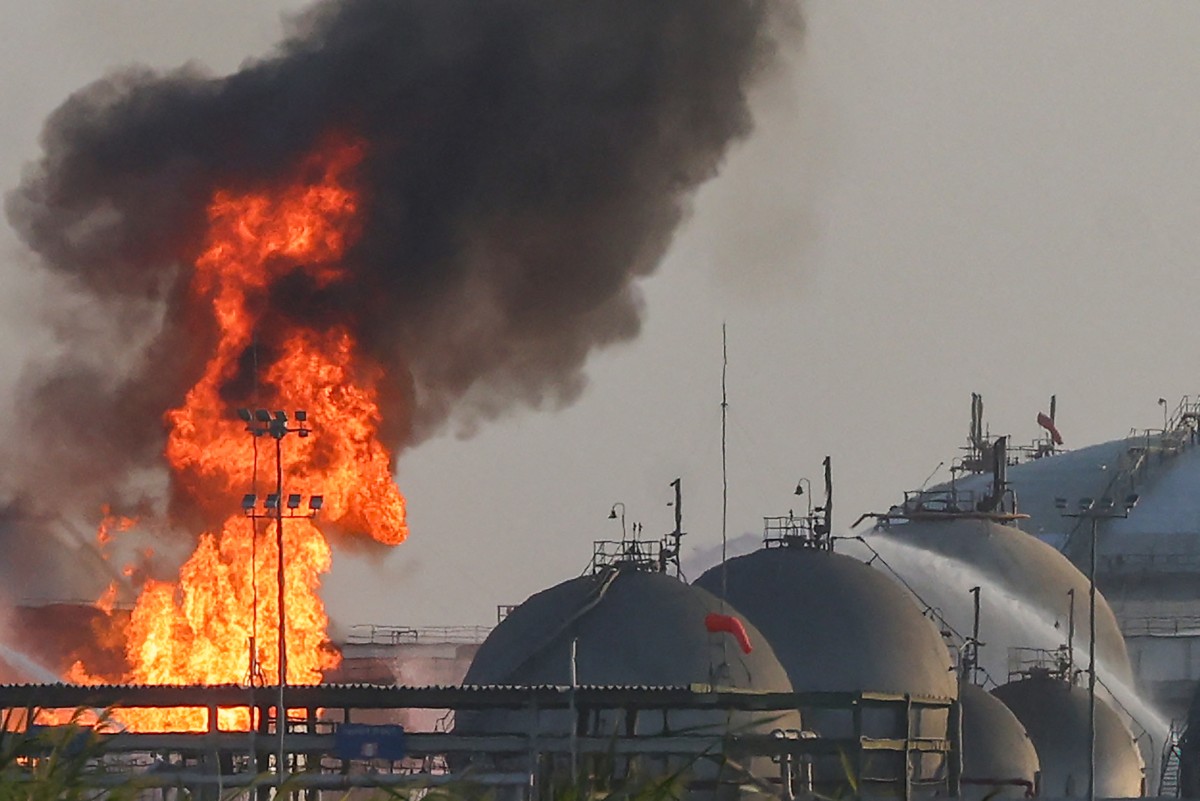
The pro-Iranian Houthi militias targeted Aramco oil facilities in Saudi Arabia last week. (AFP)
Weekly essentials
Author portrait
By LevantTime .
Published Oct 11, 2026 - 20:22
While the U.S.-Iran front remains more or less calm, two troubling signs marked the past week: the escalation on the Yemeni front and the seizure in Lebanon of a truck carrying explosives being transported by Hezbollah militiamen, which has raised fears of further suspected assassinations ordered by their Iranian patron. With Israel’s legislative elections approaching on October 27, and as the war in the Middle East weighs increasingly heavily on the U.S. midterm elections due to take place in early November, violence persists in the region—openly or covertly—on several fronts. Apart from occasional attacks on oil tankers in the Strait of Hormuz, the most worrying signs emerged elsewhere this week: in Saudi Arabia, where Houthi attacks are becoming increasingly deadly, and in Lebanon, where the arrest of pro-Iranian Hezbollah militiamen in possession of half a ton of explosives has revived fears of political assassinations.
Study
Author portrait
By Saoud Al-Mawla - Published Oct 11, 2026 - 15:12
News feature image
Photo MOHAMMED HUWAIS/AFP
VI. The War Against Iran (February-June 2026): the “Limited Intervention” A Late and Symbolic Entry On February 28, 2026, the United States and Israel attacked Iran. Very quickly, Tehran largely closed the Strait of Hormuz, reducing Gulf exports to a trickle. Many expected the Houthis to open a second front at Bab el-Mandeb. They did not. Their involvement was cautious, gradual and late: it was not until March 28, one month after the war began, that they fired their first missiles toward Israel, as though they had waited for the moment when their entry would have the greatest impact. Their operations were limited to missile and drone launches toward Israel. Their military effect was modest, given the distance and the effectiveness of Israeli air defenses. Above all, they avoided high-impact fronts: no campaign against shipping in the Red Sea, no strikes against the Gulf monarchies or regional energy infrastructure. The media dimension compensated for this: each launch sustained the image of a “resistance” force loyal to the Axis. These launches were suspended with the Islamabad Memorandum, concluded in June between Washington and Tehran.
Opinion
Author portrait
By Youssef Mouawad - Published Oct 11, 2026 - 12:53
News feature image
In the current Syrian context, a fundamental question arises with particular urgency: who called for the return of the Golan? Who else could it be but Syrian President Ahmed al-Charaa? But why on earth did the Syrian president reopen the Golan “cold case” when he had so many other priorities to deal with? In his view as a former jihadist, appealing to world opinion at the UN General Assembly meeting on September 23 was not merely a reminder of the Israeli-Syrian dispute dating back to June 1967. So what got into him, when in an interview the previous day he had stressed that direct Israeli-Syrian negotiations had taken place under U.S. auspices and that the two sides had reached 90% of a security agreement? (1)
More Articles
Sort By: NewestOldest
Please Forget
By
Jawad Pakradouni
Published

For many, forgetting is a coping mechanism that helps them overcome hardship. But it is also the means—and often the goal—sought by wrongdoers eager to erase their tracks. A population with the memory of a goldfish is every fisherman’s dream: a form of collective Alzheimer’s that guarantees a quiet life, smooth and undisturbed. Lebanon is perhaps the most striking example. Recently, some financial institutions have begun offering interest-bearing returns on cash deposits—an expression we had not heard since 2019. For many, this is worse than the apple in the Garden of Eden: Adam and Eve were naked before taking a bite, whereas we succumbed to these usurious interest rates, which led us straight into erosion and ruin.

In Riyadh, Art Everywhere and for Everyone
By
Micha Moussallem
Published

The entire Gulf region, and especially Saudi Arabia, is currently experiencing major social and economic transformations. These countries, whose economy once relied solely on oil production, are rapidly opening up to new technologies, AI, global sporting events, and most importantly, art and culture. From Jax, the cultural district of Riyadh, to the AlUla Oasis, Saudi Arabia—the largest country in the Middle East—is investing huge sums to promote art and culture. For the Saudi government, in a society undergoing profound changes, art helps preserve the country’s cultural heritage, transmit traditions and ancestral know-how, while opening the door to cutting-edge artistic projects. Among these ambitious projects, Riyadh Art holds a special place. Launched in 2019 by King Salman bin Abdulaziz Al Saud, it is part of Vision 2030, the grand development plan of Crown Prince Mohammed bin Salman.

“The Iranian Empire”: The Land Corridor and the Ambition of the Levantine Empire

Iran's strategy is not solely maritime. It has been built, with almost Roman patience, around a land arc : Tehran – Baghdad – Damascus – Beirut. For twenty years, Tehran patiently constructed a “Shiite crescent” connecting Iran to the Mediterranean, under the control of the vilayet e-faqih , the Iranian spiritual guide. Thus, it has sanctified Shiite militias and taken control of border areas in Iraq; it gained decision-making ascendancy from 2012 in its partnership with the Assad regime, with the intervention of the Pasdaran and Hezbollah to protect the Assad regime (later shared with Moscow during the Russian intervention from September 2015; and, above all, with the peak, from 2008, of Hezbollah in Lebanon as an expeditionary force and strategic projection tool).

Like leaven in the dough…
By
Fady Noun
Published

The vocation of the Church, of every Church and of all Churches, is charted by Christ. This vocation is both to be universal and inclusive with the aim of banishing all discrimination. It is to be the leaven in the dough and/or the salt without which all food loses its flavor and becomes inedible. In other words, as salt is made for food, we are not made for ourselves, we are 'beings for others.' This vocation is also to proclaim, through our words and our actions, the 'good news' of Christ. 'The foundational base of a minimal national history' and the beginning of the crystallization of a national identity, observed by historian Candice Raymond, is what we have most precious to offer our compatriots – and we must speak of it indistinctly as Maronites and as Lebanese. This foundation is our pride: it is the beginning of a stable and defined identity that we must protect from anything that could disfigure it.

How Hezbollah Shifts the Burden onto the Lebanese State

The jugular vein that once supplied it with weapons and ammunition has been severed. And yet, Hezbollah refuses to abide by the commitments made in its name through Nabih Berri. Because it does not believe it has been defeated—and because the fertile ground of the South, where it took root, has not contradicted that belief. To be perfectly frank, a handful of dissenting and comforting Shiite voices are hardly enough to bring it back to reason. Though the party of the mullahs has taken a beating, it has not abandoned the fight. It has gone underground to preserve the core of its forces. According to certain sources, it has even rebuilt its military capabilities. In other words, it is recovering. At the same time, it has worn down Western diplomacy, which is openly hostile to it. It can therefore savor its victory. Playing the card of “strategic patience,” learned from seasoned masters, it has created such a diplomatic mess that France has once again rushed to Lebanon’s bedside—to untangle the knot.

“The Iranian Empire”: In Yemen, the Houthi gamble (2/5)

Tehran's regional policy over the past twenty-five years has obeyed a clear logic: to establish itself on the bottlenecks and corridors of the Middle East, transform straits, land routes, and enclaves into instruments of strategic blackmail, and build a defensive depth around Iran made up of militias and subservient regimes. Within the framework of this policy, Yemen and the Houthis have played a central role. Yemen, fragmented and failed, constituted the ideal terrain for the Islamic Republic of Iran to install this 'western twin'. The Houthi movement, backed by a Zaydi matrix and a malleable anti-imperialist grammar, offered Tehran a proxy capable of: holding the capital Sanaa; controlling a large portion of the Red Sea coast; and threatening Bab el-Mandeb with missiles, drones, and booby-trapped boats.