

Who Gets to Write a Book?
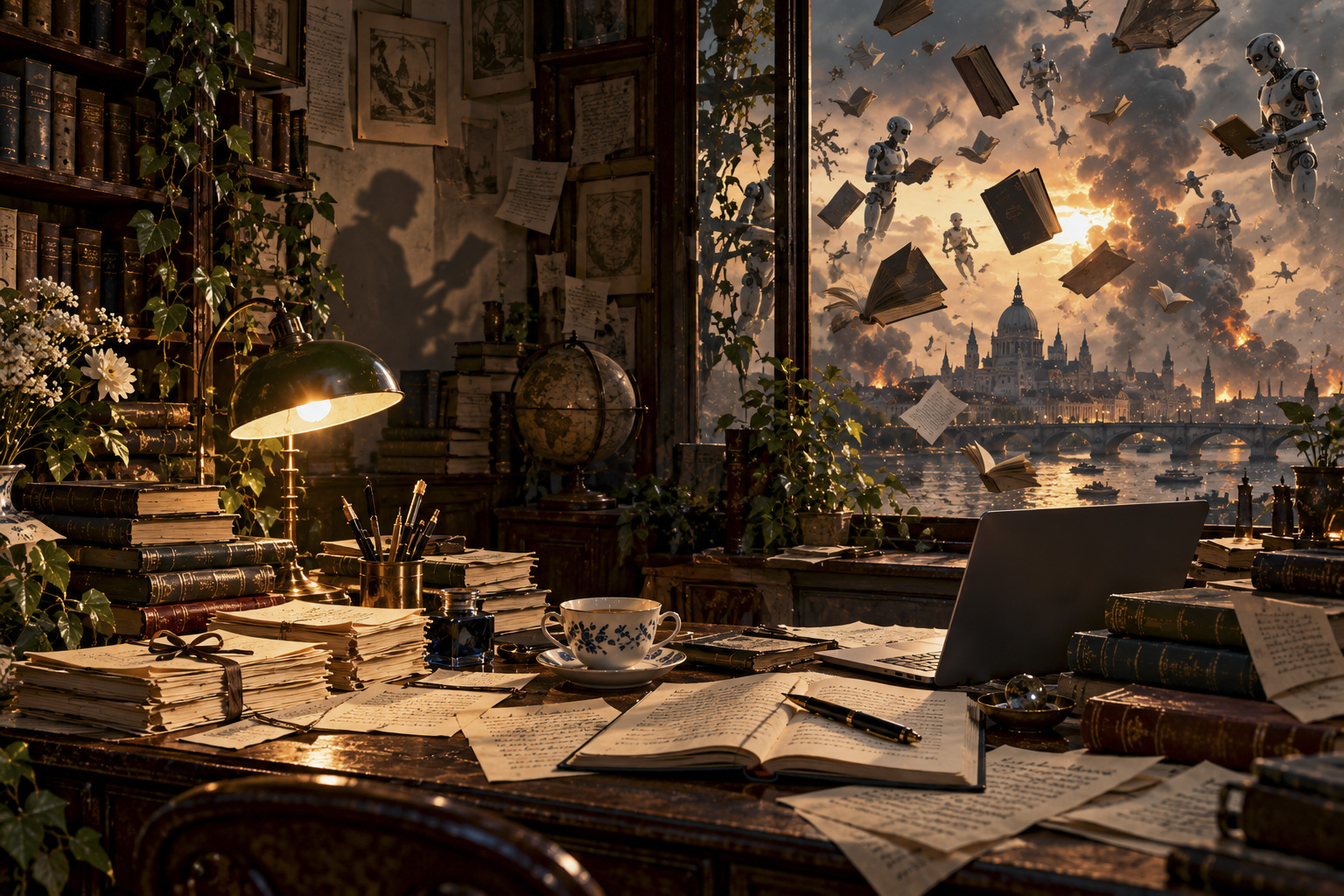
I do not know whether Thélyson Orélien wrote C’était ça ou mourir entirely by himself.
I pause at that last phrase. By himself.
Why does it suddenly feel more complicated than the accusation itself? What does it mean, really, to write alone? Where does that solitude begin, and where does it end?
Orélien’s novel had just won the Prix du Roman Fnac when an anonymous account on X, followed by only a few dozen people, began posting screenshots from an AI-detection tool. Percentages appeared. Claims followed. Within hours, a writer who had just won a literary prize was being asked to prove that he had written the book carrying his name.
There is something deeply strange about that.
I do not know whether Orélien used artificial intelligence. I do not know what he might have used it for, or at what point in the writing process. The people accusing him do not know either.
Yet suspicion seems to need surprisingly little these days.
Sometimes, a number is enough.
89 per cent. 95 per cent. 99 per cent.
Numbers have a peculiar authority when they arrive dressed as science.
This is where the whole affair begins to trouble me.
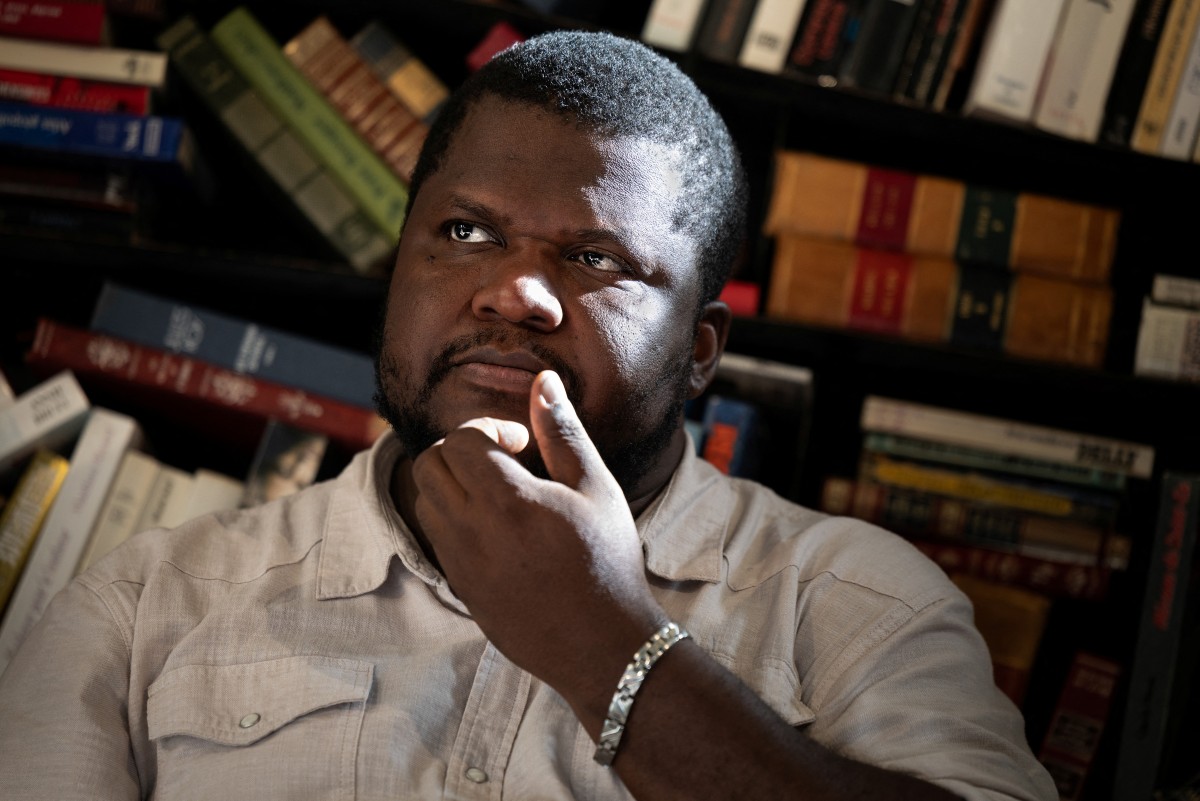
Thélyson Orélien.
For years now, we have been learning to distrust AI. We know the routine. It invents references, assigns quotations to the wrong people, confidently recommends books that do not exist and answers questions it has misunderstood with an assurance I sometimes envy.
So we learned to check.
I do it myself. A date, a title, a quotation, I look elsewhere. I have learned to doubt the machine.
Then another machine tells me that a writer cheated, and suddenly I am expected to set that doubt aside. Why?
Why do we distrust AI when it tells us about history, yet trust it when it tells us who wrote literature?
We know these systems work through probabilities, patterns, resemblance. Still, the moment a detector tells us that a piece of writing looks like something AI might have produced, resemblance quietly hardens into evidence.
TV5Monde reportedly put the First Epistle to the Corinthians through Pangram, the detector at the center of the controversy. The result identified the text as 89 percent AI-generated.
I laughed.
For a moment, I imagined Paul of Tarsus sitting somewhere with a computer no one had thought to mention for the past two thousand years.
Then I stopped laughing. Because once the joke is over, the question left behind is not funny at all.
How do you prove that you wrote a sentence?
Do you produce your drafts? Your Word files? Ink stains on your fingers? Versions sent to a friend? What if you do not keep drafts? What if you delete as you write? What if you are one of those people who think for a long time and then write quickly, as I do?
At what point did we begin imagining that writers should preserve evidence of their own thinking in case they are later asked to prove ownership of it?
That worries me.
But another question bothers me even more.
Why are we so attached to the idea that a writer should be alone?
What does alone even mean?
I have been writing for years. I also translate. And I do not think I have ever written alone.
Writers who died centuries ago live inside my sentences, so do words I once heard and later forgot. A dream in which a lover recites a poem that came from nowhere. Someone who once told me a paragraph was not working. Someone else who asked me not to delete a sentence I thought was terrible.
There are the languages I speak, and the ones I stumble through. Books I loved. Books I hated. A turn of phrase absorbed without noticing. An image caught in the street. An editor. A translator.
And then there are all the people whose traces I would no longer know how to identify because, somewhere along the way, they became part of the way I write.
My name still appears alone on the cover.
We have grown comfortable with this fiction.
Roland Barthes challenged the authority we grant the Author, that figure we place behind every sentence as if a text must lead us back to a single origin, a single intention, a final truth. Howard Becker approached art from another direction and showed how many people, conventions, tools, institutions and forms of labor stand behind any work. A work of art rarely enters the world alone.
Still, we have never quite given up on the old image of the solitary creator.
We like the writer alone in a room, at a desk, preferably a little exhausted.
We like the hand moving across the page at night. We like to believe that something almost sacred links the work to the person whose name appears beneath it.
Then a machine pulls up a chair. And something in the scene breaks.
I understand that discomfort. I also share it.
If someone asks an AI system to generate an entire novel, takes the output, changes nothing and signs their name, I would also question what authorship means in that case.
But that extreme example does not help us understand most of what is happening now.
The phrase “written with AI” covers an enormous range of practices, yet we often speak as though it describes one thing.
I use AI myself. I say that plainly. I use it with the English that still likes to remind me it is not fully mine. Sometimes I give it a sentence and ask for help. It gives me five alternatives that I hate, and I return to my original sentence, pleased with my small victory.
Someone else asks for a translation. Someone summarises their notes. Another wants title ideas.
And another spends hours arguing with the machine, changing prompts, rejecting answers, keeping half a sentence and discarding the rest.
And then there is this someone who asks for a hundred pages and puts their name on them the next morning.
How did all of these become the same act? How did one word, cheating, come to cover so much ground?
Perhaps because cheating is a comfortable word, it ends the conversation.
And thinking rather than judging is harder.
I want to know when a tool assists, when it participates, and when it takes over. I want to know when the writer still directs the work and when the name on the cover has become little more than a curtain hiding the real process. I also want to know what publishers expect.
What do they accept? What do they reject? What do they want writers to disclose?
Those answers will change in the coming years. They should.
What concerns me is the idea that the answers already exist, and that all we need is another piece of software to deliver the verdict.
There is another part of this story that interests me even more. Pleasure.
Suppose I read a sentence and love it (love may even be too weak a word). And something happens.
I stop reading, close the book for a moment and stare at the wall. Then I go back to the sentence because it seems to know something about me that I have never told anyone.
The next day, someone tells me a machine wrote it.
What happens to yesterday? Do I take the feeling back? Do I tell myself I was fooled, and therefore what I felt was false? Does an emotion become less real once I learn something new about where the sentence came from?
For a long time, I have liked to believe that behind a sentence, there is a person, and behind fear, there is a body that has known fear, and behind a sentence about a mother dying, there exists someone who knows what the world looks like after a mother dies.
There is comfort in that, as though language carries some warmth from the body it passed through before reaching mine.
Then a machine appears, having no soul and no body. It writes about loss without losing, it translates desire without desiring, it approaches death without knowing it will die.
And it might produce a beautiful sentence, perhaps even a great one.
If the sentence were bad, this would all be much easier. But what do we do with beauty?
What if the sentence makes us cry? Do our tears count for less because whatever produced them has never cried?
I suspect this is where some of our fear lives. We are unsettled by the possibility of an effect without the experience we have always assumed must stand behind it.
Grief without someone grieving, and Beauty with no awareness of itself.
I do not want to answer that question yet, simply because I am even less interested in having a detector answer it for me.
Publishers, though, have another part of the problem to solve.
A manuscript does not arrive at publication untouched. People read it and discuss it. They edit, and they correct it. It gets a cover, publicity, and review copies. It enters prize lists.
A publishing house places its name beside the author’s and stands behind the book through every stage of that process.
Then an anonymous account appears on X and says a machine wrote it.
Suddenly, the author seems to be standing alone. The author has to explain; he has to justify; he has to open drawers, files, drafts, perhaps even memory itself.
That solitude should concern publishers. They need to decide what counts as ordinary use of a tool that is already part of our lives, and what crosses a line into something that changes the nature of authorship itself. They need rules, even temporary ones. Rules that evolve are still better than a vacuum. Because a vacuum will be filled by a detector, or by an anonymous account, and, seemingly, like the case at hand, by a percentage.
And I have a problem with all three when they begin to behave like a court.
I still do not know whether Thélyson Orélien used artificial intelligence to write his novel.
What I keep thinking about now is my next piece of writing. Or this one you are reading now.
Will I need, from now on, to leave enough traces behind so that one day I can retrace my steps and prove I was there when the sentences appeared?
I find that thought almost more disturbing than the idea of a machine writing.
Because then I would no longer write only to be read. I would also be writing for the day I might have to prove that those words are mine.