
Levant Time logo
Rita Barotta

Rita Barotta

Who Gets to Write a Book?
By
Rita Barotta
Published
Sep 25, 2026 - 13:08

I do not know whether Thélyson Orélien wrote C’était ça ou mourir entirely by himself. I pause at that last phrase. By himself. Why does it suddenly feel more complicated than the accusation itself? What does it mean, really, to write alone? Where does that solitude begin, and where does it end? Orélien’s novel had just won the Prix du Roman Fnac when an anonymous account on X, followed by only a few dozen people, began posting screenshots from an AI-detection tool. Percentages appeared. Claims followed. Within hours, a writer who had just won a literary prize was being asked to prove that he had written the book carrying his name.
Who Has the Right to Write a Manifesto?
By
Rita Barotta
Published
Sep 16, 2026 - 17:13

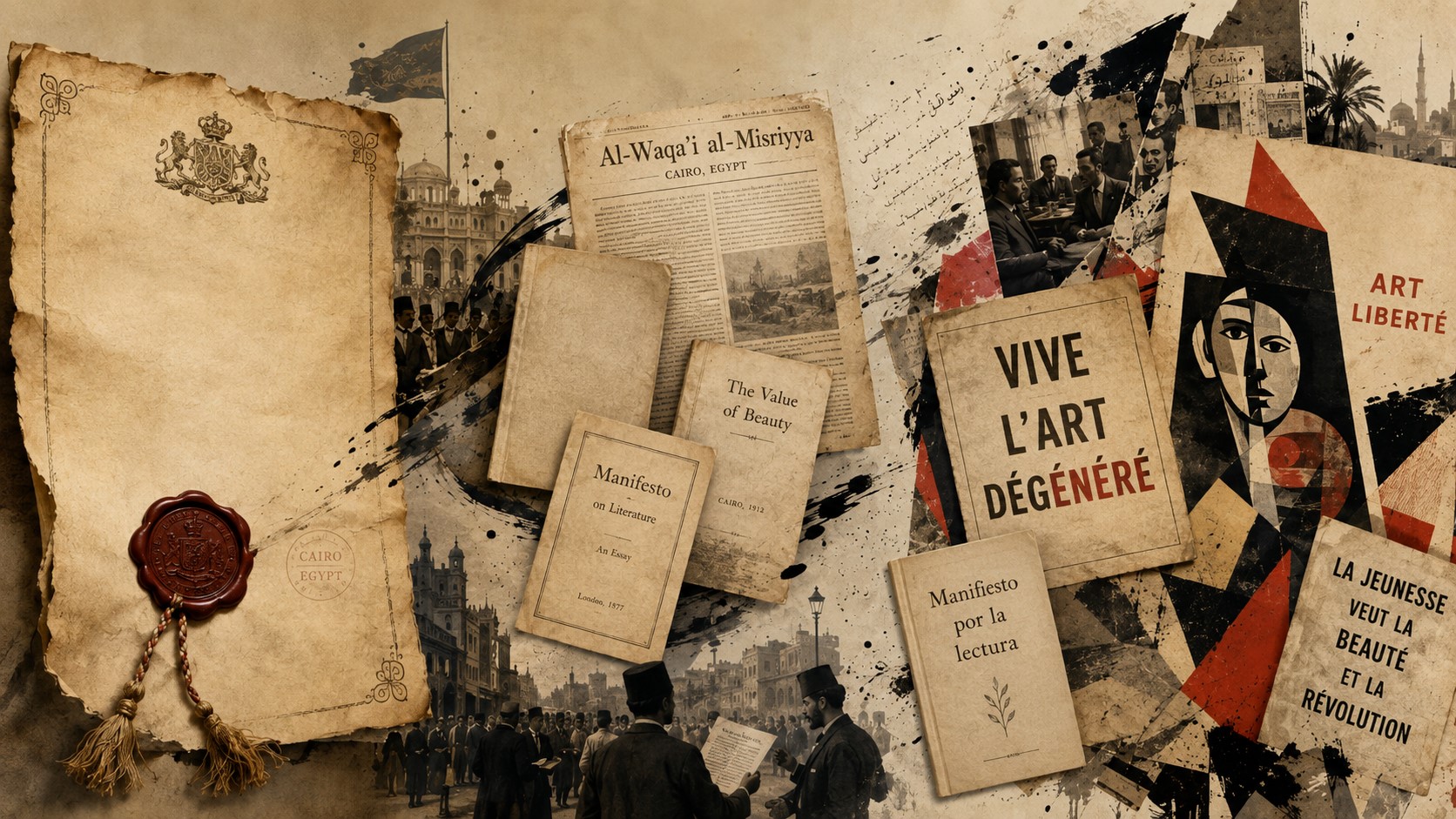
This is the third and final essay in a three-part series on the manifesto, both as a form of writing and as a way of intervening in the world. The first returned to the history of proclamation and to the authority it grants the person who speaks. The second lingered on the tensions carried by the pronoun “we,” and on what is at stake when a manifesto speaks in the name of a group. This third essay returns to the question that set the whole journey in motion, and to Irene Vallejo’s book, to ask something else: what does a text do when it calls itself a manifesto, and how far can the gestures held within that word reach?

Who Has the Right to Write a Manifesto?
By
Rita Barotta
Published
Sep 1, 2026 - 20:32

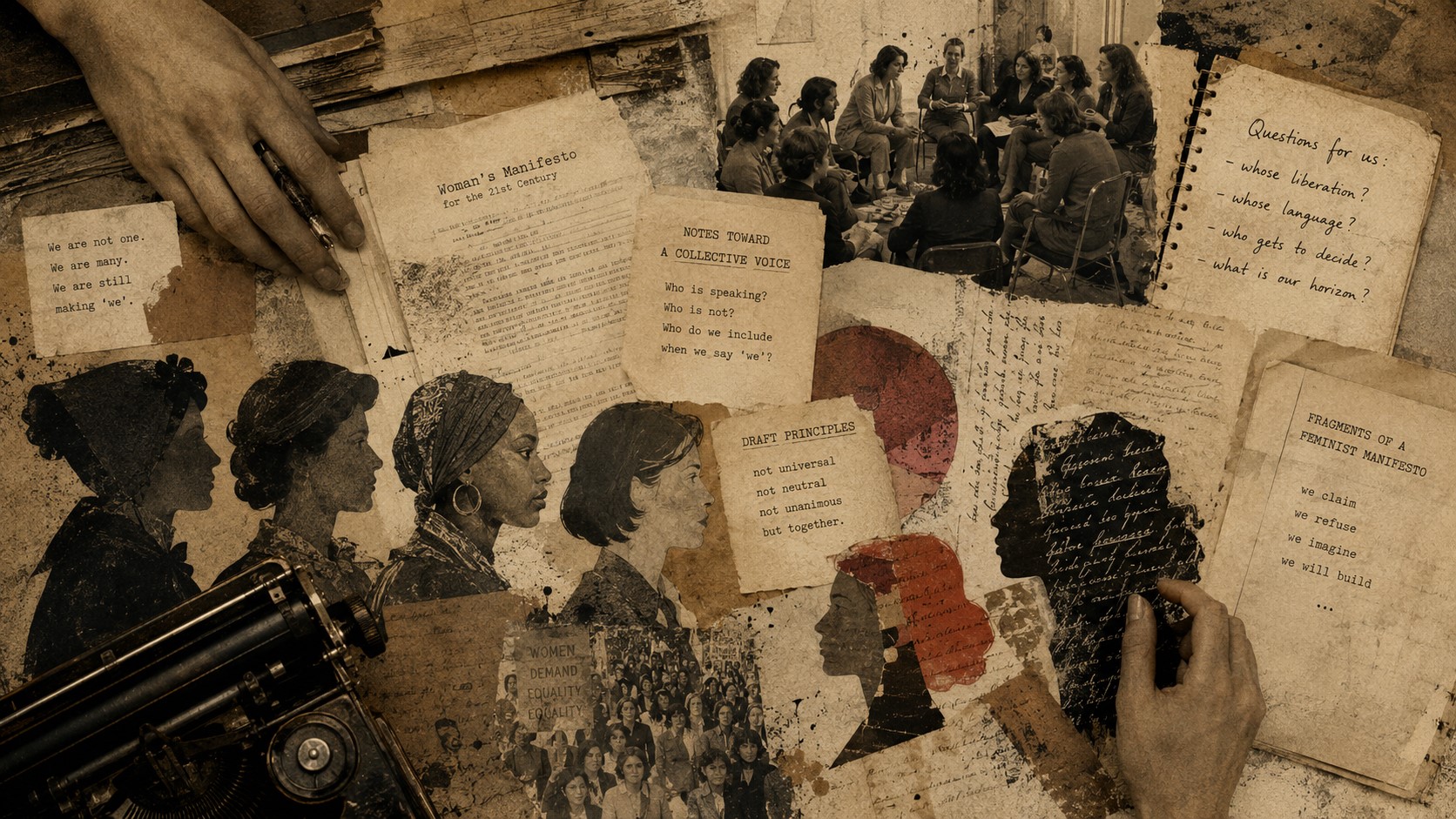
This is the second in a three-part series that follows the manifesto as both a form of writing and a way of intervening in the world. The first article stayed with the right to declare, and with the peculiar authority speech can acquire once it enters public space. Here, the question shifts. What happens when that speech moves beyond the person who utters it and begins to speak in the name of others? The third article will return to the question that began this journey, and ask what remains of the manifesto when its forms and purposes keep changing. By the end of the first article, the whole path had narrowed to a word almost too small for the history that had led us there: we .

Who Has the Right to Write a Manifesto?
By
Rita Barotta
Published
Aug 25, 2026 - 11:16

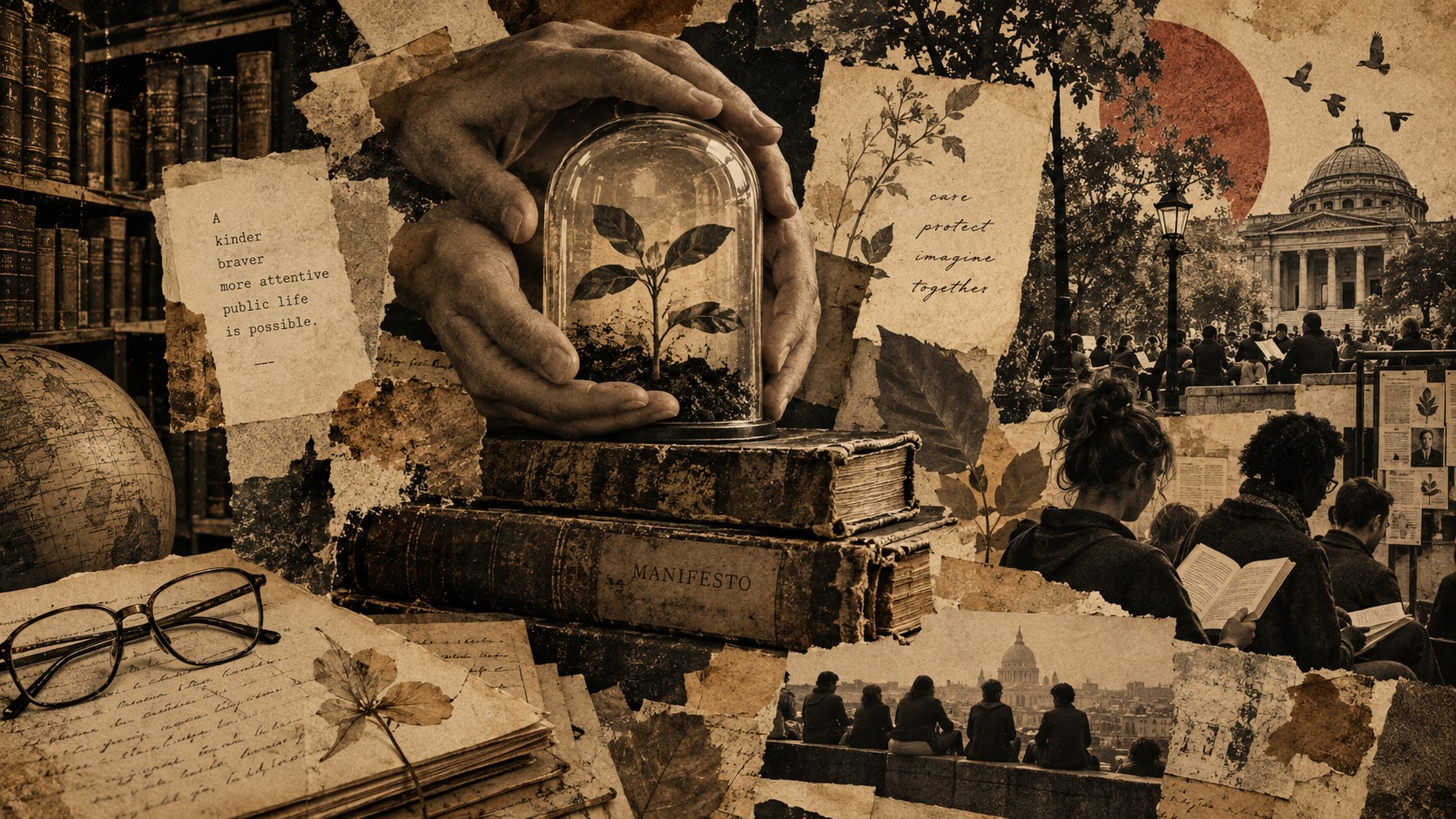
This is the first in a three-part series tracing the manifesto as a form of writing and a way of intervening in the world. The first article looks at the history of declaration and the authority it gives to those who make one. The second turns to the struggle over the pronoun “we.” The third asks a slightly different question: what does a manifesto become when it is less concerned with tearing the world down than with protecting something within it, or reminding us of what still deserves our care? It began with a small book, Irene Vallejo’s Manifesto for Reading , and with a comment from a reader who felt the title had promised something the book did not deliver.

Libraries That Fade
By
Rita Barotta
Published
May 3, 2026 - 09:30

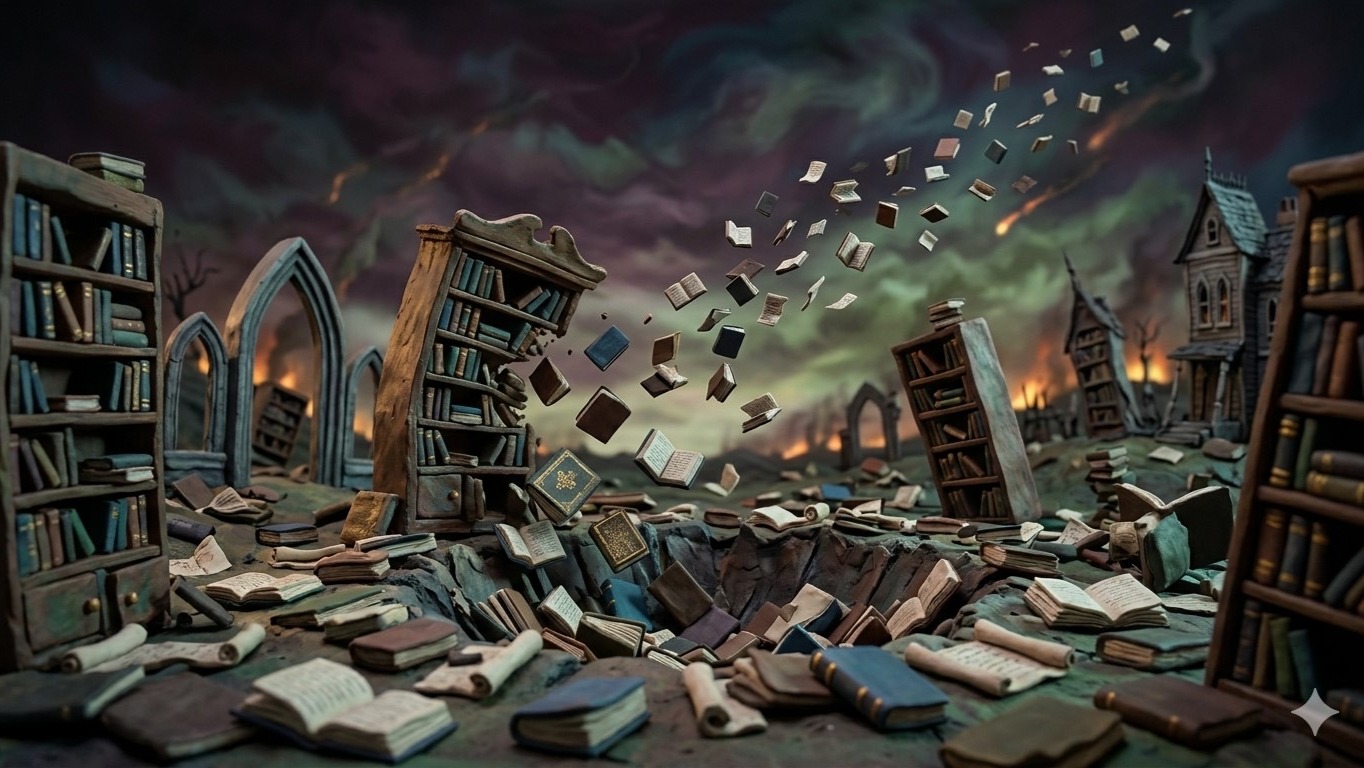
“The memory is in danger. Your books, and ours, are in imminent peril.” It is with these words that Rasha El-Ameer, Lebanese writer and publisher, responded to a Facebook image of the library of Azza Baydoun, a researcher whose work engages questions of women and gender, in Bint Jbeil, Southern Lebanon. There is no confirmed news of the house. None of the library’s fate. There is only a dense, circulating unease, passing from one person to another, and questions that find no answer: who holds certainty? What remains? What has already disappeared? It is within this unease that loss first takes shape, in that suspended moment where certainty fails. Waiting hangs between blurred satellite images and a memory that anticipates catastrophe. Disappearance does not require confirmation to become psychologically real; loss is lived before it is proven. It multiplies into a thousand possible forms, a thousand imagined scenarios, each more unbearable than the last.

Queuing in Language
By
Rita Barotta
Published
Apr 20, 2026 - 17:54

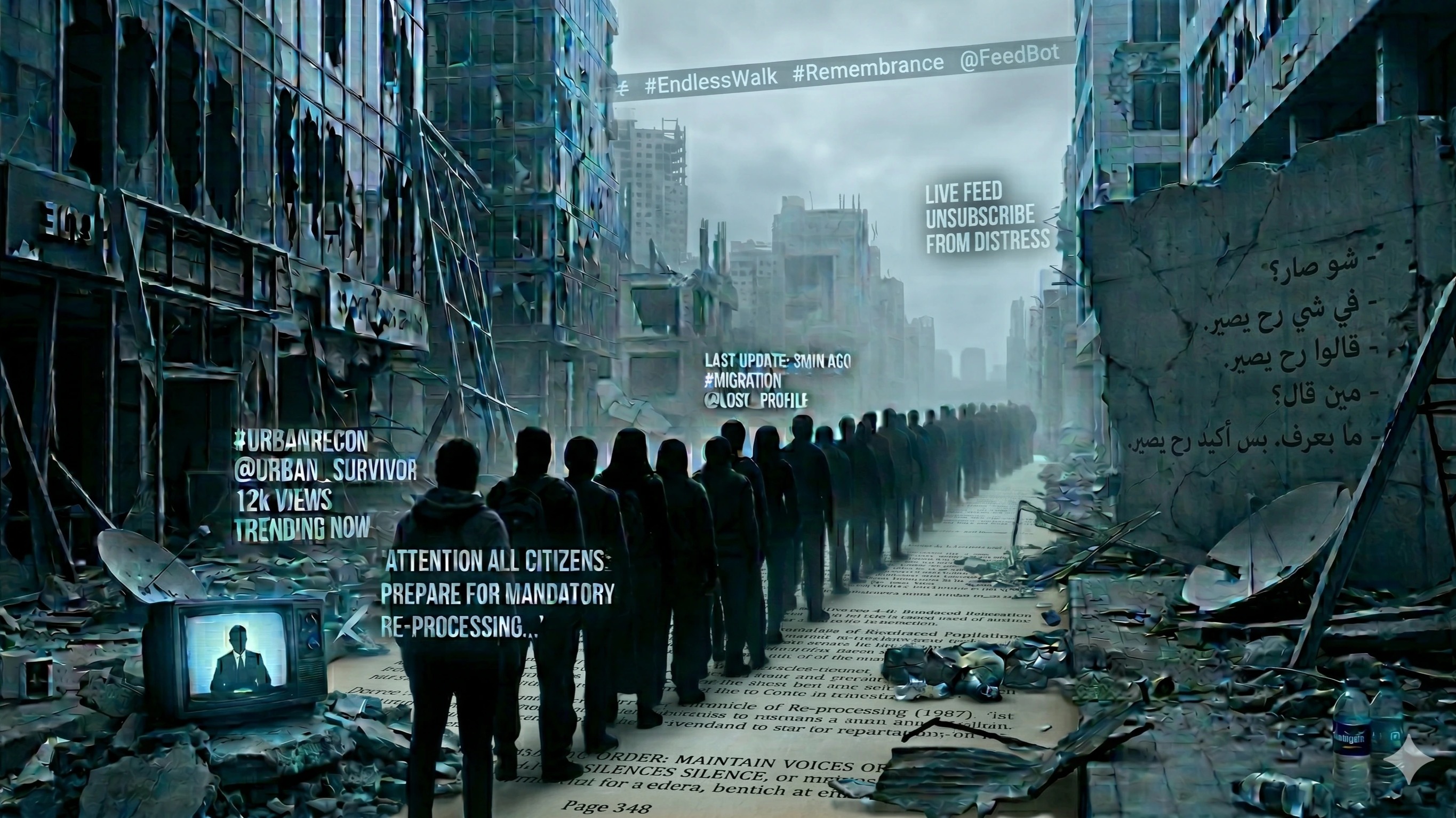
— What happened? — Something is going to happen. — They said something would happen. — Who said that? — I don’t know. But something will. This exchange, in its apparent simplicity, recurs in innumerable variations across the textures of everyday life. It condenses into a mode of being, one that does not so much transmit the event as it reproduces it in the form of a perpetually deferred anticipation, sustained by its own repetition, carried forward by language without requiring the stabilizing force of realization. Sentences no longer arrive to report what has taken place; they work instead to suspend possibility, to keep it in circulation, as though their function were no longer to refer to the real, but to shape our relation to it—drawing us toward it even as they disperse it.

The Catastrophe as Image
By
Rita Barotta
Published
Apr 13, 2026 - 14:00

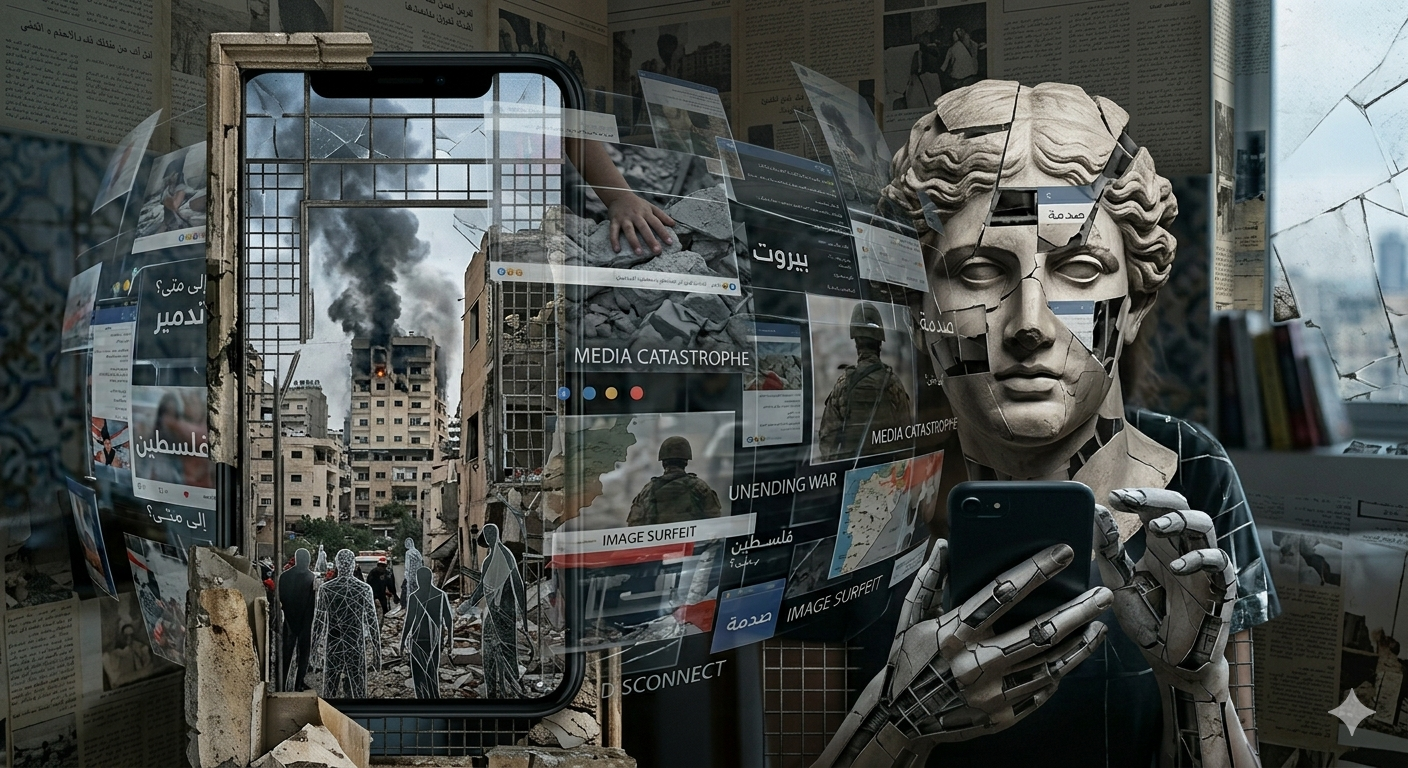
Hundreds of images, every day. Grey as the dominant tone, at times interrupted by a flash of orange, a coloring book, a doll. At other times, images reach us stained with memories, those of strangers we do not know, who do not know us, and who may no longer recognize their own. Memories held in suspension. Fleeting flashes across phone screens. Fragments scrolling on television beneath a red ticker hastily composed, saturated with approximations, where a place name is thrown in as a token of precision. Or brief sequences designed to sustain the continuity of an endlessly renewed flow. Within this flow, the image ceases to emerge as an event.

Literature in Wartime: When Language Cracks, or Waits
By
Rita Barotta
Published
Mar 16, 2026 - 10:30

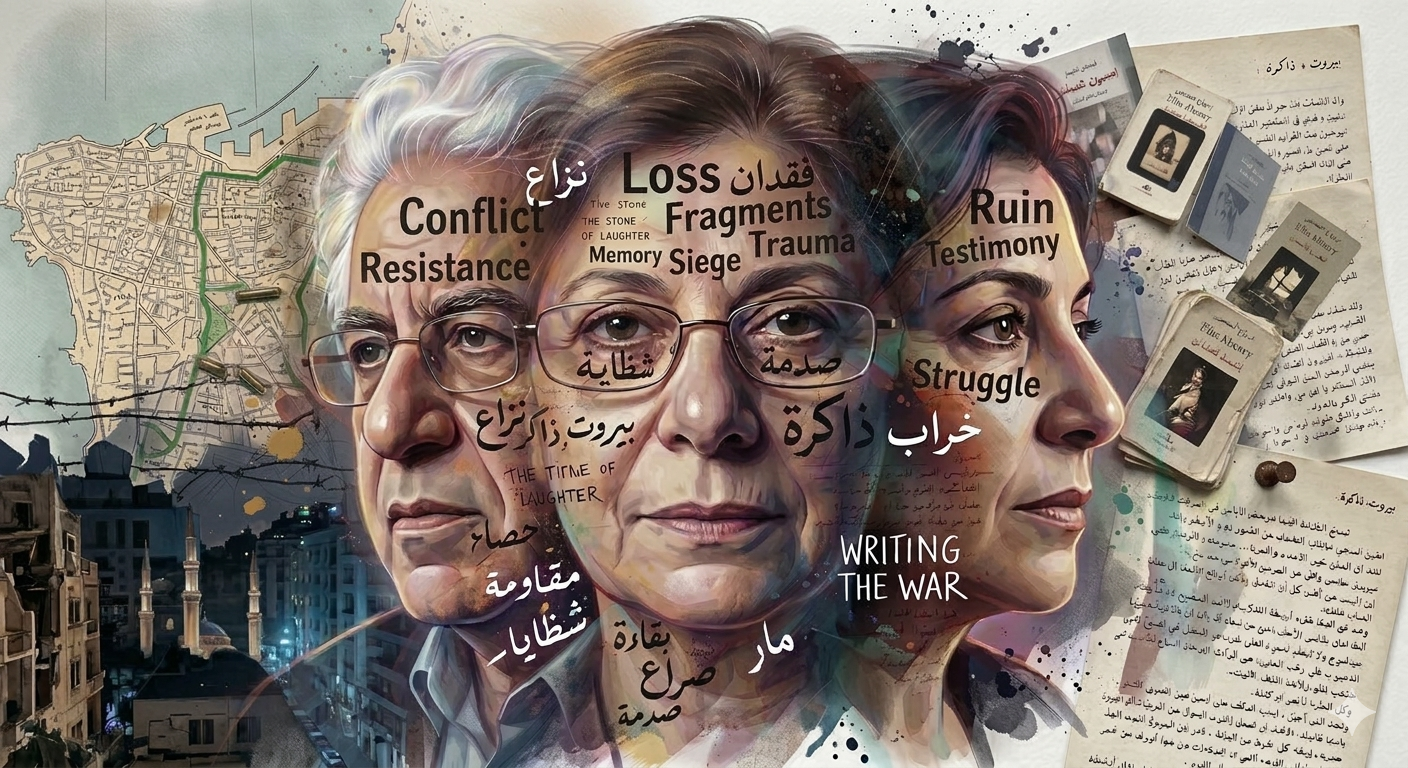
When we speak of literature in wartime, the questions that tend to crowd our minds concern the capacity of writers to produce, or the ways in which they might transmute battles, death, and destruction into novels, poems, and testimonies. But these questions, for all their importance, conceal a deeper one. War furnishes literature with a new subject, while simultaneously shaking the very conditions that make literature possible. It touches language, memory, the inner rhythm of time, and the capacity to transform experience into a coherent narrative — one that first fulfills a function before it arrives at meaning.