

The Prophet and the Philosopher (2/10)
The Hierarchy of Knowledge between Avicenna’s Falsafa and al-Kirmānī’s Ismaʿili Neoplatonism

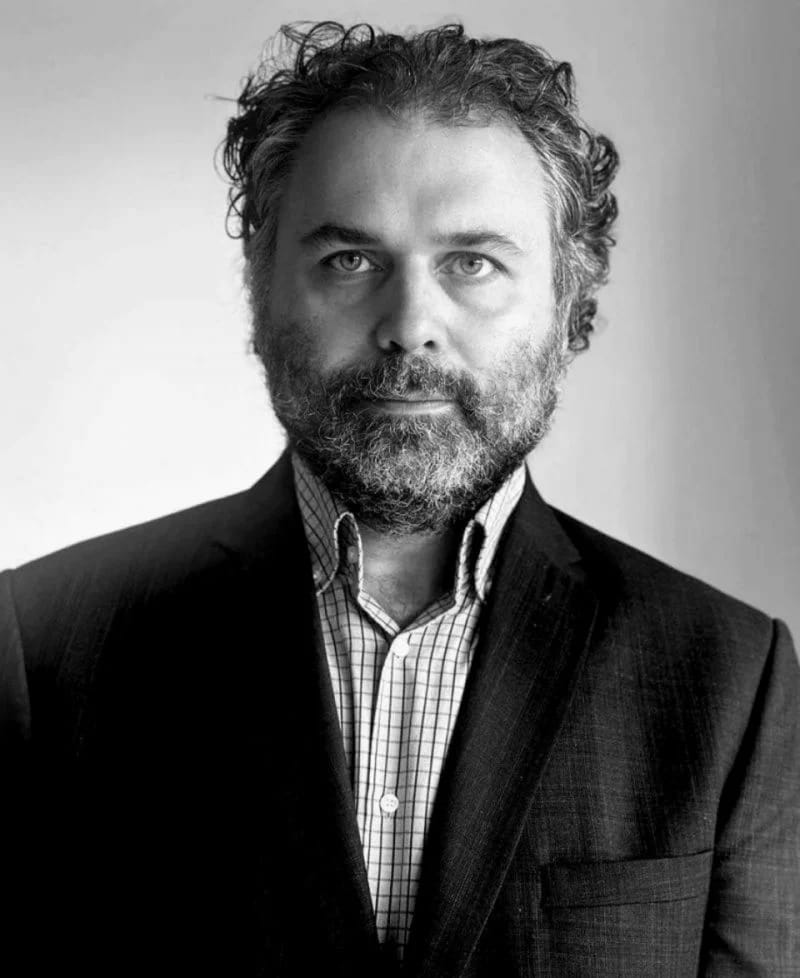
In April 2026, Wissam Saadé delivered four lectures at the University of Bologna at the invitation of Professor Giovanni Giorgini. The first lecture, entitled The Prophet and the Philosopher: The Hierarchy of Knowledge between Avicenna’s Falsafa and al-Kirmānī’s Ismaʿili Neoplatonism, is presented here in its revised and expanded essay form, published as a ten-part series.
The series explores the intellectual landscape of Islamic Neoplatonism through a comparative reading of Avicenna and al-Kirmānī. Although both thinkers share a broadly Neoplatonic horizon, shaped by an emanationist metaphysics, a hierarchy of being, and a synthesis of Aristotelian and Platonic thought, they develop distinct philosophical projects: Avicenna within the tradition of Peripatetic falsafa, and al-Kirmānī within Ismaʿili theology. Despite these different intellectual settings, their systems remain in continuous dialogue on the nature of knowledge, the relationship between reason and revelation, and the ascent of the soul. Their respective projects also embody contrasting approaches to the political, illuminating different ways of understanding the place of philosophy in relation to authority, law, and the ordering of the community. This article is the second installment of that ten-part series.
II - Falsafa as a Form of “Philosophical Religion”
The emergence of falsafa is inseparable from a complex history of translation, misattribution, and conceptual convergence. One of its decisive moments lies in the attribution to Aristotle of texts that he did not author, most famously the so-called Theology of Aristotle. This work is in fact an Arabic adaptation of Plotinian material, ultimately drawn from the Enneads of Plotinus, likely mediated through the paraphrastic interventions of Porphyry. As a result, the early falāsifa came to believe that Aristotle himself endorsed a doctrine of emanation.
This misattribution was no mere historical accident, but rather an event with profound philosophical consequences; it created, one might say, a potential for receptivity that facilitated the synthesis of these distinct traditions. It allowed the falāsifa to synthesize Aristotelian and Platonic frameworks under a unified metaphysical horizon. Emanation became the key conceptual bridge: it provided a way to reconcile the eternity of the world with a strong doctrine of divine transcendence, while simultaneously elevating the divine beyond the Aristotelian “unmoved mover.”
The Theology of Aristotle and the Neoplatonic Aristotle
This can be traced back to Aristotle himself. While he defines God in the Physics as a functional necessity of a mechanical universe, the First Unmoved Mover or a “Kinetic God,” he nuances this in the Metaphysics, or “First Philosophy,” with a more noetic and even psychological definition. Here, he defines God as noēsis noēseōs (Thought Thinking Itself). Since God is the most perfect being, His activity must be the most perfect activity, contemplation, and His object of contemplation must be the most perfect object: Himself.
Unlike a physical “push,” God moves the world as an Object of Desire (erōmenon); the heavens move in an eternal circle because they “imitate” the perfection of the divine mind. Moreover, in his cosmological works, the distinction between the “sublunary” (earthly) and “supralunary” (heavenly) spheres introduces a more “material” divinity, where the divine is often associated with the eternal nature of the celestial bodies themselves. Finally, in the Ethics, Aristotle defines the life of God as a state of supreme happiness consisting of pure theōria.
This is where Alexander of Aphrodisias and the falāsifa found the justification for the Active Intellect. The equation was simple: if the human intellect can engage in contemplation, it participates in the divine nature. Thus, the famous Theology of Aristotle (أثولوجيا) was misattributed to the Stagirite; nonetheless, a “disseminated” theology of Aristotle already existed across his authentic works, envisioned physically in the Physics, metaphysically in the Metaphysics, and ethically in the Ethics. This “open door” allowed for a transition from a strictly analytical, “cold” Aristotle to a noetico-mystical one.
The internal tensions within the Aristotelian corpus served as a creative opening, allowing for a philosophical contamination that synthesized Peripatetic logic with Platonist and Hermetic metaphysics. Alexander used the gaps in Aristotle’s Ethics and De Anima to solve the problem of how a “self-thinking” God interacts with human minds. By focusing on the Active Intellect, Alexander argued that the human mind, the potential intellect, is “activated” by a single, external, divine Intellect. For the later falāsifa, Alexander provided the “secular” or “natural” mechanism for how prophecy and philosophical insight work, grounding them in the structure of the mind rather than in pure mysticism.
While Alexander was looking at the mind, Plotinus and his student Porphyry were looking at ontology, the nature of Being. They saw Aristotle’s God in the Metaphysics, Thought Thinking Itself, as “too low” because “thinking” implies a division between the thinker and the thought. They argued that there must be something higher: the One. Porphyry is widely credited with trying to harmonize Plato and Aristotle. He took Plotinian ideas of emanation and “packaged” them in Aristotelian language. This paved the way for the Theology of Aristotle. By reading Plotinus through a Porphyrian lens, the falāsifa believed they were reading the “true, deeper” Aristotle who had finally solved the problem of how the One becomes the Many.
For Plotinus and Porphyry, this necessitated a move toward Emanationism. They “saved” Aristotle from his own mechanical limitations by subsuming his Thought Thinking Itself under the higher unity of the One. At this juncture, one is tempted to view Neoplatonism, taken as a whole, not as a separate system, but as a form of “Mystical Aristotelianism.” In this light, the Neoplatonic project becomes the ultimate Neo-Aristotelianism, providing the “noetic” engine with a “mystical” fuel.
Porphyry of Tyre, the disciple of Plotinus, is particularly relevant here; he is credited with the monumental task of harmonizing Plato and Aristotle. Together with Alexander of Aphrodisias, these two figures stand as the twin precursors of falsafa, establishing the intellectual horizon that al-Fārābī and Avicenna would later inhabit. Hermeticism found a home in the Aristotelian framework through the concept of the Active Intellect. If the human mind can “connect” with a divine, cosmic intellect, as Alexander of Aphrodisias suggested, then philosophy is no longer just logic; it becomes a mystical journey.
In this hybrid system, the divine is no longer merely “that which moves without being moved,” but becomes the absolute source from which all levels of reality unfold.
At the center of the Neoplatonic influence lies the figure of the One in Plotinus: a principle beyond being, beyond thought, and beyond predication. The One is not an object of knowledge but the condition of all intelligibility. It is “hidden” within intellect as a source is hidden within a flowing river, accessible only through a progressive stripping away of intellectual determinations, culminating in a kind of ecstatic return beyond discursive thought. This radical transcendence proved deeply attractive to the falāsifa, because it offered a model of monotheism that was both philosophical and absolute, one that seemed to ground unity beyond the limits of Aristotelian metaphysics.
Within the Islamic intellectual field, especially at the intersection of Neoplatonism and Ismaʿili thought, this structure was further intensified through a quasi-Gnostic vocabulary. Reality becomes hierarchized into levels of illumination and concealment, where salvation is linked to knowledge (gnosis).
From the One to the Gnostic Temptation
In its most radical forms, Gnostic cosmology divided humanity into categories, of which only the Pneumatics, those endowed with spiritual insight, could achieve true liberation.
Classical Gnosticism often portrayed the material world as a prison, created by a deficient or ignorant demiurgic power, sometimes identified with the God of the Hebrew Bible. In such systems, matter is inherently corrupt and salvation consists in escaping the material order. A more moderate, “assimilated” version of Gnosticism, later absorbed into Christian patristic theology, reinterprets the material world not as evil in itself, but as a created order that has been disfigured by sin. Here, matter retains a positive role: it becomes the site of incarnation, and thus participates in divine providence.
It is precisely within this tension, between Neoplatonic transcendence, Aristotelian structure, and residual Gnostic dualisms, that falsafa takes shape. It inherits a vision of reality in which the divine is radically transcendent, creation is structured through necessary emanation, and salvation is reinterpreted as intellectual ascent. At the same time, it seeks to preserve monotheistic coherence by rejecting outright dualism while still retaining a deeply hierarchical and stratified cosmos.
In this sense, falsafa is not simply a translation of Greek philosophy into Arabic, but a creative reconfiguration of multiple intellectual genealogies, Aristotelian, Platonic, Neoplatonic, and late antique religious, into a single metaphysical architecture of emanation, intellect, and return.
Falsafa as Philosophical Religion
For many years, my research has been centered on the intersection of political philosophy and what I would call philosophical religion. I take this category seriously. In this sense, falsafa, as a tradition, is, simpliciter, a philosophical religion. It should not be reduced to the secular wing of the Islamicate intellectual world, especially when contrasted with the scholastic theology of kalām or the jurisprudential reasoning of fiqh.
While the falāsifa were ostensibly committed to Aristotelian rationalism, they inherited a “contaminated” framework that pulled them toward an inherent Gnostic temptation. Although they rejected the radical Gnostic view of matter as inherently evil, they remained haunted by the image of the soul as an exiled intellect.
Here, we should not neglect the contradiction between Neoplatonism and Gnosticism. Plotinus argued that the material world is beautiful because it is an image of the divine. He rejected the Gnostic idea that the world was created by an “evil demiurge.”
While Plotinus shared a similar “atmospheric” concern for the soul’s ascent, he was the author of a polemic titled Against the Gnostics, attacking their “un-Greek” disparagement of the cosmos and their “arrogant” claim to a private, non-rational salvation. Yet, ironically, the Porphyrian synthesis stripped away much of this polemic. What remained was a “contaminated” Aristotelianism that, despite Plotinus’s intentions, functioned as a bridge for Gnostic motifs of intellectual exile and divine return to enter the medieval Arabic tradition.
The Soul in Exile: Gnosis, Prophecy, and the Active Intellect
Despite Aristotle’s definition of the soul as the “form” of the body (hylomorphism), the falāsifa, influenced by the pseudo-Theology of Aristotle, often treated the soul as a celestial stranger. This is most visible in Avicenna’s Poem of the Soul (the ʿAyniyya), where the soul is a “thick-feathered dove” descending from the high places into a “ruined cage,” the body. This is a purely Gnostic motif dressed in philosophical language. The Active Intellect acts as a “Saviour-Knowledge.” By connecting with it, the philosopher undergoes a gnosis that liberates the intellect, but not typically from the “darkness” of matter. Instead of the material world being a prison to escape, as in ancient Gnosticism, al-Fārābī views the Virtuous City as the site where the soul’s ascent is organized. The Gnostic “stranger” becomes the “Philosopher-King.”
Rather than opposing religion outright, falsafa offers an alternative form of religiosity, less juridical, more contemplative; less centered on law, more on wisdom (ḥikma). Unlike modern secular philosophy, falsafa does not discard prophecy. It reinterprets it. Prophets become supreme knowers whose imaginative faculty translates intellectual truths into symbolic form accessible to the masses.
Falsafa inherits and transforms traditions in which philosophy and religion were never sharply divided, especially in Late Antiquity. Even when it challenges the doctrine of creatio ex nihilo by defending the Aristotelian thesis of the eternity of the world, articulated through a Neoplatonic framework of procession and emanation, it nonetheless chooses to “baptize” its metaphysics as al-ilāhiyyāt (the divine sciences), particularly in Avicenna’s terminology.
The Neoplatonic schema of emanation structures reality as a descending and ascending order. This cosmology provides a metaphysical equivalent to religious narratives of creation and return. From Avicenna to later thinkers, philosophy is conceived as a graded movement of elevation, from the sensible to the intelligible, from multiplicity to unity, and ultimately from dispersion to presence. In falsafa, knowledge is never neutral or merely speculative. It is fundamentally transformative: to know is to perfect the soul. In this sense, knowledge functions in a manner structurally analogous to religion, in which gnosis is inseparable from salvation.
From Philosophical Religion to Cosmopolitics
The boundaries of the falsafa tradition remain fluid, never unequivocally demarcated from either “para-falsafa” or even “anti-falsafa.” Yet it must be understood as a philosophical religion. It evolved as an internal alternative within the Islamicate world; yet it was an alternative designated not merely for an “elite” in the social sense, but for “the Few” in a noetic one. The resonance with Gnostic categories, specifically the Pneumatics versus the Psychics or Hylics, is striking and structurally very similar.
In the Gnostic tradition of Antiquity, the Pneumatics were those who possessed the divine spark and the capacity for gnosis. Similarly, in falsafa and the philosophical Ismaʿili traditions, these “Islamo-Pneumatics” are defined by their actualized intellect. This faculty allows them to perceive either the necessity beyond contingency and the eternity beyond the creation drama, or the “hidden” (bāṭin) meanings of the Pleroma and the primordial order, realities that remain “veiled” both to the common people (al-ʿawāmm) and to the structures of exoteric Islam.
Crucially, this philosophical religion is, in its very essence, a political philosophy, one whose scope extends well beyond its explicitly political chapters into the very core of its cosmological architecture. The question of the relationship between the Philosopher and the Prophet, an inquiry first articulated in Antiquity by Philo of Alexandria, remained central for thinkers such as al-Fārābī, Avicenna, al-Kirmānī, Averroes, and Maimonides. To borrow a term from Christian Jambet, though not without some displacement of its original inflection, this question remains bound up with a form of cosmopolitics: a totalizing vision in which the order of the city (polis) reflects, and is reflected by, the order of the universe (cosmos).
For the falāsifa, cosmopolitics serves as the ultimate antidote to the “rule of the arbitrary.” Whereas arbitrariness implies a void of reason, a “will to power” devoid of ontological grounding, a cosmopolitical system asserts an immutable necessity inherent in the order of being.
Moreover, if wisdom can only be attained by the Few, then, at the intersection where philosophers appear as crypto-prophets and prophets as otherwise-philosophers, the Pneumatics of Islam do not seek merely to navigate outside the world, as the Gnostics of Antiquity aimed to do. Rather, their mission is to “politically” manage the other two categories: the Psychics and the Hylics. Their primary aim is to safeguard the noetic order against those for whom the arbitrary is an ultimate God, an obsession that manifests as a rigorous, legalistic fixation. At the same time, their mission is to find ways to diffuse not philosophy itself, but its civilizing effects, ensuring that the light of the Pleroma might still order the lives of the many without being extinguished by their literalism.
The Prophet and the Philosopher (10/10)
The Prophet and the Philosopher (9/10)
The Prophet and the Philosopher (8/10)
The Prophet and the Philosopher (7/10)
The Prophet and the Philosopher (6/10)
More from Wissam Saadé
View All


More in Diachronia
View All


Latest from Levant Time
View All


