

The Prophet and the Philosopher (9/10)
The Hierarchy of Knowledge between Avicenna’s Falsafa and al-Kirmānī’s Ismaili Neoplatonism

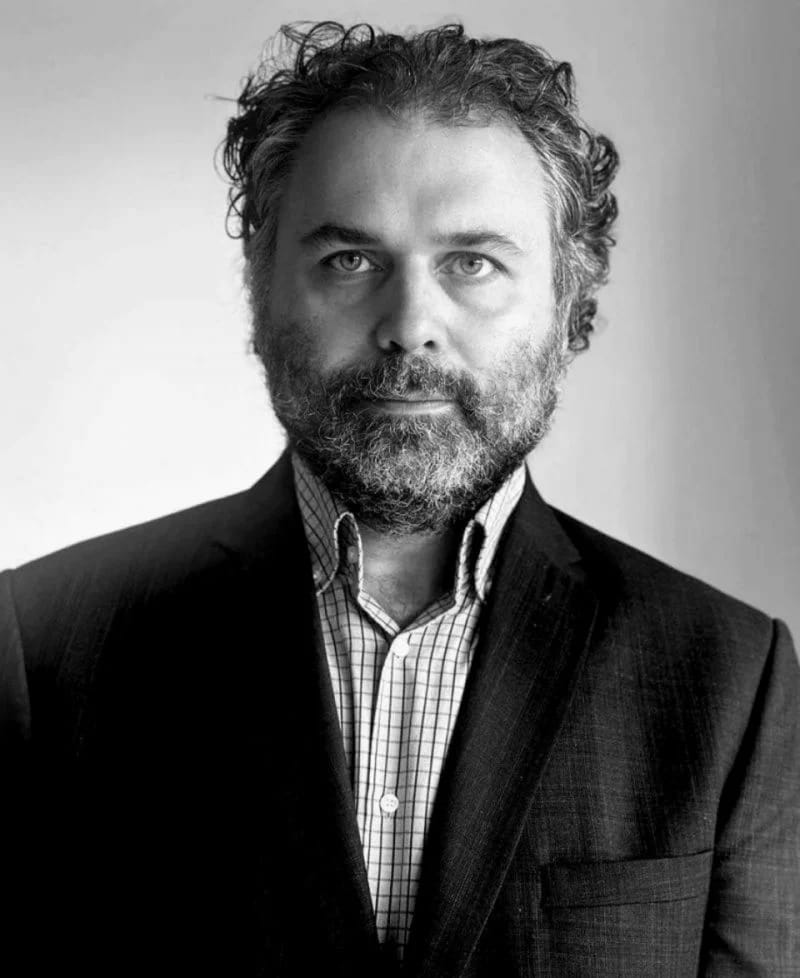
In April 2026, Wissam Saadé delivered four lectures at the University of Bologna. The first, at the invitation of Professor Giovanni Giorgini, was entitled “The Prophet and the Philosopher: The Hierarchy of Knowledge between Avicenna’s Falsafa and al-Kirmānī’s Ismaili Neoplatonism.” Its text is presented here in a revised and expanded version, as part of a series of ten articles.
This series explores the intellectual landscape of Neoplatonism in Islam through a comparative reading of Avicenna and al-Kirmānī. Although both thinkers share a broad Neoplatonic horizon, shaped by a metaphysics of emanation, a hierarchy of being, and a synthesis of Aristotelian and Platonic thought, they develop two distinct philosophical projects: Avicenna within the Peripatetic tradition of falsafa, and al-Kirmānī within Ismaili theology. Despite their different intellectual contexts, their systems remain in constant dialogue around the nature of knowledge, the relationship between reason and revelation, and the ascent of the soul. Their respective projects also embody two contrasting conceptions of the political, illuminating different ways of understanding the place of philosophy in relation to authority, law, and the organization of the community. This article constitutes the ninth part of this ten-part series.
IX - The Bifurcated Reception of Avicennism and Averroism in Medieval Christendom: Constructing the “Double Truth” Accusation
Showing that reason does not quite sabotage revelation became something of a shared intellectual pastime across the Islamicate world, Latin Christendom, and Jewish communities moving between the two. The effort was less a unified project than a recurring anxiety, dressed in different vocabularies: in kalām as dialectical defense, in falsafa as philosophical reconciliation, in anti-philosophical currents as outright suspicion, in Sufism as an experiential bypass, and in medieval Europe as the careful architecture of Scholastic theology. The same problem, in other words, was rehearsed with different accents, and occasionally with the confidence that this time, finally, it might be settled.
In medieval Europe, the debate over the relationship between reason and revelation crystallized around two poles: the Augustinian credo ut intelligam (“believe so that you may understand”) and the more systematically articulated Thomistic synthesis. Within this framework, Thomas Aquinas advanced the claim that human reason, operating on its own terms, is capable of attaining certain foundational truths, most notably the existence of God, while remaining intrinsically limited when confronted with the suprarational mysteries of Christian doctrine, such as the Incarnation or the Trinity.
Aquinas sets a clear condition for this synthesis of theology and philosophy: philosophy is to function as the ancilla theologiae, the “handmaid of theology.” In his own way, he restates a principle often associated with Averroes, namely that truth cannot contradict truth. Since God is held to be the source of both the “light of reason” and Revelation, a genuine contradiction between the two is, in principle, impossible. Any apparent conflict therefore points either to an error in rational inference or to a misinterpretation of the scriptural text.
On this basis, Aquinas formulates his well-known maxim: grace does not destroy nature, but perfects it. By the thirteenth century, this framework reached its most systematic expression within Scholasticism under Thomas Aquinas, where theology came to function as the magister scientiarum, the “master of the sciences,” shaping the intellectual architecture of the emerging universities.
Within this hierarchy, theology provides the overarching horizon, while the liberal arts, organized into the trivium (grammar, logic, rhetoric) and the quadrivium (arithmetic, geometry, astronomy, music), are integrated as preparatory disciplines. Their value is thus not autonomous but instrumental: they acquire their full meaning only insofar as they are ultimately ordered toward theological understanding, flowing, as it were, into its encompassing framework.
Kalām, fiqh, and the Sovereignty of Tradition
In contrast, kalām in the Islamic sphere never achieved such total hegemony. It failed to subordinate philosophy to its own ends, nor could it maintain its centrality against jurisprudence (fiqh). Instead, it was absorbed into the broader legalistic system as a subordinate discipline, a science of creed (ʿaqīda), which, after the early Abbasid centuries, could not compete with the sheer momentum, scope, and theoretical depth of fiqh and uṣūl al-fiqh (Principles of Jurisprudence). Islamic civilization evolved as a “civilization of Law.” Within the duality of reason (ʿaql) and tradition (naql), the balance tilted toward tradition, albeit through continuous attempts to ward off perceived contradictions between the two.
A prime example is Ibn Taymiyya’s Darʾ Taʿāruḍ al-ʿAql wa-l-Naql (“Warding Off the Contradiction between Reason and Tradition”). As the archetypal figure of Salafism, Ibn Taymiyya did not seek to abolish reason, but to demonstrate that “explicit reason” inevitably leads to “authentic tradition.” In this equation, however, tradition remains the standard, while reason serves as the witness that validates it.
Notably, the very definition of “reason” shifted from the Ashʿarite-Ghazālian model to Ibn Taymiyya’s Ḥanbalī-Salafist model. For al-Ghazālī, reason was a logical “balance,” largely Aristotelian, a necessary instrument for demonstrating the truth of prophecy that nonetheless halts at the threshold of the Unseen. For him, any apparent conflict required taʾwīl (allegorical interpretation), while reason itself functioned as a “light” cast by God into the heart.
For Ibn Taymiyya, by contrast, reason was fiṭra, primordial nature or innate disposition. He rejected the confinement of reason within Greek logical rules, arguing that “explicit reason” is simply that which accords with sound fiṭra. Reason, for him, was not an external instrument but an innate faculty naturally attuned to Revelation.
While the Muʿtazilites and the philosophers sought the primacy of reason, the ideological victory ultimately went to those who placed reason under the sovereignty of tradition, eventually redefining it through the lens of fiṭra.
Ultimately, uṣūl al-fiqh became the true arena for Islamic logical ingenuity. Rather than constructing grand theological systems on the scale of Aquinas, Muslim intellectual culture turned toward a “methodology of deriving norms.” Reason was “contained” and deployed within a vast linguistic and logical engineering project in the service of the Text. Here, reason is not a sovereign legislator, but an “engineer” who interprets and measures.
Ockham, Siger of Brabant, and the Crisis of Scholastic Synthesis
Ironically, the very success of Latin Scholasticism in imposing its primacy laid the groundwork for its own eventual undoing. By absorbing Aristotelianism and demonstrative logic in order to make faith a “rationally impregnable fortress,” Scholasticism inadvertently created the tools through which its own authority could later be subverted.
In the fourteenth century, William of Ockham declared that universal concepts possess no independent reality; they are merely “names,” a position later associated with Nominalism. This philosophical shift had two major consequences. First, it widened the separation between faith and reason by arguing that God’s “absolute will” cannot be bound by human logic. Second, by redirecting attention from theological universals toward particulars, it helped prepare the conceptual ground for the rise of empirical science.
Before Ockham, however, there was Siger of Brabant and the impact of Latin Averroism. Siger embodied the intellect that attempted, prematurely, to liberate philosophy from its theological shroud. A secular cleric rather than a member of the mendicant orders, as Aquinas and Bonaventure were, Siger (c. 1240–1284) became the leading figure of Latin Averroism. He taught philosophy as an autonomous discipline without seeking to subordinate it to theology.
Accused of heresy and pursued by ecclesiastical authorities in France, Siger fled to Italy to appeal to the Papal Curia at Orvieto, where he was eventually stabbed to death by his secretary. Notably, Dante Alighieri placed Siger in Paradise in the Divine Comedy (Canto X), alongside his intellectual rival Thomas Aquinas, presenting him as a spirit who had “syllogized envious truths.”
In the intellectual milieu of the University of Paris in the late thirteenth century, Siger of Brabant occupied a particularly tense position. He was neither a simple adversary of faith nor a conventional theologian, but a thinker attempting to push Aristotelian rationality to its internal limits, largely through the lens of Averroes.
His project did not consist in opposing Revelation as such, but in rigorously articulating what follows if one remains strictly within the autonomy of philosophical demonstration. From this standpoint, several theses became especially controversial.
First came the question of the eternity of the world. Against the doctrine of creatio ex nihilo, Siger defended the philosophical plausibility, indeed, from the standpoint of Aristotelian physics, the necessity, of an eternal cosmos without temporal origin. Within this framework, there is no “first moment” and no inaugural human event in the biblical sense, but only an unbroken continuity of motion and causality.
Second was the doctrine commonly associated with Averroism, namely monopsychism. Here, the central claim is that the Active Intellect is singular and universal rather than individually multiplied across human beings. The implication is radical: while acts of thinking occur in individuals, the principle of intellection is one and the same for all humanity.
This leads to a third, even more destabilizing consequence. If intellect is not individually differentiated in a strict ontological sense, then traditional notions of personal immortality and individual moral accountability become difficult to sustain within a purely philosophical register. The classical framework of reward and punishment thereby risks losing its metaphysical foundation.
From these tensions arose the so-called problem of “double truth,” often attributed to Siger in simplified form. In its crude version, it suggests that something could be true in philosophy while false in theology. Siger’s position, however, is subtler. Philosophical reasoning, operating according to demonstrative necessity, may arrive at conclusions that diverge from revealed doctrine; yet this divergence does not negate the authority of Revelation, which remains absolute within its own order. The issue is therefore not simply contradiction, but the coexistence of two distinct epistemic regimes operating according to different criteria of truth.
His insistence on the autonomy of philosophical inquiry nevertheless proved institutionally explosive. At the University of Paris, this line of thought contributed to a broader crisis over the status of Aristotelianism in Christian intellectual life, culminating in the Condemnation of 1277, when numerous propositions associated with radical readings of Aristotle were officially censured.
Siger’s historical significance thus lies less in any single systematic doctrine than in the pressure his position exerted on the medieval synthesis itself. He made visible the fragile boundary between a theology capable of integrating philosophy and a philosophy that, by pursuing its own rigor, risked escaping that integration.
Ernst Bloch and the “Aristotelian Left”
In contrast to the “Aristotelian Right” of the Scholastics, who viewed matter as a passive vessel for divine form, the theo-Marxist philosopher Ernst Bloch sought to construct the genealogy of an “Aristotelian Left” in his book Avicenna and the Aristotelian Left. He traced a subversive lineage beginning with Alexander of Aphrodisias and reaching its culmination in Avicenna’s concept of the “fertility of matter.”
This lineage continued through Averroes and eventually crossed into Christendom with Siger of Brabant. For Bloch, it represented the “warm stream” of materialism, a current that privileges the self-moving and creative power of the natural world over theological imposition.
Yet this seamless genealogy glides over an obvious difficulty: Averroes spent much of his career attempting to dismantle Avicenna’s philosophy, to say nothing of the vastly different, and often contradictory, receptions their respective “authorities” encountered in the Latin West.
And yet Bloch’s intuition remains brilliant. His genius lies less in cold historical accuracy than in his transgressive bridging of Islamic and medieval intellectual traditions in order to construct a philosophical mythos capable of revitalizing the past. Bloch correctly identified Avicenna as the figure who breathed soul back into matter: by conceiving matter as inherently “form-bearing” rather than as a vacant vessel, he helped lay the conceptual groundwork for an autonomous physics.
Perhaps most significantly, Bloch’s decision to enlist both Avicenna and Averroes in a shared “leftist” camp offers a compelling alternative to the influential structural project of Mohammed Abed al-Jabri. In his landmark critique, al-Jabri sought to preserve the purity of “demonstrative reason” (burhān), seeing in Averroes the culmination of a rationalist revival that could lead toward modernity, while regarding Avicenna’s synthesis as a turn toward the mystical (ʿirfān) that complicated the intellectual trajectory of the East.
Bloch, however, through his own distinctive lens, manages to reconcile these two giants. By framing them as part of a single revolutionary lineage, his genealogy invites us to recognize a more inclusive current of materialist thought, one that finds as much value in Avicenna’s “fertile matter” as in Averroes’ rigorous logic, thereby transcending the sharp dichotomies that have long shaped the study of the falsafa heritage.
The Bifurcated Latin Reception of Avicenna and Averroes
The contrasting reception of Avicennism and Averroism, the latter championed by Siger of Brabant, in the thirteenth century stems from the very architecture of Avicenna’s thought. Unlike the uncompromising Aristotelianism of Averroes, Avicenna offered metaphysical bridges that the Latin West found indispensable. While Siger of Brabant was perceived as an existential threat because of his adherence to a “pure,” radical Aristotle, Avicenna had already synthesized Aristotelianism with Neoplatonism, rendering his system far more “compatible” with monotheistic dogma.
Avicenna distinguished between the essence of a thing, what it is, and its existence, the fact that it is. God alone is the Necessary Being (Wājib al-Wujūd), whose essence is identical with His existence. All other beings are merely “possible” or contingent: they do not possess existence inherently, but receive it from God. This structure allowed medieval theologians to articulate philosophically the world’s total ontological dependence on a Creator, whereas Siger’s “Averroistic” Aristotle suggested an eternal, self-subsisting universe.
Moreover, unlike Averroes and Siger of Brabant, who were associated, in different ways and with different degrees of nuance, with monopsychism, the theory of a single intellect shared by all humanity, Avicenna defended the individuality of the human soul and its survival after death.
Through a sophisticated dialectical maneuver, Thomas Aquinas instrumentalized the internal tensions among the “Arab” interpretations, using Avicennism to check Averroism, and vice versa, in order to lay the groundwork for his own Scholastic architecture.
Aquinas effectively “baptized” Aristotle by meticulously filtering these Eastern interpretations. He preserved the scaffolding of Avicenna’s ontology of Being while discarding its emanative determinism; conversely, he retained Averroes’ analytical rigor while dismantling his monopsychism. By defining the soul as the form of the body, Aquinas anchored the intellect to the biological individual. Within this framework, man is neither a spirit trapped in a body, as in Plato or Avicenna, nor a body inhabited by a single collective intellect, as in Averroes, but a substantial unity.
With striking audacity, Aquinas conceded that reason alone is incapable of proving either the eternity of the world or its temporal beginning. While he held, as a matter of faith, that the world began in time because Revelation says so, he maintained that, philosophically, an eternal world created by God remained a logical possibility.
However, the most consequential aspect of the Thomistic intervention was its framing of the intellectual landscape as a binary choice. Philosophy must either declare its independence and drift toward the “absurdity” of a double truth, or submit to theology and assist in the rational articulation of faith, thereby accepting the role of the handmaid (ancilla).
Yet no major philosopher, Muslim, Jewish, or Christian, ever actually advocated a “Theory of Two Truths.” Their insistence on a hierarchy of knowledge, distinguishing between demonstrative truths accessible to the intellectual elite and rhetorical truths intended for the masses, nevertheless provided the very foundation for the accusations of duplicity leveled against them.
Al-Kirmānī, Avicenna, and Averroes were all committed to a single, unified truth; they never posited the existence of two. Even Siger of Brabant held no other view. The problem was that Siger lacked the “Neoplatonic gymnastics” necessary to reconcile his belief in the eternity of the world with religious dogma, yet he could not openly dismiss “non-philosophical” truth. His accusers, however, believed they knew exactly what he was doing: for Siger, there was ultimately only one truth, the Aristotelian, philosophical truth that the world had existed from all eternity.
From the “Double Truth” to Spinoza’s Separation
This tension gave rise to two distinct strategies for interpreting the history of philosophy and its intersection with religious thought: the first associated with Spinoza in the seventeenth century, and the second with Leo Strauss in the twentieth.
Spinoza’s position was that the only way to end the perennial accusation of duplicity leveled against philosophers was to enforce a strict separation between theology and philosophy.
Before him, philosophers such as Maimonides and the Latin Averroists had often relied on interpretive strategies to protect their freedom of thought. They argued that the Bible “speaks the language of men” and must therefore be interpreted allegorically in order to reveal philosophical truths. This method left the philosopher vulnerable to the charge of manipulating Scripture to fit a predetermined philosophical agenda.
By severing the two domains, Spinoza essentially argued: “Leave the Bible alone.” For him, Scripture contains no hidden philosophical truths; its purpose is not to teach philosophy, but to instill obedience and moral conduct.
This separation liberated philosophy from its role as the “handmaid” (ancilla) of theology. If theology makes no claim to philosophical truth, its aim being piety and obedience, it can no longer come into genuine conflict with philosophy. The philosopher can likewise no longer be accused of “distorting” the Word of God, having already declared that philosophical inquiry operates on an entirely different plane.
Leo Strauss and the Return of Dissimulation
Leo Strauss remained skeptical. He argued that Spinoza’s “separation” was itself a rhetorical shield. By claiming that faith and reason were compatible precisely because they belonged to separate domains, Spinoza could introduce radical materialist or atheistic ideas while appearing to preserve respect for “true” piety.
For Strauss, even this separation could be understood as a form of dissimulation, since Spinoza’s ultimate project was to replace the authority of Revelation with the sovereign authority of Reason.
The Prophet and the Philosopher (10/10)
The Prophet and the Philosopher (8/10)
The Prophet and the Philosopher (7/10)
The Prophet and the Philosopher (6/10)
The Prophet and the Philosopher (5/10)
Plus de Wissam Saadé
Voir tout


À lire aussi dans Diachronia
Voir tout


Les derniers articles de Levant Time
Voir tout


