

The Prophet and the Philosopher (6/10)
The Hierarchy of Knowledge between Avicenna’s Falsafa and al-Kirmānī’s Ismaili Neoplatonism

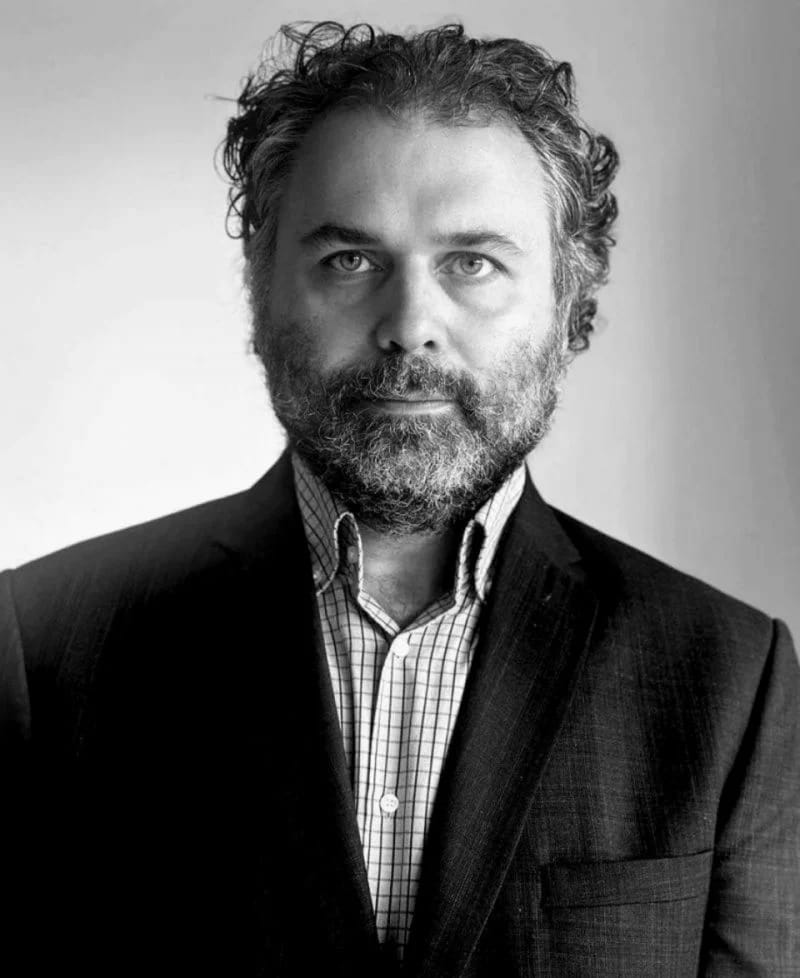
In April 2026, Wissam Saadé delivered four lectures at the University of Bologna. The first, given at the invitation of Professor Giovanni Giorgini and entitled “The Prophet and the Philosopher: The Hierarchy of Knowledge between Avicenna’s Falsafa and al-Kirmānī’s Ismaili Neoplatonism,” is presented here in a revised and expanded version, published as a series of ten articles.
This series explores the intellectual landscape of Islamic Neoplatonism through a comparative reading of Avicenna and al-Kirmānī. Although both thinkers share a broadly Neoplatonic horizon, shaped by a metaphysics of emanation, a hierarchy of being, and a synthesis of Aristotelian and Platonic thought, they develop distinct philosophical projects: Avicenna within the tradition of Peripatetic falsafa, and al-Kirmānī within the framework of Ismaili theology. Despite these different intellectual settings, their systems remain in sustained dialogue over the nature of knowledge, the relationship between reason and revelation, and the ascent of the soul. Their respective projects also embody contrasting conceptions of the political, illuminating different ways of understanding the place of philosophy in relation to authority, law, and the organization of the community. This article is the sixth installment in the ten-part series.
VI - Islamizing Platonopolis, Platonicizing Islam
Both al-Kirmānī and Ibn Sīnā belong to a long intellectual tradition that conceives philosophy not merely as theoretical inquiry, but as purification (catharsis). Within this horizon, the perfection of the human soul and its ascent toward felicity are achieved through the apprehension of truth. The aim of philosophy thus ceases to be the simple understanding of the world; rather, it becomes a means of detachment from it, in view of union with the Absolute. What emerges is a dense synthesis in which Aristotelianism, Platonism, and Islam are interwoven with residual Hermetic and Gnostic motifs, all of which contribute to structuring knowledge as a form of salvation.
Within this broader constellation, Gnosticism manifests itself in both radical and moderated forms. In its radical expression, the world is conceived as a prison, and liberation is attained through contact with the Logos. In its moderated form, the world is understood as a domain of mixture or as the site of the soul’s descent, without necessarily positing matter as intrinsically evil. Ismaili thought, in particular, oscillates between these two poles, between ascetic radicalism and metaphysical moderation. Al-Kirmānī occupies a decisive position within this tension, seeking to regulate ʿirfān (gnosis) so that the bāṭin (esoteric) does not dissolve the ẓāhir (exoteric). His project may thus be described as one of controlled interiority, informed, implicitly, by the reactivation of Stoic motifs such as ataraxia and apatheia, namely the attainment of serenity through mastery over the passions.
Salvation, within this framework, is at once gnostic and eschatological. Yet its ultimate aim is not speculative excess, but the attainment of rāḥat al-ʿaql, the repose of the intellect. For al-Kirmānī, the intellect attains peace precisely when it ceases to strive beyond its proper rank, recognizing the ontological impossibility of directly comprehending the First Origin. By acknowledging these boundaries, the soul refrains from transgression and constructs, through the synthesis of knowledge and action, a spiritual body destined to endure beyond the dissolution of the material world. In the afterlife, it abides in the light of the first intellects, transcending all veils in a state of final tranquility.
A central structural principle shared across esoteric traditions is the doctrine of ẓāhir and bāṭin. Every revealed text possesses both an outward surface and an inward depth; in Islamic terms, this corresponds to the duality of sharīʿa and ḥaqīqa. This duality is further reinforced by the notion of divine concealment: God is not absent, but veiled behind a succession of ontological curtains. The very existence of the world presupposes mediation, hierarchy, and graded manifestation. Divine light, in its intensity, cannot be received directly; it must be refracted through successive levels of being, lest it annihilate its recipient.
This metaphysics of mediation often finds expression in symbolic systems of number and correspondence. Pythagorean resonances are particularly evident in Ismaili numerology, where numbers acquire cosmological and hierarchical significance. Numerical sequences are used to map the structure of the universe, the ranks of spiritual authority, and the stages of emanation from the First Intellect down to the material world. Number thus becomes a language through which metaphysics is both expressed and concealed.
Closely related to this are the traditions of ʿilm al-jafr and ḥisāb al-jummal. The former, often associated with esoteric Shiʿi knowledge, designates a science of symbolic interpretation in which hidden meanings are extracted from sacred texts, sometimes through cryptographic or combinatory methods. The latter refers to a system of assigning numerical values to the letters of the Arabic alphabet, analogous to Hebrew gematria, thereby allowing words and phrases to be read as numerical configurations. Through this procedure, language itself becomes a field of correspondences, where letters, numbers, and metaphysical realities intersect.
These various traditions converge upon a shared conception: the cosmos is structured as a network of intelligible ratios, in which letters, numbers, and beings mirror one another across different ontological levels. The world is thus not a mute aggregate of things, but a legible order, one that can be deciphered by those initiated into its symbolic grammar.
This idea reaches its most comprehensive formulation in the notion of the Lawḥ Maḥfūẓ (Preserved Tablet), a Qurʾānic concept referring to the divine register in which all things are inscribed. Here, the cosmos appears as a kind of primordial archive: every event, form, and being exists first as an intelligible inscription within a divine memory before manifesting in time. The world, in this sense, is the temporal unfolding of a pre-written intelligible order, a visible transcription of an invisible script.
The Intelligible Human and the Metaphysics of the Imamate
Within this framework, one can discern both a recapitulation and an amplification of several late antique and late Hellenistic anthropological motifs, most notably the Neoplatonic notion of the anthrōpos noētós (the intelligible human). In Neoplatonism, particularly in Plotinus, this figure designates an intelligible archetype situated within the realm of Nous, of which empirical humanity constitutes only a diminished and derivative instantiation. Alongside this tradition stands the Hermetic conception of the primordial human (Anthropos), depicted as a luminous being who descends into the material cosmos, thereby instituting the dual condition of humanity as simultaneously rooted in transcendence and immersed in corporeality. In several Gnostic systems, this same figure is reformulated as the “Primal Man,” whose fragmentation accounts for the dispersion of divine sparks throughout the structure of the cosmos.
From this broader constellation of ideas emerges, in later Islamic intellectual history, the doctrine of the insān al-kāmil, the “perfect human being.” In its most general formulation, this figure designates a microcosm that reflects the macrocosm, a condensed and integrative image of the totality of the universe. In later comparative discourse, it is often associated with the Kabbalistic notion of Adam Qadmon (אָדָם קַדְמוֹן), the primordial and luminous archetype of humanity. Across these traditions, the human being is thus not conceived as a merely partial constituent of the cosmos, but as its symbolic totalization and metaphysical recapitulation.
The tension inherent in al-Kirmānī’s thought lies in his effort to systematically intellectualize the figure of the Imam while presenting him as the historical actualization of a primordial, celestial Anthropos. His project was to conceptualize a philosophical-imperial mediator, a ruler who could embody absolute metaphysical truth within a concrete historical form.
Ultimately, al-Kirmānī’s system seeks to bind cosmology and the Imamate into a single, unified architecture of meaning. In this framework, the higher and lower worlds are structurally continuous; every metaphysical level finds its political and historical counterpart. The Imamate thus becomes the terrestrial reflection of the cosmic order, grounding political hierarchy in metaphysical necessity. Within this schema, the Universal Intellect corresponds to the speaking Prophet, while the Universal Soul corresponds to the foundational Imam. Salvation is redefined as the realization of a “luminous anthropology,” in which the Imam possesses both a corporeal presence and a subtle, radiant form inaccessible to ordinary perception.
Yet beneath this grand metaphysical edifice lies a more urgent, pragmatic impulse: the desperate need to philosophically secure an Imamate-Caliphate in crisis. Al-Kirmānī’s elaborate intellectualism served as a defensive shield, attempting to provide an unshakable ontological foundation for a Fatimid authority increasingly threatened by internal dissent and external pressure.
Al-Kirmānī attempted to solve on a theoretical plane a problem for which no theoretical solution exists: the construction of a Neoplatonic empire. The project he sought to systematically rationalize was, in the end, an ontological impossibility. To envision a “Neoplatonic empire” is to attempt to confine the “One” or the “Universal Intellect” within the strictures of time and space, draping the Absolute in the robes of an imperial institution. While al-Kirmānī addressed this dilemma through a staggering intellectual architecture, it remained fraught with irreconcilable contradictions.
By elevating the Imamate into a cosmic necessity, his theoretical solution rendered the empire increasingly a prisoner of its own idealism. Every political failure on the ground threatened to destabilize this coherent cosmic edifice. Al-Kirmānī was essentially attempting to “nationalize” the Unseen for the sake of History, an ambition that, however philosophically brilliant, carried the seeds of its own historical undoing. He constructed a “Virtuous City” of concepts, yet imperial reality was always too narrow to contain such transcendental engineering.
Plotinus without Plotinus
The true marvel lies in the fact that this monumental Neoplatonic legacy unfolded not merely as a philosophical exercise, but as a totalizing synthesis of the philosophical, the religious, and the imperial, achieved by men who had no direct, formal acquaintance with the preeminent Neoplatonist himself, Plotinus.
The most influential figure from the late antique pagan tradition among Islamic philosophers remained, paradoxically, largely unnamed in direct transmission. When he was explicitly distinguished, he was often referred to simply as “the Greek Sage” (al-Shaykh al-Yūnānī).
Yet it was in fact Plotinus, mediated through Porphyry’s summaries and subsequent reworking, and despite a partial Aristotelian conceptual filtering, who exerted one of the deepest and most enduring influences on the architecture of Arabic-Islamic philosophy. The Enneads (notably IV–VI), as reorganized and reframed in the Arabic tradition, circulated not under Plotinus’s name but under the misleading title The Theology of Aristotle. This misattribution was not a simple error of transmission; it was structurally enabled by Porphyry’s strategy of rendering Neoplatonic doctrine in an Aristotelian conceptual idiom, using concepts such as substance, potentiality, and actuality, thereby making it legible within Peripatetic discourse.
Given the authority accorded to Aristotle as al-Muʿallim al-Awwal (“the First Teacher”), the Islamic philosophical tradition received this text as an esoteric extension of Aristotelian metaphysics. The result was a striking historical irony: Plotinian Neoplatonism was assimilated as the “deepest layer” of Aristotle himself. Alongside Aristotle, Plato was also elevated within falsafa, often under the epithet “the Divine Plato,” forming a dual canon in which Plato supplied metaphysical vision and Aristotle methodological rigor.
Plato’s reception was, however, highly selective and refracted. Islamic philosophers privileged especially the Republic and the Laws as political blueprints, and the Timaeus as a cosmological foundation. In this configuration, Plato was effectively reconstructed as a thinker of both ideal governance and metaphysical order. The Platonic ideal of the philosopher-king was reinterpreted by al-Fārābī as the figure of the virtuous ruler or prophet-legislator, while the tension between politeia and nomos was resolved through the concept of a divinely grounded political order, the Madīna al-Fāḍila.
The Timaeus, in particular, became the most consequential Platonic text in the Islamicate world, though rarely in its original philosophical form. Frequently mediated through Galenic summaries, it entered Arabic intellectual culture as a hybrid of cosmology, medicine, and metaphysics. Galen’s physiological readings of the dialogue contributed to a blurred boundary between cosmological order and bodily structure, allowing the universe itself to be read as an organism whose rational proportions are mirrored in human physiology.
Creation, Harmony, and the Greek Synthesis
The Platonic demiurgic model posed a further theological problem: how to reconcile a world shaped from pre-existing order with the doctrine of creatio ex nihilo. Philosophers such as al-Kindī and, later, Avicenna reinterpreted the demiurge not as a temporal craftsman but as a metaphor for divine intellection, whereby eternal forms reside in God’s knowledge and ground the intelligibility of creation. The result was a mathematical and harmonic cosmology in which metaphysical necessity and monotheistic creation could coexist.
This cosmological Platonism was further developed in traditions such as the Ikhwān al-Ṣafāʾ, who elaborated the doctrine of the macrocosm and microcosm: the universe as a “Great Man” and man as a “small universe.” In this framework, the harmonic ratios governing celestial motion were extended to ethics, medicine, and music, forming a unified vision of cosmic order.
Aristotle, by contrast, functioned primarily as the guarantor of method. His Organon supplied the logical architecture of demonstration, classification, and inference, allowing philosophical discourse to acquire demonstrative rigor. In combination, Plato provided ontological and cosmological vision, while Aristotle provided epistemic discipline.
Within this synthesis, Plotinus introduced a decisive interiorization of metaphysics. Unlike Plato’s Republic, which requires the philosopher’s return to the civic order, Plotinus shifts the center of gravity toward the interior ascent of the soul. The goal of existence becomes henōsis, union with the One, and political life is relegated to a secondary status within the hierarchy of being. His famous motif, the “flight of the alone to the Alone,” expresses this radical reorientation toward interior transcendence.
Nevertheless, Plotinus does not entirely reject civic virtue. In the Enneads, he distinguishes between levels of virtue: civic virtues that regulate embodied life, purificatory virtues that detach the soul from corporeality, and intellectual virtues that orient it toward the divine intellect (nous). Politics thus becomes preparatory rather than final: necessary for order, but not constitutive of the highest human end.
An anecdotal tradition even attributes to Plotinus an unrealized political project, the foundation of Platonopolis under imperial patronage, suggesting at least a tension between philosophical withdrawal and civic aspiration. Whether historical or symbolic, the episode highlights the ambiguity of his position within later political philosophy.
The transmission of Platonism into falsafa was further complicated by the absence of direct access to Plato’s corpus, unlike the relatively complete translation of Aristotle. As a result, Plato and Aristotle were often read as complementary moments of a single, unified wisdom tradition. This “harmonizing assumption” reached its most explicit formulation in al-Fārābī’s project of reconciling the opinions of Plato and Aristotle, which presupposed their underlying agreement.
Modern scholarship, notably that of Peter Adamson, has shown that the so-called Theology of Aristotle is far from a faithful rendering of Plotinus. It is, rather, a heavily reconfigured text in which Plotinian metaphysics is systematically reframed in Aristotelian terminology. Even critical arguments against Aristotle’s psychology are softened or redirected so as to preserve doctrinal continuity. In effect, Aristotle is not refuted but absorbed into a Neoplatonic framework.
This transformation had profound consequences. Aristotle’s definition of the soul as the entelecheia of the body, which in its original form implies mortality, was reinterpreted to preserve its compatibility with immortality. The soul was thus reconceived not as a bodily function but as a transcendent principle of perfection.
Within this intellectual constellation, falsafa came to operate on what may be described as a foundational myth: the unity of Greek philosophy. Plato, Aristotle, and Plotinus were integrated into a single coherent lineage of truth, despite their historical divergences. Al-Fārābī’s Harmony of the Opinions of the Two Sages can thus be read as a programmatic articulation of this synthetic vision.
From “Greek Theory” to Platonopolis
Ultimately, the metaphysical outcome of this tradition was the reconfiguration of the soul as an immaterial, self-subsisting substance oriented toward the Active Intellect. Eschatology itself was reinterpreted through an intellectualist and imaginal register: rather than a purely corporeal afterlife, the soul’s destiny unfolds within a non-material domain (ʿālam al-mithāl), in which scriptural imagery is transposed into intelligible form. In this way, falsafa constructed a philosophical eschatology capable of mediating between demonstrative metaphysics and revealed description.
The falāsifa effectively curated a “fantasy of consensus,” treating the discordant voices of the Greek tradition as a singular, monolithic “Greek Theory.” This mirrors the way 20th-century American academia distilled the friction between Foucault, Derrida, and Lacan into the unified brand of “French Theory.” While the American “French Theory” was often about deconstruction, the “Greek Theory” of the falāsifa was about reconstruction, building a massive, unified metaphysical system capable of explaining everything from the stars to the soul.
Within this Islamic reimagining of “Greek Theory,” catharsis was axiomatic. For thinkers such as al-Kirmānī and Avicenna, this tradition conceives philosophy not merely as an exercise in theoretical inquiry, but as a transformative process of purification. Within this framework, the perfection of the human soul and its ascent toward ultimate felicity are realized through the active apprehension of truth. From this perspective, the aim of philosophy shifts: it is no longer simply to understand the world, but to be purified from it, achieving union with the Absolute while remaining firmly present within the temporal realm.
While Plotinus sought Platonopolis as a retreat in Campania for the contemplative life, Ibn Sīnā and al-Kirmānī aimed for a Total Order. For al-Kirmānī, this Platonopolis was to be nearly synonymous with the Fatimid daʿwa, a rigid and beautiful hierarchy. Just as the heavens are ordered by ten Intellects, the Fatimid state is structured by degrees of initiation. Here, the city functions as a pedagogical machine, where every rank in the religious hierarchy corresponds precisely to a rank in the cosmos.
As for the Platonopolis of Avicenna, where the Platonist remains concealed behind the dual aura of Aristotle on the one hand and the Prophet on the other, it possesses a far more elusive character.
The Prophet and the Philosopher (10/10)
The Prophet and the Philosopher (9/10)
The Prophet and the Philosopher (8/10)
The Prophet and the Philosopher (7/10)
The Prophet and the Philosopher (5/10)
Plus de Wissam Saadé
Voir tout


À lire aussi dans Diachronia
Voir tout


Les derniers articles de Levant Time
Voir tout


