

The Prophet and the Philosopher (10/10)
The Hierarchy of Knowledge between Avicenna’s Falsafa and al-Kirmānī’s Ismaili Neoplatonism

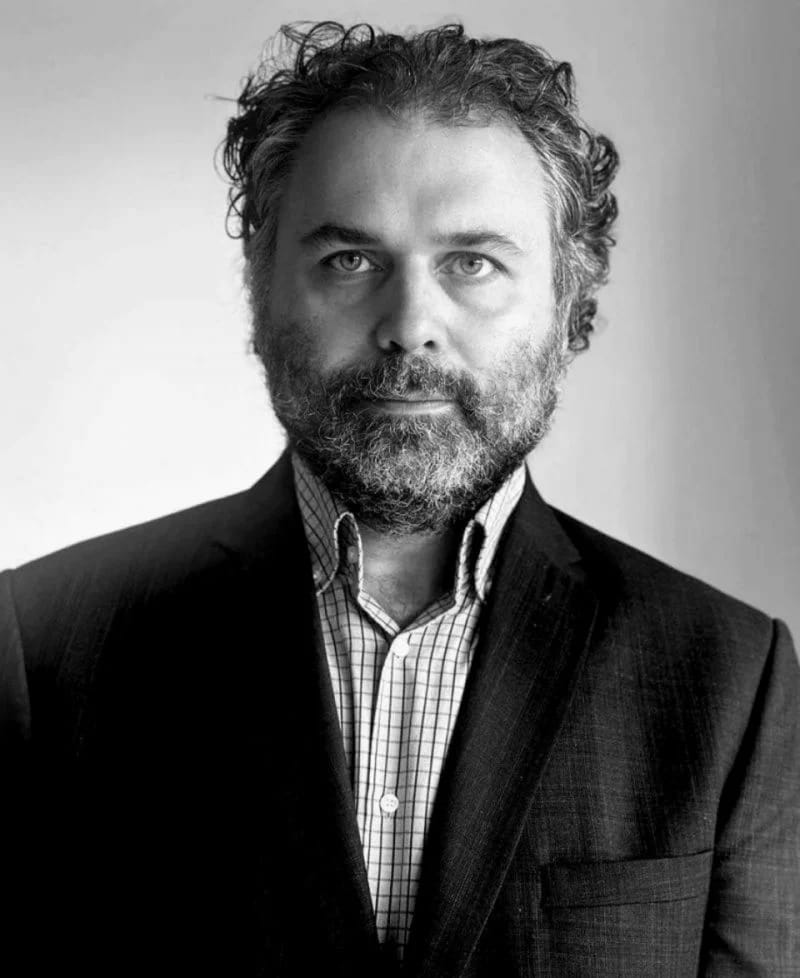
In April 2026, Wissam Saadé delivered four lectures at the University of Bologna. The first, at the invitation of Professor Giovanni Giorgini, was entitled “The Prophet and the Philosopher: The Hierarchy of Knowledge between Avicenna’s Falsafa and al-Kirmānī’s Ismaili Neoplatonism.” Its text is presented here in a revised and expanded version, as part of a series of ten articles.
This series explores the intellectual landscape of Neoplatonism in Islam through a comparative reading of Avicenna and al-Kirmānī. Although both thinkers share a broad Neoplatonic horizon, shaped by a metaphysics of emanation, a hierarchy of being, and a synthesis of Aristotelian and Platonic thought, they develop two distinct philosophical projects: Avicenna within the Peripatetic tradition of falsafa, and al-Kirmānī within the framework of Ismaili theology. Despite the differences between their respective intellectual contexts, their systems remain in constant dialogue around the nature of knowledge, the relationship between reason and revelation, and the ascent of the soul. Their respective projects also embody two contrasting conceptions of the political, illuminating different ways of thinking about the place of philosophy in relation to authority, law, and the organization of the community. This article constitutes the tenth and final part of this series.
X - Leo Strauss: Esoteric Writing and the Recovery of Practical Wisdom in Medieval Islamic and Jewish Philosophy
In the context of the Theologico-Political Treatise, Spinoza’s approach functions as a brilliant form of political neutralization. By relegating theology to the realm of the imagination and assigning philosophy to that of the intellect, Spinoza sought to “contain” theology by lowering its metaphysical status.
Theology remains a necessary “salvation for the ignorant,” providing a simplified moral code centered on justice and charity that maintains social order. For the philosopher, however, Reason is liberated to pursue the “knowledge of the whole” without ecclesiastical oversight.
Yet the more delicate point is that, for Spinoza, while philosophy cannot as such be popularized for the masses, it must nonetheless exert an influence on the common people through the medium of politics. Without this political mediation, the alternative would be the reverse: the unchecked dominance of the passions or the return of theologico-political tyranny.
This leads us to understand the inherently conflictual nature of this political mediation. Filippo Del Lucchese, a leading contemporary scholar who emphasizes the central roles of conflict, power, and the “multitude” in Spinoza’s thought, argues that politics is the battlefield on which reason attempts to organize the multitude. This organization is essential to prevent it from being weaponized as an instrument of tyrants.
In his work, particularly Conflict, Power, and Multitude in Machiavelli and Spinoza, Del Lucchese rejects traditional “liberal” interpretations that view the state as the product of a social contract aimed at achieving a static and definitive peace. Instead, he contends that, for Spinoza as for Machiavelli, conflict is not a failure of the state but an inescapable and productive force in political life.
Within Leo Strauss’s interpretive framework, Baruch Spinoza emerges not merely as a critic of religion but as a profoundly strategic thinker whose philosophical project unfolds under conditions of prudence and concealment. Strauss characterizes Spinoza as a “master of deception,” suggesting that his apparent moderation conceals a more radical intention. Religion, in this reading, is reduced to a “necessary poison” for the multitude, an instrument of social cohesion rather than a bearer of truth. Spinoza’s redefinition of faith as mere obedience marks a decisive contraction of its epistemic scope: by severing faith from knowledge, he effectively disqualifies theology from making truth claims that could rival those of philosophy or science. The consequence is not an outright refutation of religion, but its quiet marginalization.
From a Straussian perspective, the celebrated “separation” between theology and philosophy is less a principled settlement than a tactical armistice. It allows philosophy to survive within a world still governed by theology while gradually eroding the intellectual authority of revelation. Spinoza’s seemingly respectful treatment of Scripture, his “kindness” toward the Bible, can thus be read as a gesture of strategic domestication: religion is not destroyed, but retired from the domain of truth. In this sense, philosophy secures its autonomy not through open confrontation, but through a subtle reconfiguration of the terms of discourse.
This interpretation, however, has been contested by contemporary scholars such as Jonathan Israel and Steven Nadler, who regard Strauss’s reading as excessively conspiratorial. Against the hypothesis of esoteric manipulation, they emphasize the sincerity of Spinoza’s project. His reduction of religion to a minimal ethical core, justice and charity, is understood not as a covert strategy to dismantle revelation, but as a genuine attempt to establish civil peace in a context marked by sectarian violence. On this view, Spinoza does not seek to deceive the multitude, but to make coexistence possible by articulating a form of religion stripped of dogmatic antagonism.
A further dimension of Strauss’s interpretation emerges in his pairing of Spinoza with Machiavelli. For Strauss, the two form a transhistorical “duo” of covert revolutionaries, jointly responsible for inaugurating the modern project. Machiavelli, described as the “teacher of evil” in a technical rather than moral sense, initiates the break with classical political philosophy by lowering its aspirations. The central question shifts from “How should men live?” to the more pragmatic “How do men live?”, a transition that replaces the pursuit of the summum bonum with the imperatives of security and power. Yet Machiavelli’s innovation remains, in Strauss’s view, incomplete: his political realism lacks a systematic response to the enduring authority of religion.
It is here that Spinoza intervenes. By providing a metaphysical and epistemological foundation for Machiavelli’s political insights, he completes the modern turn. If Machiavelli supplies the political technique, Spinoza neutralizes its principal obstacle: the theological claim to superior authority. Through biblical criticism and the strict delimitation of faith, Spinoza ensures that the “priest” can no longer challenge the “prince.” What was in Machiavelli a persistent conflict between political and religious authority is transformed, in Spinoza, into a stabilized order, ultimately compatible with democratic forms of governance. Reason becomes the instrument through which the multitude is organized, no longer as a volatile force but as a structured component of the state.
Yet for Strauss, this apparent achievement conceals a deeper loss. The conjunction of Machiavelli and Spinoza produces not only the modern state but also the “modern crisis.” By lowering the horizons of human aspiration to security, utility, and peaceful coexistence, modernity sacrifices the very notions of greatness and truth that animated classical philosophy. What remains is a civilization oriented toward comfort and self-preservation, but deprived of any substantive account of the good life.
In Strauss’s view, Spinoza’s “sin” was his effort to sap the vital tension between Athens and Jerusalem, that essential friction between Reason and Revelation, or Philosophy and Faith. By contrast, premodern philosophers sought to maintain this tension through a delicate “esoteric” equilibrium. They did not aim to neutralize one in favor of the other; rather, they lived within the contradiction, preserving the sovereignty of the Law for the many while safeguarding the freedom of the Intellect for the few.
These philosophers recognized that their rational inquiries often threatened the very social and religious myths required for communal stability. Consequently, they wrote for a dual audience: the masses, who received a message of piety and law, and the philosophical elite, who could discern the “hidden,” often heterodox, rationalist meanings between the lines.
Strauss, Phronesis, and the Art of Writing
Strauss argued that modern political science has failed precisely because it attempts either to ignore or to resolve the theologico-political problem. In his view, Machiavelli and Spinoza are the primary culprits in this regard. He advocated a return to the “ancients,” Plato and Aristotle, and to the “medievals,” above all Maimonides and al-Fārābī, admiring in particular the way Islamic and Jewish thinkers handled this tension.
Unlike the Christian tradition, which employed “Natural Law” as a means of harmonizing reason and faith, the Jewish and Islamic traditions understood religion primarily as Law, Torah or sharīʿa. This structural reality forced the thinker to become a “political philosopher,” one who publicly respects the Law while privately pursuing the Truth.
For Strauss, “writing between the lines” is a form of phronesis. It is the “practical wisdom” of knowing what to say in public in order to satisfy the “city,” while reserving dangerous truths for the “few.” If a philosopher lacks this phronesis, he either becomes a target of tyranny or, worse, inadvertently prepares the ground for a new kind of tyranny by being too “honest” about the instability of social myths.
Al-Fārābī and Maimonides are, in this sense, the supreme masters of the “art of writing” because they operated in worlds where religion was defined as Law. This created a unique structural pressure: the philosopher could not simply disagree with “dogma”; he had to navigate an encompassing legal framework.
Strauss’s discovery of al-Fārābī’s Philosophy of Plato marked a turning point in his own intellectual career. He argued that al-Fārābī used Plato as a “mask” through which to discuss his own radical ideas about Islam.
Strauss noted that in al-Fārābī’s summaries of Plato, he often conspicuously omits or downplays the immortality of the soul. For Strauss, this “silence” itself functioned as a loud signal: al-Fārābī was suggesting to the philosophical elite that the afterlife might be a “pious myth” necessary for social order rather than a philosophical truth.
Al-Fārābī thus reimagined the Prophet as a “Philosopher-King” or “Supreme Legislator.” By framing the Prophet in Platonic terms, he subtly suggested that the essence of prophecy is political science. He presented the Law as a set of symbols intended to guide the masses toward virtue, while the philosopher understands the rational “demonstration” underlying those symbols.
If al-Fārābī used masks, Maimonides used traps. In the introduction to The Guide for the Perplexed, Maimonides explicitly warns the reader that he will employ contradictory statements in order to conceal the truth. He lists seven reasons why a book may contain contradictions. The seventh is the most famous: contradiction may be used deliberately to conceal a truth that the common reader is not prepared to grasp.
Maimonides describes metaphysical truth as a flash of lightning in a dark night. His writing strategy mimics this image: a truth is revealed in one chapter, only to be “covered over” by a more traditional or exoteric statement in the next.
Maimonides also treats the most sacred parts of the Torah, Maʿaseh Bereshit and Maʿaseh Merkavah, as corresponding to physics and metaphysics. Strauss argues that Maimonides’ “secret” was a radically Aristotelian understanding of nature and divinity, one he could disclose only indirectly in order to avoid charges of heresy.
Strauss admired al-Fārābī and Maimonides precisely because they did not try to “harmonize” Reason and Revelation in the Thomistic manner. They left the tension unresolved. For them, the Law was the nomos of the city and Truth the physis of the world. They inhabited the “gap” between the two, using writing itself to build a bridge that only the worthy could cross.
While al-Fārābī and Maimonides lived within the “gap” between nomos and physis, Baruch Spinoza sought to close it permanently. Where al-Fārābī used a “Platonic mask” and Maimonides “intentional contradictions” to keep philosophy private and protected, Spinoza used critique to make the philosophical spirit public and political. He exchanged the “noble dissimulation” of the ancients for the “naked truth” of the Enlightenment.
In Strauss’s eyes, the medievals were more realistic because they accepted that the “City” and “Philosophy” would always remain in tension.
Plato, Esotericism, and the “Impossible City”
According to the Straussian perspective, this “reading between the lines” is a perennial feature of the history of philosophy. Strauss’s interpretation of Plato is defined by the conviction that Plato wrote esoterically, shielding his most radical insights beneath a “surface,” or exoteric teaching.
This necessity arose from two motives: protecting philosophy from political persecution and preventing the destabilization of shared beliefs essential to a healthy society. Strauss maintained that the Platonic dialogues are never direct statements of Plato’s own views, since the author never speaks in his own voice but only through characters such as Socrates. In this context, Socratic irony becomes a form of “noble dissimulation,” a method by which a superior mind conceals its wisdom either to avoid giving offense or to guide worthy students toward deeper truths.
Where a thinker such as Karl Popper reads Plato’s Republic as a literal blueprint for a totalitarian nightmare, Strauss argues that it is, in fact, a profound critique of political idealism. He famously characterized the Kallipolis as “The Impossible City.”
Strauss contended that this “city in speech” is intentionally presented as unattainable because it requires a radical abstraction from the human body, including the abolition of private property and the dissolution of the family, both of which human nature strongly resists. By exposing the extreme, and often grotesque, measures necessary to achieve “perfect” justice, Plato was not drafting a utopian manual. Rather, he was warning against the fanaticism that arises when one attempts to impose a perfect political order upon an imperfect world.
For Strauss, philosophy is inherently subversive. By its very nature, it interrogates the “opinions” that serve as the foundational pillars of any stable society. Every “city” requires “pious myths” or “noble lies” to preserve its internal cohesion and unity.
Yet because the philosophical life reveals that the city’s laws are rooted in convention (nomos) rather than nature (physis), the political order, and the tyrant in particular, will always regard the philosopher with a fundamental, and perhaps justified, suspicion. This is the enduring lesson of the trial and death of Socrates.
To survive the perennial threat of tyranny, and to prevent radical philosophical inquiry from inadvertently unraveling the social fabric, Strauss contends that thinkers must master the “Art of Writing.” This esoteric strategy allows the philosopher to appear on the surface as a law-abiding, even traditional, citizen. Meanwhile, the most destabilizing insights remain “hidden between the lines,” reserved for the select few capable of confronting the “truth of the whole” without lapsing into nihilism or revolutionary fanaticism.
Philosophy, Tyranny, and the Temptation of the “Platonopolis”
Ultimately, the relationship between philosophy and tyranny constitutes the supreme “theologico-political” problem. Strauss explores this tension primarily through his famous dialogue with Alexandre Kojève in On Tyranny, his commentary on Xenophon’s Hiero. He argues that philosophy and tyranny are not merely polar opposites but are inextricably linked by a mutual, if fraught, necessity: the philosopher requires the city’s protection, while the city requires the order that only authority can provide.
Throughout history, philosophers have been seduced by the prospect of advising the tyrant, or the enlightened despot, in order to bring about a rational social order. The philosopher’s temptation is to transform the world into a “Platonopolis,” a place where the pursuit of truth is institutionalized. Yet Strauss issues a stark warning: when a philosopher seeks to rule directly or to guide the hand of absolute power, philosophy collapses into ideology. By becoming an instrument of statecraft, it loses its essential “searching” or skeptical character, sacrificing its freedom to the demands of political totality.
Falsafa as a “Cautious Enlightenment”
In the Straussian interpretation of intellectual history, the falsafa tradition, comprising a transreligious linguistic community of Arabic-writing thinkers, including Muslims, Jews, and Christians such as Yaḥyā ibn ʿAdī, offers a unique meta-framework that stands in sharp contrast to both Latin Scholasticism and the modern paradigm.
While the Latin West sought to harmonize Faith and Reason into a transparent, systematic totality, best exemplified by the Summa Theologiae, the falāsifa maintained an “energetic tension” between these two poles. They did not seek a final, public reconciliation; rather, they lived within the contradiction, employing esotericism as a strategic necessity to protect the purity of the philosophical quest while respecting the social and normative requirements of religious Law.
For Strauss, this medieval model represents a “cautious Enlightenment” rooted in phronesis, providing a vital critique of the Western Enlightenment of the eighteenth century. The latter was founded upon the conviction that the “exercise of reason” should no longer be restricted to a rare elite but disseminated among the masses. Strauss contends that this project of universal disclosure neglected a long-standing tradition in which truth was recognized as potentially destabilizing, harmful both to the social fabric and to thought itself if exposed without restraint. By seeking to lead the “common people” toward rational thinking without mediation, the modern Enlightenment inadvertently paved the way for nihilism, stripping society of the “noble lies” and shared prejudices necessary for stability.
In this context, Strauss identifies a fundamental “lowering of the bar” in early modernity. Thinkers such as Machiavelli, Hobbes, and Locke replaced the classical pursuit of human excellence and virtue with a focus on “peace and security.” This shift transformed politics from an art concerned with the cultivation of character and the vision of the philosopher-king into a technical science preoccupied with “rights” and bureaucratic management.
Machiavelli’s primary error, in Strauss’s view, was the destruction of the noble lie. By suggesting that lying is structurally bound to politics without distinguishing between its base and noble forms, he eliminated the protective distance between philosophical inquiry and political necessity.
The “two-truths” doctrine attributed to falsafa, the distinction between an esoteric, demonstrative truth for the elite and an exoteric, symbolic truth for the public, was thus a safeguard. It allowed thinkers such as al-Fārābī, Maimonides, and Avicenna to navigate the volatility of the masses and the rigidity of institutions.
Strauss’s “conservatism” was therefore not a reactionary rejection of reason, but a “rescue mission” aimed at rehabilitating the rational traditions of antiquity and the Middle Ages. He argued that the absence of caution, the modern principle of “truth for all,” converges with the dynamics of “post-truth,” in which unmediated exposure leads to the erosion of genuine meaning.
Beyond Strauss: The Return of “Philosophical Religion”
Ultimately, however, the nuanced distinctions among these philosophers are precisely what is lost in Leo Strauss’s interpretation. Their respective relationships to the crystallization of falsafa as a “philosophical religion” diverge significantly.
From my perspective, the impulse to constitute falsafa as a philosophical religion reached its most potent expression only in the works of al-Kirmānī and Avicenna, although they pursued markedly different strategies. Al-Kirmānī functioned as the “organic philosopher” of the Fatimid project, arguably sacrificing the autonomy of philosophical reason to serve ideological ends. Avicenna, by contrast, achieved this through a conscious decoupling from his Ismaili background; yet, from a strictly Aristotelian vantage point, he engaged in a form of “heresy” by developing the concept of the “Sacred Intellect” (al-ʿaql al-qudsī).
The investigation of the concept of a “philosophical religion” demands both rigorous inquiry and heightened conceptual vigilance, particularly when tracing structural continuities between medieval metaphysics and modern rationalism.
In the eleventh century, Avicennism emerged not merely as a school of logic, but as a project of philosophical religion. By transforming the Aristotelian “Unmoved Mover” into a source of ontological emanation, Avicenna established a framework in which the human soul’s highest objective is conjunction with the Active Intellect.
This system suggests that the philosopher and the prophet draw from the same source. Yet while the prophet receives truth through imaginal intuition, the philosopher attains it through discursive reason. Consequently, falsafa is elevated into a path of spiritual realization that is functionally equivalent, and often intellectually superior, to the observance of traditional religious Law.
Parallel to this, the Ismaili project, as articulated in the thought of Ḥamīd al-Dīn al-Kirmānī, constituted a comprehensive philosophical-religious endeavor. Al-Kirmānī functioned as the “organic philosopher” of the Fatimid state, synthesizing Neoplatonic emanationism with political theology in order to provide the regime with a metaphysical foundation.
From al-Kirmānī to the Druze Tradition
The Druze tradition represents the most distinct historical instance of a community founded explicitly upon such a philosophical religion. Unlike traditional creeds centered on a personal, volitional deity, the Druze faith is rooted in a highly technical Neoplatonic cosmology.
Its primary scripture, the Epistles of Wisdom (Rasāʾil al-Ḥikma), consists of philosophical and theological epistles rather than a conventional scriptural narrative. The “Five Limits” (al-Ḥudūd), including the Universal Intellect (al-ʿAql), the Universal Soul (al-Nafs), and the Word (al-Kalima), among others, provide a philosophical map of the cosmos. Within this framework, these metaphysical principles are also embodied in figures occupying specific positions within the sacred hierarchy.
While Avicenna and al-Kirmānī primarily addressed scholarly and initiatory elites, the Druze project effectively “socialized” these philosophical building blocks, employing them to define a resilient communal and spiritual identity.
Spinozism as a Modern “Philosophical Religion”
If these medieval precedents are maintained, a critical question emerges concerning the status of Spinozism in the modern epoch. While Spinozism transcends a mere hermeneutic of Baruch Spinoza’s personal corpus, it fundamentally constitutes a philosophical religion in its own right.
Although the Tractatus Theologico-Politicus formally mandates a sharp demarcation between theology, relegated to the sphere of social obedience, and philosophy, understood as the sole domain of truth, the Ethics effectively collapses this distinction. In the latter, these spheres are reintegrated into a singular, immanent “religion of reason,” in which the traditional pursuit of piety is subsumed by the intellectual drive toward metaphysical necessity.
In this light, the Ethics functions as an ultimate scripture. Written with geometric, almost ritualistic rigor, it serves as a manual for “blessedness” (beatitudo) and liberation from the “bondage” of the passions. It fulfills the traditional religious function of providing a path to salvation, yet does so without the need for church, clergy, or revelation, grounding the sacred entirely within the exercise of the intellect.
The Prophet and the Philosopher (9/10)
The Prophet and the Philosopher (8/10)
The Prophet and the Philosopher (7/10)
The Prophet and the Philosopher (6/10)
The Prophet and the Philosopher (5/10)
More from Wissam Saadé
View All


More in Diachronia
View All


Latest from Levant Time
View All


