

For a return to the political legacy of Mohammed Mehdi Chamseddine

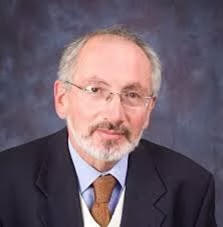
Lebanon and, more specifically, the Shiite community commemorated a few days ago the 25th anniversary of the death, on January 10, 2001, of the former president of the Supreme Shiite Council (SSC), Imam Mohammed Mehdi Shamseddine.
The man who was, for more than two decades, the spiritual leader of the Lebanese Shiite community, succeeding Imam Moussa Sadr – who mysteriously disappeared during a visit to Libya in 1978 – left behind a political 'will' whose existence and true scope are ignored (or concealed...) by many Lebanese and foreigners, particularly in academic and journalistic circles. The historical and truly existential dimension of this legacy is highlighted by the dramatic developments currently unfolding in Lebanon and the region.
More than ever, the Land of the Cedars and the Levant need the contribution to public life of a personality combining, like Imam Shamseddine, moral authority, open-mindedness, and a clear vision of current socio-political realities.
At the end of his life, and although weakened by illness, he had recorded his memoirs and recommendations on cassette regarding the course of conduct that Shiites in Lebanon and the region should adopt. He particularly urged his co-religionists not to have a 'political project specific to Shiites' and to fight for their rights 'by integrating into the society in which they live'.
Clearly, he subtly rejected the principle of exporting the Iranian Islamic Revolution initiated by the Pasdaran in the aftermath of Khomeini's rise to power in 1979. He particularly challenged, in this context, the system established by Khomeini, based on the authority of the Walih el-Faqih, namely the Supreme Leader of the Iranian Islamic Revolution – in this case, himself and his successors – endowed, in his capacity as a direct descendant of the Prophet, with absolute and unchallenged decision-making power on strategic matters, including decisions of war and peace.
By establishing such a political system, Ayatollah Khomeini had sown the seeds of chronic regional destabilization, the result of an autocratic power's behavior that would plunge the entire Middle East into chaos for over four decades. And for good reason: the Wilayat el-Faqih was designed to be an absolute reference authority not only for Iranians but also for all Shiites. In terms of religious practice, every Shiite group or individual must indeed choose their own spiritual leader. However, by granting himself power based on a divine 'legitimacy' (thus indisputable), the new Leader of the Islamic Republic (Khomeini, then Khamenei, currently) placed himself above all other religious authorities, serving, moreover – and this is where the problem lies – a transnational, expansionist, hegemonic, repressive political project that sanctifies violence as a mode of action.
This Khomeinist 'graft' on the Shiite socio-political-religious body could only be a source of tension and conflict in the Arab world, under the weight of the 'exportation of the Islamic Revolution' and the divine power granted to the Supreme Leader. As a true visionary, Sheikh Mohammed Mehdi Shamseddine had seen the danger looming, clearly distancing himself from the foundations of Wilayat el-Faqih and the expansionist ambitions of the Pasdaran, much like the spiritual leader of the Shiite community in Iraq, Ayatollah Sistani, Imam Moussa Sadr, and even Sheikh Mohammed Hussein Fadlallah, whom many Western observers mistakenly called the 'spiritual guide of Hezbollah', whereas, on the contrary, he challenged the divine power of the Walih el-Faqih and, consequently, expressed reservations about Hezbollah's conduct in Lebanon.
More than twenty-five years later, events have illustrated the visionary nature of Sheikh Shamseddine's political legacy. In fact, it is on the basis of the 'Shiite-specific (transnational) project', denounced by the former president of the SSC, that the Iranian regime resorted to militiamen from Arab countries to brutally suppress its own people in bloodshed a few days ago. The slogan 'Neither Gaza, nor Hezbollah, we give our lives for Iran', launched by Iranian revolutionaries, alone summarizes the entire historical and existential dimension of the vision expressed by Imam Shamseddine. In this context, it primarily reflects the serious resentment towards Arab populations expressed by a large part of Iranian public opinion, which does not understand how the radical wing of the Iranian regime could spend tens of billions of dollars to maintain proxies in Arab countries while Iran faces an unprecedented severe socio-economic crisis.
It is also on this same basis of the 'Shiite-specific (transnational) project' that Hezbollah's Secretary-General, Sheikh Naim Qassem, constantly prioritizes the supreme interest of the Iranian regime at the expense of the imperatives of building a strong and sovereign Lebanese state. He even went so far as to utter threats against Foreign Minister Joe Raggi (deemed too sovereignist!), not forgetting to brandish the specter of internal unrest if the government were to implement its decision to disarm Hezbollah…
During one of his recent public interventions, President Joseph Aoun called on Hezbollah to 'reason,' which openly displeased Naim Qassem (the supreme interest of the mullahs' Iran requires it!). To stop such a suicidal drift by the pro-Iranian faction, an imperative step must be taken today, urgently: alignment with the recommendations, with the prophetic political legacy, of Mohammed Mehdi Shamseddine. Even if this must inevitably lead – they will have to admit it one day – to a genuine 'cultural revolution' to reshape their political doctrine developed in the mid-1980s...
Iran: Major Revelations on Nuclear Program and the Impact of the Naval Blockade (1/2)
The Forgotten Ones of the Iran War
Facing the Tyrant, the "New Hitler" of the Middle East
Plus de Michel Touma
Voir tout


À lire aussi dans Perspective
Voir tout


Les derniers articles de Levant Time
Voir tout


