Levant Time logo
Khalil Helou

Khalil Helou

Hezbollah-Israel: An Endless War in Whose Interests? (11)
By
Khalil Helou
Published
Jul 5, 2026 - 01:56

This series of articles aims to provide a clearer understanding of the current situation on the Lebanese scene in light of the past, setting aside passionate, ideological, or romanticized narratives that miss the realities on the ground, leaving readers to draw their own conclusions. The previous ten installments examined a reinterpretation of events surrounding Hezbollah's rise to power, from the Taif Agreement through the Israeli army's withdrawal from Lebanon in May 2000, up to the 2006 war and its aftermath. The deployment of the Lebanese army — known internationally as the Lebanese Armed Forces (LAF) — then under the command of General Michel Sleiman, to southern Lebanon was ordered by Fouad Siniora's government on August 16, 2006. This deployment, the first since 1968, was immediately launched at dawn on August 17 with the crossing of the Litani River via military Bailey bridges and improvised crossings, as the permanent bridges had been destroyed by Israeli bombardments.
Timeline of ceasefires after the 40-day war in Iran
By
Khalil Helou
Published
Jul 1, 2026 - 17:06

After forty days of war between the United States and Israel on one side and Iran on the other, along with simultaneous fighting between Israel and Hezbollah in Lebanon, a preliminary ceasefire framework agreement between Washington and Tehran came into effect on April 8, 2026. A few hours later, a series of massive Israeli air operations struck more than thirty Hezbollah positions in Lebanon within ten minutes, killing over 300 people and wounding 1,150 others — among the deadliest strikes of the conflict — as the Israeli air force dropped precisely 160 bombs. The American-Iranian agreement, initially set to last fifteen days and not covering Lebanon, was extended indefinitely on April 21. In addition to halting hostilities between the two parties, it provided for the reopening of the Strait of Hormuz and the start of diplomatic talks.

USA-Iran: Trump's previous ultimatums (2/2)
By
Khalil Helou
Published
Jun 26, 2026 - 12:06

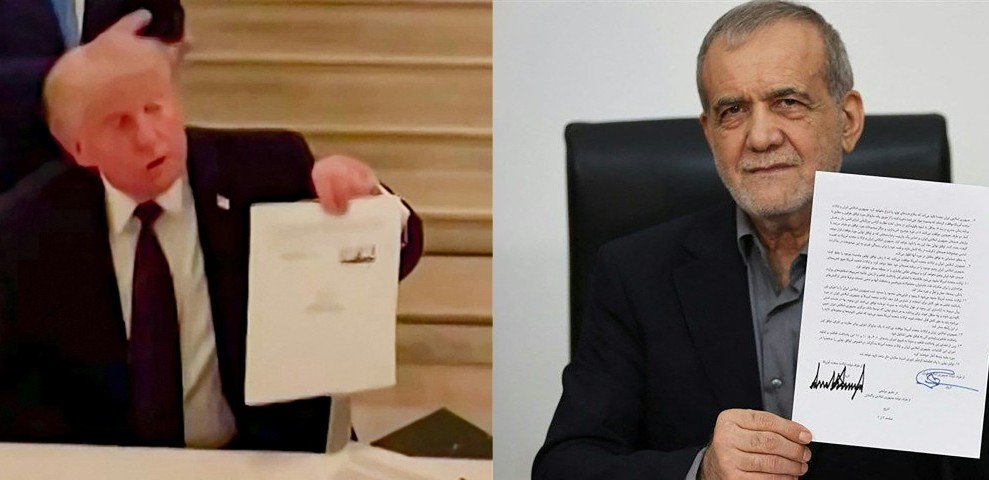
The 60-day American-Iranian roadmap must be understood in the context of the ultimatum cycles that define President Donald Trump's Middle East strategy — a method built on alternating between threats of total destruction and purely transactional diplomacy. In April 2025, a first unilateral 60-day ultimatum demanding that Tehran dismantle its nuclear program was met with a categorical refusal from Supreme Leader Ali Khamenei, triggering massive U.S. B-2 bomber strikes in June 2025 against Iranian nuclear sites. A year later, in April 2026, faced with a strangling blockade of the Strait of Hormuz, the White House doubled down, threatening to devastate vital Iranian infrastructure "within four hours" — a credible threat that forced Tehran to accept, at the last moment, the principle of a ceasefire, paving the way for the protocol signed at Versailles by President Trump.

USA-Iran: a roadmap under time pressure (1/2)
By
Khalil Helou
Published
Jun 24, 2026 - 22:10

After 48 chaotic hours marked by threats of breakdown, the first high-level session between the American and Iranian delegations concluded under the joint mediation of Qatar and Pakistan. The protocol signed at Versailles on June 17 had until now appeared to be a fragile ceasefire; it has now been transformed into a genuine diplomatic exercise following the formal endorsement of a 60-day roadmap. This is expected to lead either to a final agreement—along the lines of the arrangements that have shaped the Middle East since 1948—or to a new open crisis. The political and military risks between the two parties remain fully intact, within an extremely compressed timeframe.

Hezbollah-Israel: An Endless War in Whose Interests? (10)
By
Khalil Helou
Published
Jun 22, 2026 - 15:05

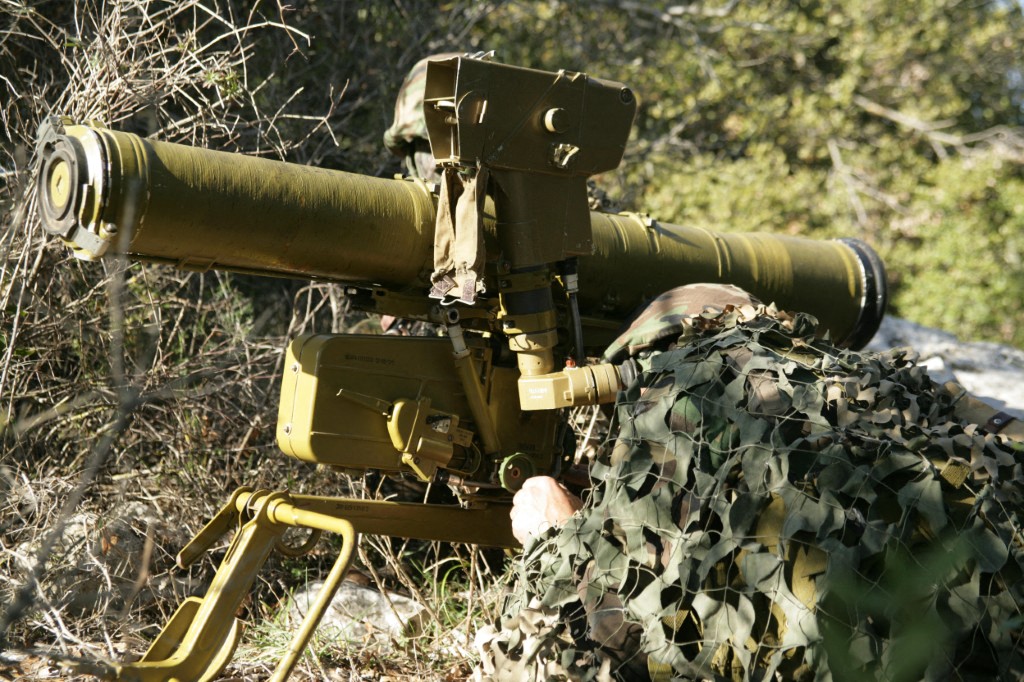
This series of articles aims to shed light on the current situation through the lens of history, setting aside passionate, ideological, or romanticized narratives that miss the mark on reality, and leaving readers to draw their own conclusions. The previous nine installments offered a reexamination of events surrounding Hezbollah's rise to power, from the Taif Agreement through Israel's withdrawal from Lebanon in May 2000, the establishment of a Hezbollah-controlled zone in the South, and the 2006 war. This article addresses the lessons of the 2006 war and its aftermath. In the operation "Truthful Promise" (el-Wa3ed el-Sadek, the name given to the July 2006 war), Hezbollah employed tactics rooted in hybrid asymmetric warfare, skillfully combining traditional guerrilla techniques, the heavy use of cutting-edge dual-purpose anti-tank missiles, and defense in depth across the entire area south of the Litani River and parts of its northern bank.

A memorandum of understanding or a war on pause?
By
Khalil Helou
Published
Jun 19, 2026 - 17:11

As Iran lies practically in ruins, the memorandum of understanding signed between Washington and Tehran on June 17 has left a cloud of uncertainty hanging over the Middle East. As long as the Iranian regime remains in place and its regional proxies survive — however weakened — the foreseeable dynamic will be no different from the one that has defined the region since the Islamic Revolution of 1979 in Tehran. Iran would thus continue to draw on a blend of ideology and pragmatism — first to ensure its survival, then to reassert itself regionally while keeping tensions alive. Operation 'Epic Fury' is undoubtedly a masterpiece of tactical execution, but so far it has yielded no clear strategic benefit, while Iran attempts to portray itself as the big 'winner' through a barrage of false propaganda, media manipulation, and state-sponsored disinformation.

Hezbollah-Israel: An Endless War in Whose Interests? (9)
By
Khalil Helou
Published
Jun 11, 2026 - 16:08

This series of articles aims to provide a clearer understanding of the current situation in light of the past, free from passionate, ideological, or romanticized narratives that miss the realities on the ground, leaving readers to draw their own conclusions. The previous eight installments offered a reexamination of events surrounding Hezbollah's rise to power since the Taif Agreement, through the Israeli army's withdrawal from Lebanon in May 2000, the establishment of a Hezbollah-controlled zone in the South, and the 2006 war. This article picks up where that conflict left off. The Battle of Wadi Al Houjeyr, also known as the Battle of Wadi Slouqi, took place in the central sector of the Lebanese-Israeli border between August 11 and 13, 2006. It was one of the costliest engagements for the Israeli army. The Israeli forces' objective was to cross the Slouqi valley heading northward to reach the Litani River before the anticipated ceasefire came into effect.

Why the Iranian Regime's Collapse Would Come From Within (2/2)
By
Khalil Helou
Published
Jun 8, 2026 - 17:23

In a previous article, we analyzed the military and industrial impact of the joint “Epic Fury” and “Lion’s Roar” operations on Iran’s conventional capabilities. In this second and final installment, we examine the possible combined effects of economic strangulation and grassroots mobilization that could lezd to the implosion of the Iranian regime. The naval blockade has taken over from the February and April 2026 strikes. The blockade is a necessary condition for weakening the Iranian regime, but not a sufficient one. Several factors help explain why the economic sanctions imposed over many years – compounded by the ongoing American naval blockade and its consequences, including supply chain disruptions and the halt of oil exports –struggle on their own to bring about the regime’s collapse. The Iranian regime has repeatedly proven its capacity for adaptation and restructured itself following the decapitation strike of last February.

Hezbollah-Israel: An Endless War in Whose Interests? (8)
By
Khalil Helou
Published
Jun 6, 2026 - 12:19

This series of articles is intended to shed light on the current situation through the lens of the past, far removed from passionate, ideological or romantic narratives that overlook the underlying realities. It is up to the reader to draw the appropriate conclusions. The previous seven instalments offered a reassessment of the events surrounding the rise of Hezbollah’s power, from the Taif Agreement to the withdrawal of the Israeli army from South Lebanon in May 2000, the establishment of a Hezbollahland in the South and the eruption of the 33-Day War in July 2006, which was initiated by Ali Larijani..

Dismantled, Yet Still Dangerous: Iran After Operations “Epic Fury” and “Roaring Lion”: (1/2)

In this first instalment, we examine the military and industrial impact of Operations Epic Fury and Roaring Lion on Iran’s conventional capabilities. It will be followed next week by a second and final part exploring the conditions that could lead to Iran’s implosion over the medium to long term. The Iranian regime suffered heavy losses during the US-Israeli war fought between February and April 2026. Yet despite the scale of the damage, the collapse of the Islamic Republic did not materialize, and Tehran showed no sign of flexibility in response to U.S. sanctions and the American naval blockade.