Levant Time logo
Khalil Helou

Khalil Helou

The War in Iran: Where the Parties Stand
By
Khalil Helou
Published
May 29, 2026 - 11:27

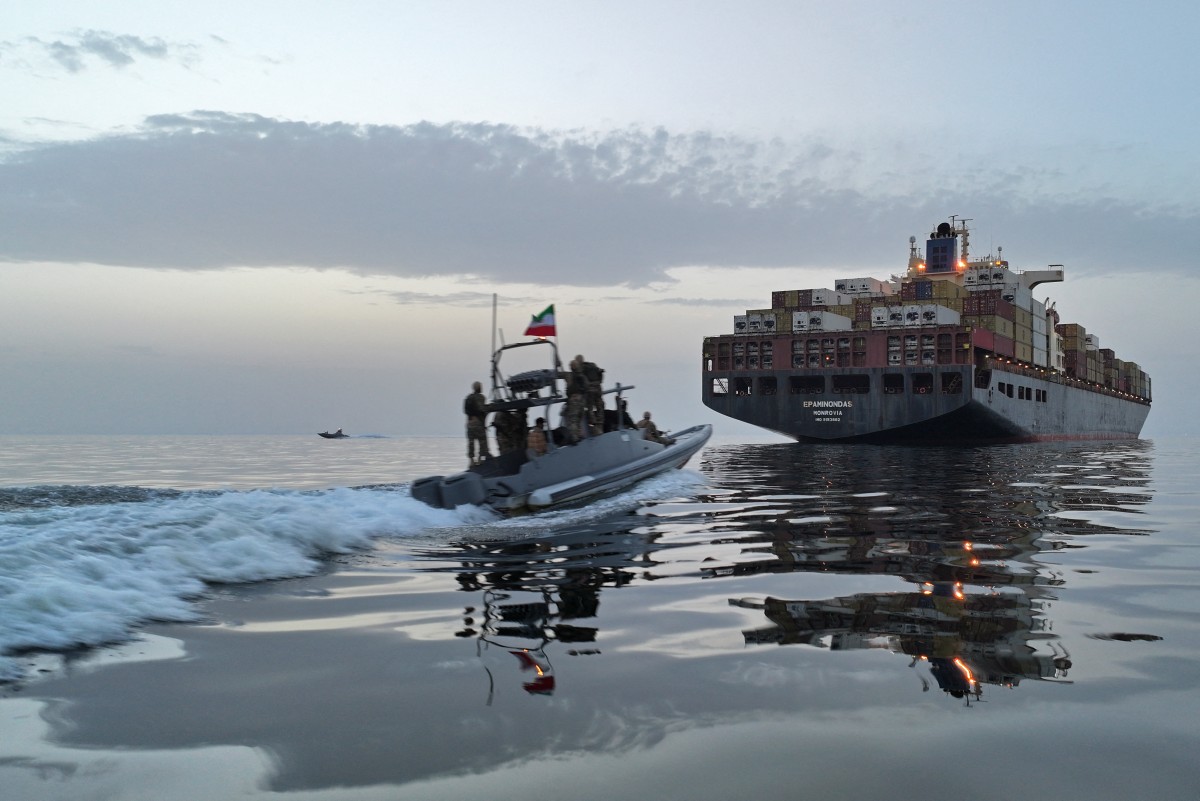
Three months to the day after it began, the war in Iran appears to be in suspension, and in the calculations of Washington and Tehran, the opposing side will eventually give in with the factor of 'time'. Although all signs suggest that Iran should capitulate after its military disaster and integrated economic losses estimated between 1,000 and 1,450 billion US dollars, the Islamic Revolutionary Guard Corps (IRGC) is not backing down. It has no accountability to its people, prevents them from expressing themselves, has massacred at least thirty thousand of them, and imprisoned fifty thousand more as of last January.
Hezbollah-Israel: An Endless War in Whose Interests? (7)
By
Khalil Helou
Published
May 25, 2026 - 21:36

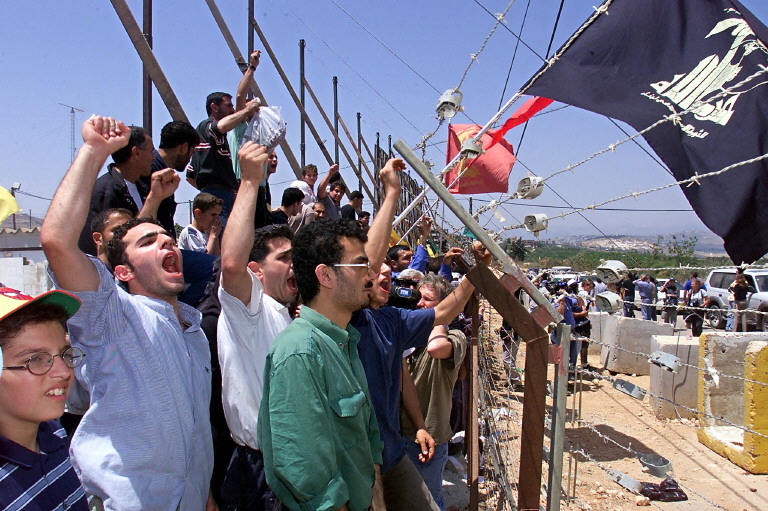
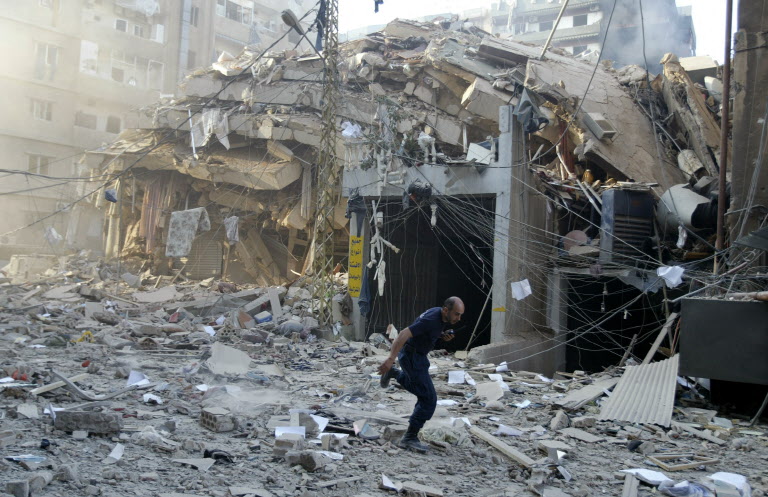
This series of articles is intended to shed light on the current situation through the lens of the past, far removed from passionate, ideological or romantic narratives that overlook the underlying realities. It is up to the reader to draw the appropriate conclusions. The previous six instalments offered a reassessment of the events surrounding the rise of Hezbollah’s power, from the Taif Agreement to the withdrawal of the Israeli army from South Lebanon in May 2000, and the establishment of a Hezbollahland in the South. Death of Hafez al-Assad and the Growing Iranian Influence in Syria and Lebanon

Between Trump, Putin, Xi and Iran: A New Geopolitics Emerges (2/2)
By
Khalil Helou
Published
May 22, 2026 - 13:47

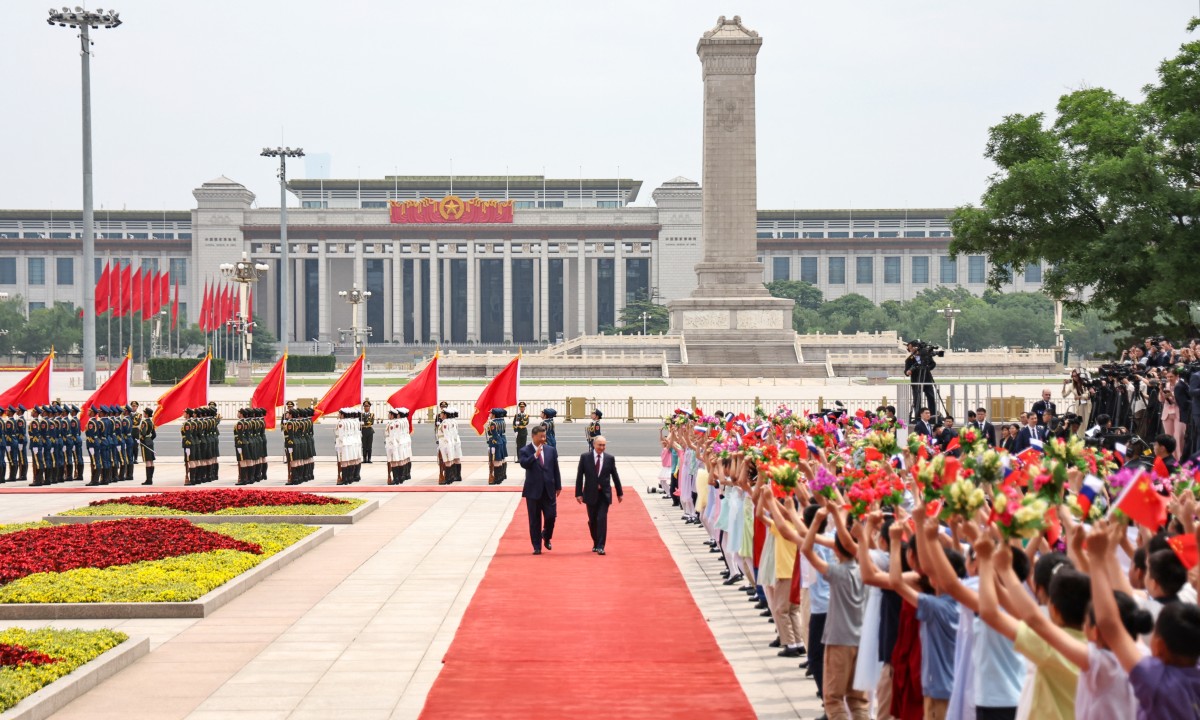
Amid a full-blown trade tariff war and commercial restrictions between Beijing and Washington, along with their confrontations over Taiwan and the South China Sea, Trump and Xi Jinping held their first meeting on October 30, 2025, at Busan airport in South Korea, on the sidelines of the Asia-Pacific Economic Cooperation Forum summit. This meeting, made necessary by the urgent economic problems facing both countries, resulted in the conclusion of a one-year trade ceasefire between the two parties. The ceasefire involved an immediate reduction in US tariffs on Chinese goods, which had exceeded 100% in some cases. These tariffs were cut to an average of 47%. Additionally, President Trump suspended the blacklisting of subsidiaries in which 50% or more of shares belonged to sanctioned Chinese groups. He also pledged to lift restrictions on exports to China of microchips related to Artificial Intelligence.

Hezbollah-Israel: An Endless War in Whose Interests? (6)
By
Khalil Helou
Published
May 18, 2026 - 13:44

With this sixth instalment in the “Israel-Hezbollah” series, we continue to examine the current situation through the lens of history, steering clear of the impassioned, ideological or romantic narratives that often obscure realities on the ground. Readers may draw their own conclusions. Previous articles revisited Hezbollah’s rise since the Taif Agreement, its first two wars with Israel, and the withdrawal of the Israeli army from Lebanon in May 2000. Following Israel’s withdrawal from Lebanon on May 24, 2000, and at the insistence of Israeli Prime Minister Ehud Barak, the United Nations officially certified on June 16, 2000, that the pullout was complete and in full compliance with UN Security Council Resolution 425, which was thereafter deemed implemented. UNIFIL subsequently delineated an Israeli withdrawal line known as the “Blue Line,” identifying 13 disputed points between the two countries covering an area of less than one square kilometer. The line is often mistaken for the Paulet-Newcombe line, drawn in 1923 as the border separating Lebanon and Palestine under the French and British mandates.

Between Trump, Putin, Xi Jinping and Iran: A New Geopolitics Emerges (1/2)
By
Khalil Helou
Published
May 14, 2026 - 21:13

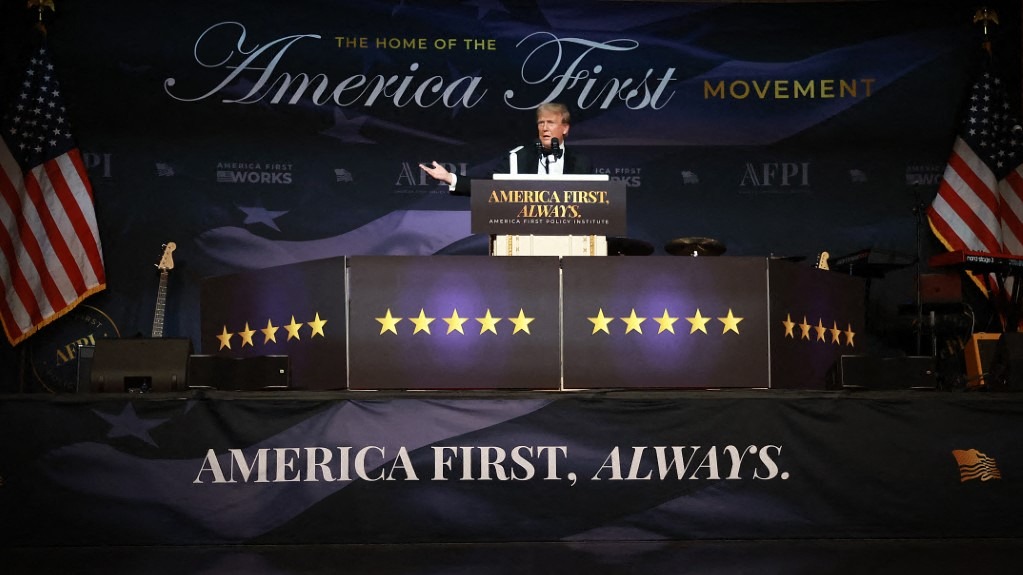
Radical shifts are taking shape across a world that, over the past two decades, has seen the slow disintegration of the global order established after the Second World War, giving way to a new system now beginning to emerge on the horizon. Since the start of his second term, and in line with his National Security Strategy (NSS 2025), President Donald Trump has redefined US priorities. First and foremost are domestic affairs – America First – and the American continent itself. As for the rest of the world, Europe, he argues, should takes responsibility for its own defense and no longer rely on the United States as it has done since 1945. In his view, Russia, despite its bellicose posture, is no longer considered a threat, having proven incapable of defeating Ukraine and incapable of invading Europe.

Hezbollah-Israel: An Endless War in Whose Interests? (5)
By
Khalil Helou
Published
May 8, 2026 - 18:27

This series of articles will allow for a better understanding of the current situation in light of the past, moving beyond impassioned, ideological, or romanticized rhetoric that misses the mark, leaving the reader to draw their own conclusions. Furthermore, it is high time to seriously counter the sterile rhetoric of resistance, not with counter-rhetoric, but with serious work by promoting the rule of law, which can only be established through sovereignty. In the previous four installments, we revisited the events that shaped Hezbollah’s rise following the Taif Agreement, its first two wars with Israel, and the grinding war of attrition it has waged for more than a decade.

The Cultural Illness
By
Khalil Helou
Published
May 5, 2026 - 17:02

The disease afflicting the country is not solely the Hezbollah militia, although it constitutes the most significant challenge, nor is it other militias, armed groups in the Palestinian camps, the absence of sovereignty, or the perpetual corruption dating back to the Mutasarrifate (1862-1915). This disease, which is the erosion of the culture of the state and of the sovereign state, has infected and proliferated mentalities since the Syrian Ba'athist occupation. It was exacerbated later and became cancerous under Hezbollah's hegemony. For 21 years, Hezbollah, at every level of its hierarchy and wherever it is present within institutions, has relentlessly worked to shape mentalities and render them subservient, using these institutions as a socio-political and security shield for its own benefit. The state and its institutions are thus disfigured, and any official who does not adopt the rhetoric of "resistance" is labeled a traitor and a Zionist agent. Likewise, friendly countries where hundreds of thousands of Lebanese, naturalized or not, reside must be labeled enemies, and their representatives avoided or boycotted under threat of accusations of collusion with imperialism. According to this widespread culture, Lebanon should isolate itself from the Arab and Western worlds.

Hezbollah-Israel: An Endless War in Whose Interests? (4)
By
Khalil Helou
Published
May 1, 2026 - 13:58

In a forthcoming series of articles, we intend to shed light on the current situation through the lens of history, steering clear of impassioned, ideological, or romanticized narratives that overlook the realities on the ground. Our aim is to give readers the tools to draw their own conclusions. In this context, it is high time to seriously challenge the sterile rhetoric of “resistance” – not with counter-rhetoric, but through a deeper approach that champions the rule of law, which can only be built on sovereignty. The first three articles presented a reinterpretation of the events surrounding Hezbollah's rise to power, from the Taif Agreement through Operation “Settling of Accounts” and the “July Agreement” (1993), up to the eve of its second war with Israel.

What Alternatives in the War with Iran?
By
Khalil Helou
Published
Apr 29, 2026 - 14:16

A growing number of Western analysts contend that the United States has failed to achieve its objectives in the war with Iran. This assessment is largely driven by the surge in global oil prices, which has rippled through the global economy and is being felt acutely in the rising cost of everyday goods in the United States – a recurring theme in the American press. For these same observers, Iran appears to hold the stronger hand in ongoing negotiations. But how accurate is that view? A Closer Look at the War’s Underlying Motives George Friedman, a geopolitical analyst, says he is not convinced that Benjamin Netanyahu was able to draw Donald Trump into the war. Not only, he argues, is the latter difficult to persuade, but Iran’s nuclear program is of far greater concern to the United States than to Israel.

Geopolitics of the Iran war: new American grand strategy
By
Khalil Helou
Published
Apr 25, 2026 - 17:40

The 2025 United States National Security Strategy (NSS) is centered on the "America First" principle and demands greater strategic autonomy from its European allies, whom President Donald Trump is pressing to take charge of their own defense on their continent. Washington would thus have its hands free to focus first on its domestic situation and on the American continent, infiltrated by China and Russia, and then on the Pacific Basin. To this end, it needs to reduce its involvement in the Middle East and keep it sustainably stable. For this purpose, the definitive neutralization of the threat from Iran and Hezbollah is essential. A weakened Iran would pave the way for an unprecedented expansion of the Abraham Accords to include Saudi Arabia and other Arab countries.