
Levant Time logo

Articles

News feature image
Massive explosion caused by an Israeli strike near the town of Al-Mansouri in southern Lebanon. (AFP)
Weekly essentials
Author portrait
By LevantTime .
Published Sep 6, 2026 - 23:27
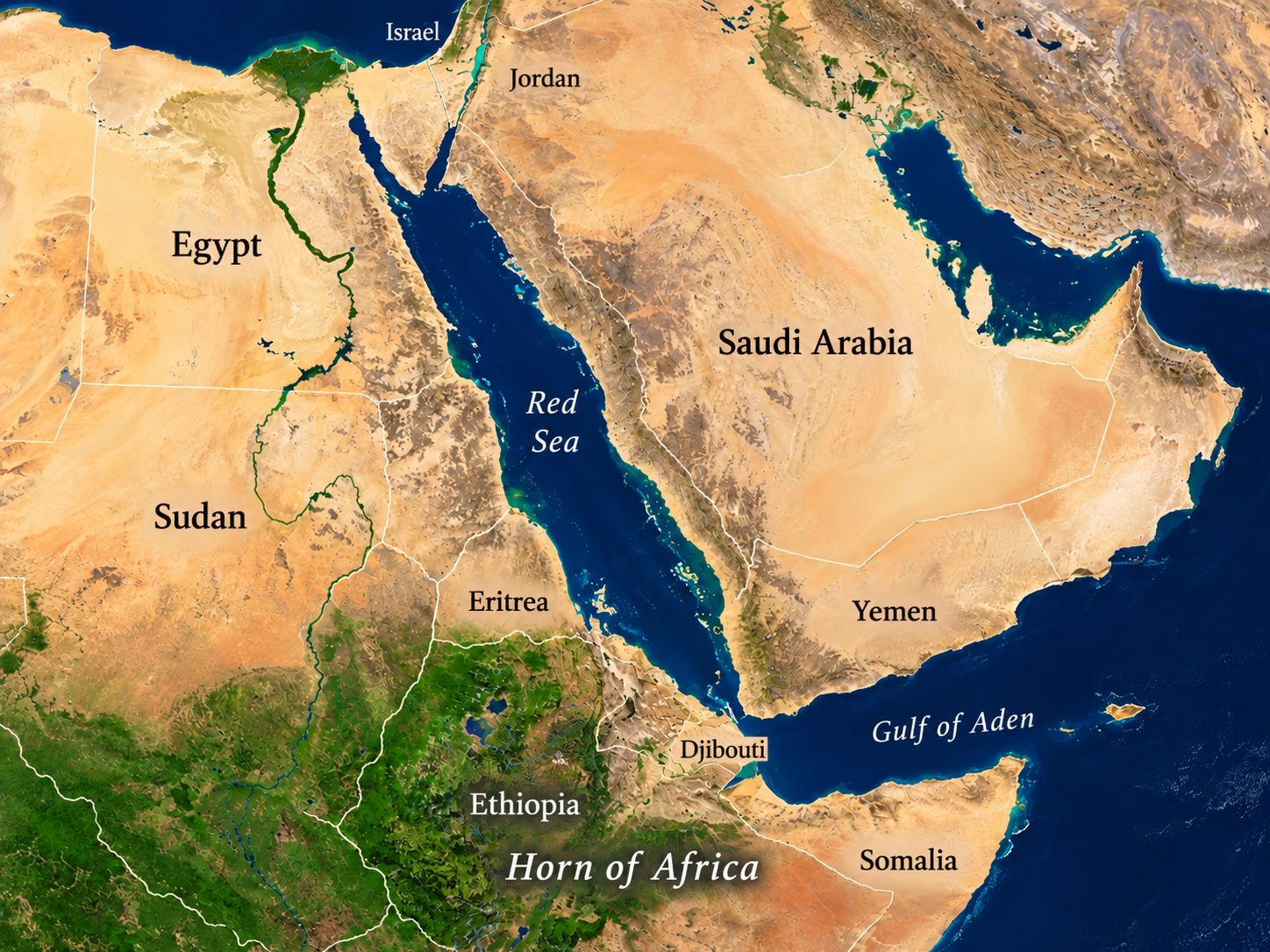
While the United States had appeared to be relying solely on economic warfare against Iran, the US military abruptly carried out strikes on Iranian territory on Tuesday in retaliation for attacks targeting oil tankers, setting off a spiral of violence over the course of the week. In Lebanon, Israel released several civilians held in its prisons, while its army seized the strategic Ali el-Taher hill and continued its heavy strikes in the area it controls in the south of the country. The week from August 31 to September 6 was marked by a sharp acceleration of events in the Middle East, after the previous one had seemed defined by relative stagnation. On the Iranian front, the US military carried out targeted strikes inside Iranian territory as early as Tuesday evening, the first in nearly a month. This screen grab, made on September 6, 2026 from undated video footage released the same day by US Central Command, shows what CENTCOM says is one of the Iranian oil tankers it destroyed in response to attempted missile attacks on naval vessels. (CENTCOM via AFP) However, the relatively limited pace of the strikes suggests that the US administration has opted for an escalation that remains controlled, while continuing its blockade and economic pressure on Tehran. Even so, tensions continued to rise throughout the week. Explosions were heard on Saturday on the highly strategic island of Kharg, through which most of Iran’s oil exports pass. US President Donald Trump, for his part, threatened to strike the Kuh-e Kolang nuclear site — “Pickaxe Mountain” in Persian — a heavily fortified facility located deep underground, not far from Natanz, Iran’s main uranium-enrichment site. Earlier in the week, he had enshrined the “tanker for tanker” equation, pledging to target an Iranian vessel every time the Islamic Revolutionary Guard Corps struck an oil tanker in the Strait of Hormuz. That is precisely what the US military did on Saturday, setting two Iranian vessels ablaze. Politically, Donald Trump further hardened his tone toward Tehran. After saying in an interview that talks had been permanently frozen “because an agreement with them is not worth the paper it is written on,” he said on Saturday that the “conflict” with Iran was not a “war,” but “something ordinary” for the United States. A way of rattling the Iranians while at the same time reassuring the US public ahead of the midterm elections. A port, along with storage facilities and warehouses, was damaged following a US military strike carried out on September 6, 2026 in Iran’s southern Hormozgan province, which borders the Strait of Hormuz. (AFP) At the same time, the US news outlet Axios published a report on Saturday suggesting that the United States is already looking beyond this conflict, which began on February 28. Citing US officials and other informed sources, the outlet said the Trump administration is developing a broader strategy for the post-war Middle East. According to the report, it would be based on creating a regional alignment aimed at containing Iran, bringing an end to the regional fallout from Hamas’s October 7, 2023 attacks in Gaza, and expanding the circle of normalization between Israel and countries in the region. The threat against Kuh-e Kolang, which brings the Iranian nuclear issue back to the fore, echoes an announcement by the International Atomic Energy Agency (IAEA), which said on September 1 that Iran had still not reopened its sites to inspectors following the strikes of May 2025. It should be recalled that despite the scale of the Israeli-American offensive against Iranian sites, it is almost certain that the stockpile of enriched uranium remains intact and has been moved to a safe location by the Iranian authorities, which remain committed to what they consider their right to develop a nuclear program. Following the IAEA announcement, the United States, together with France, Britain and Germany, said they intended to submit a resolution to the UN Security Council condemning Iran’s failure to comply with its non-proliferation commitments. This display of unity stands in contrast to the chill that has prevailed between Washington and its European allies since the beginning of the conflict. For their part, the Iranians appear to be responding to the upheaval in much the same way as before: by striking neighboring countries, notably Kuwait, the United Arab Emirates and Jordan, without directly targeting Israel. Heavy strikes in southern Lebanon On the Lebanese front, Israel is intensifying its destruction operations in villages in the south, even using explosive barrels in some cases. Lebanese President Joseph Aoun urged Washington and the international community to “put an end” to Israeli attacks on Lebanese territory, which killed seven people on Sunday against the backdrop of a fragile truce. The strikes hit several localities in the Nabatiyeh region. Twenty people were also wounded, including children, according to the Health Ministry. One strike also destroyed the former Ghandour hospital, which had been out of service for years. Release of detainees and capture of Ali el-Taher But the major event of the week in the south was the Israeli capture of the strategic Ali el-Taher hill in the Nabatiyeh region. The site served as a major Hezbollah headquarters, consisting of an extensive network of tunnels from which fighters from the Shiite party operated, along with, according to some reports, Iranian fighters. On Thursday evening, the Israelis announced that they had taken control of the complex. On Sunday, Israeli Defense Minister Israel Katz said that tunnels still had to be blown up. This military “success” may not have come as a surprise after weeks of bombardment, but Hezbollah’s reaction was more unexpected. After long insisting that it would refuse to give up this strategic hill — as had the Iranians, who had also threatened to intervene — the Shiite party ultimately sought to play down the significance of the development through its media outlets and allied networks, without officially confirming the loss of the site, which it had refused to preserve by handing it over to the Lebanese army. The other major surprise of the week was Israel’s release of five Lebanese and Syrian civilians held in its prisons. The move came following a visit to Tel Aviv by US Ambassador to Lebanon Michel Issa. According to the Israeli prime minister’s office, Thursday’s announcement “follows efforts by Israel and Lebanon to locate and repatriate the remains of leaders of the Jewish community who had been abducted and killed in Lebanon” between 1984 and 1986. Here too, Hezbollah’s reaction raises questions. While describing the move as positive but insufficient, the party once again turned on the Lebanese authorities, accusing them of “submission to the enemy” and holding them “responsible” for the disaster in the south. It even warned them against “internal conflicts.” Could the party’s military setbacks push it to turn increasingly toward the domestic front? Finally, the Israeli army made an important statement on Sunday, saying it was considering reducing its occupation zone in southern Lebanon, moving from the current “yellow zone” to a “grey zone.” Such a development would, according to this assessment, reflect a reduced threat from Hezbollah. The measure has not yet been approved by Israel’s political leadership. Yemen and Palestine The week was also particularly tense in Yemen, where clashes between Houthi rebels and government forces continued to intensify, culminating in an especially deadly Saturday in which more than 60 people were killed in a single day, bringing the death toll since Thursday to around 200. The Houthi offensive is aimed in particular at taking control of areas bordering the Bab el-Mandeb passage, which would give this Iranian ally additional leverage over another major strategic chokepoint after the Strait of Hormuz. In Palestine, particularly troubling comments by Israel Katz on Gaza marked the week. He claimed, without providing evidence, that most of the territory’s residents wanted to leave, stressing that Israel was “ready for such an evacuation” on a mass scale. A sign that the ordeal of Gaza’s residents may be far from over. Finally, it is worth noting that the IAEA announced on September 1 that facilities discovered in Deir el-Zor, Syria, indicate that Bashar al-Assad’s former regime had secretly been preparing an advanced nuclear program that could have led to the production of an atomic weapon with the help of North Korean experts.
Homage
Author portrait
By Michel Hajji Georgiou - Published Sep 6, 2026 - 13:31
News feature image
The Argentine player, who brought his international career to an end on August 31, 2026, was nothing less than a magician of the stadiums. His journey, made of wonders, falls and redemption, may tell us something about our undiminished need for enchantment in a world that nevertheless claims to have rid itself of it. Announced a few weeks after the 2026 World Cup final lost to Spain, Lionel Messi’s international retirement inevitably stirred an emotion for which it is difficult to find many equivalents in the recent history of football. One would probably have to go back to Maradona, or perhaps to Cruyff or Pelé, to recover that sense that, with the retirement of a player, something disappears that extends far beyond the sport itself, as though a certain way of inhabiting football, perhaps even of believing in it, were also coming to an end. Far from the glacis of reason Enough of the endless statistics and the unbearable, tedious and sterile quarrels over “who is the greatest of all time.” The author of these lines has never been a fanatic of the round ball, nor, for that matter, of vertical rankings or hierarchies of merit in general, and consequently appreciates the talent of each player with the same sense of wonder as an eleven-year-old child. Besides, this particularly contemporary obsession with numbers ruins all the pleasure of the spectacle. And with good reason: the approach that consists in adding up goals, assists, Ballons d’Or, Champions Leagues, Copa América titles, World Cups… can only be reductive. On another register, it is not entirely unrelated to German-American philosopher Eric Voegelin’s critique of the modern Gnostic temptation: that of a form of knowledge convinced that it can imprison reality within a system and abolish whatever resists it. Records are probably one indicator of Lionel Messi’s genius. Yet so many other great players who made stadiums and hearts tremble, without achieving half of what he did, nevertheless remain eternal in our memories. What made them truly singular lies elsewhere, far from the glacis of reason. Something else was at work around them. Something belonging to a certain profound sense of transcendence that understanding can never fully grasp. This has been true of Lionel Messi for more than twenty years, since the day when, under the gaze of the “icon” Diego Maradona, he made his first appearance, in June 2006, on the World Cup stage in the colors of the Albiceleste against Serbia and Montenegro. That ineffable element that constitutes Messi’s genius, as it does that of others, may indeed touch upon one of modernity’s strangest paradoxes: the persistence of magic in a world that has constructed itself precisely against it. The disenchanted world Max Weber used the expression “disenchantment of the world” to describe the slow process by which Western modernity gradually subjected existence to rationalization, calculation, predictability and causal explanation. The world was no longer supposed to be traversed by obscure powers, signs, supernatural interventions or invisible wills; it was, at least in principle, to become intelligible. Unfortunately, modern sport, and more broadly the modern world inherited from globalization, fits perfectly within this dynamic. Today’s football, and not football alone, is probably one of the most quantified objects imaginable. The slightest gesture is measured, and everything is carefully calculated and modeled. From mathematics to artificial intelligence, raw talent now depends more on science than on enchantment. What is human in its spontaneous, even wild, relationship with the invisible that springs from the heart is disappearing before our eyes, in favor of the squaring of the VAR circle. It is, in a sense, the murder of sport in the name of greater rigor and fairness… even though the euthanasia of this share of sublime spontaneity ultimately produces glaring injustices of its own. One need only revisit some of the controversial decisions of the 2026 World Cup to see it. Paradox of paradoxes, Lionel Messi was himself, at the outset, a child of this technical modernity, to which he certainly owes part of his exceptional career. His body, too small by expected standards, was corrected through hormone treatment. Identified very early, his talent was taken in hand by an institution that organized his training, nutrition, physical development and integration into an already globalized sporting machine. Nothing, in appearance, could have been further removed from the old heroic narrative. At first sight, the story seems closer to dystopias in the vein of Gattaca than to myths and messianic narratives. And yet the old narrative did indeed return, and with an almost embarrassing insistence. Since the beginning of his career, Lionel Messi has been placed under the microscope. But the more people labored to explain and demystify him, the less they succeeded in entirely dissipating the impression produced by some of his gestures. The man simply cannot be circumscribed and reduced to an accumulation of data. At an age when most great players retreat into the shadows, he continues to surprise. To astonish, even, by bringing to sport that element of the senseless which escapes the quasi-robotic hypersystematization of the world. It is probably there that one must seek this elsewhere that characterizes Messi. In the survival of magic at a time when even the spaces that once allowed the positive expression of a humanity made of flesh and blood are gradually being “disciplined” by the hypnotic attraction of a new puritanical Gnosis in the name of modernity. The Messiah made by the machine Although he emerged, in a sense, from the machinery of the Matrix, Lionel Messi constitutes in himself a challenge to this ready-to-wear model. A kind of alter ego of Neo from The Matrix, thrown into a simulation governed by parameters that claim to calculate everything. The Argentine’s destiny gradually took on, almost despite himself, the form of a messianic narrative. The pun on his name would be too easy had it not been ceaselessly revived by his own story: that of the fragile child whose body seemed intent on denying him the fulfillment to which his talent destined him. Then that of exile at a very young age to Barcelona, adoption by a foreign city, an almost unreal ascent, worldwide recognition, followed by this strange difficulty in being recognized by his own… For a long time, Argentina maintained a relationship of hainamoration with its prodigal child. His results, his talent, his brilliance mattered little… he still had to answer one merciless question: why wasn’t he Maradona? The comparison was admittedly inevitable, but it was also profoundly unfair. Everything separated the two men in their way of being in the world. Maradona carried Argentina with everything in it that was passionate, contradictory, excessive and theatrical. He spoke, provoked, fought, fell, returned, mingled football with his private life, his anger, his political commitments… all the way to his own destruction. His very body seemed to become one of the places where the contradictions of his country were played out. Maradona was the very incarnation of what the world expected from football: a rebellious soul, sometimes pushing the game to the point of immorality, but within a kind of footballing gigantomachy. Maradona was epic. And, above all, he had placed his country at the summit of world football in 1986. Messi offered none of that. He was silent, at times almost absent from the story others were constructing around him, an absence long interpreted as a flaw. Almost erased, devoid of personality. That, moreover, was what the two giants Maradona and Pelé reproached him for: a lack of leadership, being too smooth. A kind of miracle test-tube baby of the stadiums. The boy from Rosario was also criticized for not singing the anthem loudly enough, for not being Argentine enough, for having been “manufactured” by Barcelona, and then, naturally, for failing to win with the national team what he won almost continuously with his club. The unfulfilled prophecy The dramatic loss to Germany in the 2014 World Cup final, followed by the Copa América finals of 2015 and 2016, had gradually transformed that suspicion into an accusation. When he missed his penalty against Chile in 2016 and subsequently announced that he was leaving the national team, he was nevertheless already one of the greatest players in football history. Yet his story remained strangely unfinished. The sense of incompletion had little to do with his honors. It concerned instead that quasi-archaic necessity continually imposed upon modern heroes: to bring their initiatory journey to completion. In Argentina’s colors, Messi shone, then fell heavily. But he did not rise again. He did not fulfill the prophecy. And, in the eyes of his people, this reinforced the sense of hainamoration: a fallen god remains a god, after all. But with the added burden of what his worshippers regard as an intolerable substratum of humanity and, therefore, something perfectly detestable: his flaws, his weaknesses. Argentines loved Maradona despite his spectacular downfall and his fallible humanity. But that was because he had “earned” the right to such a downfall, because it had somehow become acceptable after Mexico 1986. Messi, by contrast, did not yet have the right to fall, because he had not yet reached the summit. No, the prophecy had not been fulfilled. It was even becoming a caricature. So Messi returned. But he still had to wait for his redemption. It took the 2021 Copa América at the Maracanã for this relationship of suspicion, expectation and disappointment with his public and his people truly to begin changing. And above all it took the 2022 World Cup for the story to acquire that almost excessively perfect form that no one would have dared write without appearing to indulge in a screenwriter’s contrivance. Strangely, Maradona had died in 2020. It was as though a kind of oppressive national curse had been lifted. At the same time, the Argentine people needed a substitute father figure, and the pressure was thereby only redoubled. But perhaps mixed with a little tenderness this time? What happened in Qatar in 2022 is all the more interesting because Messi himself appeared slightly different. He protested more, answered provocations, lost his temper, spoke with a violence of which few had thought him capable, and even let slip that now famous “¿Qué mirás, bobo?” at the Dutch, to Argentina’s amusement. Buenos Aires finally discovered, belatedly, what it had always expected from him. A little Maradona in a great deal of Messi. But Messi did not become Maradona. And perhaps that was precisely where the true reconciliation occurred: Argentina stopped asking him to be. From 2022 onward, Messi no longer needed to embody another model of national genius. For his country too, he could finally become what he had already been everywhere else: Messi. Simply. The final act of the prophecy Granted, the triumph of 2022 could have constituted a perfect ending. But, as with Maradona, the final act of heroic prophecy is the fall. No one really expected anything extraordinary from Messi anymore in 2026. At 39, he was widely regarded as one of the “tired heroes.” The fall from the Capitol had come with the bitter episode of his departure from FC Barcelona and his misadventure at PSG. He was now playing only in the American league, in Miami’s colors… on the periphery of the footballing world, in the distant lands of soccer. And the new generation was already there, ready to send its ancestors off to Bicêtre. Yet this 2026 World Cup, which seemed destined to be nothing more than an epilogue, turned into one last sensational blaze of glory. Argentina reached the final once again, with Messi, at 39, restored as its “historic leader” and its recourse in decisive moments, achieving something not unlike what Roberto Baggio had done for Italy in 1994, at… 27: a perpetual deus ex machina. Baggio failed at the gates of triumph against Brazil after practically carrying Italy all the way to Pasadena. His penalty, sent over the crossbar, would leave behind one of the cruelest images in World Cup history: a man standing motionless, head bowed, hands on his hips, while Brazil celebrated its victory. The man who had “died standing.” The Italian imp never knew apotheosis. Yet this symbolic death, far from erasing his tournament, eventually became part of his legend. History was kinder to Messi, despite a campaign of hatred directed at him, mixed with accusations of cheating and favoritism, against a backdrop of controversial refereeing decisions and acts of unsporting conduct by his team, just as it had once been with Maradona. Kinder still, in fact. A final in a sixth World Cup on the verge of retirement, capped by an outstanding individual performance? That is precisely where the magic of the Messi phenomenon lies, and where it defies reason and its avalanche of statistics. Genius cannot be imprisoned within a sum of parameters and variables. Even optimal physical condition cannot by itself explain what the entire world witnessed. And what does it matter if his story reminds us that the hero, however mythical, cannot abolish the sinister influence of Saturn. The re-enchantment of the world For beyond the prophecy fulfilled, from ascent to fall, with its share of happiness and misfortune, the Argentine offered the world one final lap that belongs to art, if not to a form of Homeric poetry. With Lionel Messi’s withdrawal from the international stage, a little of the world’s magic disappears… until another providential hero returns to enchant the stadiums. For more than twenty years, Messi embodied the coexistence of two worlds we had thought incompatible: that of the extreme rationalization of modern sport and that, far older, of the hero, the sign, expectation and enchantment. When Messi leaves, something of this contradiction suddenly becomes visible. Other prodigies have already emerged, but perhaps, at the very moment when one of its last great representatives leaves the stage, we discover just how much we continue to need transcendence. The modern world has therefore probably not abolished enchantment. It has merely displaced it. For ninety minutes at a time, this man called Lionel Messi, who embodied it on football pitches, now leaves after having accomplished everything. And even more.
Analyze

Have We Become Stupider?

Or Are We Experiencing a Transformation in the Structure of Knowledge?
Author portrait
By Mona Fayad - Published Sep 5, 2026 - 20:01
News feature image
The question “Has the world become stupider?” frequently returns in contemporary debates about digital media, search engines, and social networks. On the surface, it seems simple. Yet behind it lies a deeper issue concerning the very nature of knowledge: how it is produced, how it is transmitted, and how it is consumed. Perhaps “Have we become stupider?” is not the most accurate question. A better one might be: Is knowledge still being transmitted in a way that allows it to be understood and made productive? Do most readers still go back to the original texts? Or do they turn instead to summaries and to what is said about those texts through material circulating among readers? One key to understanding this phenomenon lies in the work of British psychologist Frederic Bartlett, who conducted a series of experiments in the 1930s on what he called “serial reproduction.” In these experiments, one person would be asked to hear a story and then retell it to someone else, who would in turn retell it to a third person, and so on. The results were striking: with each new transmission, the story was not conveyed as it had originally been told, but was reformulated. Some details were omitted, others were exaggerated, and still others were replaced by elements that better suited the recipient’s background, experience, and culture. By the time the chain had passed through enough people, the original story had become something entirely different. This simple model reveals a fundamental truth: memory is not a neutral container, but a mechanism of reconstruction. When knowledge passes through multiple intermediaries, it is not “preserved” but “reproduced.” Here we begin to see the resemblance to our contemporary world, and with it the fear that we may be becoming stupider. In the age of digital media, knowledge no longer travels through oral transmission, but through chains of mediation: an article is summarized, then quoted, then reposted as a short post, before being further reduced to a sentence or a headline. In this context, we might borrow a metaphor that appeared in a journalistic text: a library whose books are gradually replaced by summaries, then by summaries of summaries, until the reader is left facing layer upon layer of reduction. We might call this the “raccoon chain”: the raccoon does not read the original, but rummages through what remains of it. It is worth clarifying that the choice of the “raccoon” is not arbitrary. The metaphor symbolically condenses a cognitive condition that is becoming increasingly entrenched. This animal, which lives on the fringes of cities and rummages through garbage bins, does not produce its own food but feeds on the leftovers of what others have produced. Despite its practical intelligence and its ability to pry things apart, pick through them, and seize what is useful, it does not understand what lies before it. It treats things simply as material available for immediate use. This is what knowledge begins to look like in an age of serial reduction: texts are shortened, then shortened again, until all that remains are scraps of meaning, rearranged and circulated without any genuine connection to their source. At that point, we have not merely moved away from the original. We have entered a new phase in the production of information or knowledge, in which the cognitive actor is no longer a reader or a thinker, but a collector of fragments of meaning who redistributes them in forms designed for rapid consumption. “Raccoon culture,” then, is not merely a description of superficiality. It is an accurate description of the degradation of the knowledge chain itself: from creation to summary, from understanding to formal processing, from ideas to something resembling only their faded trace. Yet this phenomenon cannot be understood apart from the technological structure that governs it. Here Marshall McLuhan becomes relevant, with his famous formulation: “The medium is the message.” The problem lies not only in content, but also in the form through which that content is transmitted. Contemporary digital media do not simply convey information. They reshape it according to the logic of speed, condensation, and fragmentation. Long texts become unsuitable for consumption, while an idea becomes acceptable only if it can be compressed into a few shareable lines. This transformation produces a striking paradox: we live in a time when access to knowledge is no longer difficult. It is excessively easy. And with that excessive ease comes what might be called a “cognitive illusion”: reading a brief passage or a quick summary can be enough to make a person feel that they have grasped an idea. Yet this feeling of possession is not necessarily accompanied by deep understanding, or by the ability to reconstruct or critique that knowledge. This is where we encounter what might be called the “semi-educated”: people who possess the signs of knowledge but not its structure, its vocabulary but not its internal logic. The problem becomes even more complex when viewed through the lens of attention. Instead of remaining in a state of sustained concentration, as in traditional reading or prolonged reflection, the mind now exists under continuous informational bombardment: notifications, clips, headlines, and successive waves of content. This does not merely fragment attention. It reshapes it according to a logic of constant jumping between short units of meaning, rather than the gradual and cumulative construction of an idea. I am reminded here of a joke that we used to tell and that was widely circulated during the days of popular demonstrations. It vividly illustrates the process of reduction and reshaping of content. After the occupation of Palestine, many popular demonstrations took to the streets chanting, “Down with the Balfour Declaration!” The joke was that by the end of the demonstration, the slogan had become, in Arabic, “Let one fall from above,” a completely different phrase that retained something of the original slogan’s rhythm and sound. This image may help bring us closer to what happens in everyday language when knowledge is transformed into short messages that are collectively repeated. A demonstration begins with a precise political slogan. Through repetition, collective immersion, and sonic rhythm, it gradually turns into a completely different formula. The new version may preserve the rhythm and emotional charge of the original, while losing its meaning and original significance. What remains is no longer the meaning, but the emotional energy of the phrase. Here, in another form, we encounter what Bartlett observed: what matters is not merely what was said, but how it was retold and how it was reinterpreted within a changing social context. If we bring these strands together, we might say that what we are experiencing today is not so much a “collapse of intelligence” as a transformation in the conditions under which intelligence operates. The human mind has not changed radically, but the environment in which it functions has changed profoundly: from an environment that allowed slow accumulation to one that imposes the rapid and fragmented reproduction of knowledge. This transformation creates a permanent tension between two kinds of thinking: reflective thought, which requires time, and rapid thought, which demands an immediate response. Seen in this light, the question “Have we become stupider?” is partly misleading. It may be more accurate to say that we are increasingly exposed to conditions that make deep thinking less stable, or less possible, and knowledge more vulnerable to fragmentation and recycling. As for stupidity, if the term can be used, it may not be a quality of the mind at all, but rather a side effect and a characteristic of the cultural structure that has emerged. It is a technology that reshapes our relationship with the world. Thus, rather than seeing this as a decline in human capacities, we might understand it as a transformation in the “knowledge environment”: an environment in which it has become easy to know something, but harder to truly understand it in depth.
More Articles
Sort By: NewestOldest
Washington announces the end of the offensive phase against Iran

After a day marked by incendiary statements from all sides, the United States, through the voice of Secretary of State Marco Rubio, assured late Tuesday evening (Beirut time) that the offensive phase of the conflict with Iran was “over”. During a press conference at the White House, the US Secretary of State stated that Washington was now in a “defensive” phase, referring to the new operation announced by Donald Trump and dubbed “Project Liberty”. “Operation ‘Epic Fury’ is over, as the president signified to Congress. We have passed this stage,” he added. Marco Rubio clarified that this operation aimed to rescue the crews of ships stranded in the Strait of Hormuz. The United States will not open fire, but will retaliate “with deadly effectiveness” in the event of an attack. Secretary of Defense Pete Hegseth confirmed during another press briefing that the ceasefire was not over, despite recent exchanges of fire between the US and Iranian navies, as well as missiles targeting the United Arab Emirates on Monday. Iran has “categorically” denied any involvement in these strikes.  US President Donald Trump refrained from directly accusing Iran of violating the truce in effect since April 8: “They know what they have to do (...) and what they must not do,” he stated. “We are in a minor military skirmish. I say ‘skirmish’ because Iran has no chance,” he added, having previously referred to a “mini-war” and even a “little excursion”. “Hezbollah, the main obstacle to peace” Marco Rubio also stated that a peace agreement between Lebanon and Israel was “imminent”. “The problem between Israel and Lebanon is neither Israel nor Lebanon, it is Hezbollah,” he affirmed. “What must happen in Lebanon is the establishment of a government capable of taking on Hezbollah and dismantling it,” he added. Tehran demands, for its part, that any agreement ending the war with Iran also include the cessation of Israeli attacks in Lebanon, a position Washington rejects, asserting that these issues are separate. In Berlin, Israeli Foreign Minister Gideon Saar stated, after a meeting with his German counterpart Johann Wadephul, that “Israel has no territorial ambitions in Lebanon” and seeks to “protect its citizens” as long as “Hezbollah and other terrorist factions” are not dismantled. He recalled that Israel had withdrawn from Lebanon in 2000 and from Gaza in 2005. Saar also criticized the Lebanese government for not having “cleared southern Lebanon of Hezbollah's weapons”, estimating that “efforts have been very limited”. These remarks received nuanced support from Berlin: Johann Wadephul deemed the stationing of Israeli troops in the area “necessary” and condemned Hezbollah's attacks “in the strongest terms”, while emphasizing that “Lebanon must not become a theater of war where civilians pay the price”. An Israeli source cited by CNN indicated that Israel would consider intensifying its strikes against Hezbollah if the truce with Iran collapsed. According to the same source, Benjamin Netanyahu reportedly informed Donald Trump of Israel's willingness to resume high-intensity combat, while the army is pushing to lift certain American restrictions in order to resume its strikes north of the Litani River. In Israel, the new air force chief, General Omer Tischler, said he was ready to deploy “the entire air force” against Iran “if necessary”, during his assumption of command ceremony. A “Hezbollah-linked cell” dismantled in Syria The Syrian Interior Ministry announced on Tuesday the dismantling of a cell linked to Hezbollah, accused of plotting assassinations of officials. According to authorities, the cell was ready to take action, notably to carry out targeted assassinations. Eleven people were arrested, with no details provided on their nationality. Weapons, ammunition, grenades, explosives, and surveillance equipment were seized. Hezbollah “categorically denied” these accusations, asserting that it conducts “no activity” in Syria, recalling that it had already rejected similar accusations on April 12 and 19.

Useful Enemy, Real Enemy
By
Michel Hajji Georgiou
Published

One should be grateful to Naïm Kassem for possessing neither the charisma, nor the eloquence, nor the virtù of his predecessor, Hassan Nasrallah. Over the years, and no doubt until his Syrian misstep, Nasrallah embodied in the Arab-Muslim mind a certain idea of intransigence in the face of Israel. His talents as a rhetorician had achieved a masterstroke — namely, making people forget that beneath his anti-imperialist harangues of «resistance», he himself constituted nothing less than the spearhead of an Iranian imperialist project, built on the blood of his Lebanese fellow citizens, from the Lebanese left to the pillars of March 14. Yet there exists, in Hezbollah's rhetoric, an ambivalence so carefully maintained that it requires extraordinary feats of persuasion… and one must note that the smoke and mirrors no longer work with Kassem, whose appeal belongs more to the rigid doctrinaire than to the historic tribune. Carl Schmitt had placed, at the very foundation of the political, the friend/enemy distinction as the sovereign act par excellence. In the German philosopher's view, he who draws the line decides, and he who decides is sovereign. Julien Freund, refining the idea, had added that no one has the luxury of choosing their enemies — it is the enemy who chooses you; and pretending to ignore this does not make him disappear, but simply disarms you in his face. What neither Schmitt nor Freund had entirely anticipated is the perverse use that a sufficiently skilled political actor can make of such an axiom — exhibiting a substitute enemy in order to conceal the real one. All the more so when that actor is sufficiently shielded by the sacred that anyone who dares point to the substitution is immediately placed in the camp of traitors… For what the rhetoric of Naïm Kassem reveals in the negative — what Nasrallah knew how to conceal beneath a learned blend of argument and literature — is that Israel is not Hezbollah's principal enemy. Israel is its daawa : in the Khaldunian sense used by Michel Seurat in L'État de barbarie — that is to say, the justification, the existential fuel. The real enemy, the one the party has had in its sights since its foundation, is twofold and internal. First, the Shia community itself, which must be kept, by every means available, in an unconditional allegiance to the wilayat al-faqih , by smothering any dissent — Lebanese nationalist, democratic, or simply critical — within it. Then, the Lebanese state, which must not be destroyed — that would be too conspicuous, and functionally counterproductive — but invested, paralysed, colonised from within and drained of substance, in the name and on behalf of Tehran, until it becomes the legal vestment of a project of power that was never Lebanese. The legitimate concealment of adversity is thus elevated into an offensive art of governance: Hezbollah declaring its wish to liberate Lebanon… while occupying it politically and militarily. It further claims to defend sovereignty while subordinating every strategic decision to Tehran. It summons the Lebanese people to unity while designating as traitors those who refuse to dissolve into it. And it brandishes Israel — with a particular talent for staging — as the curtain behind which the real drama is being played. What makes the drama particularly formidable, moreover, is that the external enemy who justifies the daawa is not invented. Israel exists, conducts deadly raids, occupies portions of Lebanese territory, violates the November 27 agreement with documented brutality, and thereby furnishes Hezbollah with an inexhaustible alibi, renewed with each razed village. The legitimacy of resistance to Israeli aggression was not a fabrication. It is real, rooted in international law and in the collective memory of a people who genuinely suffered occupation — even if every trace of that past has been entirely and violently erased by Hezbollah since the late 1980s. And this is precisely where the criminal sophistication of the device lies. Hezbollah did not manufacture this enemy out of thin air. It captured him, instrumentalised him, and rendered itself structurally dependent on his persistence (Tel Aviv too, for that matter — which is why the two have no doubt coexisted comfortably for so many years, before Iran became, for an Israel at peace with the Sunni Arab world, the elected adversary). Without Israeli aggression, the daawa collapses. Without the daawa , internal domination loses its semantic shield. From this perspective, peace with Israel would constitute a dual existential catastrophe. Hezbollah would find itself exposed on the domestic front, summoned to surrender its weapons, and bereft of any rhetoric justifying its control of territory and its martial conquest of the mulk — the centre of power, the state. It is in this Gordian knot that President Joseph Aoun and Prime Minister Nawaf Salam find themselves today, called upon to perform an altogether impossible feat. On one side, a Shia street — and beyond it, a Lebanese one — still wounded, still traversed by the legitimate fury of a community that Tel Aviv bombs relentlessly and indiscriminately. On the other, a domestic and international will to finally dissolve this abnormal para-state situation and restore to the Lebanese state the monopoly on legitimate violence it has never fully exercised since Taëf. These two pressures do not fail to obey different temporalities and incompatible emotional conjunctures. Anyone who attempts to reconcile them risks being accused simultaneously of complicity with the enemy and of betrayal of their own people. As necessary and fundamental as the restoration of the monopoly on legitimate violence is to the survival of the Lebanese state, the fact that it would come about under the constraint of a forced peace with Israel renders it deeply problematic. The international community, in this context, cannot afford to lay the weight of its pressure on Lebanon's three political poles, as though they were the principal obstacles to normalisation. That would be to invert the burden of proof with culpable carelessness. The restoration of Lebanese sovereignty requires two prior conditions that only coherent international pressure can create: that Tehran be compelled, once and for all, to relinquish its Beirut transmission belt, and that Israel be forced to rein in its destruction machine operating with complete impunity, thereby ceasing to furnish Hezbollah with the fuel of its perpetual legitimation. To demand that Nawaf Salam and Joseph Aoun — and indeed Nabih Berri — move forward without these two conditions being met is to ask them to walk on water; or, more precisely, to sign their own political, and possibly physical, death warrant. For Naïm Kassem has more than words. Behind the ideological rhetoric and the metaphors of mythical resistance stands an organisation worthy of the Assassins, one that has demonstrated its capacity and its will to eliminate every obstacle to its hegemony. And the spectre of Sadat — assassinated for having dared chart a path toward peace that the guardians of eternal war could not tolerate — still haunts every prospect of reconciliation in the Middle East. This is neither paranoia nor catastrophism. Simply the bitter reality of things. Need one recall that the Western powers, having incited the Siniora cabinet to take its historic decision regarding the dismantlement of Hezbollah's fixed telephone network on the road to Beirut airport in 2008, had only the smallest words of condemnation after the punitive expeditions of May 2008 against Beirut and the Lebanese Mountain? Does Donald Trump — whose power today rests on the uncertainty of the midterms — grasp the implications of what he is attempting to impose, in the current circumstances, on Joseph Aoun by forcing his hand to meet with Netanyahu? Beyond the incongruous, there is a recklessness and a frivolity driven solely by an obsession with appearances. True courage today is not to demand bravado from the Lebanese authorities when they face a double enemy driven by the same mimetic objective: to subjugate them. It would rather be to support the Lebanese state practically, through a comprehensive plan across every domain, so that it may rebuild its institutions free from Hezbollah's grip. Even if this means a legitimate multinational force composed of friendly nations, tasked with maintaining civil peace and helping Lebanon's legal political and security forces — freed from Iranian hegemonic influence — to recover the sovereignty of the Lebanese state over its entire territory and lay the foundations of a political programme capable of restoring national unity.

The Cultural Illness
By
Khalil Helou
Published

The disease afflicting the country is not solely the Hezbollah militia, although it constitutes the most significant challenge, nor is it other militias, armed groups in the Palestinian camps, the absence of sovereignty, or the perpetual corruption dating back to the Mutasarrifate (1862-1915). This disease, which is the erosion of the culture of the state and of the sovereign state, has infected and proliferated mentalities since the Syrian Ba'athist occupation. It was exacerbated later and became cancerous under Hezbollah's hegemony. For 21 years, Hezbollah, at every level of its hierarchy and wherever it is present within institutions, has relentlessly worked to shape mentalities and render them subservient, using these institutions as a socio-political and security shield for its own benefit. The state and its institutions are thus disfigured, and any official who does not adopt the rhetoric of "resistance" is labeled a traitor and a Zionist agent. Likewise, friendly countries where hundreds of thousands of Lebanese, naturalized or not, reside must be labeled enemies, and their representatives avoided or boycotted under threat of accusations of collusion with imperialism. According to this widespread culture, Lebanon should isolate itself from the Arab and Western worlds. For those who do not admire Hezbollah, Stockholm Syndrome takes hold and becomes commonplace. Faced with this, the champions of fait accompli can find nothing better to do than play the insipid game of "pragmatism." Conversely, the wave of drastic opposition to the armed group blames the "deep state" for our situation. This is by definition classically business-oriented, whereas in reality what we are suffering from is the "shell state," or the "Hezbollah mask state." Therefore, blaming what is happening on the "deep state" is simplistic. Furthermore, absolving the highest levels of the state hierarchy, and those in the intermediate positions between this hierarchy and the deep abysses, of responsibility is wrong. The culture of the state, envisioned by the founding fathers of modern Lebanon a century ago, was gradually established by an elitist class, first under the French Mandate, then under successive presidents and governments until 1975. This can indeed be seen by rereading the newspapers of the time and recalling what daily life was like before the war. Certainly, in those periods, there was a state and institutions that functioned despite their shortcomings, weaknesses, and flaws. These issues took on their true dimensions during the first four presidential terms after independence, but this period was insufficient to achieve the necessary socio-political maturity among all citizens, especially after four centuries of sectarian culture under the Ottoman Empire's "millet" regime. Since 1975, the Lebanese have yearned for a sovereign state governed by the rule of law, and they continue to seek it, but a large majority no longer understand what it is. State institutions, instead of serving the citizens, have become instruments of power, hegemony, and enrichment. Many find this routine and live "normally" with it. Moreover, the state's collusion with the pro-Iranian militia has become an obligation in the eyes of Hezbollah supporters, and commonplace for everyone else. To turn the tide and set things right, what is needed are true statesmen, not just representatives of religious groups, who often come from populist circles. Religious diversity is a reality, but its management cannot be left to mediocrities. Elites within each religious group or party are essential in these circumstances. The Speaker of our parliament is not a true leader in the classical sense. He wields veto power over the executive branch and hegemony over the administration of the state to facilitate the affairs of his cronies and supporters. He manages parliament much more like a "Loya Jirga," or tribal council, and much less like a team that legislates and discusses visions and action plans in the face of strategic challenges. The proof lies in the parliament's resounding absence regarding the Hezbollah-Israel war since 2023. The Prime Minister, for his part, is almost entirely detached from security and military decisions. Our government, despite its qualified ministers, hardly resembles a working team that collectively identifies problems and develops solutions. A clear foreign policy is nowhere to be seen, nor is a strategy for negotiations with Israel, which are rejected by a segment of the executive and legislative branches. The president of the republic makes numerous pronouncements but fails to play the role of constitutional conductor. The attacks and defamation he endures are not countered by institutional measures. Furthermore, politicians, clan and militia leaders, and media outlets vie for airtime and column space to declare their support for or opposition to negotiations with Israel, but this remains merely a matter of taking positions. Complaints against the "shell state" are justified but insufficient. What is lacking is action from statesmen. The countries of the region, whether friends, enemies, or adversaries, are working tirelessly to safeguard the interests of their people and emerge from the regional crisis with minimal damage. If things continue to be managed in this way, solutions will be imposed from the outside; otherwise, we will be condemned to simply manage day-to-day affairs. Finally, what has been said about the rule of law and the sovereign state may be utopian, but if we do not aim very high, we risk not only going nowhere, but sliding very low.

Healing Lebanon’s Fracture
By
Rami Rayess
Published

As the rhetoric of hatred and rancour deepens among Lebanese, questions multiply as to what can realistically be done to heal the political and media fracture that is taking root through social networks, now within everyone’s reach and allowing each citizen to voice an opinion (which is, in principle, a good thing) without exercising the minimum of self-censorship, with the result that communal and sectarian fanaticisms pour out freely, beyond any moral or political restraint. This social rift mirrors the vertical divide running through the country, a dangerous divide bound up with the major strategic choices that will define Lebanon’s identity and its regional role going forward, and that centres on such pivotal questions as how to confront Israel and its ongoing aggressions against Lebanon, and the issue of confining arms to the exclusive authority of the State, as prescribed by the Ta’if Agreement, under which all Lebanese militias had surrendered their weapons in the early 1990s, with the sole exception of Hezbollah, under the banner of the “Resistance.” If justifications could be put forward for retaining arms in order to liberate the territory (which was indeed achieved in 2000 in what might be described as a major historical accomplishment, marked by Israel’s unconditional withdrawal from the lands it had occupied), it is certain nonetheless that the function of those arms expanded well beyond liberation, creating a state within the Lebanese state and reinforcing Hezbollah’s political standing vis-à-vis the other Lebanese forces, which led to confrontations of the order of 7 May 2008, when Hezbollah swooped down on the capital and the Mountain in protest against two government decisions that were, in practice, in the interest of state-building. What is regrettable, indeed distressing, is that the very party that prides itself on having achieved the historic liberation of 2000 bears the greatest share of political and military responsibility for the destruction of that achievement, from the July 2006 war through the two support wars of 2024 and 2026, during which Israel was able to reoccupy the Five Hills in the first phase, and more than fifty-five villages in the second, to which it gave the name “Yellow Colour.” If the Party’s organic bond with Iran is no secret (the Party itself boasts of it and proclaims it openly), what frustrates many Lebanese is its eagerness to avenge Supreme Leader Ali Khamenei and to declare its solidarity with the Islamic Republic, even as Iran had never lifted a finger in response to the successive wars Lebanon has endured in recent years, nor had it avenged the assassination of one of the most prominent figures of its axis, Hezbollah Secretary-General Hassan Nasrallah. Naturally, none of these considerations can justify certain Lebanese turning their gaze entirely away from Israel’s unrelenting aggressions against Lebanon, its daily violations of Lebanese sovereignty, and the deliberate targeting of civilians, as occurred on 8 April last, bearing in mind that the death toll from these aggressions in the war of 2026 alone has exceeded two thousand six hundred. Some of these Lebanese appear, moreover, fully prepared to acquit Israel of its crimes beyond what Israel itself demands, and call for accelerating steps toward a cost-free normalisation; some go even further, denying Israel’s historical ambitions over Lebanon, at least as far as the Litani River line, and its deep-seated desire to advance toward that river in order to annex the region lying below it, under the pretext of protecting the settlements of the North and their inhabitants! These same Lebanese also turn a blind eye to the alarming developments through which Israel pursues the Lebanese by emptying zones on or around Mount Hermon, zones contiguous with territories it also occupies in Syria, where it has likewise extended its hold since the fall of Bashar al-Assad’s regime in December 2024. Eager to push Lebanon toward a peace and normalisation agreement with Israel, they do not hesitate to invoke, in order to convince public opinion of the soundness of such a step, the examples of Camp David between Egypt and Israel, and Wadi Araba between Jordan and Israel, notwithstanding the vast political and non-political differences separating those comparative cases from the Lebanese reality. Caught between American pressure, Israeli aggressions, and Iran’s exploitation of the Lebanese front, Lebanon stands at a crossroads in a moment of acute national division that portends grave consequences, unless some means can be found to establish a political dialogue that restores national questions to their proper footing: the monopoly of arms by Lebanese legitimacy alone, the laying of solid foundations for negotiation with Israel (ceasefire, military withdrawal, reconstruction…), with the understanding that all of these steps must take place under the sole roof of the State. Lebanon can no longer afford to outsource its national decisions, and that is precisely what it has suffered from throughout the decades past.

Will the American naval offensive in Hormuz reshuffle the deck?

The week opened with a new diplomatic back-and-forth and a risk of military escalation between Iran and the United States. Washington stepped up its pressure on the Islamic Republic, which reacted by firing missiles at... the United Arab Emirates. At the heart of this new standoff is, once again, the strategic Strait of Hormuz, which the US Navy managed to unblock on Monday, to Tehran's great dismay, by escorting ships into Emirati territorial waters, which were quickly targeted by the Iranian army. According to various American media sources, the latest Iranian proposal submitted by Tehran for a resumption of talks with Washington was not too bad. But it did not really meet Donald Trump's expectations, especially regarding the nuclear issue, which the Iranians are seeking to postpone as much as possible, and the control exercised by Iran over the Strait of Hormuz, blocked since the beginning of the war. Moreover, in his comments on Friday and Saturday, the American president had not rejected it. He had only expressed his “dissatisfaction” and considered that the Iranian conditions were not yet “acceptable”. Amendments to the document were submitted, via the Pakistani mediator, to the Iranians, who are expected to respond during the week. But pending this response, Trump increased the pressure on Tehran. He announced, with great fanfare on Sunday evening, a military operation dubbed “Project Freedom” aimed at restoring freedom of navigation in the Strait of Hormuz. The operation in question consists of helping ships stuck for two months in the Arabian Gulf and the Gulf of Oman to cross “safely”. This impromptu decision, explained by Trump's exasperation with Iranian stalling, immediately raised tensions in the region. Iran reacted immediately by threatening to attack ships that venture into this passageway that it controls. Above all, it raises questions about its true motivations, presented by the American president as being of a “humanitarian” nature. Is Donald Trump seeking to disorient his adversary to push them to engage, without wasting time, in talks according to American conditions? Is he trying to show Tehran, pending the resumption of negotiations in Islamabad, that it has no power over this passageway which falls under international law, at a time when the Islamic Republic imposes a toll on the cargo ships it authorizes to cross? Is he seeking to drag Tehran into a new war that his Israeli ally is ready to resume? Or is he trying to ease pressure on the markets to initiate a drop in oil prices? The answer may be the sum of all four. Oil prices moreover stabilized on Monday on Asian markets, with a barrel of Brent, the global benchmark for crude, at $109.29, far from Thursday's $126. According to the news site Axios, citing an American official, Donald Trump is mostly fed up with this “neither war nor peace” situation and wants an agreement as quickly as possible with Tehran, without ruling out a major military strike should the Islamic Republic continue to bank on the time factor. Missile salvos against the UAE Determined not to be intimidated, Iran reacted with threats that it quickly carried out, without however daring to target American warships directly. Following the warning from the Iranian military command, which had cautioned that it intends to “target and attack” the US army if it approached the Strait of Hormuz, cruise missiles, rockets, and Iranian combat drones were fired a first time “as a warning” against the Arabian Gulf, supposedly targeting US army frigates. In a serious development, these shots were however followed by at least three other salvos that targeted different sites in the United Arab Emirates. The Emirati Ministry of Defense announced that cruise missiles were intercepted “over their territorial waters and Dubai”. Three Indian nationals were injured in a strike that targeted the Fujairah oil site on Monday, where a fire broke out. The salvos occurred after the US military command for the Middle East (Centcom) announced a first successful naval escort mission. “Guided-missile destroyers of the US Navy are currently operating in the Gulf after crossing the Strait of Hormuz as part of 'Project Freedom'. US forces are actively contributing to efforts to restore commercial maritime traffic,” the US command for the region wrote on its X account. “Initially, two commercial vessels flying the American flag successfully crossed the Strait of Hormuz and are continuing their journey,” it specified. It then went on to promise to react to Iranian attacks “in accordance with the instructions of President Donald Trump”. The latter, for his part, threatened to “wipe Iran off the face of the earth if it strikes American military ships”. In his war of attrition against Iran, the American president had, however, just scored a new point by depriving Tehran of an important leverage tool, at the risk of triggering a new round of fighting. Donald Trump had warned on Sunday evening, when announcing the “Project Freedom” operation, that he would “deal with by force” any Iranian attempt to disrupt it. According to Centcom, the operation in question involves guided-missile destroyers, over a hundred aircraft, and 15,000 soldiers. It remains to be seen how the Iranians will react over the coming days to this new American challenge, which has elicited mixed reactions on a European scale. French President Emmanuel Macron expressed his skepticism, considering that the framework of the American operation “is not clear” and that the reopening of the strait should be the result of a “concerted decision between Iran and the United States”. Meanwhile, British Prime Minister Keir Starmer judged that the reopening of this maritime passage represents a “vital economic priority” but remained reserved regarding the “Project Freedom” operation. And in Lebanon? In Lebanon, a showdown of a completely different kind continues to unfold, against the backdrop of upcoming direct negotiations between Beirut and Tel Aviv. Washington remains determined to accelerate this process meant to put an end to the war, which for now remains limited to southern Lebanon, between Israel and Hezbollah, and to settle for good the obstacle that this group, completely subservient to Iran, represents for the restoration of Lebanese sovereignty. The United States Ambassador to Lebanon, Michel Issa, met with President Joseph Aoun to encourage him to move forward in this process and to meet with Israeli Prime Minister Benjamin Netanyahu in Washington. “An opportunity to present his country's demands to him,” he argued during the press conference that followed the meeting. According to him, such a meeting would be “neither a loss nor a concession for Lebanon”. “Is Benjamin Netanyahu a bogeyman? He is merely a stakeholder in the negotiations,” he declared, before announcing that he also intends to visit the Speaker of Parliament, Nabih Berri. The ambassador's move earned him an outcry from Hezbollah, which called on the authorities to declare him persona non grata. But the head of state is standing his ground. Joseph Aoun reaffirmed in a statement published by his press office that a meeting with Netanyahu remains “inopportune” for the time being. According to him, the priority goes to a security agreement and the cessation of Israeli attacks on Lebanon. In southern Lebanon, exchanges of fire between Hezbollah and Israeli forces were raging on Monday. The pro-Iranian group launched a massive salvo of rockets against northern Israel late in the day and announced hand-to-hand combat with Israeli soldiers in an area between Deir Seriane and Zawtar al-Charkieh, while its leader, Naim Qassem, once again denounced Israeli military operations in the south of the country in a statement and reiterated his opposition to direct negotiations between Lebanon and Israel. While he said he was in favor of a diplomatic solution, he deemed that the talks should be indirect, which would in practical terms allow his group to have a say in the process, as had been the case during the indirect negotiations for the demarcation of maritime borders with Israel. These had been led, as is known, by his ally, the Speaker of Parliament, Nabih Berri. Naim Qassem, whose group had decided to attack Israel to avenge the death of the Iranian supreme leader, Ali Khamenei, killed in a targeted Israeli strike, thus estimated that “it is Lebanon that is being attacked and that needs guarantees for its security and sovereignty”.

The Last Venom
By
Akram Nehmé
Published

Hezbollah, which for years made the entire country tremble with its weapons, its men and its threats, has now been reduced to smearing Maronite Patriarch Béchara Rahi through armies of anonymous accounts, false bravado and insults typed from behind a screen. Even the way they fall has become small. Why this rage? Because the Patriarch simply reminded them of something that has become unbearable: Lebanon belongs to the Lebanese. A simple sentence. A normal sentence. And yet they can no longer silence it. So they strike at thin air, like someone who feels the ground slipping beneath their feet. This is not a sign of strength. It is precisely the opposite. Movements that are sure of themselves do not need to send anonymous individuals to attack a man of the Church. When arguments are replaced by mud, it is because, deep down, one already knows that part of the battle is lost. There comes a moment in the life of organizations when they begin to understand that the fear they inspired is starting to fade. And when fear departs, very little is left. That is when the nervous reactions set in, the insults, the excesses, the pointless blows. Like a cornered scorpion that stings one last time, not because it still dominates, but because it no longer knows how to die any other way. In the history of Lebanon, when a movement begins attacking a religious authority with hysteria, it is often a sign that it has exhausted its other recourse. The political argument no longer convinces. The military argument no longer suffices. What remains, then, is the mud. But mud thrown at a patriarch does not soil the one it targets. It reveals, above all, the one who throws it. What is happening today goes far beyond a polemic against Patriarch Raï. It is the spectacle of a system that senses the times are shifting around it. And a system that senses its end often becomes aggressive, chaotic and loud. The hardest thing for them is this very precise moment when fear changes sides. A dead man does not know he is dead. But a dying one does.