
Levant Time logo

Articles

News feature image
Massive explosion caused by an Israeli strike near the town of Al-Mansouri in southern Lebanon. (AFP)
Weekly essentials
Author portrait
By LevantTime .
Published Sep 6, 2026 - 23:27
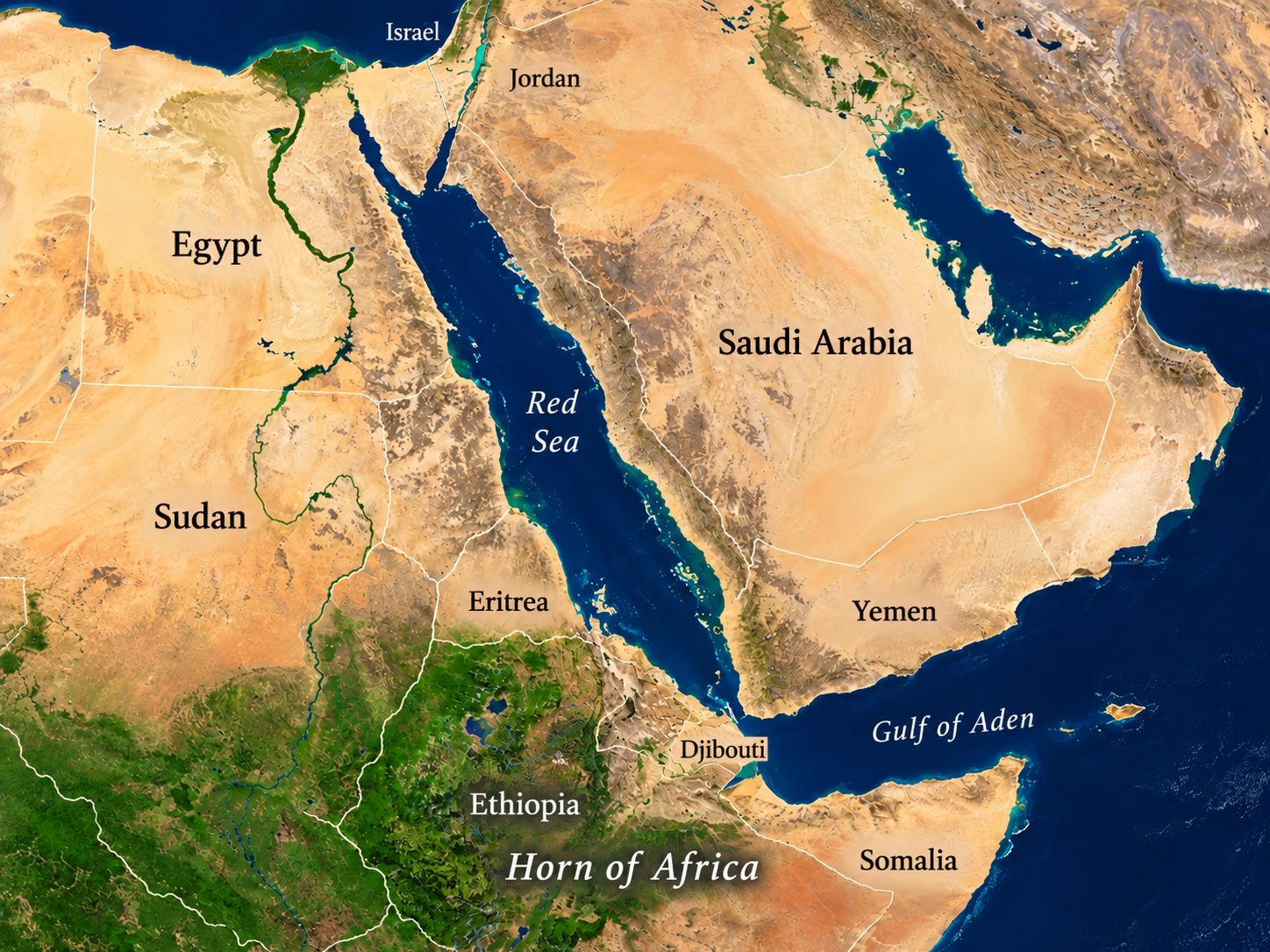
While the United States had appeared to be relying solely on economic warfare against Iran, the US military abruptly carried out strikes on Iranian territory on Tuesday in retaliation for attacks targeting oil tankers, setting off a spiral of violence over the course of the week. In Lebanon, Israel released several civilians held in its prisons, while its army seized the strategic Ali el-Taher hill and continued its heavy strikes in the area it controls in the south of the country. The week from August 31 to September 6 was marked by a sharp acceleration of events in the Middle East, after the previous one had seemed defined by relative stagnation. On the Iranian front, the US military carried out targeted strikes inside Iranian territory as early as Tuesday evening, the first in nearly a month. This screen grab, made on September 6, 2026 from undated video footage released the same day by US Central Command, shows what CENTCOM says is one of the Iranian oil tankers it destroyed in response to attempted missile attacks on naval vessels. (CENTCOM via AFP) However, the relatively limited pace of the strikes suggests that the US administration has opted for an escalation that remains controlled, while continuing its blockade and economic pressure on Tehran. Even so, tensions continued to rise throughout the week. Explosions were heard on Saturday on the highly strategic island of Kharg, through which most of Iran’s oil exports pass. US President Donald Trump, for his part, threatened to strike the Kuh-e Kolang nuclear site — “Pickaxe Mountain” in Persian — a heavily fortified facility located deep underground, not far from Natanz, Iran’s main uranium-enrichment site. Earlier in the week, he had enshrined the “tanker for tanker” equation, pledging to target an Iranian vessel every time the Islamic Revolutionary Guard Corps struck an oil tanker in the Strait of Hormuz. That is precisely what the US military did on Saturday, setting two Iranian vessels ablaze. Politically, Donald Trump further hardened his tone toward Tehran. After saying in an interview that talks had been permanently frozen “because an agreement with them is not worth the paper it is written on,” he said on Saturday that the “conflict” with Iran was not a “war,” but “something ordinary” for the United States. A way of rattling the Iranians while at the same time reassuring the US public ahead of the midterm elections. A port, along with storage facilities and warehouses, was damaged following a US military strike carried out on September 6, 2026 in Iran’s southern Hormozgan province, which borders the Strait of Hormuz. (AFP) At the same time, the US news outlet Axios published a report on Saturday suggesting that the United States is already looking beyond this conflict, which began on February 28. Citing US officials and other informed sources, the outlet said the Trump administration is developing a broader strategy for the post-war Middle East. According to the report, it would be based on creating a regional alignment aimed at containing Iran, bringing an end to the regional fallout from Hamas’s October 7, 2023 attacks in Gaza, and expanding the circle of normalization between Israel and countries in the region. The threat against Kuh-e Kolang, which brings the Iranian nuclear issue back to the fore, echoes an announcement by the International Atomic Energy Agency (IAEA), which said on September 1 that Iran had still not reopened its sites to inspectors following the strikes of May 2025. It should be recalled that despite the scale of the Israeli-American offensive against Iranian sites, it is almost certain that the stockpile of enriched uranium remains intact and has been moved to a safe location by the Iranian authorities, which remain committed to what they consider their right to develop a nuclear program. Following the IAEA announcement, the United States, together with France, Britain and Germany, said they intended to submit a resolution to the UN Security Council condemning Iran’s failure to comply with its non-proliferation commitments. This display of unity stands in contrast to the chill that has prevailed between Washington and its European allies since the beginning of the conflict. For their part, the Iranians appear to be responding to the upheaval in much the same way as before: by striking neighboring countries, notably Kuwait, the United Arab Emirates and Jordan, without directly targeting Israel. Heavy strikes in southern Lebanon On the Lebanese front, Israel is intensifying its destruction operations in villages in the south, even using explosive barrels in some cases. Lebanese President Joseph Aoun urged Washington and the international community to “put an end” to Israeli attacks on Lebanese territory, which killed seven people on Sunday against the backdrop of a fragile truce. The strikes hit several localities in the Nabatiyeh region. Twenty people were also wounded, including children, according to the Health Ministry. One strike also destroyed the former Ghandour hospital, which had been out of service for years. Release of detainees and capture of Ali el-Taher But the major event of the week in the south was the Israeli capture of the strategic Ali el-Taher hill in the Nabatiyeh region. The site served as a major Hezbollah headquarters, consisting of an extensive network of tunnels from which fighters from the Shiite party operated, along with, according to some reports, Iranian fighters. On Thursday evening, the Israelis announced that they had taken control of the complex. On Sunday, Israeli Defense Minister Israel Katz said that tunnels still had to be blown up. This military “success” may not have come as a surprise after weeks of bombardment, but Hezbollah’s reaction was more unexpected. After long insisting that it would refuse to give up this strategic hill — as had the Iranians, who had also threatened to intervene — the Shiite party ultimately sought to play down the significance of the development through its media outlets and allied networks, without officially confirming the loss of the site, which it had refused to preserve by handing it over to the Lebanese army. The other major surprise of the week was Israel’s release of five Lebanese and Syrian civilians held in its prisons. The move came following a visit to Tel Aviv by US Ambassador to Lebanon Michel Issa. According to the Israeli prime minister’s office, Thursday’s announcement “follows efforts by Israel and Lebanon to locate and repatriate the remains of leaders of the Jewish community who had been abducted and killed in Lebanon” between 1984 and 1986. Here too, Hezbollah’s reaction raises questions. While describing the move as positive but insufficient, the party once again turned on the Lebanese authorities, accusing them of “submission to the enemy” and holding them “responsible” for the disaster in the south. It even warned them against “internal conflicts.” Could the party’s military setbacks push it to turn increasingly toward the domestic front? Finally, the Israeli army made an important statement on Sunday, saying it was considering reducing its occupation zone in southern Lebanon, moving from the current “yellow zone” to a “grey zone.” Such a development would, according to this assessment, reflect a reduced threat from Hezbollah. The measure has not yet been approved by Israel’s political leadership. Yemen and Palestine The week was also particularly tense in Yemen, where clashes between Houthi rebels and government forces continued to intensify, culminating in an especially deadly Saturday in which more than 60 people were killed in a single day, bringing the death toll since Thursday to around 200. The Houthi offensive is aimed in particular at taking control of areas bordering the Bab el-Mandeb passage, which would give this Iranian ally additional leverage over another major strategic chokepoint after the Strait of Hormuz. In Palestine, particularly troubling comments by Israel Katz on Gaza marked the week. He claimed, without providing evidence, that most of the territory’s residents wanted to leave, stressing that Israel was “ready for such an evacuation” on a mass scale. A sign that the ordeal of Gaza’s residents may be far from over. Finally, it is worth noting that the IAEA announced on September 1 that facilities discovered in Deir el-Zor, Syria, indicate that Bashar al-Assad’s former regime had secretly been preparing an advanced nuclear program that could have led to the production of an atomic weapon with the help of North Korean experts.
Homage
Author portrait
By Michel Hajji Georgiou - Published Sep 6, 2026 - 13:31
News feature image
The Argentine player, who brought his international career to an end on August 31, 2026, was nothing less than a magician of the stadiums. His journey, made of wonders, falls and redemption, may tell us something about our undiminished need for enchantment in a world that nevertheless claims to have rid itself of it. Announced a few weeks after the 2026 World Cup final lost to Spain, Lionel Messi’s international retirement inevitably stirred an emotion for which it is difficult to find many equivalents in the recent history of football. One would probably have to go back to Maradona, or perhaps to Cruyff or Pelé, to recover that sense that, with the retirement of a player, something disappears that extends far beyond the sport itself, as though a certain way of inhabiting football, perhaps even of believing in it, were also coming to an end. Far from the glacis of reason Enough of the endless statistics and the unbearable, tedious and sterile quarrels over “who is the greatest of all time.” The author of these lines has never been a fanatic of the round ball, nor, for that matter, of vertical rankings or hierarchies of merit in general, and consequently appreciates the talent of each player with the same sense of wonder as an eleven-year-old child. Besides, this particularly contemporary obsession with numbers ruins all the pleasure of the spectacle. And with good reason: the approach that consists in adding up goals, assists, Ballons d’Or, Champions Leagues, Copa América titles, World Cups… can only be reductive. On another register, it is not entirely unrelated to German-American philosopher Eric Voegelin’s critique of the modern Gnostic temptation: that of a form of knowledge convinced that it can imprison reality within a system and abolish whatever resists it. Records are probably one indicator of Lionel Messi’s genius. Yet so many other great players who made stadiums and hearts tremble, without achieving half of what he did, nevertheless remain eternal in our memories. What made them truly singular lies elsewhere, far from the glacis of reason. Something else was at work around them. Something belonging to a certain profound sense of transcendence that understanding can never fully grasp. This has been true of Lionel Messi for more than twenty years, since the day when, under the gaze of the “icon” Diego Maradona, he made his first appearance, in June 2006, on the World Cup stage in the colors of the Albiceleste against Serbia and Montenegro. That ineffable element that constitutes Messi’s genius, as it does that of others, may indeed touch upon one of modernity’s strangest paradoxes: the persistence of magic in a world that has constructed itself precisely against it. The disenchanted world Max Weber used the expression “disenchantment of the world” to describe the slow process by which Western modernity gradually subjected existence to rationalization, calculation, predictability and causal explanation. The world was no longer supposed to be traversed by obscure powers, signs, supernatural interventions or invisible wills; it was, at least in principle, to become intelligible. Unfortunately, modern sport, and more broadly the modern world inherited from globalization, fits perfectly within this dynamic. Today’s football, and not football alone, is probably one of the most quantified objects imaginable. The slightest gesture is measured, and everything is carefully calculated and modeled. From mathematics to artificial intelligence, raw talent now depends more on science than on enchantment. What is human in its spontaneous, even wild, relationship with the invisible that springs from the heart is disappearing before our eyes, in favor of the squaring of the VAR circle. It is, in a sense, the murder of sport in the name of greater rigor and fairness… even though the euthanasia of this share of sublime spontaneity ultimately produces glaring injustices of its own. One need only revisit some of the controversial decisions of the 2026 World Cup to see it. Paradox of paradoxes, Lionel Messi was himself, at the outset, a child of this technical modernity, to which he certainly owes part of his exceptional career. His body, too small by expected standards, was corrected through hormone treatment. Identified very early, his talent was taken in hand by an institution that organized his training, nutrition, physical development and integration into an already globalized sporting machine. Nothing, in appearance, could have been further removed from the old heroic narrative. At first sight, the story seems closer to dystopias in the vein of Gattaca than to myths and messianic narratives. And yet the old narrative did indeed return, and with an almost embarrassing insistence. Since the beginning of his career, Lionel Messi has been placed under the microscope. But the more people labored to explain and demystify him, the less they succeeded in entirely dissipating the impression produced by some of his gestures. The man simply cannot be circumscribed and reduced to an accumulation of data. At an age when most great players retreat into the shadows, he continues to surprise. To astonish, even, by bringing to sport that element of the senseless which escapes the quasi-robotic hypersystematization of the world. It is probably there that one must seek this elsewhere that characterizes Messi. In the survival of magic at a time when even the spaces that once allowed the positive expression of a humanity made of flesh and blood are gradually being “disciplined” by the hypnotic attraction of a new puritanical Gnosis in the name of modernity. The Messiah made by the machine Although he emerged, in a sense, from the machinery of the Matrix, Lionel Messi constitutes in himself a challenge to this ready-to-wear model. A kind of alter ego of Neo from The Matrix, thrown into a simulation governed by parameters that claim to calculate everything. The Argentine’s destiny gradually took on, almost despite himself, the form of a messianic narrative. The pun on his name would be too easy had it not been ceaselessly revived by his own story: that of the fragile child whose body seemed intent on denying him the fulfillment to which his talent destined him. Then that of exile at a very young age to Barcelona, adoption by a foreign city, an almost unreal ascent, worldwide recognition, followed by this strange difficulty in being recognized by his own… For a long time, Argentina maintained a relationship of hainamoration with its prodigal child. His results, his talent, his brilliance mattered little… he still had to answer one merciless question: why wasn’t he Maradona? The comparison was admittedly inevitable, but it was also profoundly unfair. Everything separated the two men in their way of being in the world. Maradona carried Argentina with everything in it that was passionate, contradictory, excessive and theatrical. He spoke, provoked, fought, fell, returned, mingled football with his private life, his anger, his political commitments… all the way to his own destruction. His very body seemed to become one of the places where the contradictions of his country were played out. Maradona was the very incarnation of what the world expected from football: a rebellious soul, sometimes pushing the game to the point of immorality, but within a kind of footballing gigantomachy. Maradona was epic. And, above all, he had placed his country at the summit of world football in 1986. Messi offered none of that. He was silent, at times almost absent from the story others were constructing around him, an absence long interpreted as a flaw. Almost erased, devoid of personality. That, moreover, was what the two giants Maradona and Pelé reproached him for: a lack of leadership, being too smooth. A kind of miracle test-tube baby of the stadiums. The boy from Rosario was also criticized for not singing the anthem loudly enough, for not being Argentine enough, for having been “manufactured” by Barcelona, and then, naturally, for failing to win with the national team what he won almost continuously with his club. The unfulfilled prophecy The dramatic loss to Germany in the 2014 World Cup final, followed by the Copa América finals of 2015 and 2016, had gradually transformed that suspicion into an accusation. When he missed his penalty against Chile in 2016 and subsequently announced that he was leaving the national team, he was nevertheless already one of the greatest players in football history. Yet his story remained strangely unfinished. The sense of incompletion had little to do with his honors. It concerned instead that quasi-archaic necessity continually imposed upon modern heroes: to bring their initiatory journey to completion. In Argentina’s colors, Messi shone, then fell heavily. But he did not rise again. He did not fulfill the prophecy. And, in the eyes of his people, this reinforced the sense of hainamoration: a fallen god remains a god, after all. But with the added burden of what his worshippers regard as an intolerable substratum of humanity and, therefore, something perfectly detestable: his flaws, his weaknesses. Argentines loved Maradona despite his spectacular downfall and his fallible humanity. But that was because he had “earned” the right to such a downfall, because it had somehow become acceptable after Mexico 1986. Messi, by contrast, did not yet have the right to fall, because he had not yet reached the summit. No, the prophecy had not been fulfilled. It was even becoming a caricature. So Messi returned. But he still had to wait for his redemption. It took the 2021 Copa América at the Maracanã for this relationship of suspicion, expectation and disappointment with his public and his people truly to begin changing. And above all it took the 2022 World Cup for the story to acquire that almost excessively perfect form that no one would have dared write without appearing to indulge in a screenwriter’s contrivance. Strangely, Maradona had died in 2020. It was as though a kind of oppressive national curse had been lifted. At the same time, the Argentine people needed a substitute father figure, and the pressure was thereby only redoubled. But perhaps mixed with a little tenderness this time? What happened in Qatar in 2022 is all the more interesting because Messi himself appeared slightly different. He protested more, answered provocations, lost his temper, spoke with a violence of which few had thought him capable, and even let slip that now famous “¿Qué mirás, bobo?” at the Dutch, to Argentina’s amusement. Buenos Aires finally discovered, belatedly, what it had always expected from him. A little Maradona in a great deal of Messi. But Messi did not become Maradona. And perhaps that was precisely where the true reconciliation occurred: Argentina stopped asking him to be. From 2022 onward, Messi no longer needed to embody another model of national genius. For his country too, he could finally become what he had already been everywhere else: Messi. Simply. The final act of the prophecy Granted, the triumph of 2022 could have constituted a perfect ending. But, as with Maradona, the final act of heroic prophecy is the fall. No one really expected anything extraordinary from Messi anymore in 2026. At 39, he was widely regarded as one of the “tired heroes.” The fall from the Capitol had come with the bitter episode of his departure from FC Barcelona and his misadventure at PSG. He was now playing only in the American league, in Miami’s colors… on the periphery of the footballing world, in the distant lands of soccer. And the new generation was already there, ready to send its ancestors off to Bicêtre. Yet this 2026 World Cup, which seemed destined to be nothing more than an epilogue, turned into one last sensational blaze of glory. Argentina reached the final once again, with Messi, at 39, restored as its “historic leader” and its recourse in decisive moments, achieving something not unlike what Roberto Baggio had done for Italy in 1994, at… 27: a perpetual deus ex machina. Baggio failed at the gates of triumph against Brazil after practically carrying Italy all the way to Pasadena. His penalty, sent over the crossbar, would leave behind one of the cruelest images in World Cup history: a man standing motionless, head bowed, hands on his hips, while Brazil celebrated its victory. The man who had “died standing.” The Italian imp never knew apotheosis. Yet this symbolic death, far from erasing his tournament, eventually became part of his legend. History was kinder to Messi, despite a campaign of hatred directed at him, mixed with accusations of cheating and favoritism, against a backdrop of controversial refereeing decisions and acts of unsporting conduct by his team, just as it had once been with Maradona. Kinder still, in fact. A final in a sixth World Cup on the verge of retirement, capped by an outstanding individual performance? That is precisely where the magic of the Messi phenomenon lies, and where it defies reason and its avalanche of statistics. Genius cannot be imprisoned within a sum of parameters and variables. Even optimal physical condition cannot by itself explain what the entire world witnessed. And what does it matter if his story reminds us that the hero, however mythical, cannot abolish the sinister influence of Saturn. The re-enchantment of the world For beyond the prophecy fulfilled, from ascent to fall, with its share of happiness and misfortune, the Argentine offered the world one final lap that belongs to art, if not to a form of Homeric poetry. With Lionel Messi’s withdrawal from the international stage, a little of the world’s magic disappears… until another providential hero returns to enchant the stadiums. For more than twenty years, Messi embodied the coexistence of two worlds we had thought incompatible: that of the extreme rationalization of modern sport and that, far older, of the hero, the sign, expectation and enchantment. When Messi leaves, something of this contradiction suddenly becomes visible. Other prodigies have already emerged, but perhaps, at the very moment when one of its last great representatives leaves the stage, we discover just how much we continue to need transcendence. The modern world has therefore probably not abolished enchantment. It has merely displaced it. For ninety minutes at a time, this man called Lionel Messi, who embodied it on football pitches, now leaves after having accomplished everything. And even more.
Analyze

Have We Become Stupider?

Or Are We Experiencing a Transformation in the Structure of Knowledge?
Author portrait
By Mona Fayad - Published Sep 5, 2026 - 20:01
News feature image
The question “Has the world become stupider?” frequently returns in contemporary debates about digital media, search engines, and social networks. On the surface, it seems simple. Yet behind it lies a deeper issue concerning the very nature of knowledge: how it is produced, how it is transmitted, and how it is consumed. Perhaps “Have we become stupider?” is not the most accurate question. A better one might be: Is knowledge still being transmitted in a way that allows it to be understood and made productive? Do most readers still go back to the original texts? Or do they turn instead to summaries and to what is said about those texts through material circulating among readers? One key to understanding this phenomenon lies in the work of British psychologist Frederic Bartlett, who conducted a series of experiments in the 1930s on what he called “serial reproduction.” In these experiments, one person would be asked to hear a story and then retell it to someone else, who would in turn retell it to a third person, and so on. The results were striking: with each new transmission, the story was not conveyed as it had originally been told, but was reformulated. Some details were omitted, others were exaggerated, and still others were replaced by elements that better suited the recipient’s background, experience, and culture. By the time the chain had passed through enough people, the original story had become something entirely different. This simple model reveals a fundamental truth: memory is not a neutral container, but a mechanism of reconstruction. When knowledge passes through multiple intermediaries, it is not “preserved” but “reproduced.” Here we begin to see the resemblance to our contemporary world, and with it the fear that we may be becoming stupider. In the age of digital media, knowledge no longer travels through oral transmission, but through chains of mediation: an article is summarized, then quoted, then reposted as a short post, before being further reduced to a sentence or a headline. In this context, we might borrow a metaphor that appeared in a journalistic text: a library whose books are gradually replaced by summaries, then by summaries of summaries, until the reader is left facing layer upon layer of reduction. We might call this the “raccoon chain”: the raccoon does not read the original, but rummages through what remains of it. It is worth clarifying that the choice of the “raccoon” is not arbitrary. The metaphor symbolically condenses a cognitive condition that is becoming increasingly entrenched. This animal, which lives on the fringes of cities and rummages through garbage bins, does not produce its own food but feeds on the leftovers of what others have produced. Despite its practical intelligence and its ability to pry things apart, pick through them, and seize what is useful, it does not understand what lies before it. It treats things simply as material available for immediate use. This is what knowledge begins to look like in an age of serial reduction: texts are shortened, then shortened again, until all that remains are scraps of meaning, rearranged and circulated without any genuine connection to their source. At that point, we have not merely moved away from the original. We have entered a new phase in the production of information or knowledge, in which the cognitive actor is no longer a reader or a thinker, but a collector of fragments of meaning who redistributes them in forms designed for rapid consumption. “Raccoon culture,” then, is not merely a description of superficiality. It is an accurate description of the degradation of the knowledge chain itself: from creation to summary, from understanding to formal processing, from ideas to something resembling only their faded trace. Yet this phenomenon cannot be understood apart from the technological structure that governs it. Here Marshall McLuhan becomes relevant, with his famous formulation: “The medium is the message.” The problem lies not only in content, but also in the form through which that content is transmitted. Contemporary digital media do not simply convey information. They reshape it according to the logic of speed, condensation, and fragmentation. Long texts become unsuitable for consumption, while an idea becomes acceptable only if it can be compressed into a few shareable lines. This transformation produces a striking paradox: we live in a time when access to knowledge is no longer difficult. It is excessively easy. And with that excessive ease comes what might be called a “cognitive illusion”: reading a brief passage or a quick summary can be enough to make a person feel that they have grasped an idea. Yet this feeling of possession is not necessarily accompanied by deep understanding, or by the ability to reconstruct or critique that knowledge. This is where we encounter what might be called the “semi-educated”: people who possess the signs of knowledge but not its structure, its vocabulary but not its internal logic. The problem becomes even more complex when viewed through the lens of attention. Instead of remaining in a state of sustained concentration, as in traditional reading or prolonged reflection, the mind now exists under continuous informational bombardment: notifications, clips, headlines, and successive waves of content. This does not merely fragment attention. It reshapes it according to a logic of constant jumping between short units of meaning, rather than the gradual and cumulative construction of an idea. I am reminded here of a joke that we used to tell and that was widely circulated during the days of popular demonstrations. It vividly illustrates the process of reduction and reshaping of content. After the occupation of Palestine, many popular demonstrations took to the streets chanting, “Down with the Balfour Declaration!” The joke was that by the end of the demonstration, the slogan had become, in Arabic, “Let one fall from above,” a completely different phrase that retained something of the original slogan’s rhythm and sound. This image may help bring us closer to what happens in everyday language when knowledge is transformed into short messages that are collectively repeated. A demonstration begins with a precise political slogan. Through repetition, collective immersion, and sonic rhythm, it gradually turns into a completely different formula. The new version may preserve the rhythm and emotional charge of the original, while losing its meaning and original significance. What remains is no longer the meaning, but the emotional energy of the phrase. Here, in another form, we encounter what Bartlett observed: what matters is not merely what was said, but how it was retold and how it was reinterpreted within a changing social context. If we bring these strands together, we might say that what we are experiencing today is not so much a “collapse of intelligence” as a transformation in the conditions under which intelligence operates. The human mind has not changed radically, but the environment in which it functions has changed profoundly: from an environment that allowed slow accumulation to one that imposes the rapid and fragmented reproduction of knowledge. This transformation creates a permanent tension between two kinds of thinking: reflective thought, which requires time, and rapid thought, which demands an immediate response. Seen in this light, the question “Have we become stupider?” is partly misleading. It may be more accurate to say that we are increasingly exposed to conditions that make deep thinking less stable, or less possible, and knowledge more vulnerable to fragmentation and recycling. As for stupidity, if the term can be used, it may not be a quality of the mind at all, but rather a side effect and a characteristic of the cultural structure that has emerged. It is a technology that reshapes our relationship with the world. Thus, rather than seeing this as a decline in human capacities, we might understand it as a transformation in the “knowledge environment”: an environment in which it has become easy to know something, but harder to truly understand it in depth.
More Articles
Sort By: NewestOldest
Facing the Cedars of Lebanon, Israel’s “Moral Deficit”

What answer can be given to Israel Katz, Israel’s defense minister, when he taunts Lebanon by declaring that “soon, fire will consume its cedars?” What response is there to Bezalel Smotrich, Israel’s finance minister, who mocks Lebanon by saying that his son asks him “to leave something for him to destroy?” Israeli officials should choose their words more carefully. Words carry consequences. Katz invokes the Book of Zechariah: “Open your doors, O Lebanon, that the fire may devour your cedars! … Wail, O cypress, for the cedar has fallen, for the glorious trees are ruined! Wail, oaks of Bashan, for the thick forest has been felled! The sound of the wail of the shepherds, for their glory is ruined! The sound of the roar of the lions, for the thicket of the Jordan is ruined” (Zechariah 11:1–3). In this passage, to threaten the cedars is symbolically to threaten an entire country – its cultural inheritance, its history, and its identity. That is no small thing to say of a nation whose legacy stretches back millennia, as Lebanon’s does. As has already been noted, such biblical references are meant to normalize war within Israeli public opinion – to legitimize it, to suggest that it has been foretold. That is precisely why it is crucial to answer Israel Katz on a different register. Experience has shown that bellicose rhetoric only deepens the cycle of violence; it builds neither justice nor lasting peace. On the contrary, it risks fueling further escalation and animosity between peoples at the very moment talks are beginning toward, at the very least, a permanent cessation of hostilities. A diplomatic response – one that reaffirms international law, national sovereignty, and the necessity of dialogue – therefore constitutes the course that is both the fairest and the most pragmatic in protecting future generations and regional stability, while avoiding the trap of reciprocal provocation. The Moral Stakes of Language From an ethical standpoint, it is equally important to recall that violence – or threats directed against others – must never become a legacy to be passed on. When a public figure says that his son asks him to leave him “something to destroy,” he casts himself as an educator in hatred and violence. The Israeli minister’s words are the last thing a father should repeat before his son, gravely wounded in Lebanon. On the contrary, Israeli political leaders have a duty to protect, educate, and transmit principles of justice, responsibility, and mutual respect to their people, rather than pouring oil on the fire. One Must Never Laugh at Another’s Misfortune It scarcely needs saying how immoral it is to laugh at another person’s suffering. In our childhood, our elders would reprimand us whenever we mocked someone else’s physical defect – a hunchback, some other deformity, or even a speech impediment. To teach us respect, we were told that God might afflict us with the very hump or flaw we had ridiculed. In this way, we learned that there exists an invisible justice, immanent within creation itself, that restores human balance whenever it is broken. Unexpectedly, this subtle law of justice – or of balance – can also be found in the Book of Proverbs, one of the most frequently cited books of the Bible: “Do not rejoice when your enemy falls, and do not let your heart be glad when he stumbles,” the Book of Proverbs warns, “lest, seeing it (also translated as ‘your wickedness’), God change His mind” (Proverbs 21). The Book of Proverbs is perhaps one of the foundations of our shared sense of civility. In the civilization common to the Semitic peoples of the region, words are never without consequence. This idea is also present throughout the Psalms, where it is said that those who seek to harm others ultimately become trapped in their own schemes. In Psalm 7, it is written that “he makes a pit, digging it out, and falls into the hole that he has made.” The image conveys the idea that threats or violence ultimately rebound upon the aggressor. In Psalm 37, it is advised: “Fret not yourself because of evildoers; be not envious of wrongdoers … For the evildoers draw the sword and bend their bows to bring down the poor and needy … but their swords shall enter their own hearts, and their bows shall be broken.” This is a poetic and moral way of recalling that unjust violence does not ultimately prevail. The figurative language of these maxims of practical wisdom suggests that wickedness, violence, and destruction often turn back upon those who devise them. The Psalms frequently combine these two motifs: the reversal of threats against the aggressor, and the protection and/or reward of the righteous. The Memory of the Villages Beyond symbolism, Lebanon also carries within it the centuries-old memory of the villages of South Lebanon that Israeli bulldozers are destroying. South Lebanon is part of the land trodden by the feet of Christ and, in the eyes of Lebanese – particularly Christians – it is worth as much as all the other treasures of the country combined, including the Holy Valley and the Cedars, Baalbek, and Beiteddine. Every Lebanese person feels, in the face of vanished villages, an intimate pain, but also a call to resilience and a trust in the destiny of their country. To enter a Lebanese home as a guest is to be welcomed as if one were at home; to enter it as an enemy is to condemn oneself to misfortune. The country emerged as an independent state after centuries of migrations, invasions, dominations, and external and internal pressures. Today, it continues to defend a sovereignty and territorial integrity that were hard won. Threatening its people or its national symbols will not paralyze it. On the contrary, such rhetoric only strengthens its determination, as well as that of its friends and partners, to continue confidently privileging what makes it strong: dialogue, diplomacy, and collective responsibility. To borrow the imagery of the prophet Zechariah, the reckoning will come later for the bad shepherds who left the flock’s pen unguarded – that is, the country’s borders. Freedom and Pluralism Faced with threats and provocations, responses must therefore be rooted in our deeper cultural tradition. Diplomacy, caution, prudence, and a solid understanding of both our own files and those of the adversary of the moment – alongside a reaffirmation of ethical principles and sovereign rights – constitute the most effective answer to incendiary rhetoric directed our way. In this sense, Lebanon’s true strength lies in its ability to resist provocation, to uphold justice – including the right of the Palestinians to an independent state, in close coordination with all member states of the Arab League – and to transmit urbi et orbi the values of freedom, pluralism, and dialogue at the heart of Lebanon’s historical mission. The Synagogue of Beirut In a recent interview given to the daily La Croix (20 April), Avraham Burg, former Labor president of the Knesset, of the Jewish Agency, and of the World Zionist Organization, does not hesitate to speak of Israel’s “moral bankruptcy,” with its soldiers razing Lebanese villages, looting homes, and desecrating religious symbols. “Israel is currently completely corrupt on a moral level,” he says, expressing particular outrage at the law on the death penalty applied selectively to Palestinians found guilty of “terrorism.” “More broadly,” he continues, “the government has compromised Judaism, the universality of justice, and all the values according to which Israel claimed to operate.” “Somewhat surprisingly,” the former Labor leader adds, “the only voice in favor of a sensitive and responsible humanity is that of the Pope. Leo XIV has avoided politics as much as possible, but he can no longer do so. And that is why, in a very dialectical way, he represents my spirituality and my value system, and not the rabbis.” One is tempted to say the same of Lebanon, whose Constitution grants a place to the Jewish community on an equal footing with the country’s seventeen other confessional components, and where the synagogue destroyed during the war has been restored and now occupies a prominent place in the historic center of Beirut.

Powerful Cities… More Powerful Narratives Still

Influence in the Middle East is no longer measured solely by the ability of states to impose their military or political domination; it is now bound up with their capacity to build attractive cities and craft convincing narratives. In this shift, cities such as Riyadh, Dubai and Doha are emerging as new centres of gravity, while states unable to produce an effective city or a coherent discourse find themselves receding. Between economics and media, a different model of governance is taking shape, one that raises a fundamental question: who actually governs? In this context, the city has ceased to be a mere urban space or administrative hub and has become a fully-fledged political instrument. Its rise cannot be understood through the lens of economic growth alone; it points to something deeper — a redefinition of power itself. Cities are no longer built simply to house populations, but to serve as transborder platforms of influence, capable of attracting investment, drawing in talent and affirming their presence in the global economy. These are cities that compete with states, presenting themselves as models of stability and openness in a region long associated with conflict and uncertainty. In this sense, the city becomes the face of the state, and in certain contexts its substitute, where success is measured by the capacity to attract rather than to dominate, to produce rather than to declaim. Yet urban and economic power are not sufficient on their own. Every city needs a narrative that legitimises its ascent and gives it meaning. The media are no longer mere carriers of reality: they have become its co-producers. Digital platforms, news channels, and even influencers, all contribute to constructing a coherent image — that of modern, stable cities capable of leading the future. These narratives do not speak only to the outside world; they also reshape internal consciousness, becoming a tool for redefining legitimacy. The question is no longer who holds power, but who holds the ability to define reality. And whoever succeeds in imposing their narrative consolidates their position, even if the facts are far more complex than the image suggests. What is striking about this model is that it dissolves the boundary between economics and media. Rising cities do not merely invest in infrastructure; they invest with equal care in the image they project of themselves. Major projects, international events and economic openness are not solely tools of development — they are also narrative instruments. They are deployed to produce a coherent story of success, presented to the world as reality and, internally, as a path that admits no alternative. In this sense, soft power becomes a direct extension of economic power, and narrative an asset no less strategic than material resources. This transformation raises a legitimate question about the nature of this power: are we witnessing genuine power, or power that has been carefully designed? The truth is that the distinction between the two is no longer sustainable. A narrative cannot function without grounding in reality, but it is equally capable of reframing that reality, amplifying it, or even simplifying it in the service of political goals. The narrative no longer merely reflects reality: it reproduces it. What is presented as success may well be a compound of real achievement and skilful management of image. Against this backdrop, Lebanon appears to be outside the equation. Beirut, once a regional centre for media, culture and the economy, has progressively lost its capacity to play that role. The city can no longer attract investment, produce a model worth emulating, or even present itself as a space of relative stability. Yet the deepest loss lies not in this retreat from relevance, but in the absence of narrative. There is no longer a coherent Lebanese discourse capable of explaining what is happening or offering a vision of the future — only contradictory narratives that reflect a deeper fracture in the structure of state and society. At a time when the region is governed through cities and narratives, Lebanon finds itself without an effective city and without a narrative capable of competing. In light of these transformations, the question of who governs the Middle East today no longer yields an easy answer. Does the state remain the central actor, or have cities — sustained by economic power and coherent narratives — become the most influential force? The answer may not yet be settled, but one thing is certain: the balance of power is shifting, and influence is no longer measured only by the traditional instruments at states' disposal, but by their ability to produce models that can convince. In the Middle East today, it is not enough to exist. It is not enough to possess resources or a geographic position. Real power lies in the capacity to produce a city that attracts and a narrative that convinces. Whoever fails at this finds himself outside the game, even if he remains present on the map. In an era of rising cities and competing narratives, influence is no longer simply a matter of control, but a matter of meaning.

Open War… The Questions of Gazans
By
Hisham Dibsi
Published

In a remote conversation with an activist who had taken part in the local and municipal elections of the city of Deir al-Balah, he disclosed the personal reasons that had led him to vote for the first time: he wanted to experience the feeling of equality with the Jewish voter, whose opinion is canvassed every week across all domains of Israeli life. He also expressed a desire to feel some measure of human equilibrium as an original inhabitant of the land, in order to bridge the gap opened by Israel's overwhelming superiority, sustained by its modern army and the Iron Dome that shields it, while the sons of this land possess nothing but the capacity to survive, however great the scale of torment, brutality and humiliation. This reality in Gaza has its counterpart in the West Bank, compounded there by the annexation and Judaization of land and the unrelenting construction of settlements. The second difficult question concerns the approach to the yellow line dividing the east of the territory from the west, an approach that leads to death “by artificial intelligence.” This danger stems from the permanent shifting of that line’s contours to suit the daily needs of the occupation army, needs always defined as existential, in the face of which the sanctity of life counts for nothing. The third question relates to the entry of food and medical aid, which Israeli oversight calculates according to the number of calories entering the territory. This is not an exaggeration: it is a reality officially declared so that the Israeli government cannot be held responsible for any famine it causes among a population already mired in the most severe deprivation. Solidarity The scandalous spectacle of a policy of systematic starvation served as a powerful catalyst for the launch of the “Global Steadfastness Fleet” last April, carrying with it a constellation of international activists, a little food, and a great deal of compassion. Its ships left the ports of Spain and France with a resounding cry to break the hermetic siege imposed on Gaza. But the US State Department spokesperson Tommy Pigott deemed what was happening an unacceptable transgression, stating in the newspapers of 5 May that “in accordance with the law, ports are considered internal waters over which states exercise their sovereignty.” This was a criticism of the conduct of the French and Spanish governments and their laxity on what he called a “sovereign” matter, ignoring the fact that the port of Gaza is not Israeli, just as he failed to observe that the one hundred and seventy-five activists were fully entitled to express their views, with not a single one among them sought by justice on terrorism charges. The Israeli Prime Minister, for his part, did not hesitate for a moment to launch a naval and aerial operation against twenty peaceful vessels in international waters off the island of Crete, then staging a display of pride, boasting of having “succeeded in preventing the fleet from reaching its destination” and that they should “watch Gaza on YouTube,” according to his declarations of 20 April. In their accounts of the arrests, the solidarity campaign activists described the methods employed by the Israeli commandos, including the use of the “electric stun baton” to neutralize any physical resistance. One of them nonetheless let out a cry demanding that the Israeli government build a “moral dome” to protect them, in lieu of the Iron Dome. Destiny The major military operations in the Gaza Strip officially ended on 10 October of last year with the announcement of President Trump’s twenty-point plan. Seven months have passed and we remain on the implementation of the first point. More than seven thousand people have been killed during this period, while approximately eighty-five percent of the population, some one million nine hundred thousand displaced persons, continue to live in makeshift shelters, lacking new tents whose delivery into the territory Israeli authorities forbid, while also blocking all heavy equipment needed to clear the rubble, in addition to restricting the number of food trucks permitted to enter. During the latest Cairo negotiations, Israel made the disarmament of Hamas a precondition for moving to the second point of the Trump plan, which Hamas rejected, demanding in turn that an Israeli withdrawal come first. The population of the territory thus watches the negotiations unfold without anyone deigning to answer the fundamental question that haunts them, a question that concerns their own destiny and not that of the weapons. The Hamas leadership, meanwhile, appears confident in its position despite the assassination last week of its local commander Azzam al-Hayya, son of the movement’s senior official. Most of the inhabitants of Gaza are unaware that the current Hamas leader, Khalil al-Hayya, obtained an agreement from the White House, Qatar and Turkey allowing Hamas’s police and governmental apparatuses to exercise authority in the western part of the territory until the arrival of “peacekeeping forces,” which are themselves mired in deadlock, unable to fulfill their assigned mission due to divergences among the member states of the “Peace Council” over the definition of their mandate, the deliberately prohibitive Israeli conditions, and the procrastination in meeting the obligations of the first phase. The Israeli army has meanwhile succeeded in imposing facts on the ground regarding the question of Gaza’s armament by supplying and arming groups of marginalized individuals and professional criminals to whom it also provides protection, while families and clans have resorted to individual armament and some other factions continue to acquire sufficient light weapons to exercise a measure of local influence. This territory now holds the full weight of Israeli weaponry, what remains of Hamas’s arms and its security apparatuses, the weapons of the collaborationist groups, and finally those of families, clans and other factions. It is precisely this that lends the debate over the priority of disarmament a well-defined function, that of perpetuating the armed state in the Gaza Strip as a pretext for maintaining the status quo, to the benefit of the Netanyahu government, which can thus exploit politically the weapons of Hamas and others to perpetuate the occupation for an indefinite period, during which operations of control and annexation of the eastern part of Gaza continue apace. And it is this that gives the question of the destiny of Gaza’s inhabitants a truly central dimension today. Where is the Authority? Since the bloody Hamas coup against the Palestinian Authority in the Gaza Strip in 2007, the movement has built its own parallel governmental and police apparatuses. The National Authority in Ramallah, for its part, has continued to pay the salaries of approximately thirty-seven thousand civil and military employees, who nonetheless remain outside of active service in the territory. Given that the question of opening the crossings on the Palestinian-Egyptian border is governed by a formal agreement between Israel and the Authority under American-European mediation, the Authority’s return to its role in managing the Rafah crossing, combined with the preparation of some ten thousand newly trained police personnel in Egypt and Jordan awaiting entry into the territory with the international peacekeeping force, would enable it to contribute to the construction of a solution. Furthermore, its political presence is closely tied to its ability to execute its plan to hold legislative and presidential elections before the end of this year, which remains within the realm of possibility if circumstances allow and if the American administration agrees to prevent Israeli obstruction. Trump’s peace plan envisages the “Gaza Administration Committee” playing the role of a provisional local government, but that committee has itself not yet managed to enter the territory due to Israeli obstruction and the persistent failure to constitute the international peacekeeping force. The questions multiplying among Gazans now concern what their destiny is bound up with: the outcome of the conflict with Iran, what is happening in Lebanon, or the intentions openly declared by the pillars of the Netanyahu government not to withdraw from the territory and indeed to annex a part of it as a buffer zone. These are questions to which the inhabitants of Gaza find no convincing answer, for as long as the war has not laid down its arms.

Studying in a State of Limbo: When Instability Becomes the Norm

One one hand there is war, and on another the terror it imposes. And then there is what’s in-between. This state of neither war nor peace—less dramatic but more insidious—creates constant tension and prevents any projection of future. This is where attrition sets in: motivation erodes, resources are depleted, meaning wavers. And learning is no exception. Imposed hybrid formats, unstable educational continuity, fluctuating commitment: in a Lebanon torn by turmoil, the university seems to hold on—but at the cost of a silent weakening. What was once the exception—switching from one format to another—has gradually become the norm. This is the first shift: when the unpredictable becomes structural, it no longer merely disrupts studies; it redefines their rules. Educational continuity, therefore, fragments. Classes shift between in-person and remote formats, sometimes canceled, more often dictated by circumstances than by academic choice. Yet learning requires a minimum of stability, a progression grounded in time. When this breaks down, knowledge does not simply pause—it dissolves. The university no longer merely transmits knowledge: it administers instability. Added to this is an aggravating factor: each outbreak of war exacerbates the economic crisis. For some students, this means dropping out altogether; for others, it means being forced to switch to less expensive institutions, which are often less demanding. An academic path then becomes less of a choice and more of an adjustment. But the most profound effect lies elsewhere. It is mental. Studying in an unstable environment demands a diffuse, constant vigilance. One never fully commits to a setting that one knows could collapse at any moment. This instability consumes a considerable portion of cognitive resources: one must constantly adapt—to formats, tools, and rhythms. The mind then shifts from a learning mindset to a management mindset. Concentration breaks down, and knowledge becomes secondary. This tension leads to a gradual erosion of motivation. Studying requires belief in continuity—in one’s efforts, achievements, and a coherent path. When constantly reconfigured, this investment loses its clarity. The repeated shift from one mode to another prevents any lasting grounding. The resulting disengagement is often a rational response to an environment that has become incomprehensible. The effects on academic performance are tangible. An imposed hybrid format introduces disruptions—in attention, in interaction, and in the very reception of content. Some students give up more easily in online settings, while others struggle to readjust to in-person classes. This imbalance reveals another divide: the widening of inequalities. Not everyone has the same resources to navigate between these formats—internet access, workspace, and independence. It is within this gap that a more ambiguous twist makes its way. For while the constraints are very real, they can also be used as excuses. The system’s blurriness makes it harder to assess commitment. Some students use this to justify absences or poor performance. But this drift is not merely opportunistic: it also reflects a gradual disengagement, made possible—even facilitated—by a framework that is itself unstable. Institutions, for their part, are walking a tightrope. Hybrid learning is featured as a solution; here, it functions as a stopgap. By constantly adapting, the system jeopardizes its own standards. Yet everyone knows that education lies at the foundation of every nation-state. We speak of resilience. A word so often quoted that it ends up hindering another reality: that of a progressive lowering of standards. The question then becomes more radical: what remains of learning when conditions no longer allow for sustained commitment? The problem, then, lies not only in access to classes, but in their format and the level of engagement they still inspire. Studying amid uncertainty means constantly adapting to unstable formats, maintaining a scattered focus, and endlessly rebuilding a framework that no longer holds together on its own. And, implicitly, a more brutal question: what’s the point, when lives are as threatened as the future they are supposed to open up? In this context, the deepest risk may not be failure. But rather settling permanently into a deteriorated mode, into a lowered standard—which, over time, becomes the norm.

Iran-USA: a prolonged standoff with unpredictable consequences

The world is once again holding its breath as it awaits President Donald Trump's decision in response to Iran's counter-proposal (which he deemed 'totally unacceptable' on Sunday) to his conditions for resuming negotiations over an agreement aimed at bringing the war to a lasting end. Through its Foreign Ministry spokesman Ismail Baghaei, Iran stated Monday that it had merely 'demanded an end to hostilities across the region and the unfreezing of its assets.' Ismail Baghaei, responding to Donald Trump's rejection of Iran's response, claimed that 'the only thing required is Iran's legitimate rights'—namely, 'an end to the war in the region, including Lebanon, the lifting of the American blockade on Iranian ports, and the release of Iranian assets that have been unjustly frozen for years.' He made no mention of the nuclear issue, addressing it only through the lens of national sovereignty without responding to Washington's core demands. In other words, Iran's counter-proposal sidesteps American conditions and reflects a willingness to seize the diplomatic initiative. What stands out in this latest round of the standoff between the Islamic Republic and the United States is less Tehran's rejection of American demands than the defiant, even provocative tone marking Iran's 'no.' The clerical regime's response to Donald Trump was almost an 'over my dead body'—in other words, 'not on my watch.' The problem is that Donald Trump may very well take them at their word. Or perhaps not. Because the stakes and issues tied to this standoff, which has persisted since the ceasefire between the two belligerents took effect on April 8, 2026, are enormous. Concretely, both the United States and Iran find themselves in difficult straits. First, because this war, all things considered, weighs heavily on their respective populations. Second, because its effects extend globally, as evidenced by the fresh spike in oil prices when markets opened Monday. The Islamic Republic, literally fighting for its survival against the Washington-Tel Aviv duo determined to strip it of its nuclear program and neutralize its ballistic capabilities, believes it can stand up to Donald Trump and potentially bend him to its will by continuing to bet on the passage of time. Following the elimination of several high-ranking commanders in the US-Israeli airstrikes, divisions emerged within the Iranian regime between a moderate camp, favoring an agreement with Washington to salvage what was essential, and a hardliner led by the Revolutionary Guard, fiercely opposed to any concessions. It is likely that this latter camp is behind the Iranian counter-proposal. Tehran is going all-in, capitalizing on a dual domestic and international context unfavorable to the American president. In short, the Islamic Republic is primarily banking on political polarization in the United States, particularly the internal pressure Trump faces to withdraw from a war carrying both economic and political costs. The impact on the American economy has quickly translated, as we know, into severe inflation. As for the political cost, midterm elections are expected to be a major factor. On the international front, Iran is primarily counting on the following factors: America's failure to rally Europeans to the war, resulting in sharp tensions between Washington and NATO; the defensive neutrality of Arab nations; pressures stemming from maritime traffic disruptions for oil tankers through the Strait of Hormuz, which has become a major pressure tool in Iranian hands despite the American blockade on Iranian ports. We must also not overlook the strategic significance of Donald Trump's visit to Beijing Wednesday, where Iran's ally is located, and its potential implications for the Iran-U.S. conflict. All of the above may explain the hardened tone Tehran adopted after submitting its response to the Pakistani mediator Sunday. Barely had it been delivered when Iran's Foreign Ministry spokesman Ismail Baghaei released a statement conveying a clear message to Americans about what he presented as Iranian invincibility: 'Throughout history, Iranians have stood not only against isolated invaders, but also against great powers and formidable legions, and they have always emerged with honor.' In 53 B.C., at the Battle of Carrhae, General Surena, commanding far fewer troops and resources, inflicted a resounding defeat on Rome's heavily armed legions in a display of perfect asymmetric mastery. Crassus, one of Rome's richest and most powerful men, lost his life there. The myth of Roman invincibility collapsed permanently, and Rome's imperial ambitions toward the East died on that battlefield. History, it is said, always repeats itself for those who refuse to face it or learn its lessons.' Shortly after, the Iranian news agency Tasnim, citing Iranian sources, downplayed the importance of America's categorical rejection of Iran's counter-proposals. 'This doesn't matter. Nobody in Iran draws up plans to please Trump (…) but for the good of the Iranian nation. If it doesn't please Trump, all the better. Trump dislikes reality, which is why he continues to lose in Iran.' Neither War nor Peace Iran's tactic thus consists of maintaining this state of neither war nor peace, ultimately more costly for Americans than an end to hostilities, in hopes of securing as many gains as possible. A high-risk gamble that, incidentally, recalls the suicidal venture into which Hezbollah dragged Lebanon following the death of Iran's supreme leader Ali Khamenei, killed in an American-Israeli strike on February 28. How does the American president plan to respond? By reinforcing and indefinitely extending the blockade imposed on Iran to bring it to its knees, as suggested Sunday evening by Republican Senator Lindsey Graham. He proposed 'Operation Project Freedom Plus' but without elaborating. An option Donald Trump has not ruled out Monday in a statement to Fox News. The operation in question has so far involved helping oil tankers and cargo ships stranded in the Gulf of Oman and the Persian Gulf transit the Strait of Hormuz, which remains closed by the Iranians. Will he return to the military option, with the backing of his Israeli ally? Once Iran's response reached him, the American president had a phone call with Israeli Prime Minister Benjamin Netanyahu, who is holding a consultation meeting this evening with several Israeli ministers and military officials. Israel remains ready to intervene and makes no secret of its determination to crush the clerical regime and end, once and for all, the Iranian threat. For now, Donald Trump continues to keep his intentions hidden. Calling the Iranian response 'stupid,' he merely stated during a White House press conference that he has a plan—'the best of all time.' 'Iran cannot have nuclear weapons. It has been militarily defeated, totally. There's a little left. They probably managed to rebuild during this period. We're neutralizing them in roughly a day,' he said, hinting that the truce risks collapsing. He accused Iranians of making promises and then reneging on them, vowing to quickly end the threat they pose. Another question weighing on minds in this context of heightened tension: will Iran, in its confrontation with the United States, seek to use Hezbollah to derail the Lebanese-Israeli negotiations scheduled for Thursday the 14th and Friday the 15th of May in Washington? This group, which has dragged Lebanon into the regional conflict against its will and has so far turned a deaf ear to all calls from authorities to end the escalation, has several levers to exert maximum pressure on them. President Joseph Aoun and Prime Minister Nawaf Salam each held a preparatory meeting Monday with American Ambassador Michel Issa, who will attend the talks. Both called on Washington to 'pressure' Israel to cease its operations, while on the ground, fighting between Hezbollah and Israel continues with increasing intensity.

Lebanon and Syria: Opening a New and Brighter Chapter

Lebanese-Syrian relations have reached a new turning point following the important visit paid by Lebanese Prime Minister Nawaf Salam to Damascus, at the head of a ministerial delegation, with the aim of strengthening bilateral ties between the two countries and carrying them forward toward a new era, one capable of dissolving the sediment left by a bygone period in which mutual grievances accumulated and trust evaporated, as a result of the damaging role played by Syrian tutelage over Lebanon for more than thirty years. The transition from the hardships of fraternity to the open spaces of cooperation appears to have genuinely begun, though it demands perseverance, resolve, and steadiness from both leaderships. The journey toward rebuilding Lebanese-Syrian relations is long, but far from impossible, it remains achievable, provided it rests on the constants of both countries, steering clear of the two extremes of total rupture (the 1950 experience) and total tutelage (1976–2005). One thing is certain: both parties have a genuine stake in following this inevitable path. These relations cannot thrive if they drift toward complete severance, as occurred in 1950. While one of the causes of that rupture lay in the fundamental divergence between the two countries' strategic and economic choices, the closure of the borders inflicted considerable damage on the Lebanese economy, given that the Syrian land corridor is an obligatory transit point for Lebanese goods bound for the Arab hinterland, and it inevitably weighed on the Syrian economy as well. Today, as Syria enters a new political phase following the fall of the Assad regime in December 2024, and as it begins to attract significant capital and investment in the wake of the lifting of American sanctions and the suspension of the Caesar Act, Lebanon is well positioned to be a beneficiary of this economic momentum, not on the basis of dependence, but of complementarity. The electricity interconnection projects, pursued also with Jordan, are among the most vivid illustrations of this. Beyond the economic dimension, however significant, there are files that must be addressed, all the more so given the sweeping changes that have occurred in the region, in Syria as in Lebanon, which at last allow for a serious and in-depth discussion — arguably the first of its kind — between the two countries, freed from the climate of dependency and tutelage that shaped their mutual relations for more than three decades. The following emerge as the priorities that must be examined with a cool head and complete calm, away from the political noise and media interference that seek, here and there, to turn back the clock. — Border control and demarcation: Territorial disputes between states are a common feature of international relations, and the files connected to borders tend to become more entangled whenever political relations deteriorate. There is an urgent need, serving the interests of both countries, to secure the border, combat smuggling on both sides, and take the necessary security and military measures to achieve this. More importantly, however, the terrestrial and maritime borders between the two countries must be delimited once and for all — a process that would include settling the debate over the identity of the Shebaa Farms, long used as a pretext to maintain Hezbollah's arsenal on the grounds that they are occupied by Israel, particularly given the persistent refusal of the deposed Bashar al-Assad regime to furnish the United Nations or the Lebanese government with documentation establishing their Lebanese character. — The displaced persons file: While a significant number of Syrian displaced persons returned to their country during the Israeli war on Lebanon, there is no escaping the need to continue addressing this important file in a way that ensures a dignified and decent return for these people to their homes. The question of Syrian labor in Lebanon also requires proper regulation — it remains a necessary component of Lebanese economic activity, but must always operate within the applicable legal rules and established procedures. — The detainees and prisoners file: While parliament examines the general amnesty law, which could lift the injustice weighing on hundreds of unconvicted prisoners and ease the overcrowding in already overburdened detention facilities, the file of Syrian detainees held in Lebanese prisons has recorded notable progress — a file with the potential to significantly thaw the atmosphere between the two countries, given the importance Syrian authorities attach to this matter. — Syrian deposits in Lebanese banks: Precise figures on the volume of Syrian deposits in Lebanese banks are unavailable; those deposits have met the same fate as the deposits of Lebanese nationals in commercial banks, a matter that has remained without any serious resolution for nearly six years, and which should be reactivated on the basis of protecting depositors' rights, regardless of their identity or nationality, as this is an acquired right belonging to any depositor, without exception. — The Lebanese missing persons in Syria: It is unacceptable that this file should continue to be shrouded in such obscurity. To ignore it would be a grave moral failure, since the families of these individuals have every right to know the fate of their loved ones after so many years of absence. If the former regime made a practice of concealing that fate, the new era in relations between the two countries must bring full clarity to all the circumstances of this file. — The economic file: This is perhaps the most important of all, deserving sustained attention from both countries given the mutual benefits that could be achieved, spanning agriculture, industry, and trade through to energy, electricity, and other significant areas. ` On the political front, while abolishing the Lebanese-Syrian Higher Council — a relic of the tutelage era — and replacing it with normal diplomatic relations between states is a welcome step, it is nonetheless essential to build on the review of bilateral agreements conducted in 2010 and to update them in line with the new political circumstances and the emerging dynamic of relations between the two countries, grounded in mutual respect and non-interference in internal affairs. There is an enormous amount of work to be done between Lebanon and Syria at the political, economic, and security levels, particularly as Israel continues to encroach on additional Syrian territory since the fall of the Assad regime while occupying Lebanese land it has classified as lying within what it calls the "yellow line" in the current war. While there is no call to relink the two tracks as was done under the tutelage era, consultation and coordination can only benefit both countries; it prepares them to face the coming phase with all its difficulties and complexities, which is infinitely preferable to persisting in a state of silent estrangement.