
Levant Time logo

Articles

News feature image
Massive explosion caused by an Israeli strike near the town of Al-Mansouri in southern Lebanon. (AFP)
Weekly essentials
Author portrait
By LevantTime .
Published Sep 6, 2026 - 23:27
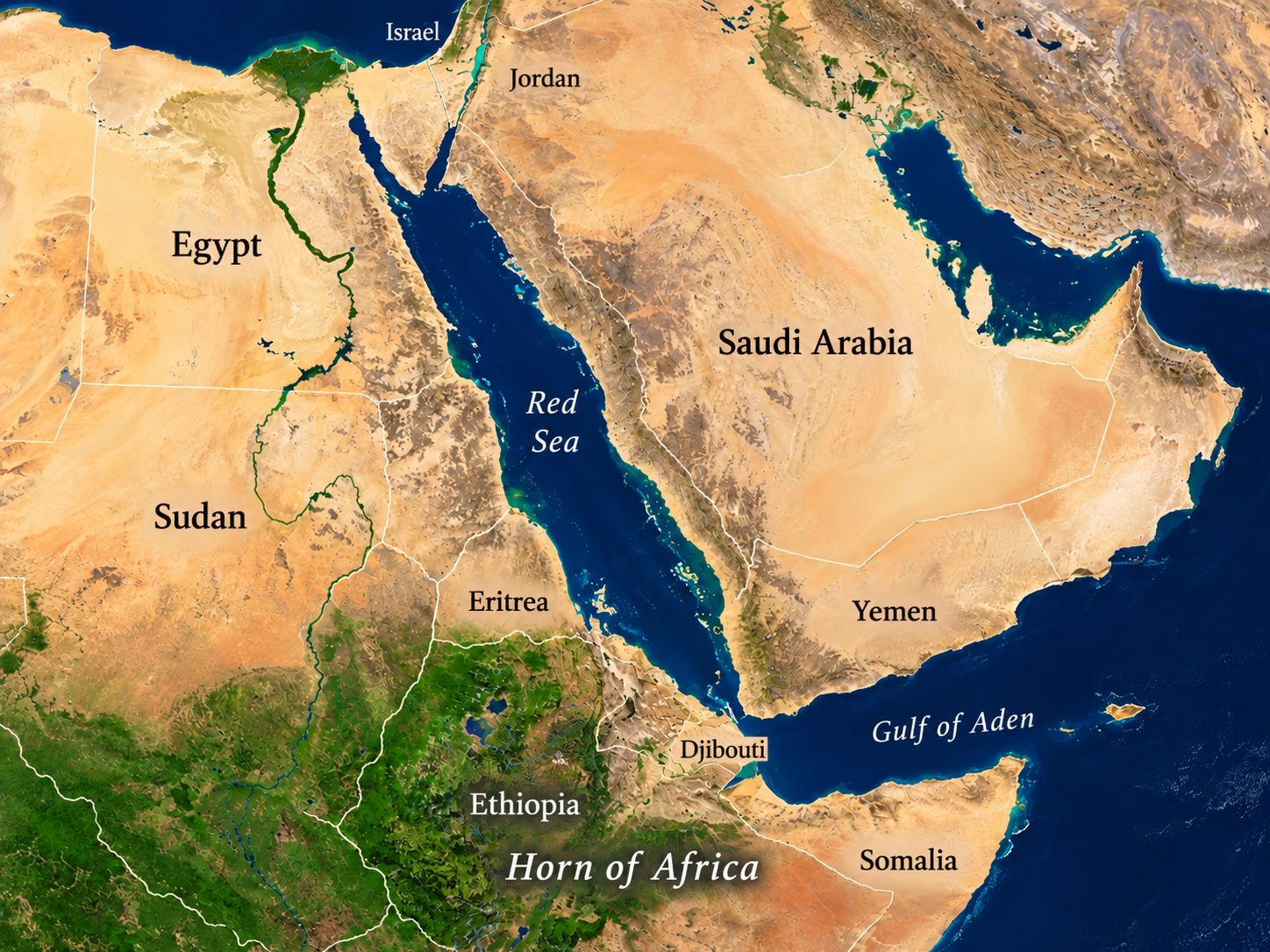
While the United States had appeared to be relying solely on economic warfare against Iran, the US military abruptly carried out strikes on Iranian territory on Tuesday in retaliation for attacks targeting oil tankers, setting off a spiral of violence over the course of the week. In Lebanon, Israel released several civilians held in its prisons, while its army seized the strategic Ali el-Taher hill and continued its heavy strikes in the area it controls in the south of the country. The week from August 31 to September 6 was marked by a sharp acceleration of events in the Middle East, after the previous one had seemed defined by relative stagnation. On the Iranian front, the US military carried out targeted strikes inside Iranian territory as early as Tuesday evening, the first in nearly a month. This screen grab, made on September 6, 2026 from undated video footage released the same day by US Central Command, shows what CENTCOM says is one of the Iranian oil tankers it destroyed in response to attempted missile attacks on naval vessels. (CENTCOM via AFP) However, the relatively limited pace of the strikes suggests that the US administration has opted for an escalation that remains controlled, while continuing its blockade and economic pressure on Tehran. Even so, tensions continued to rise throughout the week. Explosions were heard on Saturday on the highly strategic island of Kharg, through which most of Iran’s oil exports pass. US President Donald Trump, for his part, threatened to strike the Kuh-e Kolang nuclear site — “Pickaxe Mountain” in Persian — a heavily fortified facility located deep underground, not far from Natanz, Iran’s main uranium-enrichment site. Earlier in the week, he had enshrined the “tanker for tanker” equation, pledging to target an Iranian vessel every time the Islamic Revolutionary Guard Corps struck an oil tanker in the Strait of Hormuz. That is precisely what the US military did on Saturday, setting two Iranian vessels ablaze. Politically, Donald Trump further hardened his tone toward Tehran. After saying in an interview that talks had been permanently frozen “because an agreement with them is not worth the paper it is written on,” he said on Saturday that the “conflict” with Iran was not a “war,” but “something ordinary” for the United States. A way of rattling the Iranians while at the same time reassuring the US public ahead of the midterm elections. A port, along with storage facilities and warehouses, was damaged following a US military strike carried out on September 6, 2026 in Iran’s southern Hormozgan province, which borders the Strait of Hormuz. (AFP) At the same time, the US news outlet Axios published a report on Saturday suggesting that the United States is already looking beyond this conflict, which began on February 28. Citing US officials and other informed sources, the outlet said the Trump administration is developing a broader strategy for the post-war Middle East. According to the report, it would be based on creating a regional alignment aimed at containing Iran, bringing an end to the regional fallout from Hamas’s October 7, 2023 attacks in Gaza, and expanding the circle of normalization between Israel and countries in the region. The threat against Kuh-e Kolang, which brings the Iranian nuclear issue back to the fore, echoes an announcement by the International Atomic Energy Agency (IAEA), which said on September 1 that Iran had still not reopened its sites to inspectors following the strikes of May 2025. It should be recalled that despite the scale of the Israeli-American offensive against Iranian sites, it is almost certain that the stockpile of enriched uranium remains intact and has been moved to a safe location by the Iranian authorities, which remain committed to what they consider their right to develop a nuclear program. Following the IAEA announcement, the United States, together with France, Britain and Germany, said they intended to submit a resolution to the UN Security Council condemning Iran’s failure to comply with its non-proliferation commitments. This display of unity stands in contrast to the chill that has prevailed between Washington and its European allies since the beginning of the conflict. For their part, the Iranians appear to be responding to the upheaval in much the same way as before: by striking neighboring countries, notably Kuwait, the United Arab Emirates and Jordan, without directly targeting Israel. Heavy strikes in southern Lebanon On the Lebanese front, Israel is intensifying its destruction operations in villages in the south, even using explosive barrels in some cases. Lebanese President Joseph Aoun urged Washington and the international community to “put an end” to Israeli attacks on Lebanese territory, which killed seven people on Sunday against the backdrop of a fragile truce. The strikes hit several localities in the Nabatiyeh region. Twenty people were also wounded, including children, according to the Health Ministry. One strike also destroyed the former Ghandour hospital, which had been out of service for years. Release of detainees and capture of Ali el-Taher But the major event of the week in the south was the Israeli capture of the strategic Ali el-Taher hill in the Nabatiyeh region. The site served as a major Hezbollah headquarters, consisting of an extensive network of tunnels from which fighters from the Shiite party operated, along with, according to some reports, Iranian fighters. On Thursday evening, the Israelis announced that they had taken control of the complex. On Sunday, Israeli Defense Minister Israel Katz said that tunnels still had to be blown up. This military “success” may not have come as a surprise after weeks of bombardment, but Hezbollah’s reaction was more unexpected. After long insisting that it would refuse to give up this strategic hill — as had the Iranians, who had also threatened to intervene — the Shiite party ultimately sought to play down the significance of the development through its media outlets and allied networks, without officially confirming the loss of the site, which it had refused to preserve by handing it over to the Lebanese army. The other major surprise of the week was Israel’s release of five Lebanese and Syrian civilians held in its prisons. The move came following a visit to Tel Aviv by US Ambassador to Lebanon Michel Issa. According to the Israeli prime minister’s office, Thursday’s announcement “follows efforts by Israel and Lebanon to locate and repatriate the remains of leaders of the Jewish community who had been abducted and killed in Lebanon” between 1984 and 1986. Here too, Hezbollah’s reaction raises questions. While describing the move as positive but insufficient, the party once again turned on the Lebanese authorities, accusing them of “submission to the enemy” and holding them “responsible” for the disaster in the south. It even warned them against “internal conflicts.” Could the party’s military setbacks push it to turn increasingly toward the domestic front? Finally, the Israeli army made an important statement on Sunday, saying it was considering reducing its occupation zone in southern Lebanon, moving from the current “yellow zone” to a “grey zone.” Such a development would, according to this assessment, reflect a reduced threat from Hezbollah. The measure has not yet been approved by Israel’s political leadership. Yemen and Palestine The week was also particularly tense in Yemen, where clashes between Houthi rebels and government forces continued to intensify, culminating in an especially deadly Saturday in which more than 60 people were killed in a single day, bringing the death toll since Thursday to around 200. The Houthi offensive is aimed in particular at taking control of areas bordering the Bab el-Mandeb passage, which would give this Iranian ally additional leverage over another major strategic chokepoint after the Strait of Hormuz. In Palestine, particularly troubling comments by Israel Katz on Gaza marked the week. He claimed, without providing evidence, that most of the territory’s residents wanted to leave, stressing that Israel was “ready for such an evacuation” on a mass scale. A sign that the ordeal of Gaza’s residents may be far from over. Finally, it is worth noting that the IAEA announced on September 1 that facilities discovered in Deir el-Zor, Syria, indicate that Bashar al-Assad’s former regime had secretly been preparing an advanced nuclear program that could have led to the production of an atomic weapon with the help of North Korean experts.
Homage
Author portrait
By Michel Hajji Georgiou - Published Sep 6, 2026 - 13:31
News feature image
The Argentine player, who brought his international career to an end on August 31, 2026, was nothing less than a magician of the stadiums. His journey, made of wonders, falls and redemption, may tell us something about our undiminished need for enchantment in a world that nevertheless claims to have rid itself of it. Announced a few weeks after the 2026 World Cup final lost to Spain, Lionel Messi’s international retirement inevitably stirred an emotion for which it is difficult to find many equivalents in the recent history of football. One would probably have to go back to Maradona, or perhaps to Cruyff or Pelé, to recover that sense that, with the retirement of a player, something disappears that extends far beyond the sport itself, as though a certain way of inhabiting football, perhaps even of believing in it, were also coming to an end. Far from the glacis of reason Enough of the endless statistics and the unbearable, tedious and sterile quarrels over “who is the greatest of all time.” The author of these lines has never been a fanatic of the round ball, nor, for that matter, of vertical rankings or hierarchies of merit in general, and consequently appreciates the talent of each player with the same sense of wonder as an eleven-year-old child. Besides, this particularly contemporary obsession with numbers ruins all the pleasure of the spectacle. And with good reason: the approach that consists in adding up goals, assists, Ballons d’Or, Champions Leagues, Copa América titles, World Cups… can only be reductive. On another register, it is not entirely unrelated to German-American philosopher Eric Voegelin’s critique of the modern Gnostic temptation: that of a form of knowledge convinced that it can imprison reality within a system and abolish whatever resists it. Records are probably one indicator of Lionel Messi’s genius. Yet so many other great players who made stadiums and hearts tremble, without achieving half of what he did, nevertheless remain eternal in our memories. What made them truly singular lies elsewhere, far from the glacis of reason. Something else was at work around them. Something belonging to a certain profound sense of transcendence that understanding can never fully grasp. This has been true of Lionel Messi for more than twenty years, since the day when, under the gaze of the “icon” Diego Maradona, he made his first appearance, in June 2006, on the World Cup stage in the colors of the Albiceleste against Serbia and Montenegro. That ineffable element that constitutes Messi’s genius, as it does that of others, may indeed touch upon one of modernity’s strangest paradoxes: the persistence of magic in a world that has constructed itself precisely against it. The disenchanted world Max Weber used the expression “disenchantment of the world” to describe the slow process by which Western modernity gradually subjected existence to rationalization, calculation, predictability and causal explanation. The world was no longer supposed to be traversed by obscure powers, signs, supernatural interventions or invisible wills; it was, at least in principle, to become intelligible. Unfortunately, modern sport, and more broadly the modern world inherited from globalization, fits perfectly within this dynamic. Today’s football, and not football alone, is probably one of the most quantified objects imaginable. The slightest gesture is measured, and everything is carefully calculated and modeled. From mathematics to artificial intelligence, raw talent now depends more on science than on enchantment. What is human in its spontaneous, even wild, relationship with the invisible that springs from the heart is disappearing before our eyes, in favor of the squaring of the VAR circle. It is, in a sense, the murder of sport in the name of greater rigor and fairness… even though the euthanasia of this share of sublime spontaneity ultimately produces glaring injustices of its own. One need only revisit some of the controversial decisions of the 2026 World Cup to see it. Paradox of paradoxes, Lionel Messi was himself, at the outset, a child of this technical modernity, to which he certainly owes part of his exceptional career. His body, too small by expected standards, was corrected through hormone treatment. Identified very early, his talent was taken in hand by an institution that organized his training, nutrition, physical development and integration into an already globalized sporting machine. Nothing, in appearance, could have been further removed from the old heroic narrative. At first sight, the story seems closer to dystopias in the vein of Gattaca than to myths and messianic narratives. And yet the old narrative did indeed return, and with an almost embarrassing insistence. Since the beginning of his career, Lionel Messi has been placed under the microscope. But the more people labored to explain and demystify him, the less they succeeded in entirely dissipating the impression produced by some of his gestures. The man simply cannot be circumscribed and reduced to an accumulation of data. At an age when most great players retreat into the shadows, he continues to surprise. To astonish, even, by bringing to sport that element of the senseless which escapes the quasi-robotic hypersystematization of the world. It is probably there that one must seek this elsewhere that characterizes Messi. In the survival of magic at a time when even the spaces that once allowed the positive expression of a humanity made of flesh and blood are gradually being “disciplined” by the hypnotic attraction of a new puritanical Gnosis in the name of modernity. The Messiah made by the machine Although he emerged, in a sense, from the machinery of the Matrix, Lionel Messi constitutes in himself a challenge to this ready-to-wear model. A kind of alter ego of Neo from The Matrix, thrown into a simulation governed by parameters that claim to calculate everything. The Argentine’s destiny gradually took on, almost despite himself, the form of a messianic narrative. The pun on his name would be too easy had it not been ceaselessly revived by his own story: that of the fragile child whose body seemed intent on denying him the fulfillment to which his talent destined him. Then that of exile at a very young age to Barcelona, adoption by a foreign city, an almost unreal ascent, worldwide recognition, followed by this strange difficulty in being recognized by his own… For a long time, Argentina maintained a relationship of hainamoration with its prodigal child. His results, his talent, his brilliance mattered little… he still had to answer one merciless question: why wasn’t he Maradona? The comparison was admittedly inevitable, but it was also profoundly unfair. Everything separated the two men in their way of being in the world. Maradona carried Argentina with everything in it that was passionate, contradictory, excessive and theatrical. He spoke, provoked, fought, fell, returned, mingled football with his private life, his anger, his political commitments… all the way to his own destruction. His very body seemed to become one of the places where the contradictions of his country were played out. Maradona was the very incarnation of what the world expected from football: a rebellious soul, sometimes pushing the game to the point of immorality, but within a kind of footballing gigantomachy. Maradona was epic. And, above all, he had placed his country at the summit of world football in 1986. Messi offered none of that. He was silent, at times almost absent from the story others were constructing around him, an absence long interpreted as a flaw. Almost erased, devoid of personality. That, moreover, was what the two giants Maradona and Pelé reproached him for: a lack of leadership, being too smooth. A kind of miracle test-tube baby of the stadiums. The boy from Rosario was also criticized for not singing the anthem loudly enough, for not being Argentine enough, for having been “manufactured” by Barcelona, and then, naturally, for failing to win with the national team what he won almost continuously with his club. The unfulfilled prophecy The dramatic loss to Germany in the 2014 World Cup final, followed by the Copa América finals of 2015 and 2016, had gradually transformed that suspicion into an accusation. When he missed his penalty against Chile in 2016 and subsequently announced that he was leaving the national team, he was nevertheless already one of the greatest players in football history. Yet his story remained strangely unfinished. The sense of incompletion had little to do with his honors. It concerned instead that quasi-archaic necessity continually imposed upon modern heroes: to bring their initiatory journey to completion. In Argentina’s colors, Messi shone, then fell heavily. But he did not rise again. He did not fulfill the prophecy. And, in the eyes of his people, this reinforced the sense of hainamoration: a fallen god remains a god, after all. But with the added burden of what his worshippers regard as an intolerable substratum of humanity and, therefore, something perfectly detestable: his flaws, his weaknesses. Argentines loved Maradona despite his spectacular downfall and his fallible humanity. But that was because he had “earned” the right to such a downfall, because it had somehow become acceptable after Mexico 1986. Messi, by contrast, did not yet have the right to fall, because he had not yet reached the summit. No, the prophecy had not been fulfilled. It was even becoming a caricature. So Messi returned. But he still had to wait for his redemption. It took the 2021 Copa América at the Maracanã for this relationship of suspicion, expectation and disappointment with his public and his people truly to begin changing. And above all it took the 2022 World Cup for the story to acquire that almost excessively perfect form that no one would have dared write without appearing to indulge in a screenwriter’s contrivance. Strangely, Maradona had died in 2020. It was as though a kind of oppressive national curse had been lifted. At the same time, the Argentine people needed a substitute father figure, and the pressure was thereby only redoubled. But perhaps mixed with a little tenderness this time? What happened in Qatar in 2022 is all the more interesting because Messi himself appeared slightly different. He protested more, answered provocations, lost his temper, spoke with a violence of which few had thought him capable, and even let slip that now famous “¿Qué mirás, bobo?” at the Dutch, to Argentina’s amusement. Buenos Aires finally discovered, belatedly, what it had always expected from him. A little Maradona in a great deal of Messi. But Messi did not become Maradona. And perhaps that was precisely where the true reconciliation occurred: Argentina stopped asking him to be. From 2022 onward, Messi no longer needed to embody another model of national genius. For his country too, he could finally become what he had already been everywhere else: Messi. Simply. The final act of the prophecy Granted, the triumph of 2022 could have constituted a perfect ending. But, as with Maradona, the final act of heroic prophecy is the fall. No one really expected anything extraordinary from Messi anymore in 2026. At 39, he was widely regarded as one of the “tired heroes.” The fall from the Capitol had come with the bitter episode of his departure from FC Barcelona and his misadventure at PSG. He was now playing only in the American league, in Miami’s colors… on the periphery of the footballing world, in the distant lands of soccer. And the new generation was already there, ready to send its ancestors off to Bicêtre. Yet this 2026 World Cup, which seemed destined to be nothing more than an epilogue, turned into one last sensational blaze of glory. Argentina reached the final once again, with Messi, at 39, restored as its “historic leader” and its recourse in decisive moments, achieving something not unlike what Roberto Baggio had done for Italy in 1994, at… 27: a perpetual deus ex machina. Baggio failed at the gates of triumph against Brazil after practically carrying Italy all the way to Pasadena. His penalty, sent over the crossbar, would leave behind one of the cruelest images in World Cup history: a man standing motionless, head bowed, hands on his hips, while Brazil celebrated its victory. The man who had “died standing.” The Italian imp never knew apotheosis. Yet this symbolic death, far from erasing his tournament, eventually became part of his legend. History was kinder to Messi, despite a campaign of hatred directed at him, mixed with accusations of cheating and favoritism, against a backdrop of controversial refereeing decisions and acts of unsporting conduct by his team, just as it had once been with Maradona. Kinder still, in fact. A final in a sixth World Cup on the verge of retirement, capped by an outstanding individual performance? That is precisely where the magic of the Messi phenomenon lies, and where it defies reason and its avalanche of statistics. Genius cannot be imprisoned within a sum of parameters and variables. Even optimal physical condition cannot by itself explain what the entire world witnessed. And what does it matter if his story reminds us that the hero, however mythical, cannot abolish the sinister influence of Saturn. The re-enchantment of the world For beyond the prophecy fulfilled, from ascent to fall, with its share of happiness and misfortune, the Argentine offered the world one final lap that belongs to art, if not to a form of Homeric poetry. With Lionel Messi’s withdrawal from the international stage, a little of the world’s magic disappears… until another providential hero returns to enchant the stadiums. For more than twenty years, Messi embodied the coexistence of two worlds we had thought incompatible: that of the extreme rationalization of modern sport and that, far older, of the hero, the sign, expectation and enchantment. When Messi leaves, something of this contradiction suddenly becomes visible. Other prodigies have already emerged, but perhaps, at the very moment when one of its last great representatives leaves the stage, we discover just how much we continue to need transcendence. The modern world has therefore probably not abolished enchantment. It has merely displaced it. For ninety minutes at a time, this man called Lionel Messi, who embodied it on football pitches, now leaves after having accomplished everything. And even more.
Analyze

Have We Become Stupider?

Or Are We Experiencing a Transformation in the Structure of Knowledge?
Author portrait
By Mona Fayad - Published Sep 5, 2026 - 20:01
News feature image
The question “Has the world become stupider?” frequently returns in contemporary debates about digital media, search engines, and social networks. On the surface, it seems simple. Yet behind it lies a deeper issue concerning the very nature of knowledge: how it is produced, how it is transmitted, and how it is consumed. Perhaps “Have we become stupider?” is not the most accurate question. A better one might be: Is knowledge still being transmitted in a way that allows it to be understood and made productive? Do most readers still go back to the original texts? Or do they turn instead to summaries and to what is said about those texts through material circulating among readers? One key to understanding this phenomenon lies in the work of British psychologist Frederic Bartlett, who conducted a series of experiments in the 1930s on what he called “serial reproduction.” In these experiments, one person would be asked to hear a story and then retell it to someone else, who would in turn retell it to a third person, and so on. The results were striking: with each new transmission, the story was not conveyed as it had originally been told, but was reformulated. Some details were omitted, others were exaggerated, and still others were replaced by elements that better suited the recipient’s background, experience, and culture. By the time the chain had passed through enough people, the original story had become something entirely different. This simple model reveals a fundamental truth: memory is not a neutral container, but a mechanism of reconstruction. When knowledge passes through multiple intermediaries, it is not “preserved” but “reproduced.” Here we begin to see the resemblance to our contemporary world, and with it the fear that we may be becoming stupider. In the age of digital media, knowledge no longer travels through oral transmission, but through chains of mediation: an article is summarized, then quoted, then reposted as a short post, before being further reduced to a sentence or a headline. In this context, we might borrow a metaphor that appeared in a journalistic text: a library whose books are gradually replaced by summaries, then by summaries of summaries, until the reader is left facing layer upon layer of reduction. We might call this the “raccoon chain”: the raccoon does not read the original, but rummages through what remains of it. It is worth clarifying that the choice of the “raccoon” is not arbitrary. The metaphor symbolically condenses a cognitive condition that is becoming increasingly entrenched. This animal, which lives on the fringes of cities and rummages through garbage bins, does not produce its own food but feeds on the leftovers of what others have produced. Despite its practical intelligence and its ability to pry things apart, pick through them, and seize what is useful, it does not understand what lies before it. It treats things simply as material available for immediate use. This is what knowledge begins to look like in an age of serial reduction: texts are shortened, then shortened again, until all that remains are scraps of meaning, rearranged and circulated without any genuine connection to their source. At that point, we have not merely moved away from the original. We have entered a new phase in the production of information or knowledge, in which the cognitive actor is no longer a reader or a thinker, but a collector of fragments of meaning who redistributes them in forms designed for rapid consumption. “Raccoon culture,” then, is not merely a description of superficiality. It is an accurate description of the degradation of the knowledge chain itself: from creation to summary, from understanding to formal processing, from ideas to something resembling only their faded trace. Yet this phenomenon cannot be understood apart from the technological structure that governs it. Here Marshall McLuhan becomes relevant, with his famous formulation: “The medium is the message.” The problem lies not only in content, but also in the form through which that content is transmitted. Contemporary digital media do not simply convey information. They reshape it according to the logic of speed, condensation, and fragmentation. Long texts become unsuitable for consumption, while an idea becomes acceptable only if it can be compressed into a few shareable lines. This transformation produces a striking paradox: we live in a time when access to knowledge is no longer difficult. It is excessively easy. And with that excessive ease comes what might be called a “cognitive illusion”: reading a brief passage or a quick summary can be enough to make a person feel that they have grasped an idea. Yet this feeling of possession is not necessarily accompanied by deep understanding, or by the ability to reconstruct or critique that knowledge. This is where we encounter what might be called the “semi-educated”: people who possess the signs of knowledge but not its structure, its vocabulary but not its internal logic. The problem becomes even more complex when viewed through the lens of attention. Instead of remaining in a state of sustained concentration, as in traditional reading or prolonged reflection, the mind now exists under continuous informational bombardment: notifications, clips, headlines, and successive waves of content. This does not merely fragment attention. It reshapes it according to a logic of constant jumping between short units of meaning, rather than the gradual and cumulative construction of an idea. I am reminded here of a joke that we used to tell and that was widely circulated during the days of popular demonstrations. It vividly illustrates the process of reduction and reshaping of content. After the occupation of Palestine, many popular demonstrations took to the streets chanting, “Down with the Balfour Declaration!” The joke was that by the end of the demonstration, the slogan had become, in Arabic, “Let one fall from above,” a completely different phrase that retained something of the original slogan’s rhythm and sound. This image may help bring us closer to what happens in everyday language when knowledge is transformed into short messages that are collectively repeated. A demonstration begins with a precise political slogan. Through repetition, collective immersion, and sonic rhythm, it gradually turns into a completely different formula. The new version may preserve the rhythm and emotional charge of the original, while losing its meaning and original significance. What remains is no longer the meaning, but the emotional energy of the phrase. Here, in another form, we encounter what Bartlett observed: what matters is not merely what was said, but how it was retold and how it was reinterpreted within a changing social context. If we bring these strands together, we might say that what we are experiencing today is not so much a “collapse of intelligence” as a transformation in the conditions under which intelligence operates. The human mind has not changed radically, but the environment in which it functions has changed profoundly: from an environment that allowed slow accumulation to one that imposes the rapid and fragmented reproduction of knowledge. This transformation creates a permanent tension between two kinds of thinking: reflective thought, which requires time, and rapid thought, which demands an immediate response. Seen in this light, the question “Have we become stupider?” is partly misleading. It may be more accurate to say that we are increasingly exposed to conditions that make deep thinking less stable, or less possible, and knowledge more vulnerable to fragmentation and recycling. As for stupidity, if the term can be used, it may not be a quality of the mind at all, but rather a side effect and a characteristic of the cultural structure that has emerged. It is a technology that reshapes our relationship with the world. Thus, rather than seeing this as a decline in human capacities, we might understand it as a transformation in the “knowledge environment”: an environment in which it has become easy to know something, but harder to truly understand it in depth.
More Articles
Sort By: NewestOldest
Gibran Khalil Gibran: A Bridge of Light Between East and West (1/3)

“I am but a small cloud drifting across the sky, knowing neither where it goes nor whence it came.” Some souls defy every border and elude every label. Gibran Khalil Gibran was one of them. At once celebrated and strangely insufficiently known, he remains among the most compelling figures of the twentieth century. Born in Lebanon, he came of age amid the restless energy of Boston and New York City. Through his work, Gibran quietly disproved Rudyard Kipling’s famous assertion that “East is East, and West is West, and never the twain shall meet.” In his life and writing, he embodied both the spiritual depth of the East and the rational modernity of the West. Too often reduced to the extraordinary global success of his masterpiece, The Prophet – long regarded as one of the most widely read books in the United States after the Bible – Gibran was a complete artist, a “seeker of the absolute” who wielded the paintbrush with the same intensity as the pen. His work still resonates today with striking modernity. Was he a painter, a philosopher, a poet, a writer – or all of these at once? Having met him in Paris, Auguste Rodin is said to have remarked: “The world awaits a new William Blake, and he has been born in the East.” Like Blake, Gibran did not see himself as a writer who painted, but as an artist whose inner vision found equal expression through the pen and the brush. To better understand this singular figure, one must look to the influences that shaped the thinker, the writer – reputedly among the most widely read authors in the world after William Shakespeare and Laozi – and the painter whose ethereal works sought to reveal the human soul stripped of its social disguises. 1883–1931: A Life Between Two Worlds Gibran Khalil Gibran was born in 1883 in Bsharri, a Christian village in northern Lebanon, then part of the Ottoman Empire, into a Maronite Christian family. His grandfather was a priest. He was only 12 when his mother emigrated with him and his two sisters to Boston, seeking refuge from poverty and from an alcoholic husband. Their early years in the United States were marked by hardship and loss. His half-brother, sister and mother all succumbed to tuberculosis. Between 1908 and 1910, Gibran returned to Beirut to study at the Collège de la Sagesse before moving to Paris, where he spent two years at the Académie Julian refining his artistic technique. It was there that he encountered, among others, Auguste Rodin. Women and Gibran Woman is the temple of life.” “In the eyes of a woman one can read the history of humanity, for she carries within her both the mystery of creation and the power of unconditional love.” Women occupied a central place in the life of Gibran Khalil Gibran. He regarded them with reverence and profound respect, never merely as objects of desire. As he himself often acknowledged, his life was shaped and sustained by extraordinary women. Though he never married, he loved several deeply. Throughout his life, he called for the emancipation of Arab women, urging them to break free from the constraints of tradition and patriarchal society. Foremost among the women in his life was his mother, to whom he was devoted with near-total reverence. He admired the courage she displayed in leaving everything behind to emigrate to the United States in search of a better life for her children. One anecdote captures particularly well his relationship with women. During his years in Paris, a model who posed nude for artists was so moved by Gibran’s gentleness and respect that she became deeply attached to him. As a gesture of gratitude, she insisted on washing his clothes each day, without accepting payment. Mary Haskell She was both his mentor and his patron, and played a decisive role in his life. It was Mary Haskell who introduced Gibran to New York’s artistic and publishing circles and helped launch his career. Though she was ten years older than him, she remained the only woman Gibran ever asked to marry him. Their relationship is documented in Mary Haskell’s journals, published after her death. May Ziadeh It remains one of the most beautiful and unusual love stories in modern literary history. Gibran lived in New York, while May Ziadeh – the pioneering feminist writer and intellectual – lived in Cairo. For nearly twenty years, they exchanged letters without ever meeting in person. Their correspondence blended intellectual debate, emotional support and a form of almost mystical passion. The relationship perfectly embodied Gibran’s conception of love: a communion of souls transcending physical attachment and geographical distance. He regarded her as his spiritual counterpart, his alter ego. One should also mention his close friendship with Barbara Young, his secretary, who during the final years of his life, assisted him with his English writings.

Raymond Eddé, in Praise of "Defeat"
By
Michel Hajji Georgiou
Published

On 10 May 2000, Raymond Eddé passed away, at the end of an exile of more than two decades in Paris. Eddé was, in the Lebanese political landscape, a wholly atypical figure. A certain reading of history retains of him today the image of an idealist and stubborn man, cut off from reality – since he refused all political compromises that sought to plug temporary gaps in the dyke by reflex of immediate survival, at the expense of the fundamental values of the Republic and the elementary foundations of the State, from the Cairo Agreement to the Taif Agreement. Unbending, the Amid? And yet, paradox of anachronism, it was the opposite that his own community reproached him for: his refusal to be swept along by currents of identitarian testosterone, and his rejection of the sweet songs of the sirens and the machine guns, unlike the popular parties and armed organizations of the era. Like Michel el-Khoury, leader of the Destour, the Amid of the National Bloc continued to hold back the escalation to extremes, opposing the temptation of arms that was ravaging the Lebanese and Christian street, including among his own supporters. Violence ultimately wore down his resolve. Victim of a series of assassination attempts by the various belligerents, he chose to leave. Without knowing, no doubt, that this departure would be permanent. The Man Who “Was Right” A piece of political folklore has it that Raymond Eddé asked that the following be inscribed, as an epitaph, on his grave: “Here lies Raymond, who was right.” The Amid was anid – obstinate – whenever it came to holding firm on his backbone of political ethics. Over time, however, the formula has not been without mixing admiration, irony and even a certain bitterness. As if it were the epitaph of a certain mode of political conduct – too idealistic, if not naive – that refuses to bend and adapt to Lebanese political realities. It defines almost an anthropological category: the honest but powerless Lebanese political figure, ill-suited to Machiavellian virtù . A “loser,” in a sense. Thus, the petty-political Lebanese time has retained of Raymond Eddé the image of a man who saw the catastrophes coming, but who, by refusing compromises in order to keep his hands clean, ended up isolated, exiled, and almost transformed into a Maronite Cassandra – where instincts preferred to follow utilitarian and populist zaïms or “men of the field” in military fatigues. And it is no doubt true that Eddé was himself a victim of his political rigorism when he refused Michel el-Khoury’s proposal to unite the Destour and the National Bloc to create a national counterweight to vatenguerrisme , at the beginning of the 1970s. “Never will the son of Emile Eddé take the hand of the son of Bechara el-Khoury!” he had replied to Sheikh Michel. And this was probably one of the Amid’s political errors, since the absence of the political centre that this national axis might have represented opened the way to an escalation to extremes, and behind it, to a puppet master named Hafez al-Assad, who knew how to exploit internecine quarrels in order to reign for three decades over the land of the Cedar. Function and Stature Nevertheless, in the present circumstances, it may be worth dismantling once and for all the myth of “idealism” and “utopianism” that continues to surround Raymond Eddé – the unloved figure of Lebanese communitarianism, all the more so of its sectarian, identitarian, populist and martial tendency. Raymond Eddé – and the author of these lines did not know him personally, but draws his conclusions from the man’s positions and trajectory – is without doubt the most unpopular of the Christian political leaders (unless it be, supreme irony, Bechara el-Khoury). Why? Because the power that interested him was not the political power coveted by traditional politicians. Eddé was in quest of an authority capable of genuinely embodying something beyond itself: a body of knowledge, an inner bearing, a coherence, an experience, a capacity for transmission, even a form of spiritual or intellectual nobility. He distinguished instinctively between function and stature. In this, he maintained a very ancient rapport with legitimacy – almost Greek or medieval in kind. True authority, not coming from status alone, necessarily had to flow from an adequacy between being, word and deed. For him, authority seemed compelled to satisfy two simultaneous requirements, rarely united: a genuine verticality of knowledge, experience or thought, and an organic recognition from below, from the human real, from the terrain and the living community. If he failed in the test of reality, it was not because he refused to roll up his sleeves. It was because he refused to play the strongman and the militiaman. A considerable difference. He refused to succumb to the illusion of the solution through violence. And in that, he was indeed right. And unfortunately, Lebanon being what it is, he is right every day, without variation. Eddé combined culture, depth and a certain popular recognition grounded in positions of principle, not in acts of war. Not popular in the raw electoral sense, but in the sense that his word genuinely reached people, circulated, transformed, generated free adherence rather than imposed obedience. Eddé created the political, there where others have done nothing but undo it for half a century. One finds here something very Mediterranean, almost antique once again: the idea that authority is not merely an institutional mechanism, but a living relation between a person and a city. A legitimacy tested in duration. In this, as in many other things, he was entirely coherent. Perhaps too coherent for a politician? The Beautiful Losers Beyond this, was Raymond Eddé a “loser,” as an entire current “school” of political thought suggests – a school that measures success in terms of crowds drawn to rallies and ballot boxes? As, after him, figures like Nassib Lahoud or Samir Frangieh, to cite only a few? The time has surely come to shatter once and for all the myth that a figure who does not seek the cult of personality as the foundation of its political legitimacy is necessarily to be discarded from politics or relegated to the margins, in the name of realism. To be wrong with Sartre rather than right with Aron? No. Certain figures now constitute specific landmarks precisely because their knowledge has been tested, recognized, embodied. They have traversed the contradiction of the real world without entirely losing their backbone. They have embodied a form of truth that was not rewarded by immediate history. And this gives more weight to their words, not less. These figures have often seen the disasters coming, understood the impasses, refused certain compromises – and then lost in spite of it all. Or sometimes because of it. There is in them something tragic in the noble sense: not so much the romantic posture of the “cursed” as the confrontation between lucidity and the balance of forces. They reveal something difficult to accept: that being right protects neither from failure, nor from isolation, nor from destruction – but perhaps from dishonour. Leonard Cohen gave his second novel a sublime title: Beautiful Losers , translated into French as “Les Perdants magnifiques.” The translation diminishes the force of the oxymoron. These “losers” are not “magnificent.” They simply inhabit a register that is not the same as that of others. Their giant wings will not allow them to walk among the crowd. Lebanon is full of tactical victors and historical losers. Many of those who won the symbolic or military wars left behind them emptiness, ruin or fear. While certain “vanquished” figures preserved a form of moral legitimacy because they had perceived something essential about coexistence, sovereignty, violence or human dignity. Raymond Eddé is one of them. He accepted to pay the price of his clear-sightedness rather than betray his reading of the real in order to belong to the camp of the victors. One might say he was inhabited by an almost Sophoclean tension, preferring just defeat to degrading victory. Not out of a taste for defeat, no. But because a victory bought at the price of falsehood or blindness would have ended, in his eyes, by becoming another form of ruin. And it is no doubt for this reason that he never truly wished, in his deepest self, to become president of a Republic that has not ceased, more than twenty years after his departure, to sell itself, again and again, to the highest bidder, rather than resolve to exist.

Saving Integral Humanism
By
Michel Hajji Georgiou
Published

We keep talking about “globalization” as though the word still had a shared meaning. It no longer does. Or rather: all that remains of it is its economic shell—globalization as such: capital flows, supply chains, digital platforms—while its soul has vanished. Globalization as openness, as the promise of a world made more habitable for all, as the search for a shared language among cultures, is in the process of dying. And yet that form of globalization was never merely a material reality; it was a moral horizon. It rested on a simple, almost naïve idea: that repeated contact among peoples, cultures, imaginaries would eventually disarm the temptation of war. Distances reduced by technology, by transportation, by the abolition of customs borders… People would meet at universities, festivals, NGOs, international institutions; they would build compromises, treaties, exchange programs. They would learn to live together, for lack of a better option. That horizon was born with a specific generation: the baby boomers. A generation traumatized by the Second World War, by industrial extermination, Hiroshima, the discovery of the camps. A generation for whom the word “universal” was not a philosophical abstraction, but a response to the abyss—to Hitlerism, Mussolinism, Francoism, to the horror of Auschwitz. Openness against concentration camps. From this emerged the Universal Declaration of Human Rights, the United Nations, the European Union, the major cultural and scientific institutions that tried—awkwardly, imperfectly—to construct a shared space. This generation endowed itself with a language: that of integral humanism. A humanism that did not reduce human beings to their communal identity, that did not dissolve them into the market alone, that did not sacrifice them on the altar of a jealous transcendence either. A humanism that placed the dignity of each person at the center, against the fetishes of race, confession, clan, or nation. That generation is now disappearing. And with it, the symbolic architecture that made an open form of globalization possible. We have indeed entered, for some time now, the famous Gramscian interregnum: “The old world is dying, the new one struggles to be born, and in this twilight, monsters appear.” The old world was one in which the universal still had a place, if only as official hypocrisy. The new one is taking shape before our eyes: a world of blocs, walls, proxy wars, digital platforms that fragment societies into hostile tribes. And now artificial intelligence, which sends everyone back to “their” truth, narcissism as intellectual comfort—yet another virtual addiction under the guise of progress. Between the two, monsters proliferate: authoritarian regimes that speak the language of democracy in order to hollow it out; populisms that turn social anger into hatred of the internal enemy; religious, ethnic, civilizational identitarianisms that turn otherness into an ontological threat. Hatred has unfortunately become the structuring affect of politics, where the will to live together—even fragile, even wavering—once carried the hope of a better world. Probably up until the watershed disaster of September 11, 2001. Hatred and violence used to be the shadow cast by conflicts; today they are their openly embraced engine. The border is no longer an instrument of regulation but a fetish brandished as a totem. Walls are erected, customs barriers raised like weapons, fantasies of a return to closed sovereignties flourish—as though material interdependence could be repealed by decree. There is a cruel irony here: at the very moment when exchanges have never been so intense—data, images, capital, goods circulating at the speed of light—imaginaries are closing in. We no longer dream of a shared world; we settle for defending fortresses. A shattered postulate The cultural globalization of the baby boomers was certainly Western, sometimes arrogant, often asymmetrical. But it contained a measure of self-risk: one went toward others, confronted them, allowed oneself to be transformed. It assumed that the world could not be divided into culturally airtight blocs. That postulate is now shattered. The twenty-first century is being written in a closed plural: “Christian civilization” versus “Islamic civilization,” “the Russian world” versus the “decadent West,” the “true people” versus “cosmopolitan elites,” “us” versus “them,” everywhere, all the time. This is what Francis ceaselessly denounced until his death. The question is no longer: what do we share? but: what separates us, and how can it be exploited? Integral humanism, for its part, is caught in a vise. On the side of markets, it is disqualified as naïveté: what matters is no longer the person but the profile, the data point, the consumer segment. The individual is thus pulverized into measurable, monetizable behaviors. On the side of identities, it is denounced as a Western ruse: the universal would be nothing but a mask of domination, a moral varnish laid over colonial power relations. The response: a return to “authentic” belongings, to supposedly preserved communities, to tribal passions. Caught between the cynicism of global capital and the resentment of wounded identities, integral humanism no longer finds a political space. It survives in institutions on the verge of ossification, in diplomatic discourse, sometimes in a few individual consciences. But it no longer structures the social imaginary. Perhaps most worrying of all is the generational rupture. The baby boomers carried within them the direct or transmitted memory of the catastrophes of the twentieth century. They had seen where radical dehumanization leads, and it was this memory that made credible—despite everything—the promise of a fragile universal. Subsequent generations grew up in a world already globalized, already connected, but also already fractured. For them, the universal often appears as an exhausted discourse, an official narrative with no grip on reality. They live with economic precarity, the climate crisis, repeated wars, informational vertigo. Survivals of a bygone world The most natural reflex is no longer openness but defense: defending one’s job, one’s territory, one’s identity, one’s comfort, one’s narrative. In this context, figures of openness become inaudible. Whether they speak in the name of faith, reason, human rights, or literature, they seem to be speaking a foreign language. They appear as survivals of a bygone world—one in which it was still believed that dialogue could bend reality. “Strongmen,” by contrast, reassure. Whether they are called Putin, Trump, Erdoğan, MBS, Netanyahu, Orbán, or Le Pen, they all respond to an intrinsic fear of being swallowed, absorbed, erased of all difference in a world that, through technology, had reached a culminating point of mimetic proximity among peoples and their particularities. Should we conclude that everything is lost? That would be too simple, and too comfortable. The death of open globalization does not mean the end of the universal as a demand. It means that the historical form this universal took—the one constructed by the baby boomers, with their institutions, treaties, and grand narratives—is running out of breath. What remains is the naked, brutal question: how can we still speak of human dignity, of rights, of the common, in a world that has ceased to believe in them? We will probably have to begin again from below, in cities, schools, associations, in those minuscule places where individuals stubbornly continue to believe that the other is not first and foremost an enemy. Integral humanism will not be reborn from a diplomatic summit or a new treaty, but from a counterculture: a culture that refuses hatred as a mother tongue and withdrawal as a horizon; a culture that does not confuse the memory of wounds with the perpetuation of vengeance. Open globalization may be dead. But as long as there remain men and women capable of saying “we” beyond their tribes, and of rising beyond the “me” to celebrate and promote a culture of connection, the universal will not be entirely buried. It will move forward limping, against the current, without illusions, certainly. As it always has. But it will find its way. A phrase attributed to Burke held that “evil is the inaction of good people.” So we must unite—and act.

Unprecedented Lebanese action against Iran at the UN

An unprecedented Lebanese initiative practically stole the spotlight locally on Wednesday from two major events: the resumption of Lebanese-Israeli negotiations in Washington and the Trump-Xi summit in Beijing. On the eve of these two crucial meetings due to their impact on the regional conflict, Beirut submitted a memorandum to the UN in which it challenges claims made by Tehran to protest to the UN Security Council against the Israeli strike that killed four of its diplomats at the Ramada Hotel in Raouché last March. In this memorandum, Lebanese diplomacy criticizes the Islamic Republic, accusing it of violating the Geneva Convention on diplomatic relations and interfering in Lebanese internal affairs, according to Independent Arabia, which reported on it. Lebanon also accuses Tehran of drawing it into a destructive war that does not concern it through its military arm, Hezbollah. This initiative by the Lebanese Foreign Ministry, aimed at putting facts in their proper context, is part of a continuing effort by the government, which had banned Hezbollah's paramilitary activities and declared Tehran's ambassador to Beirut, Mohammad Reza Chibani, persona non grata. Its significance on the eve of the third round of Lebanese-Israeli talks in Washington lies in the dual message it sends: on one hand, the determination of the Lebanese state to move forward with the process supposed to allow it, in due course, to restore its sovereignty over the entire territory. On the other hand, an official, though implicit, Lebanese acknowledgment of Hezbollah's allegiance to the mullah regime. In the text, Lebanon affirms its right to hold Iran internationally accountable and to ensure it bears the consequences of its repeated violations of its international obligations, according to Independent Arabia, which said it had access to the document's contents. The media reported that Lebanon had filed a complaint with the UN. However, in a clarification issued in the evening, the Foreign Ministry specified that it was actually a response to Iranian letters addressed to the Security Council. Beirut chose to respond because Tehran had presented inaccurate information in its name. Iran's ambassador to the UN had seized the Security Council after the attack, accusing Israel of a serious violation of international law by targeting four Iranian diplomats who were exercising the functions of official representatives of a sovereign member state on the territory of another sovereign state. Lebanon, for its part, explained that the so-called diplomats killed were actually members of Iran's Islamic Revolutionary Guard Corps. It based its claims on photos of them in military uniforms with their ranks clearly displayed. Beirut provided these clarifications to the UN because in its letter, Iran had stated it had informed Lebanese authorities of the four diplomats' travel to the Ramada Hotel before their assassination. Lebanon, however, stated there was no coordination, citing an official note from March 16 in which the Iranian embassy acknowledged that it had not been able to inform the Foreign Ministry of the presence of the four diplomats at the Ramada Hotel. Furthermore, the ministry recalled that it had requested an updated list of Iranian diplomats in Lebanon twice without receiving a response. Beirut also detailed in the document the harmful interventions of the IRGC in the country and reminded, to illustrate a flagrant violation of the Geneva Convention, the launch of the first coordinated attack with Hezbollah since the beginning of the war in February. It was on March 11, a week after the government's decision to ban Hezbollah's paramilitary activities. That day, the Islamic Revolutionary Guard Corps itself announced the coordinated strikes during which about fifty sites were targeted in Israel. A Political Lever Far from having a direct impact on Thursday's Lebanese-Israeli dialogue, the Lebanese initiative is nonetheless likely to serve as a political lever for a Lebanon eager to prove it wants to regain control of decisions on war and peace, heretofore mortgaged by Hezbollah. This signal is all the more critical as Israel remains focused on securing its communities on the northern border with Lebanon. For now, Lebanon's main concern remains halting hostilities that have already claimed at least 2,882 deaths, including 200 children. It is around this objective—rejected so far by Israel—that Thursday's two-day talks between the Lebanese and Israeli delegations will open, led respectively by former ambassador Simon Karam and Yechiel Leiter, head of the Israeli diplomatic mission in Washington, and composed, among others, of military officials. The discussions are expected to be difficult due to divergent priorities. Lebanon wants above all strict respect for the ceasefire of April 17 and an end to Israeli destruction in border villages to allow the return of displaced southerners. Israel, for its part, demands a clear plan for Hezbollah's disarmament, a condition it had already set in November 2024 in the ceasefire agreement that ended the war also launched by this pro-Iranian group in support of Hamas in Gaza. Tel Aviv had already made clear it will not withdraw from the buffer zone it continues to expand in the south as long as Hezbollah remains considered a threat. To reaffirm its determination to neutralize this group, the Israeli military intensified strikes Wednesday against Hezbollah targets in southern Lebanon. It also targeted four vehicles in the Chouf and southern Lebanon coastal areas. A total of nine people were killed, including two children. Evacuation calls were also issued for villages. Residents of nine localities in the Israeli line of fire were ordered to leave toward open areas. The Beijing Summit At the regional level, attention is focused on the talks that U.S. President Donald Trump will have with his Chinese counterpart Xi Jinping during his two-day visit to Beijing, where he arrived Wednesday. A summit with major global stakes, from international trade to war in Iran to Taiwan. The American president should notably seek China's help in his diplomatic confrontation with Iran, especially since it risks leading to a resumption of military operations should Tehran maintain its positions, which are unacceptable to Washington. Central to the negotiations is the fate of the Strait of Hormuz, which Tehran remains determined to control because the revenue from tolls exceeds that from oil sales, Tehran stressed Wednesday. An option practically unacceptable globally due to its strategic geopolitical and commercial impact. Another important matter on the agenda of the Beijing discussions is economic cooperation, to which Donald Trump attaches particular importance, as evidenced by the composition of the delegation accompanying him, made up of about fifteen top business executives.

Origins: Chapter 2
By
Nadim Tabet
Published

In the first chapter of this series of texts on the grand sweep of History and that of my son, Raphaël — "The Time of the South, the Time of the North" — the subject was the difference between the countries of the South, where History is still on the march, and those of the North which, according to Fukuyama, are living through "the end of History." But in its conclusion, the text returned to an intuition of the poet Etel Adnan, according to whom Lebanon — where the past resurfaces permanently in the present — is becoming "the prototype" of the world of tomorrow. Of course, this relationship to time may seem counter-intuitive to defenders of the historiographical tradition according to which History has a direction. A tradition that finds its origin in the biblical history of David, as related in the Books of Samuel, and which has since been taken up by the many philosophies of History that proliferated in the nineteenth century. But anyone with an interest in historiography knows that, alongside this vision, there exists another tradition in which historical time is described as cyclical. This was the case with the precursor of the philosophy of History, Ibn Khaldun, in his Book of Lessons published in the fourteenth century, and, in the twentieth century, with the great philosopher of the Frankfurt School, Walter Benjamin, who defended a vision of History in which fragments of the past can surge into the present. And anyone who follows current events knows that today, on a global scale, we are witnessing the return of many such fragments. 1 – What historical era are we reliving? One of the most frequently evoked returns, particularly in the West, is of course that of the 1930s of the last century, when Europe was contaminated by fascism. With the raised arms of certain American politicians, the demonisation of the far left, and a definite rise in antisemitism accompanied by hate speech targeting Muslims, one can readily understand why this analogy recurs so often in public debate. Even though I subscribe to this reading, for my part I have the impression that we are witnessing above all the return of a more distant era — one that goes back to the sixteenth century, when, after the discovery of the Americas, Europe began to produce a discourse on its own civilisational superiority. One of the founding episodes of this turning point was the Valladolid Controversy, where, in 1551, theologians and jurists debated the nature of the Amerindian peoples in order to determine whether they were the legitimate owners of their lands or whether, according to Aristotle's criteria, they could be identified as "natural slaves." Even though this debate "officially" concluded with a recognition of the humanity of the Amerindians, this discourse subsequently only grew stronger, culminating in the nineteenth century with theories on race and discourses on the civilising mission, so as to justify an imperial logic and the expansion of colonial territories. 2 – The return of the discourse on civilisational superiority If it is precisely this language that seems to me to be resurfacing today, it is first of all because Netanyahu uses it to sell his many massacres in the Middle East as a "clash of civilisations," presenting his country as the one defending the values of the Judeo-Christian West. But when one sees the many acts of desecration committed by the Israeli army against Christian religious symbols — as is the case in Lebanon — one is justified in relativising the clash of civilisations theory. For this reason, more than Samuel Huntington's theory, it seems more accurate to speak of a return of the civilisational discourse. A discourse that also appeared recently from the lips of Marco Rubio at a conference where he referred to the era of Christopher Columbus and the conquistadors as a symbolic period of Western greatness. Delivered before an audience of European leaders, the aim of this conference was to invite them to ally themselves with the United States in order to reconnect with that past which, as we know, was above all made up of territorial expansion, the subjugation of peoples, and the erasure of civilisations. Of course, as a Lebanese person, I cannot but be alarmed to hear a minister of the world's foremost power referring with pride to this historical era. But what is even more alarming is that recourse to this "archaic" discourse is also being made by the pioneers of future technologies. 3 – Accelerationism Such is the case, for example, of Alex Karp, the controversial head of Palantir, who, in his manifesto for "the future of the West," recently published on X, makes explicit reference to discourses on civilisational superiority: "Some cultures have produced vital advances; others remain dysfunctional and regressive." And when one considers that Palantir sells surveillance software to the CIA and to Israel, and that he makes no secret of his admiration for Netanyahu's policies, there is reason to worry for the inhabitants of the Middle East — and, I believe, for the world at large. In any case, it is a strange irony that Alex Karp should have wished to write a doctoral thesis in Frankfurt in order to associate his name with that philosophical tradition. A strange irony, because if that school was once the home of luminous thought — such as Walter Benjamin's concept of the "aura" — it now finds itself associated with an entrepreneur close to a current of thought, the "Dark Enlightenment," that seeks to accelerate the advent of a new civilisation freed from the slowness of democracy and governed by the efficiency of new technologies, such as artificial intelligence. All of this gives the impression that it is as if the debate initiated in the sixteenth century were returning, but with a civilisational hierarchy based on the mastery of algorithms and artificial intelligence, and that the question once posed at the Valladolid Controversy — on the humanity of the Amerindians — is now mutating into the question of what use humans will be in such a civilisation. What is to be done in the face of the probable arrival of this civilisation? I do not know, but chance had it that at the moment of the publication of Alex Karp's manifesto, I was discovering at the cinema a film whose action unfolds in the sixteenth century: Magellan , by the Filipino filmmaker Lav Diaz. 4 – “Magellan” and the Ghosts A pictorially splendid film which, as its title suggests, traces the journey of this Portuguese navigator who, in the sixteenth century, completed the first circumnavigation of the globe, and who, upon reaching the Philippine islands, encountered the resistance of "indigenous" chiefs who, out of fidelity to their ancestral culture, refused forced Christianisation. Despite some factual errors, what is striking about this film is not only its resonance with current events, but also its way of depicting every character as an anti-hero. No glorification of anyone whatsoever — only exhausted, vulnerable, and viscous bodies. To put it another way, this is far removed from the Hollywood biopic aimed at glorifying a historical figure, and further still from the very enthusiastic description that Marco Rubio gave of that era in his speech. And where this anti-heroic approach hits its mark is that it condemns no one in particular, but reveals how a system — in this case colonialism — enslaves everyone without distinction between colonised and colonisers, and casts them all into violence. And one can well sense how, in the future, even those who today sell us the civilisation of "techno-colonialism" with broad smiles will themselves be enslaved by the technology they are championing. But so as not to end on a sombre note, I will evoke the end of the film, which relates the Battle of Mactan, where Magellan was killed by warriors led by Lapu-Lapu. This victory made Lapu-Lapu a legendary figure in the Philippines, where a city bears his name today. But by choosing to depict Lapu-Lapu as a spectral figure, Lav Diaz lends credence to the thesis that this character may never have existed — perhaps his way of saying that the victories of supposedly superior civilisations will never be definitive, since they will be haunted by the spectre of those they tried to subjugate. And it is of this importance of spectres that the next chapter will speak.

Israeli Incursion North of the Litani, a “Message” Ahead of Washington Talks

As political circles await clearer indications of President Donald Trump’s true intentions regarding the trajectory of the standoff with the Islamic Republic – following Washington’s outright rejection of Tehran’s response to the latest American “peace” proposals (though what kind of “peace” is actually being discussed remains an open question) – attention on Tuesday, May 12, turned to reports of an Israeli incursion north of the Litani River, the first such move in the current context. Since the disastrous war launched by Hezbollah in July 2006 – for what many viewed as purely Iranian considerations – every international and regional initiative, negotiation and security arrangement had focused on stabilizing the area south of the Litani. United Nations Resolution 1701, as well as the ceasefire brokered in November 2024 following yet another self-destructive war initiated by Hezbollah, centered on ending all militia presence within that clearly delineated southern zone. Following the third frenzied – and no less self-destructive – war launched by the pro-Iranian party on March 2, 2026, ostensibly in retaliation for the death of the Islamic Republic’s Supreme Leader, Ali Khamenei, Israel immediately signaled its intentions, stressing its determination to establish a buffer zone in that same area south of the Litani River. The high-profile announcement of an Israeli military incursion north of the river, along with the establishment of a permanent position on the outskirts of the town of Zawtar al-Sharqiyeh, marks, in many respects, a “break” with the entire international diplomatic and security process governing southern Lebanon since August 2006, when the United Nations Security Council adopted Resolution 1701. Tel Aviv also reported clashes in the area with Hezbollah militants, fighting that it said lasted three days. The significance of the disclosure of this major development lies in its timing: it comes on the eve of the third round of direct talks between Lebanon and Israel, scheduled for Thursday, May 14, in Washington under the auspices of the Trump administration, and in the presence of former ambassador Simon Karam – a participation that lends a new political dimension to the bilateral discussions. The message directed at the Lebanese authorities appears clear: if no tangible progress is made toward the disarmament of Hezbollah’s militia, as stipulated by Resolution 1701 and the November 2024 ceasefire agreement, the Israeli army will not limit its operations to the area south of the Litani, as initially indicated, but will not hesitate to expand its campaign by crossing the river northward. Israeli political leaders in Tel Aviv have, in fact, raised that possibility explicitly. Some sources have even gone so far as to suggest that the Israeli military could advance as far as the Zahrani River, south of Saida. The Jewish state could justify such an escalation of its military operations in southern Lebanon by citing the renewed attacks carried out by the pro-Iranian party against northern Israel. As recently as Tuesday evening, several explosive-laden drones launched from southern Lebanon crashed inside Israeli territory near the border, wounding a number of soldiers. The Regional Dimension As tensions rise on the Lebanese front, uncertainty continues to surround developments on the Iranian front. The explosive issue is expected to feature prominently during President Donald Trump’s visit to China later this week, as Beijing maintains close ties with the Islamic Republic. Speaking on the matter Tuesday, the White House chief said he had no intention of acting “rashly” regarding Iran, stressing the importance of the naval blockade imposed on Iranian ports. At the same time, however, the American president made clear that he is under no illusion about what he described as Tehran’s delaying tactics. The remark echoed previous statements by Mr. Trump, who has repeatedly argued that the time has come to put an end to what he describes as the Islamic Republic’s long record of deadly and destabilizing aggression against Western nations and Middle Eastern states alike. Iran, the president said earlier this week, has been “leading us on for 47 years.”