
Levant Time logo

Articles

News feature image
Diachronia

Philosophy as Cosmified Social Conflictuality (2/20)

From the Divided City to the Figures of the World: Immanence and the Aporias of the Universal
Author portrait
By Wissam Saadé
Published Nov 22, 2026 - 05:23
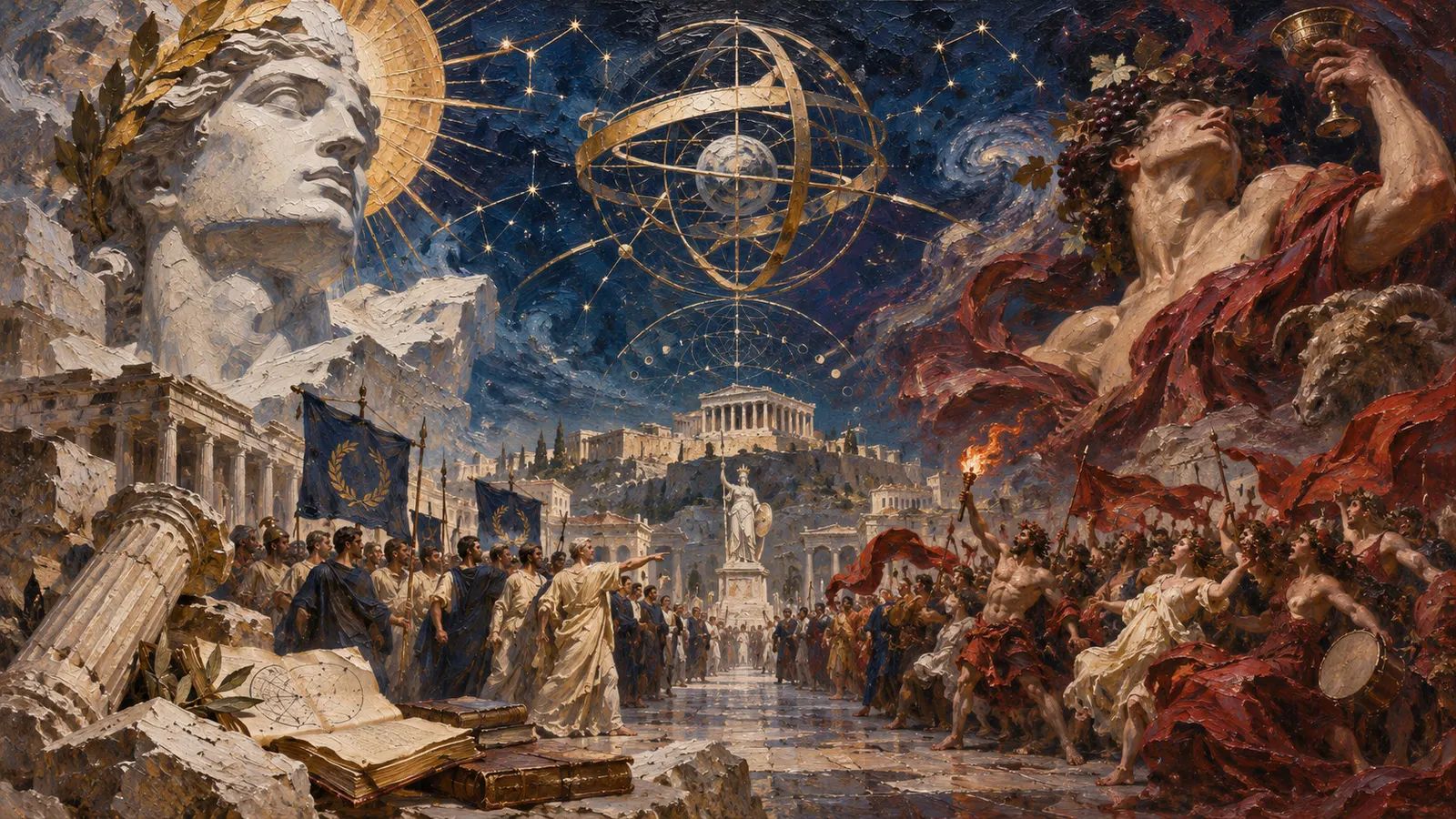
From Temperaments to Antagonisms: How Conflict Becomes a Problem of the World Bringing James, Neyrat and Benjamin into relation thus resolves nothing through the mere addition of perspectives. Rather, it makes a detour through Nietzsche necessary. In Beyond Good and Evil , Nietzsche suggests that the great philosophies bear, to some degree, the imprint of their authors’ involuntary confessions. His proposition does not authorize us to replace the examination of arguments with a psychological assessment of those who produce them. It shifts the question towards the values that make certain images of the world desirable, the drives that invest the categories of order, and the claim of those categories to free themselves from the conditions of their genesis. Conflict, then, is neither immediately a logical contradiction nor merely a clash of individual sensibilities: it also runs through the historical formation of the criteria by which certain things appear worthy of being known or saved. [11]
An Eye on the Event
Author portrait
By Hisham Dibsi - Published Nov 22, 2026 - 03:49
News feature image
(Photo by Sergei BOBYLYOV / POOL / AFP)
My recent visit to China was not merely an opportunity to discover a country undergoing enormous economic, urban and technological transformations. It also allowed me to observe some of the smaller details of everyday life and to try to understand the social culture and vision of the future underlying these transformations. At one point during my visit, I went to a panda park, where I witnessed the birth of panda triplets and observed the public interest generated by the event, as well as the way visitors responded to it. I was struck by the orderly way people moved around, their respect for the surroundings and nature, and their concern not to disrupt the order of the protected park. These were simple scenes, yet they revealed something about society’s relationship with public space and the organisation that makes collective life more harmonious.
Analyze
Author portrait
By Yakzan Takki - Published Nov 21, 2026 - 15:28
News feature image
In Toronto, Canada, Iranian scientist Kaveh Madani, born in Tehran in 1981, heads the United Nations University Institute for Water, Environment and Health, which coordinates research on water resources and makes policy recommendations. In 2026, he received the Stockholm Water Prize, widely regarded as the “Nobel Prize of Water,” notably for his work on the concept of “water bankruptcy,” at a time when the world is depleting its water resources faster than they can be replenished. Madani is seeking to use his position to make his voice heard within the Iranian diaspora, particularly during the war waged by the United States and Israel against Iran. He regularly speaks out on social media, where he has thousands of followers. He denounces abuses committed by the Tehran regime and draws attention to the environmental damage caused by the war in which his country is involved, including the toxic rainfall that followed missile strikes on oil depots in Tehran.
More Articles
Sort By: NewestOldest
The global gathering of contemporary art, “Art Basel”, soon in Doha

For several years, the Gulf States have been investing enormous resources to transform the region into a world-class artistic, technological, and educational hub. Qatar is no exception and has been doubling its efforts to attract talents from around the globe while nurturing local skills. The Qatari state continues to launch ambitious projects, whether artistic, architectural, or sporting such as the FIFA World Cup held in Qatar in 2022.To achieve this goal, the government collaborates with internationally renowned artists, high-level cultural and educational institutions, and top local and international talents.

The Gulf States, from the regional to the international stage (2/3)

The Gulf States emerged and accumulated wealth through the exploitation of their energy resources, but they have also undergone, in rapidly successive stages, a profound transformation that has enabled them to assert themselves on the international stage. Eager not to remain merely “the Gulf States,” Saudi Arabia, Bahrain, the United Arab Emirates, Kuwait, Oman and Qatar sought to move beyond a purely regional status by building on the assets they had acquired, while multiplying and developing them through a process resembling a forced march—sometimes judged excessive or unrestrained, yet reflecting a determination that has allowed them to pursue their ambitions and achieve global recognition.

Jean-Claude Guillebaud and the Spiritual Question of Evil

All the thinkers and political leaders who continue to reflect on the unveiling of the countless facets of the Lebanese war, all those drawn to what Michel de Certeau called “cultural poaching, through which non-specialists and the dominated fashion a space of their own,” were struck by the passing, on November 8, of a friend and leading figure who was, and will remain, the essayist Jean-Claude Guillebaud (1944–2025). A journalist and editor, winner of the Albert Londres Prize in 1972, a great reporter and war correspondent (notably for Le Monde, Sud-Ouest, La Vie, among others) for more than two decades, and co-founder and president of Reporters Without Borders (RSF) from 1987 to 1993, Guillebaud authored some forty reports and essays, dazzling in the richness of their references. An editor with a luminous instinct, curious about everything, his books leave one with the impression that he had read everything, noted everything.

Between Europe and China, the Tone Is Changing
By
Jacques Mechelany
Published

On December 7, 2025, Emmanuel Macron did something no European leader had openly done in three decades of carefully managed relations with Beijing: he spoke plainly. Hours after returning from his fourth official visit to China, the French president stated in an interview with Les Échos that Europe’s trade relationship with China had become “unsustainable.” China, he warned, was “killing its own customers.” European industry, he said, was facing a question of “life or death.” This was not the language of diplomacy. It was the language of strategic alarm. For thirty years, Europe had wrapped its relationship with China in carefully chosen euphemisms: strategic partnership, mutually beneficial trade, win-win cooperation. Macron’s words marked a rupture. They acknowledged what had long been visible in the data but absent from political discourse: Europe has become the adjustment variable in a global economic system increasingly shaped by Chinese overcapacity and American protectionism.

The Gulf States: From Oil to Power (1/3)
By
Jean-Patrick Dayras
Published

Power is imposing one's will: to do, to make others do, to prevent doing, to compel others to do (Raymond Aron). The Gulf States emerged and grew wealthy thanks to the exploitation of their natural resources—oil and gas—particularly since what was later called the first oil shock of 1973. This shock was significant for what is commonly referred to as the West, namely North America and Europe, even though at that time in the 1970s a large part of Europe was not, by any means, part of the European Union and was still subject to the Soviet yoke and, equally, to that of communism for nearly another twenty years.

Spotlight on the regime's orientations
By
Jad Akhawi
Published

President Joseph Aoun's meeting with a delegation from "Journalists for Freedom" was not merely a protocolary occasion or a platform for conveying declared positions. Rather, it constituted a political event in its own right, its significance extending beyond the content of the speeches to what it reveals about the presidency's mindset, priorities, and the boundaries of engagement it chooses at this stage. The most important aspect of the meeting is not "what the president said," but why he said it, how he said it, and to whom. First: The meeting as a political act, not a media gathering The choice of a media delegation—neither partisan nor diplomatic—reflects a conscious decision to manage the political situation directly through public opinion. The presidency is not addressing a specific adversary, but rather an environment saturated with leaks and rumors, and it treats the media as a partner in shaping the political climate, not merely a conduit.