
Levant Time logo

Articles

News feature image
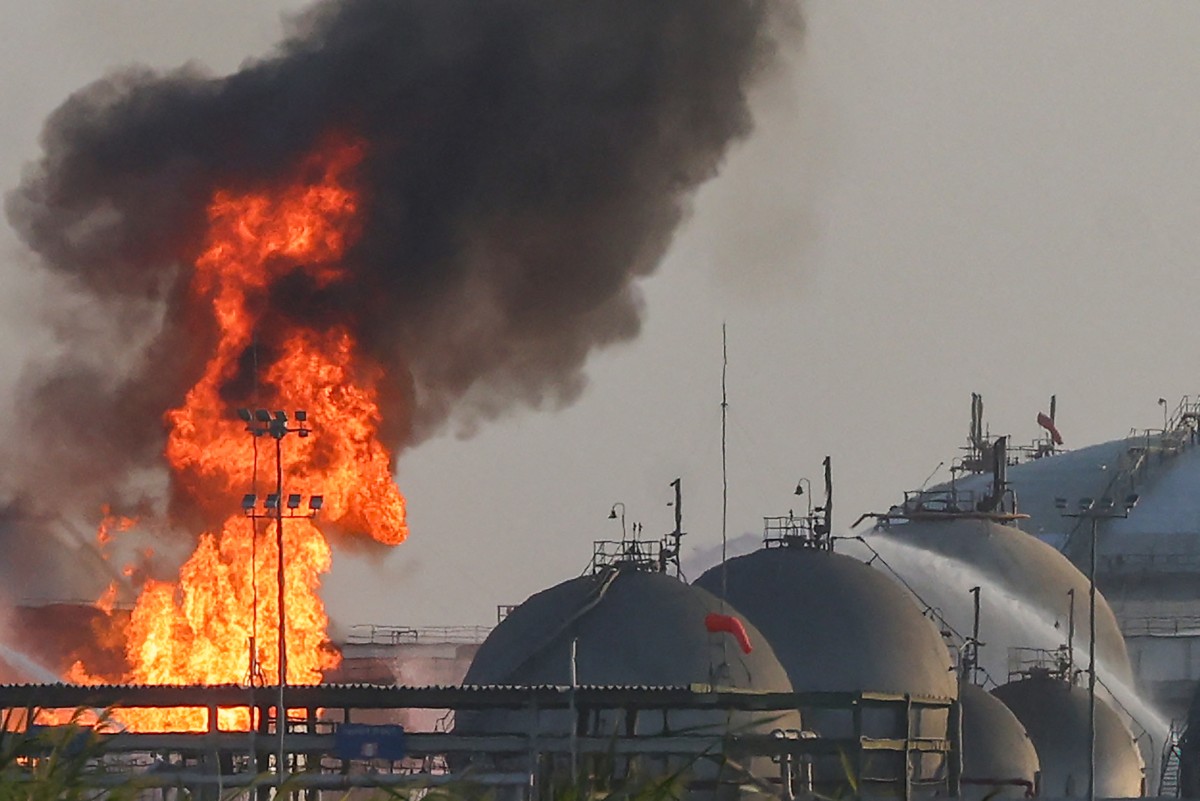
The pro-Iranian Houthi militias targeted Aramco oil facilities in Saudi Arabia last week. (AFP)
Weekly essentials
Author portrait
By LevantTime .
Published Oct 11, 2026 - 20:22
While the U.S.-Iran front remains more or less calm, two troubling signs marked the past week: the escalation on the Yemeni front and the seizure in Lebanon of a truck carrying explosives being transported by Hezbollah militiamen, which has raised fears of further suspected assassinations ordered by their Iranian patron. With Israel’s legislative elections approaching on October 27, and as the war in the Middle East weighs increasingly heavily on the U.S. midterm elections due to take place in early November, violence persists in the region—openly or covertly—on several fronts. Apart from occasional attacks on oil tankers in the Strait of Hormuz, the most worrying signs emerged elsewhere this week: in Saudi Arabia, where Houthi attacks are becoming increasingly deadly, and in Lebanon, where the arrest of pro-Iranian Hezbollah militiamen in possession of half a ton of explosives has revived fears of political assassinations.
Study
Author portrait
By Saoud Al-Mawla - Published Oct 11, 2026 - 15:12
News feature image
Photo MOHAMMED HUWAIS/AFP
VI. The War Against Iran (February-June 2026): the “Limited Intervention” A Late and Symbolic Entry On February 28, 2026, the United States and Israel attacked Iran. Very quickly, Tehran largely closed the Strait of Hormuz, reducing Gulf exports to a trickle. Many expected the Houthis to open a second front at Bab el-Mandeb. They did not. Their involvement was cautious, gradual and late: it was not until March 28, one month after the war began, that they fired their first missiles toward Israel, as though they had waited for the moment when their entry would have the greatest impact. Their operations were limited to missile and drone launches toward Israel. Their military effect was modest, given the distance and the effectiveness of Israeli air defenses. Above all, they avoided high-impact fronts: no campaign against shipping in the Red Sea, no strikes against the Gulf monarchies or regional energy infrastructure. The media dimension compensated for this: each launch sustained the image of a “resistance” force loyal to the Axis. These launches were suspended with the Islamabad Memorandum, concluded in June between Washington and Tehran.
Opinion
Author portrait
By Youssef Mouawad - Published Oct 11, 2026 - 12:53
News feature image
In the current Syrian context, a fundamental question arises with particular urgency: who called for the return of the Golan? Who else could it be but Syrian President Ahmed al-Charaa? But why on earth did the Syrian president reopen the Golan “cold case” when he had so many other priorities to deal with? In his view as a former jihadist, appealing to world opinion at the UN General Assembly meeting on September 23 was not merely a reminder of the Israeli-Syrian dispute dating back to June 1967. So what got into him, when in an interview the previous day he had stressed that direct Israeli-Syrian negotiations had taken place under U.S. auspices and that the two sides had reached 90% of a security agreement? (1)
More Articles
Sort By: NewestOldest
Financial Markets in 2025: A Year that Defies Economic Gravity (1/3)

As Santa prepares to make his annual descent down chimneys around the world and 2025 draws to a close, global financial markets present a picture that would have seemed implausible — if not outright impossible — at the beginning of the year. Most major equity indices are ending the year at, or near, all-time highs, marking a third consecutive year of exceptional performance. In the United States, the benchmark S&P 500 Index is up approximately 17% at the time of writing, following gains of 23% in 2024 and 24% in 2023. This represents a cumulative advance of roughly 77% over three years — and an extraordinary rise of more than 1,000% since the beginning of the secular bull market in March 2009.

Christmas and the Price of Redemption
By
Michel Hajji Georgiou
Published

The meaning of Christmas challenges us more than ever, in a world that is increasingly fragmented, increasingly “nihilistic” — in the existential sense. Beyond its commercial and festive character, or even its spiritual and religious dimension, Christmas is, in principle, a hand extended toward humanity in all its flaws, its inequities, its imperfections. Without distinction. This is not about engaging in supermarket morality, nor in secularized spiritualism, but about sincerely questioning what this moment signifies, beyond immediate experience — beyond that delightful synesthesia of lights, songs, and flavors, or the joy of gifts reflected in the innocent eyes of young children.

Al-Qard Al-Hassan reportedly initiated a «post-liquidation» phase

Under the effect of American sanctions, restrictions imposed by the Banque du Liban, and losses sustained during the last war with Israel, Hezbollah has sought to reconfigure its main financial arm, Al-Qard Al-Hassan. This “repositioning,” presented as “legal,” aims to preserve its grip on the parallel economy and its social base. Founded in 1982, the Qard Al-Hassan association operates outside the legal banking framework. Iranian funds initially contributed to the association's capital. These were supplemented by Lebanese capital, particularly from entrepreneurs in Africa, over several years. According to the US Treasury Department, which listed Qard Al-Hassan in 2007 on its list of sanctioned entities and then strengthened these sanctions in 2021, this association manages financial volumes comparable to those of a medium-sized bank, while escaping all official supervision.

“The Iranian Empire”: Israel and the Alliance of Minorities, a Paradoxical Stability (5/5)

It seems necessary to dwell for a moment on the insidious game played by Israel, acting as a puppet master, in the context of the geostrategic ambitions of the Iranian Islamic Republic. For half a century, Tel Aviv found in the “alliance of minorities” (Alawites, Christians, Druze, Lebanese Shiites, Kurds) a geopolitical buffer against the Sunni hinterland. The Israeli «periphery doctrine» (1950s-70s) was indeed based on an axiom: ally with minorities to break the Sunni encirclement. In this context, the Alawite regimes in Damascus — Hafez and then Bashar al-Assad — were declared but predictable enemies; ideologically stable; obsessed with their internal survival; and perfectly dissuadable. Israel preferred a cynical and rational Assad to a nationalist or Islamist Sunni Syria. And the Western world, both the United States and European countries, followed suit with the Hebrew state, purely out of utilitarianism. The henchmen of the Assad regime rendered so many good and loyal services to European intelligence agencies over the past four decades… why get rid of such an accommodating enemy?

Sharjah, pioneer of culture in the Emirates
By
Micha Moussallem
Published

For several decades, Sharjah has distinguished itself as the cultural capital of the Arab world, a title officially bestowed by UNESCO in 1998 in recognition of the emirate’s commitment to art, culture, and education, as well as its cultural landscape. Under the guidance of Sheikh Sultan bin Mohammed Al Qasimi, who has ruled the emirate since 1972, Sharjah has developed a unique artistic ecosystem in the Middle East, establishing itself as an essential destination for art lovers and cultural professionals alike. The modern history of art in Sharjah is closely tied to the founding of the Sharjah Art Foundation in 2009, under the leadership of Sheikha Hoor Al Qasimi. This multidisciplinary institution supports both local and regional artistic creations while fostering connections with international artists. The foundation regularly stages major exhibitions, organizes workshops in collaboration with partners, and offers research grants and mentorship programs aimed at empowering young artists, women, and innovative creators.

“The Iranian Empire”: Iraq, an Open Wound; Gaza, Palestinian Strategic Depth (4/5)

For a long time, Iraq was the keystone of the Islamic Republic of Iran’s geostrategic maneuvers and ambitions. Without Iraq, nothing holds together: neither the land corridor to Syria, nor the sanctions-busting economy, nor the network of militias that provided Iran with strategic depth in the Gulf. Powerful Shiite militias (the PMF), financed, trained, and supervised by the Revolutionary Guards, controlled for years the border areas of al-Qaim/Bukamal, through which weapons, fighters, and technologies transited toward Syria and Lebanon. The Iraqi government, wavering, constantly oscillated between Washington and Tehran, yet Iranian leverage remained massive. Today, Iraq has become a field of contradictions: U.S. pressure is increasing to sanction pro-Iranian networks; militias have been weakened by the disorganization of the Syrian front; the recent internal dispute over the classification of Hezbollah and the Houthis—placed on and then removed from terrorist lists within a few days—clearly reveals confusion; and, last but not least, an Iraqi nationalism is taking shape that rejects Iranian interference as much as American dominance.