
Levant Time logo

Articles

News feature image
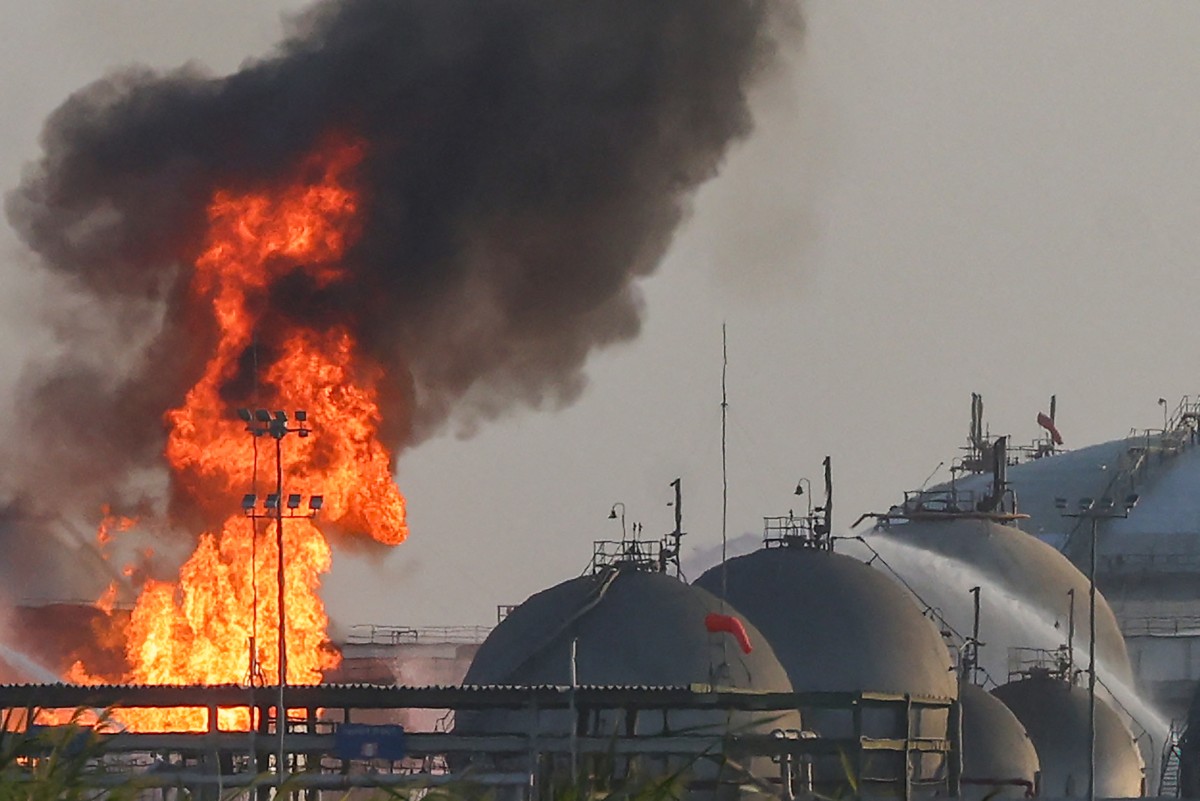
The pro-Iranian Houthi militias targeted Aramco oil facilities in Saudi Arabia last week. (AFP)
Weekly essentials
Author portrait
By LevantTime .
Published Oct 11, 2026 - 20:22
While the U.S.-Iran front remains more or less calm, two troubling signs marked the past week: the escalation on the Yemeni front and the seizure in Lebanon of a truck carrying explosives being transported by Hezbollah militiamen, which has raised fears of further suspected assassinations ordered by their Iranian patron. With Israel’s legislative elections approaching on October 27, and as the war in the Middle East weighs increasingly heavily on the U.S. midterm elections due to take place in early November, violence persists in the region—openly or covertly—on several fronts. Apart from occasional attacks on oil tankers in the Strait of Hormuz, the most worrying signs emerged elsewhere this week: in Saudi Arabia, where Houthi attacks are becoming increasingly deadly, and in Lebanon, where the arrest of pro-Iranian Hezbollah militiamen in possession of half a ton of explosives has revived fears of political assassinations.
Study
Author portrait
By Saoud Al-Mawla - Published Oct 11, 2026 - 15:12
News feature image
Photo MOHAMMED HUWAIS/AFP
VI. The War Against Iran (February-June 2026): the “Limited Intervention” A Late and Symbolic Entry On February 28, 2026, the United States and Israel attacked Iran. Very quickly, Tehran largely closed the Strait of Hormuz, reducing Gulf exports to a trickle. Many expected the Houthis to open a second front at Bab el-Mandeb. They did not. Their involvement was cautious, gradual and late: it was not until March 28, one month after the war began, that they fired their first missiles toward Israel, as though they had waited for the moment when their entry would have the greatest impact. Their operations were limited to missile and drone launches toward Israel. Their military effect was modest, given the distance and the effectiveness of Israeli air defenses. Above all, they avoided high-impact fronts: no campaign against shipping in the Red Sea, no strikes against the Gulf monarchies or regional energy infrastructure. The media dimension compensated for this: each launch sustained the image of a “resistance” force loyal to the Axis. These launches were suspended with the Islamabad Memorandum, concluded in June between Washington and Tehran.
Opinion
Author portrait
By Youssef Mouawad - Published Oct 11, 2026 - 12:53
News feature image
In the current Syrian context, a fundamental question arises with particular urgency: who called for the return of the Golan? Who else could it be but Syrian President Ahmed al-Charaa? But why on earth did the Syrian president reopen the Golan “cold case” when he had so many other priorities to deal with? In his view as a former jihadist, appealing to world opinion at the UN General Assembly meeting on September 23 was not merely a reminder of the Israeli-Syrian dispute dating back to June 1967. So what got into him, when in an interview the previous day he had stressed that direct Israeli-Syrian negotiations had taken place under U.S. auspices and that the two sides had reached 90% of a security agreement? (1)
More Articles
Sort By: NewestOldest
2025… A Distinctly Moroccan Year
By
Khairallah Khairallah
Published

The year 2025 was distinctly Moroccan. It marked Morocco’s victory in the war it had endured for half a century, ever since it peacefully recovered its Saharan provinces from the former Spanish colonizer. Why did that war occur? And why did it continue for half a century? Why was the Algerian regime never able to acknowledge that the war of attrition it waged against Morocco, using an instrument called the Polisario, was nothing more than an overt war that would sooner or later turn against it? A series of questions reveals, among other things, Morocco’s resilience in the face of the challenges it confronted, as well as the fact that the Sahara issue has always been a national cause, one that touches every citizen of the Kingdom at the core.

Those Whom the Gods Wish to Destroy, They First Make Mad !

Who can believe that the Shiite community—especially that of South Lebanon—will withstand this perfidious war of attrition? Day after day, Israeli strikes taunt it, challenge it to retaliate, and impose a hellish pace. If, at the outset, Hezbollah’s restraint was synonymous with self-control, that is no longer the case. And the Party of God can no longer claim to be exercising self-discipline after a year of provocation. Hence the question of whether it will finally choose the path of confrontation or yield to the demands of disarmament ? Will the perseverance of the israeli army ultimately overcome the legendary patience of civilians? For discontent is rising among an exasperated Twelver population. Worked up to a fever pitch, it sees no way out of this conflict, nor any benefit in it. And who could still deceive it when the evidence is so clear: the day after October 7, it was sacrificed on the altar of Palestine, and now, a year later, it is immolated on the altar of Iran’s nuclear ambitions.

AI: The Technological Revolution That Powered the Markets in 2025 (2/3)

No single force shaped the trajectory of financial markets in 2025 more decisively than artificial intelligence. AI became the dominant narrative through which investors justified elevated valuations, extreme concentration, and rising risk-taking. It offered a forward-looking story powerful enough to neutralise concerns about slowing growth, mounting debt, and geopolitical fragmentation. At its core, AI is a genuine technological revolution — a productivity leap comparable to electrification or the internet — and it is already reshaping entire industries. But financial markets do not price long-term societal benefits; they price microeconomic realities: corporate cash flows, capital intensity, and sustainability. It is at this level that a growing disconnect emerged.

The National Museum of Beirut, Against All Odds
By
Micha Moussallem
Published

The survival of the National Museum of Lebanon is a miracle. Located on the demarcation line that divided the capital between the warring parties, the building was the target of gunfire and shells. But the country's main archaeological museum, which houses exceptional collections ranging from prehistory to the Mamluk period, was able to be reborn just after the war. The museum’s construction The idea for the museum emerged in the early 20th century, when plans were made to bring together in one place the collection of Raymond Weill, a French officer stationed in Lebanon. The building was constructed between 1930 and 1937 during the French Mandate, thanks to the efforts of the Friends of the Museum Committee led by Bechara El Khoury, then Prime Minister and Minister of Education. It was officially inaugurated on May 27 1942, following the designs of architects Antoine Nahas and Pierre Leprince Ringuet, in a monumental ochre-stone style inspired by antiquity.

Palestine: a peace hijacked by extremes
By
Michel Hajji Georgiou
Published

Contrary to popular belief, the Palestinian question is not trapped in a stalemate by historical inevitability, nor by an irreconcilable, atavistic hatred. It is methodically neutralized by a convergence of interests between extremes who, while clashing in bloodshed, share a common obsession: preventing the emergence of a political solution based on mutual recognition and equal rights. On one side, an Israeli power captive to an absolute security logic, transformed over the years into a governing ideology. On the other, Islamist movements that thrive on the collapse of politics, the sacralization of violence, and the hijacking of the Palestinian cause for the benefit of regional agendas. Caught in the middle, a population held hostage, and a prospect of peace deliberately sabotaged.

Christmas Tale: the Two-State Solution and the Star of Hope

It is said that one night, when the sands once crossed by the Magi seemed weary of having witnessed so many footsteps passing without ever meeting, a new star began to shine brighter than all the others. Those who were most attentive lifted their heads and sighed as they searched the sky, sensing that something new and mysterious, born of the Great Unknown, was making itself known. The star did not appear over an untouched land. It shone above a Middle East scarred by walls, checkpoints, ruins, conflicting prayers, and thousands of dead, widows, and orphans. At the same moment, in a narrow street of Bethlehem, a family was setting up a small nativity scene in front of their home. Nothing elaborate: burlap salvaged from a rice sack, a few battered plastic figurines, a baby Jesus wrapped in yellowed cloth, sheep without shepherds, and a Virgin Mary and Saint Joseph with faded colors. A boy asked his father: