Logo Levant Time
Taline Becharraoui

Taline Becharraoui

A New Chapter in Lebanon–Syria Relations?
Par
Taline Becharraoui
Publié
Jul 2, 2026 - 23:20

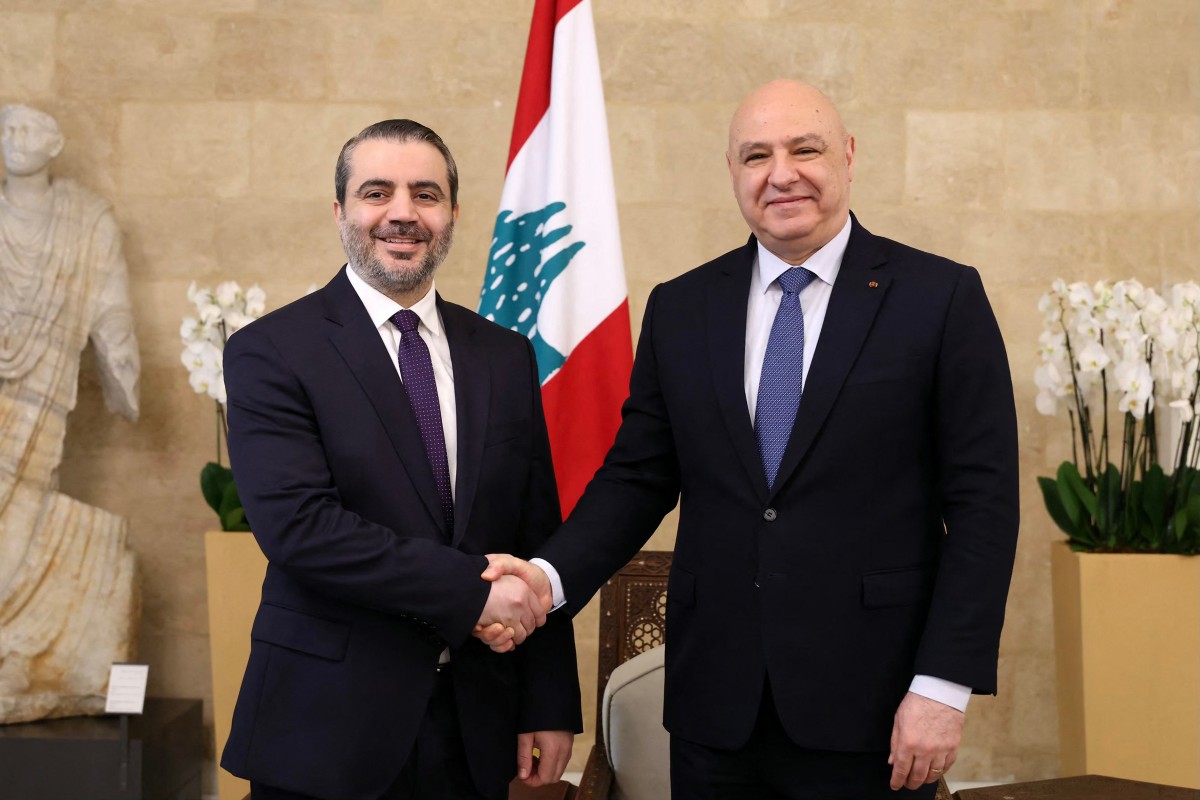
Thursday’s headlines in Lebanon were dominated by the visit of Syrian Foreign Minister Assaad Chibani to Beirut, where he met with all of Lebanon’s leading political and religious figures, as well as representatives of the country’s main sectarian parties – with the notable exception of Hezbollah. For those who lived through the years of Syrian tutelage over Lebanon – or occupation, as some prefer to describe it – the visit was anything but ordinary, as were the statements that accompanied it. One of the most noteworthy came from President Joseph Aoun, who said he remained “committed to fraternal relations” between the two countries, founded on “coordination, cooperation, and non-interference in each other’s internal affairs.”

From Lucerne to Washington, Lebanon defends its sovereignty
Par
Taline Becharraoui
Publié
Jun 23, 2026 - 00:40

Negotiations between Iranian and American delegations, following the framework agreement signed by both parties last week, continued on Monday in Lucerne, Switzerland. That said, this diplomatic process is still in its early stages, and many grey areas remain. Questions are mounting, however: are we heading toward an era in which Iran will reclaim its regional influence, or rather toward a period of regional balance of power? One place where many questions are being asked is certainly Lebanon. On Monday evening, a U.S. official announced an agreement between the United States, Lebanon, and Israel to establish a ceasefire monitoring mechanism in southern Lebanon under the supervision of CENTCOM, the U.S. Central Command. The official added that the agreement was preceded by a call from Secretary of State Marco Rubio with Lebanese President Joseph Aoun and Israeli Prime Minister Benjamin Netanyahu.

Hezbollah Disarmament Urged by G7
Par
Taline Becharraoui
Publié
Jun 18, 2026 - 00:47

Since a ceasefire in Lebanon was mentioned in the memorandum of understanding between Iran and the United States – the text of which was released by the State Department on Wednesday evening (see below) – speculation has been rife over what developments may in the country in the short term. Not only does the ceasefire remain extremely fragile, but uncertainty also surrounds a possible Israeli troop withdrawal and the central issue of Hezbollah’s disarmament. While the party and its Iranian backers have already declared “victory” following the conclusion of the framework agreement, several developments on Wednesday cast doubt on that narrative advanced by the Iranian camp.

The Iran-US deal: suspense and feverish bargaining
Par
Taline Becharraoui
Publié
Jun 14, 2026 - 23:53

A heavy, anxiety-filled suspense gripped the entire day and evening of this Sunday, June 14, which was supposed to be marked by the virtual, online signing of the framework agreement (or memorandum of understanding) intended to "suspend" hostilities between the United States and Iran for a period of 60 days, with the aim of launching a negotiation process over the dispute — nuclear, ballistic, financial, and geopolitical — with the Islamic Republic. Over the past 48 hours, both President Donald Trump and the Pakistani Prime Minister repeatedly and insistently affirmed that the framework agreement would indeed be signed on Sunday. The signing was expected to take place "virtually," in the presence of U.S. Vice President JD Vance and Iranian Parliament Speaker Mohammad Qalibaf. Yet well into the late evening (Levant time), the ceremony planned for this purpose had still not taken place. Two factors accounted for the delay: internal Iranian disagreements and a military escalation on the Lebanese front.

Iran-USA: the blunder of leaks in Iranian media
Par
Taline Becharraoui
Publié
Jun 12, 2026 - 23:20

Is the transitional 'memorandum of understanding' intended to end the war between the United States and Iran really close to being finalized? The triumphalist announcement made by President Donald Trump about an 'imminent deal' with Iran has already been undermined by 'leaks' in Iranian state-controlled media, which continue to proclaim that the Islamic Republic got everything it was seeking: control of the Strait of Hormuz, the immediate release of frozen funds, the lifting of sanctions, and American investment to revive the Iranian economy… A post by Trump on his social media platform abruptly set the record straight. However, it seems unlikely that this will prevent a deal from being reached — a view reinforced Friday evening by an announcement from the Pakistani mediator, who officially confirmed that the two sides had reached an agreement.

Washington Negotiations: Progress Despite Challenges
Par
Taline Becharraoui
Publié
May 14, 2026 - 23:35

May 14, 2026 marked the beginning of the third round of direct negotiations between Israeli and Lebanese delegations in Washington at the State Department headquarters. Contrary to expectations, the Israeli delegation was not headed by former Israeli minister Ron Dermer, who is close to Prime Minister Benjamin Netanyahu, but rather by Israel's ambassador to Washington, Yechiel Leiter, as had been the case in previous meetings. On the Lebanese side, however, the delegation was this time headed by former ambassador to Washington Simon Karam, an experienced negotiator who had already been appointed by Republic President Joseph Aoun to the ceasefire monitoring committee in South Lebanon (before the current conflict).

Negotiations with Israel would put Aoun's life in danger
Par
Taline Becharraoui
Publié
Apr 29, 2026 - 20:27

The standoff between the Lebanese presidency and Hezbollah – and President Joseph Aoun’s resolve to press ahead with direct negotiations with Israel under Washington’s auspices – is reportedly placing his life at risk. The warning surfaced over the past 24 hours from an unlikely source: Israeli intelligence services. A report aired by Israel’s Channel 12 cited a military intelligence briefing indicating that “the involvement of the Lebanese president in direct negotiations with Israel could endanger his life.” According to local broadcaster MTV Lebanon, the information is being taken seriously at Baabda Palace, the seat of the presidency. Even so, Aoun appears unwilling to back down from his commitment to pursuing an agreement with Tel Aviv aimed at ending the conflict into which Hezbollah has drawn the country.

Lebanon’s Political Divide Deepens
Par
Taline Becharraoui
Publié
Apr 28, 2026 - 22:38

Tuesday, April 28 in Lebanon was still shaped by the starkly opposing speeches delivered a day earlier by President Joseph Aoun on the one hand, and Hezbollah secretary-general Naïm Qassem on the other. The former’s address was, in effect, a response to the latter. The president argued that the real “treason” of which he has been accused by the pro-Iranian camp since the launch of direct negotiations with Israel – aimed at ending the war triggered by Hezbollah in southern Lebanon – should instead be attributed to those driving the country into a spiral of destruction and violence. Unsurprisingly, the unprecedented response of a sitting president to the leader of a militia – one that, until the end of 2024, maintained a firm grip on the Lebanese state – has divided the country along its familiar political fault lines.

An eventful week that concludes with two major developments
Par
Taline Becharraoui
Publié
Apr 19, 2026 - 20:02

Direct Lebanese-Israeli negotiations, unprecedented since 1983; a precarious ceasefire in South Lebanon; the Strait of Hormuz still at the center of Iranian-American tensions; a summary of an eventful week in the Middle East ending with two crucial developments. The past week ended this Sunday, April 19, with a double announcement of the highest importance. In a firm tone that contrasts with his traditional statements, President Donald Trump indicated Sunday afternoon (Levant time) that his representatives would travel to Islamabad Monday evening for a final round of talks on Tuesday, during which the Iranian regime would have to endorse a 'very fair and reasonable' agreement proposed by Washington. Failing that, the White House chief affirmed, the US army 'will destroy every power plant and every bridge'.

Between Surprise Negotiations and Surprise Attacks, a Week Full of Twists and Turns

Between April 5 and 12, the past week has been particularly rich in events in the Middle East. It concluded on Sunday, April 12, at dawn, with the announcement of the failure of negotiations between the United States and Iran in Islamabad, while mid-week, Israel gave its approval for direct negotiations with Lebanon, scheduled for Tuesday, April 14, in Washington. On April 8, the Israeli air force launched a massive attack – about a hundred raids in 10 minutes – against Hezbollah leaders and positions in several districts of Beirut, as well as in the Beqaa and South Lebanon. April 5 had been primarily marked by statements made by President Donald Trump, who had issued serious threats against the Iranian regime, ordering it to end the obstacles it placed in the way of free maritime navigation in the Strait of Hormuz. President Trump had given Iran an ultimatum that expired on Tuesday evening, April 7. While everything indicated, during the weekend of April 4-5, that escalation was hardly avoidable, the surprise came a few hours before the end of the ultimatum. A two-week truce was proclaimed, and negotiations were set for Saturday, April 11, in Islamabad, with a view to a settlement between the United States and Iran, focusing notably on the Strait of Hormuz.