Levant Time logo

Articles

News feature image
Massive explosion caused by an Israeli strike near the town of Al-Mansouri in southern Lebanon. (AFP)
Weekly essentials
Author portrait
By LevantTime .
Published Sep 6, 2026 - 23:27
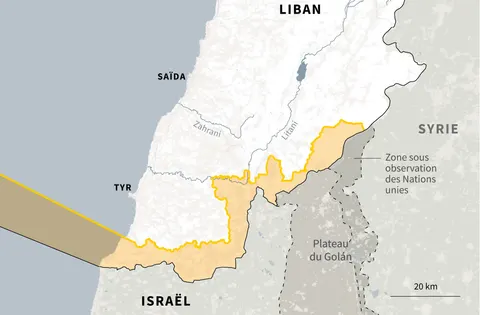
While the United States had appeared to be relying solely on economic warfare against Iran, the US military abruptly carried out strikes on Iranian territory on Tuesday in retaliation for attacks targeting oil tankers, setting off a spiral of violence over the course of the week. In Lebanon, Israel released several civilians held in its prisons, while its army seized the strategic Ali el-Taher hill and continued its heavy strikes in the area it controls in the south of the country. The week from August 31 to September 6 was marked by a sharp acceleration of events in the Middle East, after the previous one had seemed defined by relative stagnation. On the Iranian front, the US military carried out targeted strikes inside Iranian territory as early as Tuesday evening, the first in nearly a month. This screen grab, made on September 6, 2026 from undated video footage released the same day by US Central Command, shows what CENTCOM says is one of the Iranian oil tankers it destroyed in response to attempted missile attacks on naval vessels. (CENTCOM via AFP) However, the relatively limited pace of the strikes suggests that the US administration has opted for an escalation that remains controlled, while continuing its blockade and economic pressure on Tehran. Even so, tensions continued to rise throughout the week. Explosions were heard on Saturday on the highly strategic island of Kharg, through which most of Iran’s oil exports pass. US President Donald Trump, for his part, threatened to strike the Kuh-e Kolang nuclear site — “Pickaxe Mountain” in Persian — a heavily fortified facility located deep underground, not far from Natanz, Iran’s main uranium-enrichment site. Earlier in the week, he had enshrined the “tanker for tanker” equation, pledging to target an Iranian vessel every time the Islamic Revolutionary Guard Corps struck an oil tanker in the Strait of Hormuz. That is precisely what the US military did on Saturday, setting two Iranian vessels ablaze. Politically, Donald Trump further hardened his tone toward Tehran. After saying in an interview that talks had been permanently frozen “because an agreement with them is not worth the paper it is written on,” he said on Saturday that the “conflict” with Iran was not a “war,” but “something ordinary” for the United States. A way of rattling the Iranians while at the same time reassuring the US public ahead of the midterm elections. A port, along with storage facilities and warehouses, was damaged following a US military strike carried out on September 6, 2026 in Iran’s southern Hormozgan province, which borders the Strait of Hormuz. (AFP) At the same time, the US news outlet Axios published a report on Saturday suggesting that the United States is already looking beyond this conflict, which began on February 28. Citing US officials and other informed sources, the outlet said the Trump administration is developing a broader strategy for the post-war Middle East. According to the report, it would be based on creating a regional alignment aimed at containing Iran, bringing an end to the regional fallout from Hamas’s October 7, 2023 attacks in Gaza, and expanding the circle of normalization between Israel and countries in the region. The threat against Kuh-e Kolang, which brings the Iranian nuclear issue back to the fore, echoes an announcement by the International Atomic Energy Agency (IAEA), which said on September 1 that Iran had still not reopened its sites to inspectors following the strikes of May 2025. It should be recalled that despite the scale of the Israeli-American offensive against Iranian sites, it is almost certain that the stockpile of enriched uranium remains intact and has been moved to a safe location by the Iranian authorities, which remain committed to what they consider their right to develop a nuclear program. Following the IAEA announcement, the United States, together with France, Britain and Germany, said they intended to submit a resolution to the UN Security Council condemning Iran’s failure to comply with its non-proliferation commitments. This display of unity stands in contrast to the chill that has prevailed between Washington and its European allies since the beginning of the conflict. For their part, the Iranians appear to be responding to the upheaval in much the same way as before: by striking neighboring countries, notably Kuwait, the United Arab Emirates and Jordan, without directly targeting Israel. Heavy strikes in southern Lebanon On the Lebanese front, Israel is intensifying its destruction operations in villages in the south, even using explosive barrels in some cases. Lebanese President Joseph Aoun urged Washington and the international community to “put an end” to Israeli attacks on Lebanese territory, which killed seven people on Sunday against the backdrop of a fragile truce. The strikes hit several localities in the Nabatiyeh region. Twenty people were also wounded, including children, according to the Health Ministry. One strike also destroyed the former Ghandour hospital, which had been out of service for years. Release of detainees and capture of Ali el-Taher But the major event of the week in the south was the Israeli capture of the strategic Ali el-Taher hill in the Nabatiyeh region. The site served as a major Hezbollah headquarters, consisting of an extensive network of tunnels from which fighters from the Shiite party operated, along with, according to some reports, Iranian fighters. On Thursday evening, the Israelis announced that they had taken control of the complex. On Sunday, Israeli Defense Minister Israel Katz said that tunnels still had to be blown up. This military “success” may not have come as a surprise after weeks of bombardment, but Hezbollah’s reaction was more unexpected. After long insisting that it would refuse to give up this strategic hill — as had the Iranians, who had also threatened to intervene — the Shiite party ultimately sought to play down the significance of the development through its media outlets and allied networks, without officially confirming the loss of the site, which it had refused to preserve by handing it over to the Lebanese army. The other major surprise of the week was Israel’s release of five Lebanese and Syrian civilians held in its prisons. The move came following a visit to Tel Aviv by US Ambassador to Lebanon Michel Issa. According to the Israeli prime minister’s office, Thursday’s announcement “follows efforts by Israel and Lebanon to locate and repatriate the remains of leaders of the Jewish community who had been abducted and killed in Lebanon” between 1984 and 1986. Here too, Hezbollah’s reaction raises questions. While describing the move as positive but insufficient, the party once again turned on the Lebanese authorities, accusing them of “submission to the enemy” and holding them “responsible” for the disaster in the south. It even warned them against “internal conflicts.” Could the party’s military setbacks push it to turn increasingly toward the domestic front? Finally, the Israeli army made an important statement on Sunday, saying it was considering reducing its occupation zone in southern Lebanon, moving from the current “yellow zone” to a “grey zone.” Such a development would, according to this assessment, reflect a reduced threat from Hezbollah. The measure has not yet been approved by Israel’s political leadership. Yemen and Palestine The week was also particularly tense in Yemen, where clashes between Houthi rebels and government forces continued to intensify, culminating in an especially deadly Saturday in which more than 60 people were killed in a single day, bringing the death toll since Thursday to around 200. The Houthi offensive is aimed in particular at taking control of areas bordering the Bab el-Mandeb passage, which would give this Iranian ally additional leverage over another major strategic chokepoint after the Strait of Hormuz. In Palestine, particularly troubling comments by Israel Katz on Gaza marked the week. He claimed, without providing evidence, that most of the territory’s residents wanted to leave, stressing that Israel was “ready for such an evacuation” on a mass scale. A sign that the ordeal of Gaza’s residents may be far from over. Finally, it is worth noting that the IAEA announced on September 1 that facilities discovered in Deir el-Zor, Syria, indicate that Bashar al-Assad’s former regime had secretly been preparing an advanced nuclear program that could have led to the production of an atomic weapon with the help of North Korean experts.
Homage
Author portrait
By Michel Hajji Georgiou - Published Sep 6, 2026 - 13:31
News feature image
The Argentine player, who brought his international career to an end on August 31, 2026, was nothing less than a magician of the stadiums. His journey, made of wonders, falls and redemption, may tell us something about our undiminished need for enchantment in a world that nevertheless claims to have rid itself of it. Announced a few weeks after the 2026 World Cup final lost to Spain, Lionel Messi’s international retirement inevitably stirred an emotion for which it is difficult to find many equivalents in the recent history of football. One would probably have to go back to Maradona, or perhaps to Cruyff or Pelé, to recover that sense that, with the retirement of a player, something disappears that extends far beyond the sport itself, as though a certain way of inhabiting football, perhaps even of believing in it, were also coming to an end. Far from the glacis of reason Enough of the endless statistics and the unbearable, tedious and sterile quarrels over “who is the greatest of all time.” The author of these lines has never been a fanatic of the round ball, nor, for that matter, of vertical rankings or hierarchies of merit in general, and consequently appreciates the talent of each player with the same sense of wonder as an eleven-year-old child. Besides, this particularly contemporary obsession with numbers ruins all the pleasure of the spectacle. And with good reason: the approach that consists in adding up goals, assists, Ballons d’Or, Champions Leagues, Copa América titles, World Cups… can only be reductive. On another register, it is not entirely unrelated to German-American philosopher Eric Voegelin’s critique of the modern Gnostic temptation: that of a form of knowledge convinced that it can imprison reality within a system and abolish whatever resists it. Records are probably one indicator of Lionel Messi’s genius. Yet so many other great players who made stadiums and hearts tremble, without achieving half of what he did, nevertheless remain eternal in our memories. What made them truly singular lies elsewhere, far from the glacis of reason. Something else was at work around them. Something belonging to a certain profound sense of transcendence that understanding can never fully grasp. This has been true of Lionel Messi for more than twenty years, since the day when, under the gaze of the “icon” Diego Maradona, he made his first appearance, in June 2006, on the World Cup stage in the colors of the Albiceleste against Serbia and Montenegro. That ineffable element that constitutes Messi’s genius, as it does that of others, may indeed touch upon one of modernity’s strangest paradoxes: the persistence of magic in a world that has constructed itself precisely against it. The disenchanted world Max Weber used the expression “disenchantment of the world” to describe the slow process by which Western modernity gradually subjected existence to rationalization, calculation, predictability and causal explanation. The world was no longer supposed to be traversed by obscure powers, signs, supernatural interventions or invisible wills; it was, at least in principle, to become intelligible. Unfortunately, modern sport, and more broadly the modern world inherited from globalization, fits perfectly within this dynamic. Today’s football, and not football alone, is probably one of the most quantified objects imaginable. The slightest gesture is measured, and everything is carefully calculated and modeled. From mathematics to artificial intelligence, raw talent now depends more on science than on enchantment. What is human in its spontaneous, even wild, relationship with the invisible that springs from the heart is disappearing before our eyes, in favor of the squaring of the VAR circle. It is, in a sense, the murder of sport in the name of greater rigor and fairness… even though the euthanasia of this share of sublime spontaneity ultimately produces glaring injustices of its own. One need only revisit some of the controversial decisions of the 2026 World Cup to see it. Paradox of paradoxes, Lionel Messi was himself, at the outset, a child of this technical modernity, to which he certainly owes part of his exceptional career. His body, too small by expected standards, was corrected through hormone treatment. Identified very early, his talent was taken in hand by an institution that organized his training, nutrition, physical development and integration into an already globalized sporting machine. Nothing, in appearance, could have been further removed from the old heroic narrative. At first sight, the story seems closer to dystopias in the vein of Gattaca than to myths and messianic narratives. And yet the old narrative did indeed return, and with an almost embarrassing insistence. Since the beginning of his career, Lionel Messi has been placed under the microscope. But the more people labored to explain and demystify him, the less they succeeded in entirely dissipating the impression produced by some of his gestures. The man simply cannot be circumscribed and reduced to an accumulation of data. At an age when most great players retreat into the shadows, he continues to surprise. To astonish, even, by bringing to sport that element of the senseless which escapes the quasi-robotic hypersystematization of the world. It is probably there that one must seek this elsewhere that characterizes Messi. In the survival of magic at a time when even the spaces that once allowed the positive expression of a humanity made of flesh and blood are gradually being “disciplined” by the hypnotic attraction of a new puritanical Gnosis in the name of modernity. The Messiah made by the machine Although he emerged, in a sense, from the machinery of the Matrix, Lionel Messi constitutes in himself a challenge to this ready-to-wear model. A kind of alter ego of Neo from The Matrix, thrown into a simulation governed by parameters that claim to calculate everything. The Argentine’s destiny gradually took on, almost despite himself, the form of a messianic narrative. The pun on his name would be too easy had it not been ceaselessly revived by his own story: that of the fragile child whose body seemed intent on denying him the fulfillment to which his talent destined him. Then that of exile at a very young age to Barcelona, adoption by a foreign city, an almost unreal ascent, worldwide recognition, followed by this strange difficulty in being recognized by his own… For a long time, Argentina maintained a relationship of hainamoration with its prodigal child. His results, his talent, his brilliance mattered little… he still had to answer one merciless question: why wasn’t he Maradona? The comparison was admittedly inevitable, but it was also profoundly unfair. Everything separated the two men in their way of being in the world. Maradona carried Argentina with everything in it that was passionate, contradictory, excessive and theatrical. He spoke, provoked, fought, fell, returned, mingled football with his private life, his anger, his political commitments… all the way to his own destruction. His very body seemed to become one of the places where the contradictions of his country were played out. Maradona was the very incarnation of what the world expected from football: a rebellious soul, sometimes pushing the game to the point of immorality, but within a kind of footballing gigantomachy. Maradona was epic. And, above all, he had placed his country at the summit of world football in 1986. Messi offered none of that. He was silent, at times almost absent from the story others were constructing around him, an absence long interpreted as a flaw. Almost erased, devoid of personality. That, moreover, was what the two giants Maradona and Pelé reproached him for: a lack of leadership, being too smooth. A kind of miracle test-tube baby of the stadiums. The boy from Rosario was also criticized for not singing the anthem loudly enough, for not being Argentine enough, for having been “manufactured” by Barcelona, and then, naturally, for failing to win with the national team what he won almost continuously with his club. The unfulfilled prophecy The dramatic loss to Germany in the 2014 World Cup final, followed by the Copa América finals of 2015 and 2016, had gradually transformed that suspicion into an accusation. When he missed his penalty against Chile in 2016 and subsequently announced that he was leaving the national team, he was nevertheless already one of the greatest players in football history. Yet his story remained strangely unfinished. The sense of incompletion had little to do with his honors. It concerned instead that quasi-archaic necessity continually imposed upon modern heroes: to bring their initiatory journey to completion. In Argentina’s colors, Messi shone, then fell heavily. But he did not rise again. He did not fulfill the prophecy. And, in the eyes of his people, this reinforced the sense of hainamoration: a fallen god remains a god, after all. But with the added burden of what his worshippers regard as an intolerable substratum of humanity and, therefore, something perfectly detestable: his flaws, his weaknesses. Argentines loved Maradona despite his spectacular downfall and his fallible humanity. But that was because he had “earned” the right to such a downfall, because it had somehow become acceptable after Mexico 1986. Messi, by contrast, did not yet have the right to fall, because he had not yet reached the summit. No, the prophecy had not been fulfilled. It was even becoming a caricature. So Messi returned. But he still had to wait for his redemption. It took the 2021 Copa América at the Maracanã for this relationship of suspicion, expectation and disappointment with his public and his people truly to begin changing. And above all it took the 2022 World Cup for the story to acquire that almost excessively perfect form that no one would have dared write without appearing to indulge in a screenwriter’s contrivance. Strangely, Maradona had died in 2020. It was as though a kind of oppressive national curse had been lifted. At the same time, the Argentine people needed a substitute father figure, and the pressure was thereby only redoubled. But perhaps mixed with a little tenderness this time? What happened in Qatar in 2022 is all the more interesting because Messi himself appeared slightly different. He protested more, answered provocations, lost his temper, spoke with a violence of which few had thought him capable, and even let slip that now famous “¿Qué mirás, bobo?” at the Dutch, to Argentina’s amusement. Buenos Aires finally discovered, belatedly, what it had always expected from him. A little Maradona in a great deal of Messi. But Messi did not become Maradona. And perhaps that was precisely where the true reconciliation occurred: Argentina stopped asking him to be. From 2022 onward, Messi no longer needed to embody another model of national genius. For his country too, he could finally become what he had already been everywhere else: Messi. Simply. The final act of the prophecy Granted, the triumph of 2022 could have constituted a perfect ending. But, as with Maradona, the final act of heroic prophecy is the fall. No one really expected anything extraordinary from Messi anymore in 2026. At 39, he was widely regarded as one of the “tired heroes.” The fall from the Capitol had come with the bitter episode of his departure from FC Barcelona and his misadventure at PSG. He was now playing only in the American league, in Miami’s colors… on the periphery of the footballing world, in the distant lands of soccer. And the new generation was already there, ready to send its ancestors off to Bicêtre. Yet this 2026 World Cup, which seemed destined to be nothing more than an epilogue, turned into one last sensational blaze of glory. Argentina reached the final once again, with Messi, at 39, restored as its “historic leader” and its recourse in decisive moments, achieving something not unlike what Roberto Baggio had done for Italy in 1994, at… 27: a perpetual deus ex machina. Baggio failed at the gates of triumph against Brazil after practically carrying Italy all the way to Pasadena. His penalty, sent over the crossbar, would leave behind one of the cruelest images in World Cup history: a man standing motionless, head bowed, hands on his hips, while Brazil celebrated its victory. The man who had “died standing.” The Italian imp never knew apotheosis. Yet this symbolic death, far from erasing his tournament, eventually became part of his legend. History was kinder to Messi, despite a campaign of hatred directed at him, mixed with accusations of cheating and favoritism, against a backdrop of controversial refereeing decisions and acts of unsporting conduct by his team, just as it had once been with Maradona. Kinder still, in fact. A final in a sixth World Cup on the verge of retirement, capped by an outstanding individual performance? That is precisely where the magic of the Messi phenomenon lies, and where it defies reason and its avalanche of statistics. Genius cannot be imprisoned within a sum of parameters and variables. Even optimal physical condition cannot by itself explain what the entire world witnessed. And what does it matter if his story reminds us that the hero, however mythical, cannot abolish the sinister influence of Saturn. The re-enchantment of the world For beyond the prophecy fulfilled, from ascent to fall, with its share of happiness and misfortune, the Argentine offered the world one final lap that belongs to art, if not to a form of Homeric poetry. With Lionel Messi’s withdrawal from the international stage, a little of the world’s magic disappears… until another providential hero returns to enchant the stadiums. For more than twenty years, Messi embodied the coexistence of two worlds we had thought incompatible: that of the extreme rationalization of modern sport and that, far older, of the hero, the sign, expectation and enchantment. When Messi leaves, something of this contradiction suddenly becomes visible. Other prodigies have already emerged, but perhaps, at the very moment when one of its last great representatives leaves the stage, we discover just how much we continue to need transcendence. The modern world has therefore probably not abolished enchantment. It has merely displaced it. For ninety minutes at a time, this man called Lionel Messi, who embodied it on football pitches, now leaves after having accomplished everything. And even more.
Analyze

Have We Become Stupider?

Or Are We Experiencing a Transformation in the Structure of Knowledge?
Author portrait
By Mona Fayad - Published Sep 5, 2026 - 20:01
News feature image
The question “Has the world become stupider?” frequently returns in contemporary debates about digital media, search engines, and social networks. On the surface, it seems simple. Yet behind it lies a deeper issue concerning the very nature of knowledge: how it is produced, how it is transmitted, and how it is consumed. Perhaps “Have we become stupider?” is not the most accurate question. A better one might be: Is knowledge still being transmitted in a way that allows it to be understood and made productive? Do most readers still go back to the original texts? Or do they turn instead to summaries and to what is said about those texts through material circulating among readers? One key to understanding this phenomenon lies in the work of British psychologist Frederic Bartlett, who conducted a series of experiments in the 1930s on what he called “serial reproduction.” In these experiments, one person would be asked to hear a story and then retell it to someone else, who would in turn retell it to a third person, and so on. The results were striking: with each new transmission, the story was not conveyed as it had originally been told, but was reformulated. Some details were omitted, others were exaggerated, and still others were replaced by elements that better suited the recipient’s background, experience, and culture. By the time the chain had passed through enough people, the original story had become something entirely different. This simple model reveals a fundamental truth: memory is not a neutral container, but a mechanism of reconstruction. When knowledge passes through multiple intermediaries, it is not “preserved” but “reproduced.” Here we begin to see the resemblance to our contemporary world, and with it the fear that we may be becoming stupider. In the age of digital media, knowledge no longer travels through oral transmission, but through chains of mediation: an article is summarized, then quoted, then reposted as a short post, before being further reduced to a sentence or a headline. In this context, we might borrow a metaphor that appeared in a journalistic text: a library whose books are gradually replaced by summaries, then by summaries of summaries, until the reader is left facing layer upon layer of reduction. We might call this the “raccoon chain”: the raccoon does not read the original, but rummages through what remains of it. It is worth clarifying that the choice of the “raccoon” is not arbitrary. The metaphor symbolically condenses a cognitive condition that is becoming increasingly entrenched. This animal, which lives on the fringes of cities and rummages through garbage bins, does not produce its own food but feeds on the leftovers of what others have produced. Despite its practical intelligence and its ability to pry things apart, pick through them, and seize what is useful, it does not understand what lies before it. It treats things simply as material available for immediate use. This is what knowledge begins to look like in an age of serial reduction: texts are shortened, then shortened again, until all that remains are scraps of meaning, rearranged and circulated without any genuine connection to their source. At that point, we have not merely moved away from the original. We have entered a new phase in the production of information or knowledge, in which the cognitive actor is no longer a reader or a thinker, but a collector of fragments of meaning who redistributes them in forms designed for rapid consumption. “Raccoon culture,” then, is not merely a description of superficiality. It is an accurate description of the degradation of the knowledge chain itself: from creation to summary, from understanding to formal processing, from ideas to something resembling only their faded trace. Yet this phenomenon cannot be understood apart from the technological structure that governs it. Here Marshall McLuhan becomes relevant, with his famous formulation: “The medium is the message.” The problem lies not only in content, but also in the form through which that content is transmitted. Contemporary digital media do not simply convey information. They reshape it according to the logic of speed, condensation, and fragmentation. Long texts become unsuitable for consumption, while an idea becomes acceptable only if it can be compressed into a few shareable lines. This transformation produces a striking paradox: we live in a time when access to knowledge is no longer difficult. It is excessively easy. And with that excessive ease comes what might be called a “cognitive illusion”: reading a brief passage or a quick summary can be enough to make a person feel that they have grasped an idea. Yet this feeling of possession is not necessarily accompanied by deep understanding, or by the ability to reconstruct or critique that knowledge. This is where we encounter what might be called the “semi-educated”: people who possess the signs of knowledge but not its structure, its vocabulary but not its internal logic. The problem becomes even more complex when viewed through the lens of attention. Instead of remaining in a state of sustained concentration, as in traditional reading or prolonged reflection, the mind now exists under continuous informational bombardment: notifications, clips, headlines, and successive waves of content. This does not merely fragment attention. It reshapes it according to a logic of constant jumping between short units of meaning, rather than the gradual and cumulative construction of an idea. I am reminded here of a joke that we used to tell and that was widely circulated during the days of popular demonstrations. It vividly illustrates the process of reduction and reshaping of content. After the occupation of Palestine, many popular demonstrations took to the streets chanting, “Down with the Balfour Declaration!” The joke was that by the end of the demonstration, the slogan had become, in Arabic, “Let one fall from above,” a completely different phrase that retained something of the original slogan’s rhythm and sound. This image may help bring us closer to what happens in everyday language when knowledge is transformed into short messages that are collectively repeated. A demonstration begins with a precise political slogan. Through repetition, collective immersion, and sonic rhythm, it gradually turns into a completely different formula. The new version may preserve the rhythm and emotional charge of the original, while losing its meaning and original significance. What remains is no longer the meaning, but the emotional energy of the phrase. Here, in another form, we encounter what Bartlett observed: what matters is not merely what was said, but how it was retold and how it was reinterpreted within a changing social context. If we bring these strands together, we might say that what we are experiencing today is not so much a “collapse of intelligence” as a transformation in the conditions under which intelligence operates. The human mind has not changed radically, but the environment in which it functions has changed profoundly: from an environment that allowed slow accumulation to one that imposes the rapid and fragmented reproduction of knowledge. This transformation creates a permanent tension between two kinds of thinking: reflective thought, which requires time, and rapid thought, which demands an immediate response. Seen in this light, the question “Have we become stupider?” is partly misleading. It may be more accurate to say that we are increasingly exposed to conditions that make deep thinking less stable, or less possible, and knowledge more vulnerable to fragmentation and recycling. As for stupidity, if the term can be used, it may not be a quality of the mind at all, but rather a side effect and a characteristic of the cultural structure that has emerged. It is a technology that reshapes our relationship with the world. Thus, rather than seeing this as a decline in human capacities, we might understand it as a transformation in the “knowledge environment”: an environment in which it has become easy to know something, but harder to truly understand it in depth.
More Articles
Sort By: NewestOldest
On the Eve of D-Day, Trump Threatens Iran With a Cataclysm

US President Donald Trump increased pressure on Tehran by threatening Iran with total destruction. "The entire country could be destroyed in a single night, and that night could well be tomorrow (Tuesday)", the American president said during a press conference. Trump had set a Tuesday evening ultimatum before bombing energy infrastructure in Iran. He stated that he was not "worried" about the risk of committing war crimes when a journalist questioned him about his threat to destroy power plants. « The "war crime" would be to let Iran acquire nuclear weapons », the president retorted, referring to the mullahs' regime's repression of demonstrations: "They kill protesters. They are animals". However, the world had hoped for de-escalation after reports of mediation by third countries. But Iranians and Americans almost simultaneously rejected truce offers on Monday, with President Trump nonetheless hailing a "very significant" step in the conflict. The White House confirmed that mediating countries had proposed a 45-day cessation of hostilities, adding that Donald Trump had not "validated" this idea. "It's not good enough yet, but it's a very significant step," the American president himself said during an exchange with journalists on the sidelines of an Easter ceremony at the White House. Donald Trump also stated that "if it were up to him," he would seize Iranian oil but added that "unfortunately, Americans would want us to go home." "They are stupid," he replied to the journalist who asked him what he thought of the opposition of a majority of Americans to the conflict, confirmed in all polls. According to the American news website Axios, Turkish, Egyptian, and Pakistani mediators discussed a two-phase proposal: a 45-day ceasefire to first allow negotiations, before leading to an agreement to end the war, which began on February 28. Meanwhile, the Iranian news agency Irna stated that Tehran had rejected a ceasefire proposal, whose content was not specified, brought by Pakistan. Trump's latest demands focused on a reopening of the Strait of Hormuz, a crucial choke point for global oil and gas trade, now de facto controlled by Iran. He had, however, previously stated several times that the fate of the strait was indifferent to him and insisted that he would make the decision to conclude military operations or not, independently of any negotiation. Two Iranian petrochemical complexes hit On the ground, two Iranian petrochemical complexes were struck. According to Israeli Defense Minister Israel Katz, "about half of the country's petrochemical production" was destroyed. The Iranian news agency Fars reported "several explosions" at this gigantic site, which also houses the country's largest gas facility. These Israeli strikes are strategically essential because Iran produces a portion of the solid fuel used in missile manufacturing there. Western intelligence agencies reported the arrival, in Iranian ports located before the Strait of Hormuz, of several shipments of chemical precursors used in the missile industry, originating from China. In addition to infrastructure, Iranian leaders were targeted : the Revolutionary Guards announced that their intelligence chief, Majid Khademi, had been killed. The Israeli army also announced on Sunday that it had eliminated the commander of the special operations unit of Iran's Quds Force, the branch responsible for the Guards' external operations, during a strike in Tehran. In Lebanon, new information regarding the strike that targeted an apartment in Ain Saadeh reported the presence of a tenant for a few days preceding the attack. Investigators found a revolver and water bottles on site. Other media, citing a Lebanese army statement, had announced that the apartment was uninhabited. Executions continue in Iran On another front, Iran on Monday hanged another man sentenced to death in connection with the January protests, as executions of individuals considered by NGOs to be political prisoners multiply amidst the war against Israel and the United States. Seven men had been sentenced to death in February. Four of them, including teenagers, have since been executed, leaving the other three exposed to an imminent risk of execution, according to NGOs. After an initial pause following the outbreak of war on February 28, Iranian authorities executed several political prisoners, according to the Norway-based NGO Iran Human Rights (IHR). IHR states that the accused were "subjected to torture and deprived of access to a lawyer," then sentenced to death after an expedited, "grossly unfair" trial, presided over by Judge Abolqasem Salavati. This judge was sanctioned in 2019 by the United States, which claims he is known as the "judge of death" due to his frequent use of capital punishment. "These executions are part of the Islamic Republic's survival strategy, which is waging a war against its own people in the shadow of an external conflict," said IHR director Mahmood Amiry-Moghaddam. "The international community must react urgently. The situation of prisoners and the regime's systematic use of the death penalty must become a central condition for any negotiation or engagement with the Islamic Republic," he added. For Amnesty International, these executions show that the judicial system is "a tool of repression, sending individuals to the gallows to sow fear and take revenge on those who demand fundamental political change."

Lebanese Surrender Is Patriotism…
By
Khairallah Khairallah
Published

Lebanon has now been left to its fate, in the absence of a unified position from the country’s senior officials — the President of the Republic, the President of Parliament, and the President of the Council of Ministers — both in the search for a way out and in the face of Israel’s determination to establish a buffer zone in the south. The Israeli threat, however, extends well beyond the creation of this buffer zone; it is becoming increasingly clear that the Hebrew state is bent on destroying Lebanese villages along what is considered the border between the two countries, lines that have never been officially demarcated. The need for a unified and courageous position is more urgent than ever, for the simple reason that the country’s fate and future hang by a thread ever since the Iranian Revolutionary Guards dragged it into a war of devastating character. How will Lebanon cope with the presence of more than one million displaced persons in the months ahead? The responsibility for this massive displacement — the overwhelming majority of whom are Shia — falls simultaneously on Iran and Hezbollah. These displaced persons are the direct consequence of the decision to engage in a new war against Israel, triggered by the six missiles that the Revolutionary Guards fired from southern Lebanon under the pretext of avenging the death of Supreme Leader Ali Khamenei. What is distressing is that the Islamic Republic, entirely dominated by the Revolutionary Guards, knows perfectly well what it wants from Lebanon and to what end it intends to use it, particularly since the Guards have taken complete control of Hezbollah. It appears willing to sacrifice all Lebanese, Shia included, in order to assert that it holds cards in the region and that it is capable of turning the conflict into a regional war — one capable of affecting the global economy. To put it plainly, the Iranian regime seeks to demonstrate that its investment in Hezbollah and its relentless efforts to reshape the nature of the Shia community in Lebanon were a sound investment, and that there are men in Lebanon willing to die in order to earn their rank as “soldiers” in the army of the wali al-faqih, in the words that the late Hassan Nasrallah was fond of using. The American administration knows perfectly well what is expected of Lebanon. From the perspective of the Donald Trump administration, determined to bring Iran to heel, Israel enjoys full freedom of action in Lebanon. Within Israel itself, an attempt had been made to entrust the Lebanese file to Ron Dermer, a man of genuine political acumen; but the file quickly returned to the hands of Defense Minister Israel Katz, who has little faith in diplomacy and believes there is no solution in Lebanon other than a military one — meaning the elimination of Hezbollah and its arsenal. The difficulty on the Israeli side lies in Benjamin Netanyahu’s need to keep Dermer in Washington, or in constant contact with the American capital, given that this man maintains a privileged relationship with the Trump administration, whose positions on the war with Iran shift from one day to the next. There is an American position and there is an Israeli position. Lebanon is Israel’s share of the equation. Yet one link is missing, and that link is the Lebanese position. What does Lebanon want? What are its priorities? Does it have any option other than entering into direct negotiations with Israel to determine what that state demands before allowing the displaced to return to their villages — or what remains of them? The displaced persons crisis is a time bomb that Lebanon has no choice but to confront, sooner or later. Doing so requires overcoming all of Lebanon’s mental blocks, including the one that holds that Israel harbours territorial ambitions over Lebanon. Had that been the case, Israel would not have refrained from going to war with the country in 1967, simply because Lebanon had refused to take part in the Six-Day War — a war that ended with Israel’s occupation of Sinai, the West Bank including Jerusalem, and the Golan Heights. Moreover, had Israel truly had designs on Lebanon, it would not have implemented, in May 2000, the provisions of United Nations Security Council Resolution 425. Israel ultimately executed that resolution, adopted in 1978, and withdrew from Lebanese territory, as certified by the Security Council itself. Lebanon has a duty to define its priorities and to engage in direct negotiations with Israel, free from any form of illusion. Such negotiations cannot begin as long as Hezbollah remains armed, since it has now been established that this arsenal served only to bring back the occupation, entrench it, and stoke internal strife in response to Iran’s will. In the circumstances Lebanon is currently living through, the situation on the ground no longer permits any distinction between peace and surrender. Where would the dishonour lie in surrender if it represents the only path to peace? Everything else is mere detail, a waste of time, and a permanent flight from truth and reality — when everyone knows perfectly well what Israel demands and when it is manifestly clear that no American position exists independently of the Israeli one. Lebanon’s tragedy comes down to a single question: how to recover the territory, and at what price. A price is unavoidable, one from which there is no escape, if only to prevent the explosion of the time bomb that the million displaced persons represent. In light of what Iran has inflicted upon Lebanon, surrender appears to be the true patriotism, and patriotism the true surrender. The time has come for Lebanon to state what it wants, now that it is known what Israel demands and that no American position can break free from the Israeli one. Surrender carries no shame. The shame lies in the absence of a unified Lebanese position to provide cover for direct negotiations — without which the occupation cannot be lifted, and the majority of the displaced cannot hope to return to their villages…

Lebanese Impressionism: from the Parisian Greyness to the Light of Mount Lebanon (1/4)

The year 2026 marks the centenary of the death of Claude Monet, one of the founding figures of Impressionism. It was, after all, one of his paintings – Impression, Sunrise (Impression soleil levant) – that lent the movement its name. Impressionism emerged in France in the 1870s, carried by artists such as Claude Monet, Auguste Renoir, and Camille Pissarro. Breaking with the rigid rules of the Academy, the Impressionists moved away from the idea of rendering the “subject” with polished perfection. Instead, they sought to capture light, the fleeting moments, and the impression that a scene or model conveys. They embraced a spontaneous, unfiltered vision of the world, stripped of hierarchy – characterized by fragmented touches, swift, visible brushstrokes, and an intensive use of color, in which even shadows shimmered with hues of blue or violet rather than of black. They painted outdoors rather than in the studio - a revolution made possible by the advent of paint in tubes, which freed artists from the confines of the workshop and allowed them to capture scenes directly from nature. Lebanon’s Cultural Flourishing At the dawn of the 20th century, Lebanon experienced an unprecedented cultural flourishing. It was the dawn of the Nahda , an intellectual and cultural revival that touched nearly every field, and painting in particular. Pioneer Lebanese artists travelled to Paris and Rome to study, bringing back the techniques of modern painting, including Impressionism. Here, however, the aim was no longer to reproduce the grey light of the Parisian sky, but rather the radiant light of Mount Lebanon’s landscapes. In this sense, Levantine Impressionists had to master the region’s harsh, white light, giving rise to a more contrasted and vibrant style. Lebanese Impressionism did not merely imitate its Western counterpart. It adapted it to an Eastern sensibility, expressing nostalgia, rural life, and the beauty of nature and cultural heritage. The Quartet of Light At the turn of the 20th century, four artists emerged as the pioneers of both Impressionism and modern painting in Lebanon: Khalil Saleeby, Omar Onsi, César Gemayel, and Mustafa Farroukh. Khalil Saleeby, a Leading Figure of Lebanese Painting A true precursor of modern painting in Lebanon, Saleeby introduced a more liberated approach to both portraiture and landscape and showed a keen ability to capture and convey the psychology of his subjects. In the manner of the Old Masters, Saleeby employed light and chiaroscuro to shape volume and depth, giving his portraits a remarkable sense of depth and presence. His Journey Khalil Saleeby was born in Btalloun in 1870. After studying at the Syrian Protestant College (now the American University of Beirut, AUB) he went to study art in Edinburgh, the United States, and Paris. There, he encountered prominent figures, including the American painter John Singer Sargent, whose influence profoundly shaped Saleeby’s portrait technique. Upon returning to Lebanon in 1900, Saleeby opened his own studio in Beirut, directly opposite the AUB. He became a mentor to future leading figures of modern Lebanese painting, including César Gemayel and Omar Onsi. His life ended tragically in 1928, when he and his American wife, Carrie, were murdered in their native village following a local dispute over water rights. His Work Saleeby transformed art in Lebanon from a craft or religious based practice into a truly intellectual and modern profession. His style evolved from classical, academic realism toward a vibrant form of Impressionism. He employed a rich palette, playing with light, soft pink tones, and opalescent blues. Although he painted landscapes and village scenes, Saleeby is best known for his portraits and nudes. He was among the first Arab artists to treat the nude academically, breaking through the numerous social taboos of his time. His personal collection, preserved by his family, is now housed at the AUB Art Gallery in Beirut, regarded as a national treasure. A Signature Work: The Unfinished Self-Portrait Throughout his career, Saleeby painted several self-portraits in which he depicts himself with an intense, proud gaze, employing light and broad brushstrokes. These works perfectly demonstrate his ability to capture not just the physical likeness, but the inner psychology of his subjects. among his most poignant pieces is his unfinished self-portrait from 1928. Left on his easel at the time of his assassination, the painting encapsulates Saleeby’s late style: free and vigorous brushwork, an intense gaze reflecting his own psyche, and a masterful use of light that remains striking despite the work’s unfinished state. Next article Lebanese Impressionism: Omar Onsi, Master of Light

Prospects of escalation in Iran: all indicators are red

The week that has just passed in the Middle East has been a crescendo of rhetoric and military action, culminating this Monday, April 6, in the end of the ultimatum issued by Donald Trump to the mullahs' regime, with the White House chief threatening to “annihilate” Iran's energy facilities. A week during which the American president was anything but stingy with declarations, the apotheosis having been reached on Saturday, when he gave the leaders in Tehran 48 hours to endorse the agreement he presented to them, failing which “hell” would descend upon them. Donald Trump asks them to “conclude a deal or open the Strait of Hormuz,” referring to negotiations based on the 15 points put forward by the Americans, which mainly concern the abandonment of nuclear and ballistic programs, as well as the cessation of funding for regional allies such as Hezbollah. Second US pilot found alive During this week, the American president blew hot and cold, as he has done since the beginning of this war against the mullahs' regime, sometimes giving deadlines of two or three weeks for the end of the conflict, or at other times favoring diplomacy by asserting that the Iranians “want to strike a deal at all costs.” Except that at the end of the week, it was the Iranians who gave the impression of seeking escalation. On Saturday, they refused a 48-hour ceasefire proposed by the Americans, instead intensifying their strikes against Israel on the one hand, and especially against the Gulf countries on the other, where they targeted sensitive infrastructure, such as desalination plants and power plants (in Kuwait), as an example. At a time when strikes against their territory are also intensifying, an unusual incident occurred on Saturday, when a nuclear power plant in the south of the country was hit. Furthermore, the Iranian Revolutionary Guards (since they apparently now run the country) achieved a “moral victory” by shooting down an American F15 aircraft on Friday, with two commanders on board: one of them was quickly rescued by the American army; the second was found alive, but injured, on Saturday night (Beirut time), after a vast and very audacious 48-hour search operation conducted deep in Iranian territory by elite units of the American army, continuously supported by helicopters and reconnaissance planes flying over Iranian territory at low altitude. The rescue operation carried out without incident for two days by US elite units was marked, in its final stage, on Saturday night, by a clash with elements of the Basij (the repressive “police” of the Pasdaran) who attempted at the last minute to preempt American forces to capture the commander of the F-15, whose position had been spotted by the US army. The Basij militiamen, however, suffered heavy losses and the elite unit managed to reach the commander and rescue him before withdrawing to a neighboring Arab country. Intensive shelling against the Emirates and Kuwait Returning to “conventional” military operations, the end of the week was marked by an intensification of missile and drone strikes against, notably, the United Arab Emirates and Kuwait, where the Kuwaiti army reported on Saturday the interception, in 24 hours, of 8 ballistic missiles and 19 explosive-laden drones. The Emirates, for their part, reported having intercepted in a single day, Saturday, 23 ballistic missiles and 56 drones! But it is the Strait of Hormuz that remains the centerpiece of this armed conflict at the current stage, eclipsing all other issues raised by this war, such as the nuclear program and the regional positioning of the mullahs' regime. The Iranian gamble on the repercussions of closing this strategic waterway has paid off: rising fuel prices are already weighing on the economies of many countries and on purchasing power in places far removed from the center of the conflict in the Middle East. The Iranians even go so far as to claim they want to profit financially from passage through this strait. They have kept it closed for several weeks, allowing only the rare ships that have obtained their permission (notably Turkish and Indian ships) to pass, thereby reinforcing the impression of control they maintain over the strait. On Saturday, Iranian sources claimed to have targeted and hit an oil tanker “linked to Israel.” Another escalation on Tehran's side: an Iranian media outlet reported on Saturday that oil exports from the highly strategic island of Kharg, the very island that Trump threatens to conquer, have increased despite the conflict. Is this Iranian attitude, primarily the successive denials of negotiations with the Americans and the refusal of a 48-hour ceasefire, a sign of increased radicalization among Iranian leaders? Little information filters through on the internal political situation in Iran, but a significant clue in this regard is perceptible in the reactions to an article, though measured, written in “Foreign Affairs” by former Iranian Foreign Minister, Mohammad Javad Zarif. He believes that Iran “has the upper hand in this conflict,” having been able to resist the assault against it, which, according to him, led to “the failure of both belligerents to force the regime to capitulate.” He emphasizes that Iran should use this situation not to continue the fight and cause even more devastating destruction, but to negotiate and offer to “voluntarily limit its nuclear program and reopen the Strait of Hormuz, in exchange for the lifting of all sanctions.” The hostile reactions to this article illustrated the polarization resulting from this war, but the most significant reactions were the extremely virulent ones from radical Iranian conservatives who went so far as to consider Zarif “naive” or even a “traitor,” accusing him of wanting to send signals of weakness in the midst of war. Meanwhile, the new Supreme Leader, Mojtaba Khamenei, remains invisible. In short, the Iranians give the impression of wanting to push their two enemies to their last entrenchments. To negotiate better or in a headlong rush? What is (are) the possible scenario(s) for American military intervention next week? Knowing that the US Army Chief of Staff was dismissed this week by War Minister Pete Hegseth, in favor of a figure “who better implements President Trump's policy.” A sign of hardening on the American side as well. In any event, the coming week gives the impression of being a turning point in the war. In Lebanon… On the other front, that of Lebanon, the same atmosphere of escalation reigns between Hezbollah and Israel. The Shiite militia is conducting actions parallel to those of its Iranian patron, incessantly launching rockets, missiles, and drones on northern Israel and on Israeli positions within the territory. For its part, the Israeli army practices a scorched-earth policy in border villages, while extensively bombing numerous regions. The number of killed continues to rise, with over 1400 victims since March 2. A dangerous development occurred at the end of the week, Saturday evening, confirming the trend of increasing involvement of the Bekaa in the conflict: Israeli threats to strike the Masnaa border crossing, between Lebanon and Syria, forced Lebanese security forces to evacuate the post urgently. Why attack the Lebanese-Syrian borders? More or less realistic suspicions of arms smuggling for Hezbollah? The Minister of Public Works and Transport, Fayez Rassamny, denied that the border crossing was not well controlled. A desire for a blockade? Time will tell. Note a strange coincidence: on March 28, Syrian authorities discovered and closed a tunnel that crossed the border, and which, according to them, was used for smuggling by Hezbollah… During the past week, the resistance of the Christian villages in South Lebanon has been widely discussed: a decision to “reposition” the Lebanese army as the Israeli advance progressed drew very virulent criticism against the 'Great Mute' concerning what appears to be an abandonment of these populations who risk their lives to remain attached to their land. The army justified its initiative by the desire not to be encircled, assuring that it would keep soldiers stationed. If the Lebanese army is in the crosshairs of the belligerents in the South, the United Nations Interim Force in Lebanon (UNIFIL) is too. On March 30, three Indonesian peacekeepers were killed in a strike. Three other Indonesian peacekeepers were injured a few days later. Less than a year before its definitive departure, at the end of 2026, UNIFIL's role is once again being questioned. Another episode raised many questions this week: while Hezbollah continues to display absolute certainty in its fight and to extol the heroism of its fighters, the Israeli army published videos of interrogations it claims are of detainees from this party, captured during fighting in Lebanon. Their confessions provide evidence of very low morale, of fighters who question the meaning of their commitment but admit they cannot “say no” to the party… It is obvious that the veracity of these documents can be questioned, but their publication causes an electric shock. The future of Lebanon seems more confused than ever, and a possible escalation in Iran would add to the real uncertainties and apprehensions of the Lebanese. Another country seems to be gradually weakening, even if it is not in open war like Lebanon: Iraq increasingly gives the impression of being an open scene for the ongoing conflict. In addition to attacks against American interests that the authorities cannot curb, the first kidnapping of an American national, a journalist, by the pro-Iranian “Kataeb Hezbollah,” took place in central Baghdad, which speaks volumes about the de facto situation imposed, there too, by factions subservient to the Iranian Revolutionary Guards.

The Interests Behind the Iran-USA War
By
Mona Fayad
Published

Those who have studied war, such as Gaston Bouthoul or Marvin Harris, never confined their analysis to the immediate geopolitical dimension alone. They did not merely ask "why did it break out?" but also "what does it do?" and "whom does it serve?" For societies, when they prove unable to resolve their internal contradictions, tend to export them outward, and war is transformed into a means of reorganising the interior through violence directed toward the exterior. This approach allows for a reading of contemporary wars that escapes their reduction to the military or directly geopolitical sphere. The conflict blazing today across the Iranian-American-Israeli triangle cannot be understood simply as a struggle for influence or mutual deterrence; it must rather be grasped as a complex process serving multiple functions, aimed at consolidating embattled domestic legitimacies, redrawing regional balances, and producing mobilisation narratives that simultaneously redefine the enemy and the self. For Bouthoul, war gave birth to history, which begins with the chronicle of armed battles; it constitutes the boundary marking all great transformations. It embodies one of the forms of accelerated transition. In Cows, Pigs, Wars, and Witches , Marvin Harris endeavours to explain cultural, religious and military phenomena from a material, economic and ecological angle. His approach helps measure the importance of resources as a factor of conflict and demonstrates that economics and geopolitical role constitute the background of apparent confrontations. It also illuminates why certain communities remain in a state of prolonged war despite accumulated losses, because war fulfils social functions embedded in the heart of the material structure. Harris further connects the infrastructure, understood as the economy, the environment and technology, to the superstructure formed by religion, symbols and beliefs. His analytical framework, however, struggles to account for the role of religious and political ideology, whether Shia, Sunni, Zionist or nationalist, or for the place of emotions, hatred and historical memory, whose determining power the Iranian aggression against the Gulf states so forcefully demonstrated. It also leaves aside the real-time interactions between heads of state that punctuate current events. The ongoing war must therefore be considered a conflict with plural objectives. Strategic resources play a decisive role in American engagement, through the consolidation of influence in the Gulf, the control of energy corridors and maritime passages, and the assertion of technological superiority; the tactics of maintaining hegemony can be read in the difficult balancing act Washington performs between its own sphere of influence and the rising threats that challenge it. The internal social structures of states also play their part, as political and industrial elites exploit instability in pursuit of their own interests, while economic and military apparatuses draw substantial benefit from the perpetuation of tensions. The conflict further serves to preserve the internal cohesion of certain regimes, particularly Netanyahu's, and the "external threat" is converted into an instrument of social control, as is manifestly the case in Iran. It is here that the symbolic, psychological and directly political factor comes into play. Symbols, memory and identities exercise a central function in the Middle East especially. The current war also obeys ideological, religious and nationalist impulses that cultural materialism alone cannot exhaust; it encompasses struggles for identities, for religious and historical narratives, for existential security and for domestic legitimacy. Unpacking the conflict between the three states reveals the material interests concealed behind the ideological discourse, and invites the question of who benefits structurally from the continuation of the war. In terms of geography and resources, Iran presents itself as a regional power endowed with considerable territorial depth and vast energy reserves, while Israel, geographically small, bases its survival on technological and military superiority as well as on American support. The strategic theatre of the confrontation encompasses the Gulf, the energy corridors and regional waters. The balance of forces between the two sides reveals that Israel perpetuates an undeclared nuclear superiority, against an Iranian nuclear programme seeking to establish strategic deterrence, while a parallel race in missiles, drones and cyberwarfare further intensifies the tension. On the American side, the conflict touches on the very architecture of the world economy. The sanctions imposed on Iran generate an internal resistance economy, while the Israeli and American defence industries benefit fully from the climate of threat prevailing in the region, and the persistent tensions provide justification for military and security alliances on a global scale. The conflict thus overflows the bounds of simple doctrinal antagonism to encompass a struggle for hegemony, deterrence and the distribution of power in an environment exceptionally rich in strategic resources. The question that then arises is how the conflict serves the internal structure of each actor. In Iran, the "Israeli-American threat" has long reinforced the narrative of siege, justified the tightening of the security grip and consolidated the position of the Revolutionary Guards as a cardinal institution of the state. In Israel, the Iranian threat has reinforced the centrality of security in political life, strengthened the currents that perceive the danger as existential, and produced an unprecedented degree of social cohesion, despite the deep fractures that run through the society. For the United States, it has made it possible to maintain regional balance, consolidate alliances and manage influence in the face of rising powers. In this sense, the conflict fulfils an internal social function, generating cohesion through shared fear. At the level of the symbolic superstructure, encompassing language, religion and identity, one enters the orbit of the grand formulas: the erasure of Israel, the defence of existence, support for the axis of resistance and the nuclear threat. These formulas do not belong to the realm of mere discourse; they function as instruments of mobilisation. To this must be added the metaphysical dimension embedded in Iranian discourse, and the historical trauma that, in Israeli consciousness, resurfaced with redoubled intensity after the war of 7 October, summoning the collective memory and the existential anguish this trauma carries within it. Is the conflict between Iran and Israel structurally resolvable? Or has it become part of a functional equilibrium that serves the survival of the regimes themselves? Does Netanyahu not have an urgent need for the wars to perpetuate themselves to his benefit? Does Trump not need the strategic balance to prevent China from allying itself with Iran, from extending its influence and from consolidating the Belt and Road? Does Iran not need to maintain the regime against a people in rebellion? And yet, the functional equilibrium we have just described seems now to be slipping beyond all control. The regimes that believe themselves masters of escalation remain exposed to any unforeseen event, whether an assassination, a miscalculation or a decisive strike, and here we are, plunged into a war whose cost weighs on all actors, while the very survival of the Iranian regime is now at stake.

48 hours to avoid a new 'hell' in Iran
By
Michel Touma
Published

It was, of course, to be expected… Wielding the threat of a deluge of fire that could soon fall upon Iranian strategic infrastructure, President Donald Trump reminded the leaders of the Islamic Republic that the last 10-day deadline he had given them to endorse the 15-point plan presented by Washington expires in 48 hours (i.e., Monday) or to ensure free maritime navigation in the Strait of Hormuz. “Iran has 48 hours before facing hell,” President Trump declared. Saturday evening, April 4, no indication yet allowed for forecasting a possible breakthrough capable of avoiding a large-scale escalation in military operations, but last-minute twists are obviously not to be excluded in this kind of situation. The Revolutionary Guard Corps reiterated its firm position on Saturday, stating that it was not willing to meet American negotiators “in the coming days,” asserting, in any event, that the American demands (formulated in the fifteen-point plan) are “unacceptable.” The coming days will tell whether this is a matter of principle to strengthen the Iranian negotiator’s position or if, on the contrary, this attitude truly reflects an intransigent line of conduct based on a rigid ideological foundation whose essence is to go all the way in the standoff engaged with the United States, and the West in general. The question that also arises in this context is to what extent the Pasdaran have become the sole masters of the situation in Iran and to what extent the camp described as “moderate” and “pragmatic” has lost all influence on the internal scene, under the overwhelming weight of the radicals. At the American level, the brief statement made on Saturday by President Trump encourages reflection and can open the door to all sorts of speculation. The head of the White House indeed gave the mullahs’ regime 48 hours to “conclude an agreement” (the fifteen-point plan) or restore free circulation in the Strait of Hormuz. The “ or” makes all the difference… Does this mean that the White House would be content with this last point to end the war? In which case – very unlikely, but in such a context nothing is truly impossible – President Trump would have abandoned his repeatedly proclaimed objectives, concerning the nuclear program, the ballistic arsenal, and the abandonment of destabilizing regional expansionism, maintained through proxies subservient to the Revolutionary Guards. Therefore, apart from a total capitulation of the government in Tehran – also unlikely – it would be hard to imagine President Trump resolving to end military operations on the basis of a lame solution that would not resolve any of the disputes underlying this war and which, by that very fact, would maintain the roots of evil and plunge, in the more or less short term, the region and the international community into a new acute existential crisis, or even a new armed conflict. Late on Saturday evening, certain sources indicated that Washington had informed Tel Aviv that contacts with the Islamic Republic were at an impasse. As if to confirm this information, official Israeli sources affirmed that the US Administration could give its green light “this week” to strikes against energy facilities, which would represent a very severe blow to the Iranian economy, and by rebound to the regime in power. Major industry already targeted While awaiting the expiration of this deadline set by the US president, developments in military operations currently indicate that the balance is clearly, distinctly, tilting towards escalation. Proof of this is that American and Israeli air forces have targeted a highly strategic sector in the last forty-eight hours that they had been careful to spare since the beginning of the war, namely heavy industry. Important petrochemical infrastructures have thus been heavily bombed and damaged. This is particularly the case for the large petrochemical complex in the Ahwaz region which, according to various sources, provides no less than 70 percent of the Iranian market's needs for gasoline and fuels. The blows dealt to this vital sector will have a disastrous impact on the Iranian economy as a whole, which has already been going through a critical phase for several months. At the same time, the Israeli air force raged on Friday night to Saturday against the military, strategic, and administrative installations of the vast Revolutionary Guards apparatus in the Tehran region. The escalation in raids also reached steel complexes, which constitute another vital part of the Iranian economy. A notable fact in this context: Iranian posts on the border with Iraq were bombed by Israeli aviation. Alongside these military operations, US special forces continued their search throughout Saturday day and evening for the second pilot of the F-15 aircraft that had been shot down at the end of the week. Elite units have been deployed in Iranian territory as part of these rescue efforts and have been operating deep inside Iran for two days without being in the least bothered by any hostile force, which speaks volumes about the state of the armed and security units of the Islamic Republic. New raids against the southern suburbs On the Lebanese front, the Israeli army indicated on Saturday that its air force had bombed Hezbollah infrastructures in the southern suburbs as well as positions of “the Lebanon brigade, within the Jerusalem brigade.” It is only since the middle of last week that this “Lebanon brigade” within the “Jerusalem brigade,” which constitutes the armed wing of the Pasdaran in the Middle East, has been openly discussed. Concomitant with the raids against the southern suburbs, the Israeli air force particularly focused its bombings on Saturday on certain important localities in West Beqaa, a new hotspot on the “Lebanese front” which risks being soon at the center of Israeli operations, in parallel with the southern area.