Levant Time logo

Articles

News feature image
Analyze

Have We Become Stupider?

Or Are We Experiencing a Transformation in the Structure of Knowledge?
Author portrait
By Mona Fayad
Published Sep 5, 2026 - 20:01
The question “Has the world become stupider?” frequently returns in contemporary debates about digital media, search engines, and social networks. On the surface, it seems simple. Yet behind it lies a deeper issue concerning the very nature of knowledge: how it is produced, how it is transmitted, and how it is consumed. Perhaps “Have we become stupider?” is not the most accurate question. A better one might be: Is knowledge still being transmitted in a way that allows it to be understood and made productive? Do most readers still go back to the original texts? Or do they turn instead to summaries and to what is said about those texts through material circulating among readers? One key to understanding this phenomenon lies in the work of British psychologist Frederic Bartlett, who conducted a series of experiments in the 1930s on what he called “serial reproduction.” In these experiments, one person would be asked to hear a story and then retell it to someone else, who would in turn retell it to a third person, and so on. The results were striking: with each new transmission, the story was not conveyed as it had originally been told, but was reformulated. Some details were omitted, others were exaggerated, and still others were replaced by elements that better suited the recipient’s background, experience, and culture. By the time the chain had passed through enough people, the original story had become something entirely different. This simple model reveals a fundamental truth: memory is not a neutral container, but a mechanism of reconstruction. When knowledge passes through multiple intermediaries, it is not “preserved” but “reproduced.” Here we begin to see the resemblance to our contemporary world, and with it the fear that we may be becoming stupider. In the age of digital media, knowledge no longer travels through oral transmission, but through chains of mediation: an article is summarized, then quoted, then reposted as a short post, before being further reduced to a sentence or a headline. In this context, we might borrow a metaphor that appeared in a journalistic text: a library whose books are gradually replaced by summaries, then by summaries of summaries, until the reader is left facing layer upon layer of reduction. We might call this the “raccoon chain”: the raccoon does not read the original, but rummages through what remains of it. It is worth clarifying that the choice of the “raccoon” is not arbitrary. The metaphor symbolically condenses a cognitive condition that is becoming increasingly entrenched. This animal, which lives on the fringes of cities and rummages through garbage bins, does not produce its own food but feeds on the leftovers of what others have produced. Despite its practical intelligence and its ability to pry things apart, pick through them, and seize what is useful, it does not understand what lies before it. It treats things simply as material available for immediate use. This is what knowledge begins to look like in an age of serial reduction: texts are shortened, then shortened again, until all that remains are scraps of meaning, rearranged and circulated without any genuine connection to their source. At that point, we have not merely moved away from the original. We have entered a new phase in the production of information or knowledge, in which the cognitive actor is no longer a reader or a thinker, but a collector of fragments of meaning who redistributes them in forms designed for rapid consumption. “Raccoon culture,” then, is not merely a description of superficiality. It is an accurate description of the degradation of the knowledge chain itself: from creation to summary, from understanding to formal processing, from ideas to something resembling only their faded trace. Yet this phenomenon cannot be understood apart from the technological structure that governs it. Here Marshall McLuhan becomes relevant, with his famous formulation: “The medium is the message.” The problem lies not only in content, but also in the form through which that content is transmitted. Contemporary digital media do not simply convey information. They reshape it according to the logic of speed, condensation, and fragmentation. Long texts become unsuitable for consumption, while an idea becomes acceptable only if it can be compressed into a few shareable lines. This transformation produces a striking paradox: we live in a time when access to knowledge is no longer difficult. It is excessively easy. And with that excessive ease comes what might be called a “cognitive illusion”: reading a brief passage or a quick summary can be enough to make a person feel that they have grasped an idea. Yet this feeling of possession is not necessarily accompanied by deep understanding, or by the ability to reconstruct or critique that knowledge. This is where we encounter what might be called the “semi-educated”: people who possess the signs of knowledge but not its structure, its vocabulary but not its internal logic. The problem becomes even more complex when viewed through the lens of attention. Instead of remaining in a state of sustained concentration, as in traditional reading or prolonged reflection, the mind now exists under continuous informational bombardment: notifications, clips, headlines, and successive waves of content. This does not merely fragment attention. It reshapes it according to a logic of constant jumping between short units of meaning, rather than the gradual and cumulative construction of an idea. I am reminded here of a joke that we used to tell and that was widely circulated during the days of popular demonstrations. It vividly illustrates the process of reduction and reshaping of content. After the occupation of Palestine, many popular demonstrations took to the streets chanting, “Down with the Balfour Declaration!” The joke was that by the end of the demonstration, the slogan had become, in Arabic, “Let one fall from above,” a completely different phrase that retained something of the original slogan’s rhythm and sound. This image may help bring us closer to what happens in everyday language when knowledge is transformed into short messages that are collectively repeated. A demonstration begins with a precise political slogan. Through repetition, collective immersion, and sonic rhythm, it gradually turns into a completely different formula. The new version may preserve the rhythm and emotional charge of the original, while losing its meaning and original significance. What remains is no longer the meaning, but the emotional energy of the phrase. Here, in another form, we encounter what Bartlett observed: what matters is not merely what was said, but how it was retold and how it was reinterpreted within a changing social context. If we bring these strands together, we might say that what we are experiencing today is not so much a “collapse of intelligence” as a transformation in the conditions under which intelligence operates. The human mind has not changed radically, but the environment in which it functions has changed profoundly: from an environment that allowed slow accumulation to one that imposes the rapid and fragmented reproduction of knowledge. This transformation creates a permanent tension between two kinds of thinking: reflective thought, which requires time, and rapid thought, which demands an immediate response. Seen in this light, the question “Have we become stupider?” is partly misleading. It may be more accurate to say that we are increasingly exposed to conditions that make deep thinking less stable, or less possible, and knowledge more vulnerable to fragmentation and recycling. As for stupidity, if the term can be used, it may not be a quality of the mind at all, but rather a side effect and a characteristic of the cultural structure that has emerged. It is a technology that reshapes our relationship with the world. Thus, rather than seeing this as a decline in human capacities, we might understand it as a transformation in the “knowledge environment”: an environment in which it has become easy to know something, but harder to truly understand it in depth.
Opinion
Author portrait
By Youssef Mouawad - Published Sep 5, 2026 - 13:25
News feature image
In 2010, Israel violently intercepted the Mavi Marmara, a Turkish ship chartered by a humanitarian NGO to bring aid to the Gaza Strip, which was under Israeli blockade at the time. This was the last straw, and the incident brought the simmering hostility between Erdogan's government and the Jewish state out into the open. (AFP)
The war has not yet ceased in our south, and already it threatens to break out among our neighbors. In other words, we live on borrowed time, lurching from one conflict to the next. And for good reason! The bombing of a Syrian base very nearly escalated into an all-out clash between Ankara and Tel Aviv. That was on August 18, and Benjamin Netanyahu didn't mince his words: his country would not tolerate a Turkish military foothold that could spread into southern Syria. The warning was all the more forceful given that eight strikes had targeted the Abu al-Dhuhur air base, just 70 kilometers from the Turkish border. It's worth recalling, too, that since the fall of Bashar al-Assad in December 2024, Erdogan has become the chief mentor of the new Syria under Ahmed al-Sharaa, helping rebuild its armed forces and turning it into a strategic partner. This is no longer Hafez al-Assad's Syria Was it this renewed tension between Ankara and Tel Aviv that prompted a meeting between Syria's top diplomat, Assaad Chaibani, and Mossad chief Roman Gofman, in Jordan on August 23? Yet this quiet parley did not spark outrage across the Arab world the way Anwar al-Sadat's surprise visit to Israel did in 1977. A taboo was officially broken—and indeed, who would have imagined such talks taking place under the Baathist regime? Israel might have been expected to welcome this, but contrary to expectations, it halted neither its airstrikes nor its territorial incursions, as seen on August 27 in Quneitra. The fact is, things have changed. Under Hafez al-Assad, Syria was a regional power that, while not exactly formidable, was feared by its immediate neighbors, Arab or otherwise. No one wanted to pick a fight with it, which allowed it to pursue, within certain limits, an assertive foreign policy that often bordered on provocation. As a result, thanks to the autonomy it exercised and the room to maneuver it granted itself, Syria had become, at least geographically, a buffer zone between an "Erdoganist" Turkey flaunting its unabashed brand of Islam on one side, and Israel, a state Jewish to its core, on the other. But now, in a country worn down by Baathist mismanagement and ravaged by years of civil war, Turkey has begun staking its claims—and will inevitably find itself face to face with an Israel that occupies part of Syrian territory. What can we expect? Given the outsized egos of both Netanyahu and Erdogan, and assuming both leaders remain in power, we should brace for an epic showdown across Syrian, Lebanese, Jordanian, or even other territories. This will be a fight of feints and dodges, of underhanded tactics as well as head-on attacks, close combat, and rising tensions right up to the breaking point. And this despite a September 2025 report from the Congressional Research Service concluding that direct confrontation between Turkey and Israel remains unlikely, precisely because both states are well aware of the cost such a war would entail. Still, in the realm of conflict studies, leaders and other elites don't always act rationally! All the more so since, in the eyes of Israeli observers, the slogan now popular in Anatolia—"Make Turkey great again"—hardly reassures the Zionist state. Washington will find it increasingly difficult to contain or keep apart two adversaries already gearing up for battle. Turkey, the new Iran? Yes, that's one hypothesis, but only in a face-off with Israel, since Syria has overnight become a zone where 'two security perimeters overlap' — the Turkish and the Israeli, the Muslim and the Jewish. And it can't be ruled out that Shiite militancy, that mobilizer of "proxies," might end up allying itself, even if only temporarily, with a 'Muslim Brotherhood version' of political Islam championed by Ankara! So we would have, against all odds, a Hezbollah backed by its former enemy, Ahmad al-Sharaa, an Islamist who emerged from Jabhat al-Nusra and Hayat Tahrir al-Sham! Against a common adversary, a reversal of alliances is always legitimate and opportune. But this would only be a tactical alliance, dictated by the exigencies of the moment, one that couldn't presume anything about the future. With Arab nationalism now out of the picture, Turkey won't settle for economically capturing the Syrian market of 25 million consumers: it will want to wield political influence in Damascus, and to that end will deploy its military and security apparatus. Since the shaky power of the Syrian president can't fulfill certain sovereign functions or oversee the various branches of the state, it will inevitably turn to the expertise of its northern neighbor. Does this mean Turkey will get sucked into the spiral of 'announced belligerence'? Everything points that way, and we can already see the early signs of a spiral reminiscent of the US involvement in Vietnam under Lyndon Johnson. Indeed, if the Syrian state intends to rebuild itself, it will first need an army capable of quelling the centrifugal tendencies of the Alawites, the Druze, and other factions calling for the country's breakup. And it's up to Ankara to provide that and to bolster the central authority based in Damascus. But Israel, which has gotten into bad habits in Syria and intends to keep its freedom of aerial action there, cannot tolerate an army built along NATO lines that could serve as a proxy for a neo-Ottoman venture. And Lebanon, from primary stage to secondary stage? A new stage is now set for a new script that will define new rules of the game! What will become of Hezbollah, caught in a trap? Well, in that scenario, it could benefit, even if only partly, from Damascus's logistical support — support it has sorely lacked since the fall of Bashar al-Assad. And perhaps, through a shift in the tectonic plates, Lebanon would move from being the initial stage to being merely a secondary stage of a regional conflict. But frankly, that would do us a lot of good!
Today's Essential
Author portrait
By LevantTime . - Published Sep 5, 2026 - 00:55
News feature image
The ICRC convoy carrying the released civilians left the area occupied by Israel in southern Lebanon and traveled to the point marking the start of the zone controlled by the Lebanese authorities. (AFP)
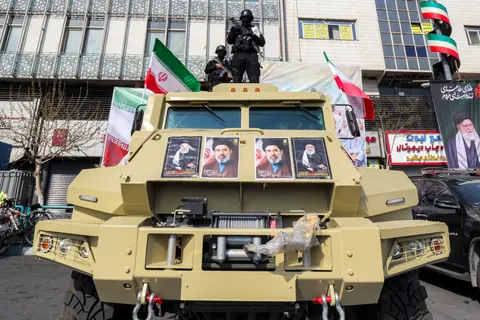
The International Committee of the Red Cross (ICRC) announced on Friday that it had transferred four more people released by Israel to Lebanon, a day after the release of a first civilian. They are three Lebanese nationals and two Syrians, according to the ICRC. This is the first time such an operation has taken place since negotiations between Lebanon and Israel began in April under US auspices. During the last round of talks in August, Beirut had requested the release of a first group of its nationals captured by Israel in southern Lebanon, where Israel is at war with the pro-Iranian Hezbollah. Their relatives estimate their number at around thirty, including fighters from the Islamist movement. In a statement, Lebanese President Joseph Aoun thanked the United States and the ICRC, saying the release "confirmed the soundness of the position" taken by Lebanon, which is engaged in negotiations with Israel that Hezbollah rejects. On Thursday, the United States praised "the government of Israel and the government of Lebanon for demonstrating good faith through these initial steps," expressing hope that this would "serve as a foundation for broader discussions on other civilian matters." The two countries are set to hold another round of negotiations in September, though the date has not yet been set. According to the Israeli prime minister's office, Thursday's announcement "follows efforts by Israel and Lebanon to locate and repatriate the remains of Jewish community leaders who were kidnapped and killed in Lebanon" between 1984 and 1986. Israeli strikes intensify On the ground, Israeli strikes killed three people and wounded 23 others on Friday in southern and eastern Lebanon. Israel stepped up its strikes in the region on Friday, after announcing Thursday evening that it had taken control of the Ali Taher mountain ridge, which had served as a strategic position for the pro-Iranian Hezbollah and overlooks Nabatiyeh, among other areas. The army will now reinforce its positions there in order to "prevent the enemy from retaking the area," said Israeli Defense Minister Israel Katz. A strike also hit the Tyre region, particularly the village of Rmadiyé, according to the National News Agency (NNA). For Trump, the war in Iran is "small potatoes" Regarding the war in Iran, US President Donald Trump sought on Friday to downplay its impact on the United States ahead of the crucial midterm elections. "A lot of people aren't calling it a war. I call it a military conflict, because it's small potatoes for us. It's not a big deal. We did Venezuela, and we did that," he told reporters in the Oval Office when asked about his vice president, JD Vance, who had said the day before that he didn't want to call the conflict a war. With fuel prices surging because of the war and threatening to cost Donald Trump's Republicans their majority in Congress in November's midterm elections, his administration is working to downplay the scale of the conflict. According to the president, the United States is carrying out "targeted strikes," insisting that it is "not currently engaged in fighting." He also claimed that the United States controlled the Strait of Hormuz and had wiped out Iran's armed forces. "What we've accomplished is remarkable. We took control of Venezuela, and we've essentially taken control of Iran," he said.
More Articles
Sort By: NewestOldest
The Libyan Conflict: An Excessive 'Militiafication' of Politics (2/5)

Since the Arab Spring of 2011, Libya has not been undergoing some unfinished transition, but has settled into a lasting state of political dissolution. Far from paving the way for a reconstruction process, the brutal disappearance of Muammar Gaddafi's regime, on the contrary, triggered a long sequence of fragmentation, where armed violence progressively replaced the state as the organizing principle of power, as in Sudan. This series offers a structural reading of the Libyan war as a stabilized and coherent system in itself, embedded in regional and international rivalries, and now capable of eliminating any political alternative that does not fit its logic. Considering the 'militiafication' of Libya as the result of an accidental post-2011 malfunction is at least a hazardous initial premise. The process of normalizing militias has become a kind of structuring logic of the post-Gaddafi 'system.' From the moment the state collapsed without a succession mechanism, armed violence ceased to be just another tool, progressively establishing itself as the central driver of politics. And this shift, far from being caused by a sudden break, settled in insidiously, through successive slips, at the pace of tactical compromises presented as temporary and which, along the way, became irreversible. In the aftermath of Muammar Gaddafi's fall, the revolutionary brigades were initially perceived as transitional security forces, tasked with filling a void while awaiting the reconstitution of national institutions. But this fiction of 'armed transition' rested on the erroneous assumption that violence would agree to disappear on its own once its initial function was accomplished. Not at all! Violence was not instrumentalized by politics; rather, it slowly and inexorably substituted it. Thus, the militias were never demobilized. And for good reason: no authority was able to compel them to do so. Very quickly, they understood that their existence depended neither on legality nor international recognition, but on their ability to control territories, infrastructures, and flows, through military control, obviously, but also economic, social - and sometimes even symbolic control. A militia's authority over a piece of territory - a neighborhood, a port, a ministry, or a bank - is pernicious par excellence, insofar as it makes any governance impossible without it. This process profoundly transformed the nature of power, as the question was no longer who governs... Power became synonymous with blocking and torpedoing, insofar as it aims to prevent others from governing without its consent. In this sense, politics was reduced to a game of armed veto, with each significant actor possessing sufficient capacity for obstruction to hinder any attempt to centralize authority. “Political entrepreneurs” The direct consequence of this configuration has been the devaluation of institutions. Successive governments, whether based in Tripoli or elsewhere, have no longer been evaluated on their capacity to administer, but on their ability to deal with prevalent armed groups. The state budget has become an instrument of co-optation, ministerial posts bargaining chips, and legitimacy has withered in favor of the brutal realism of power relations. Thus, militias have ceased to be peripheral actors to become, in a way, 'political entrepreneurs,' developing rational strategies, investing in alliances, and diversifying their sources of income. The control of migration routes, trafficking, oil installations, or public markets is today the economic 'essence' of Libyan politics, built on the vestiges of a continuously vampirized state reduced to a legal fiction, a 'cash cow,' and a trinket for legitimizing parastatal relations with the outside. Textbook 'militiaism,' in other words. textbook , in other words. Consequently, militias have no interest in fully rebuilding the state apparatus, since a functional state would reintroduce rules, hierarchy, predictability. Meaning. Law. Conversely, a weak, fragmented, permanently negotiable state maximizes their room for maneuver at will. A windfall. Managing an unstable balance Amidst this militia order that has established itself through disorder, governing in Libya now amounts to managing an unstable balance between competing armed groups, each capable of tipping the situation through targeted escalation. And it is according to this logic that the emergence of military figures whose leitmotif is to 'restore order,' purportedly, should be explained. Khalifa Haftar is the perfect expression of the excrescences generated by chaos. His rise to power rests entirely on the promise of a regained pseudo-verticality. However, this promise relies on the same mechanisms it claims to overcome: armed loyalties, external support, war economy, etc. Failing to dismantle 'militiafication,' Haftar simply seeks to centralize it under his own authority. And the attempt partially fails because it collides with other militias that are just as rational, just as locally entrenched, and just as externally supported. The war in Tripoli, in 2019-2020, which produced neither a lasting victor nor state reconstruction, illustrates the impasse of the 'Haftar approach,' in the sense that it constitutes proof of the failure of military force as an instrument for refounding the political order. An adjustment variable The 'militiafication' also has a significant deep social effect: it redefines local hierarchies, values the capacity for violence, and marginalizes civilian elites. Unarmed political actors are thus relegated to the role of secondary mediators or symbolic figures, and their room for action depends entirely on their ability to lean on an armed force, even at the cost of major concessions. In such a landscape of desolation, the civilian population becomes an adjustment variable. Periods of calm do not correspond to pacification processes, but to temporary balances between armed groups. War is never far; it is suspended, never resolved, and this permanent suspension produces a form of normalization of violence, which becomes predictable, integrated into calculations, and accepted as an insurmountable horizon. The only horizon of war is war, war, and again war. The 'militiafication' of Libyan politics is not a fleeting pathology, but the logical result of a precise historical sequence, in this case, the destruction of the state without succession, followed by an implicit delegation of coercion to local actors. Once this threshold is crossed, returning becomes extremely costly. Disarming a militia does not only mean taking away its weapons. The current example of Hezbollah in Lebanon is the most striking proof of this. It also means taking away its role, its income, its social position, and sometimes even its identity. This explains why all attempts at reintegration, disarmament, or security reform fail. 'Militiafication' is no longer a technical problem since it has established itself as a total political fact. And to downplay its importance is to postpone the solution indefinitely, and infinitely prolong Libya's agony. The problem is not an excess of militias stricto sensu , but the absence of a political order capable of rendering them obsolete, useless, laughable. And as long as this order is not rethought from its roots, violence will continue to be the pivot of the system through self-generation. Next article: 'Two Libyas' and an elusive sovereignty Read on the same topic: 2011, Libya in the post-state era

2011, Libya in the post-state era (1/5)
By
Michel Hajji Georgiou
Published

Since the Arab Spring of 2011, Libya has not been undergoing just any unfinished transition, but has settled into a durable state of political dissolution. Far from paving the way for a reconstruction process, the brutal disappearance of Muammar Gaddafi's regime instead triggered a long sequence of fragmentation, where armed violence has, as in Sudan, progressively replaced the state as the organizing principle of power. This series offers a structural reading of the Libyan war as a stabilized and coherent system in itself, inserted into regional and international rivalries, and now capable of eliminating any political alternative that does not fit into its logic. The fall of Muammar Gaddafi in October 2011 is mistakenly presented as a foundational event from which Libya has never managed to recover. However, this reading is simplistic, even misleading, insofar as it assumes that the collapse of the Gaddafi order would have made possible a thwarted transition, hindered by exogenous factors or by the immaturity of local actors. But the reality is more radical: Libya did not fail to rebuild after 2011, because no reconstruction ever truly began. Rather than being reformed, the state was dissolved, without a succession mechanism, replacement architecture, or durable arbitration principle. To understand this, we must return to the specificities of the regime established by Gaddafi, which did not function at all like a classic state. Gaddafi founded his power on an extreme concentration of decision-making, accompanied by a systematic neutralization of institutions and the establishment of an unstable balance between tribes, security apparatuses, and the redistribution of oil rent. A model of tyranny, all in all quite common in the Arab world, which, despite its iniquitous nature, produced a certain order. By destroying it without the slightest thought for minimal continuity, the 2011 intervention paradoxically removed the last center of gravity capable of organizing the political field. Thus, the fall of the tyrant did not free up the Libyan political space as logically it should have. Instead, it created a void of sovereignty. And no actor was able to establish themselves as a legitimate successor to the order established by Gaddafi. The historical oppositions, long fragmented or neutralized, had little in the way of a homogeneous territorial presence or a common institutional project capable of constituting an effective and lasting alternative. The state structures, already fragile, thus collapsed with the regime that contained them. Consequently, violence, until then monopolized and contained by the dictator, dispersed. Gaddafi's lynching, instead of purging Libya of its demons, opened Pandora's Box. Libya entered a new phase, disjointed due to this 'institutional' vacuum left behind by the colonel-Leviathan. True to Gramsci's formula, this in-between, which was neither a classic civil war nor an unfinished post-authoritarian transition, created monsters. Within this post-state space, authority is no longer transmitted vertically. It has fragmented horizontally, according to local and regional power dynamics. An armed recomposition of politics The first years following 2011 have often been described as a period of nascent chaos. But here again, the term is inappropriate, insofar as what was put in place, far from spontaneous disorder, is an armed recomposition of politics. The brigades arising from the insurgency did not disappear after the fall of the regime. They became institutionalized, de facto substituting for the state structure by capturing territories, establishing their control over infrastructure, and negotiating with central authorities already deprived of any coercive capacity. Organized from 2012, the electoral process failed to reverse this dynamic. The elected assemblies formally exist but have no monopoly on force. Legal legitimacy proves powerless in the face of military reality. The vote has therefore ceased to be an instrument of conflict regulation to become a secondary issue, instrumentalized by armed actors who do not depend on it to exercise real power. The result, as in all countries abandoned to the law of the jungle, is that politics now depends on power dynamics, and state actors must deal with those who control the ground. Stripped of its function as an organizing structure, the labeled state finds itself dis-substantialized and reduced to a space where any prospect of relief is knowingly and continuously torpedoed by para-state military organizations. This rise in militia power was accompanied by an equally structuring phenomenon: the capture of rents. Far from unifying the country, oil thus became one of the engines of its fragmentation. Installations, ports, pipelines transformed into levers of pressure, based on the logic that whoever controls a terminal or a strategic road no longer needs to govern the entire country. Their de facto power is based on their capacity for neutralization, blocking, negotiation, and extortion. At this stage, Libya has not, however, plunged into total war. It found itself in a low-intensity conflict, punctuated by acute crises, but structured by local balances. This situation, often described as transitional, has nonetheless gradually solidified. Armed actors have adapted, funding networks have consolidated, and alliances are made and unmade, as no central authority can arbitrate them. The case of Khalifa Haftar It is in this context that the figure of Khalifa Haftar emerged. Haftar's ascent does not follow any coherent ideological project. It can be defined as an attempt to recompose a military verticality in a fragmented landscape. The restoration of the state is not his concern. Haftar offers an authoritarian alternative to anomie, backed by regional support and a promise of order. This promise, however, relies less on institutional reconstruction than on security dominance. The Arab misfortune. The emergence of Haftar confirms that post-2011 Libya can no longer be understood as a unified national space. It has become nothing more than a field of forces where political projects are subordinated to military capabilities and external support. From this point, the Libyan trajectory is largely determined. The absence of state succession in 2011 is not a corrigible accident a posteriori . It constitutes the founding act of a lasting configuration. Beyond classic schemes, one can consider that the war no longer even aims to conquer the state, but to organize its absence. Libya is therefore not in a classic war between factions for power stricto sensu. The protagonists of the conflict are actually waging a war against the very possibility of a central power. And it is precisely this fact that conditions everything that follows: the 'militianization,' the regionalization of the conflict, the intervention of external powers, and this unheard-of, absurd stabilization within instability. Next article: An excessive 'militianization' of politics

A Maritime Future for Lebanon? (1)
By
Jean-Patrick Dayras
Published

Thanks to multilateral cooperation projects initiated within the global framework of the Union for the Mediterranean, could Lebanon become what it deserves to be, a maritime Lebanon? The question requires deep reflection and an exhaustive vision of the situation in which the country struggles in this regard… « For the French, the sea is what they have at their backs when they look at the beach » (Eric Tabarly). France is a maritime state that it misunderstands. The translation of this specificity into a political and budgetary reality is weak. Replace France with Lebanon. It is a maritime state - its history is there - which has not yet made the necessary political and institutional choice. Unifying maritime projects would sustainably bring together all communities. It has the assets. The « common good » would be « the » beneficiary. The history of maritime Lebanon dates back to the Phoenicians (- 3,000 / - 500 BC), a period of the foundational base of port cities (Byblos, Sidon, Tyre, Arwad), of commercial activities with Egypt, Cyprus, Greece, North Africa, the Iberian Peninsula, of offshore navigation, and shipbuilding. The trade of cedar wood, Tyrian purple, glassware and handicrafts contributes to the country's wealth, reinforced by a Lebanese coastline that opens onto the Western Mediterranean. From - 500 BC until the 7 th century, maritime activities developed under different dominations – Achaemenid Persian, Greek, Roman, and Byzantine. The Romans in particular used and developed naval bases. The commercial and logistical capabilities they offered allowed for connections with the empire's trade routes. It was during this period that maritime law was created. Not sovereign, certainly, Lebanon was nonetheless a maritime hub. From the 7 th to the 15 th century, a long medieval and Islamic period, the ports of Tripoli, Beirut, Sidon, and Tyre had significant activity with the entire Mediterranean basin. During the Crusades, they were strategic stakes; coastal fortifications have left visible remains. Maritime competition between Muslim and Christian powers made Lebanon a zone of both exchanges and military confrontations. During the Ottoman period from the 15 th century to the dawn of the 20 th century, the ports remained active despite a loss of importance. Only Beirut stood out and provided the interface with Damascus, Aleppo, and Southern Europe. In the 20th century, Beirut modernized and became a regional hub. Maritime trade developed. The fact remains that modern Lebanon has not completed its maritime transformation. The country relies heavily on sea supplies for most of its trade and provisions. Nevertheless, the absence of its own merchant navy, limited naval capabilities, and insufficient coastal surveillance prevent it from living up to its maritime past, its potential, and its needs. Yet, how many hopes could be fulfilled thanks to the sea. Agreements concerning the delimitation of maritime borders and the EEZ (Exclusive Economic Zone) with Israel, then with Cyprus, have been signed; they make it possible to consider the safe exploitation of offshore resources. Lebanon is a country of the sea; it is time for this maritime state to become capable of exploiting its potential. Lebanon's maritime challenges The challenges of the maritime vocation of the Land of the Cedars depend on several parameters that have been neglected by the authorities for too long. Maritime sovereignty and security, major issues for the surveillance of territorial waters, the EEZ, and maritime borders, as well as for the fight against military threats, trafficking, and illegal fishing, receive little support. Furthermore, Lebanon has a critical maritime dependence: 80 to 90 % of imports pass through the sea; the vital port of Beirut has been in a weakened position since August 2020 - slow reconstruction and contested governance; the port of Tripoli, an alternative hub, is underutilized and too close to Syria; Sidon and Tyre have only limited regional functions. The challenge is technical, institutional, and political. Regarding offshore resources, the hope is real but long-term. The potential is uncertain and depends on foreign companies, while the security of installations, attractiveness for investors, the legal framework, and political stability must be defined and assured. Exploitation will only be guaranteed by reliable and credible maritime capabilities. In addition, taking into account the environment (fighting pollution), means of ensuring maritime safety (sea rescue), to which is added the protection of the coastline, are essential. It must be noted in this context that maritime governance is imperfect: absence of an integrated national strategy; multiplicity of actors (Lebanese navy, Port Authorities, Ministries of Transport, Defense, and Environment). It is evident that strategic coordination between these actors needs to be perfected. In summary, Lebanon suffers from a somewhat difficult maritime situation: a short and dense coastline, a fragmented maritime strategy, a very weak merchant navy, a limited and defensive military navy, no naval industry, no regional influence. Possibilities exist Lebanon has a beautiful and rich maritime history, but what strategy is being pursued in this area? Negotiations on the EEZ do not answer such a question. However, the potential exists. Malta and Cyprus are two maritime countries with a territorial extent comparable to that of Lebanon. They nevertheless have a developed maritime flag, attractive regulation, and an ambitious and effective maritime strategy. They thus prove that even small countries can be important maritime actors. A maritime Lebanon, an illusion ? Despite chronic political instability, low public investment, and recurrent security unrest, the assets that would allow Lebanon to develop its maritime vocation do indeed exist: an exceptional geographical position, a historically structuring coastline, human capital, and a potential maritime diaspora. In such a context, what strategy should be developed to give new life to this vital sector? Next article: Maritime projects in Lebanon, with the Union for the Mediterranean?

Museums in Iran: a Heritage Under Siege (1/2)
By
Micha Moussallem
Published

Since the increase in regional tension, the strikes targeting Iran in 2025, and the latest popular uprising in Iranian cities, authorities have multiplied emergency measures around museums. The aim was to protect invaluable heritage from the risks of bombing, sabotage, or even looting. Concretely, this translated into prolonged closures, reduced hours, meticulously supervised visits, and the discreet transfer of some major pieces to secret reserves. This bunkerization reflex is part of a deeper and older climate of tension and crisis, marked for decades by a tightening of the cultural space throughout the country. Museums Caught in a Vice Cultural institutions are currently caught in a double bind: the threat of war, internal upheavals, and the diplomatic and ideological priorities of the government. Indeed, the Islamic Republic seeks, on the one hand, to promote an identity strategy based on a reinterpretation of Persian nationalism, and on the other hand, to counter 'Iranophobia' by emphasizing its heritage, historical depth, and artistic production. Iran's entire cultural and art policy adheres to this new identity strategy, perfectly illustrated by the Museum of the Islamic Revolution and Sacred Defense in Tehran, which combines memorial, political education, and tourist product. Internationally, acquisitions, loans, and exhibitions of Persian artworks constitute major events, such as the loan of the invaluable Cyrus Cylinder (539 BC) or the exhibition « Forgotten Empire: The World of Ancient Persia », organized by the British Museum a few years ago…etc The government of the Islamic Republic uses these events as tools of cultural diplomacy to serve its ideological priorities, which sometimes creates a field of tension and political blackmail. Iran's archaeological heritage is very rich, and its museums are numerous (over 800), including the National Museum of Iran, the Museum of Contemporary Art, the Golestan Palace…etc. We have chosen two museums in Tehran that are typical of Iran's history: The Treasury or National Jewelry Museum and the National Museum of Iran. The National Jewelry Treasury Inaugurated in 1937, during the Shah's era, as a showcase of monarchical power, the National Jewelry Treasury of the Shahs brings together the legacies of the Safavid, Afsharid, Qajar, and Pahlavi dynasties: crowns, inlaid thrones, extravagant adornments, legendary diamonds… It is located in the basement of the Central Bank of Iran's headquarters on Ferdowsi Street, Tehran. It is legally attached to the Central Bank, which is its legal custodian. In the 1930s, the value of the collection was such that it served as a reserve for the national currency. Even today, part of the currency's legitimacy symbolically rests on this stock of physical assets, which cannot be valued at market price. Fabulous Jewels The collection includes invaluable pieces, among which are the Kiani Crown of the Qajar rulers, emblematic of the 19th-century Persian monarchy, or the Pahlavi Crown used for the coronation of Reza Shah and Mohammad Reza Pahlavi, made of gold and silver, set with thousands of diamonds, emeralds, rubies, and rare pearls. In addition to these precious pieces are fairy-tale thrones like the Peacock Throne which is a solid gold Qajar throne, covered with diamonds, rubies, emeralds, and pearls, a major symbol of Persian royalty. It takes its name from a peacock motif or from the nickname given to Fath Ali Shah. The treasury also includes a Terrestrial Globe of 34 kg of gold and approximately 6 kg of precious stones, diamonds, rubies, and emeralds to illustrate the seas and lands of the globe. Not to mention the Shield and Sword of Nader Shah made of rhinoceros hide, 46 cm in diameter, also covered with diamonds, rubies, and emeralds, with one of the world's largest rubies (approx. 225 carats) at the center of the shield, as well as countless adornments, swords, shields, ceremonial objects, and tableware made of precious metals.. and extremely rare precious stones like the famous pink diamond Darya-ye Noor (or Sea of Light) of 182 carats, considered the world's largest pink diamond, etc. All these jewels tell of opulence and wealth, but also the extravagance of a monarchy that measured itself against European courts. After the Revolution, the Islamic Republic converted this symbol, which it considered 'reviled,' into a 'national treasure,' now meant to embody the wealth of the nation rather than that of a single family. In our next article, we will talk about the National Museum of Iran and the (difficult) role that museum curators are called upon to play.

Harirism Confronted with the Challenge of Renewal
By
Michel Hajji Georgiou
Published

Saad Hariri bears something of a cursed hero from a Greek tragedy. Twenty-one years after the assassination of Rafik Hariri, Saad returns to a city that no longer quite resembles the one he left behind. The centers of decision-making have shifted. He knows this well. Saudi Arabia, which once contributed, under the leadership of Fahd and later Abdullah, to anchoring Rafik Hariri on the Lebanese stage, has for nearly a decade multiplied negative signals toward Saad. Saudi media outlets have widely expressed their dissatisfaction at the prospect of his relaunching his political movement after four years of suspension. Harirism, once the backbone of post-war Lebanese political Sunnism, now faces a question both simple and formidable: does it still have a historical function? The Rafik Hariri dynamic was born of a conjuncture that combined an economic project, a diplomatic wager, and an identity posture. He embodied a moderate Sunnism, backed by the Kingdom, open to markets, speaking the language of Western chancelleries, and presenting itself as the interface between Lebanon and the world. From the Oslo process to the post-September 11, 2001 configuration, Hariri was an absolute necessity for the Sunni Arab-Islamic world and for the West. The objective alliance of minorities, from Israel to Iran, viewed him, for its part, as the enemy. His assassination by the Damascus-Tehran axis triggered an unprecedented cross-communal sovereignist popular surge in Lebanon, anchoring Harirism as a symbol of Lebanese independence. This entire architecture, inherited by Saad, gradually collapsed. And not solely because of his poor political and business calculations, nor because of his highly questionable management of power. Saudi Arabia is no longer what it was in the 1990s, nor what it was in the aftermath of March 14. It no longer seeks to sponsor a Lebanese current as one maintains an outpost of influence. Instead, it reasons in terms of broad regional balances, strategic repositioning, and competition with Ankara and Tehran. In this new game, Saad Hariri is no longer a central piece. At best, he is a secondary actor in a scene being redrawn elsewhere. And despite his undeniable base in Lebanon, he knows it. The Sunni center of gravity in the Middle East has shifted. The emergence of Ahmad al-Chareh as a rising Sunni figure, endorsed by Riyadh and Ankara with a form of international blessing—irony of fate, to play the very role that Rafik Hariri was once asked to assume within the Oslo framework—profoundly alters the equation. For the first time in decades, the Levant is witnessing the affirmation of a non-Lebanese Sunni leadership capable of combining religious rootedness, political skill, and external recognition. Whether this synthesis proves durable and truly convincing matters less than the signal it sends: the symbolic monopoly of moderate and modern Sunnism no longer passes through Beirut. Within this configuration, Harirism now appears somewhat as the expression of a bygone moment. It was the child of an era in which the Arab world oscillated between military authoritarianisms and radical Islamisms, when it rightly presented itself as a third way. Today, the lines are being redrawn differently. The fall of the Syrian regime, the weakening of the Iranian axis after October 7, 2023, and the redefinition of regional alliances have opened a new space. That space no longer seems structured around a centralized Lebanese Sunni leadership, but rather around an areopagus of figures, notables, and dispersed political entrepreneurs. This, at least, appears to be what Riyadh desires, despite the manifest feeling of abandonment and marginalization experienced by Sunnis within the current Lebanese political equation—and despite Sunni grievances toward Saad Hariri and his management of power, particularly since 2016. Yet the crisis of Harirism goes beyond the regional question and touches upon its internal model. The Hariri project rested upon an implicit equation: economic development in exchange for a partial renunciation of sovereignty. As long as the Syrian tutelage locked the political field, the objective was to build within the interstices. After 2005, the attempt was to transform a sovereignist movement into a governing majority. The experiment ran up against Hezbollah’s violence, the divisions of March 14, and then unfortunate strategic choices, among which the wager on the Aoun presidency and a murky status quo with the Iranian camp remains the most emblematic. That wager broke something. It undermined the credibility of a current that had presented itself as a bulwark against Iranian hegemony and that found itself, through calculation or fatigue, endorsing an institutional architecture dominated by Hezbollah. Saad Hariri’s withdrawal from political life completed the dispersal of his ranks. His return therefore raises an existential question: can one return without reinventing oneself? The problem, moreover, does not concern Saad Hariri alone—even if other political forces, focused on forthcoming power struggles, do not seem to realize it. For the decline of Harirism is not isolated. It forms part of a broader erosion of the forces inherited from the war and the post-war period. Aounism consumed itself in the exercise of power. Hezbollah, despite its postures, faces an unprecedented and essential strategic weakening. Even other charismatic figures seem suspended in a temporality that is no longer theirs. Lebanese politics resembles a theater in which yesterday’s actors still recite their lines while the audience has changed plays. These forces founded their legitimacy within a political continuum that no longer exists, with the disappearance of the Assad regime and Tehran’s return to its proper dimension. The real question therefore transcends the fate of a single current. It concerns the perennial issue of elite renewal. Who could take up the mantle? Who could formulate a project that is neither a repetition of past compromises nor the illusion of a romantic clean slate? The advent of a president initially welcomed as a deus ex machina, followed by a prime minister praised for his probity and non-belonging to traditional elites, generated for a time a wave of enthusiasm, now dissipated, overtaken by local, regional, and international realities. The myth of the savior dies hard in Lebanon, where habit—or even voluntary servitude—continues to prevent the emergence of a political class capable of breaking with archaic patterns. The current electoral law, broadly designed to preserve the most rigid confessional balances, functions like a wax museum of the past, preventing the emergence of solid transversal forces, of a parliamentary majority, even of a government program. Within this context, Harirism has two options. It may attempt to reconquer its former status by relying on nostalgia and communal mobilization. That dynamic still exists—the memory of Rafik Hariri, even a certain loyalty to Saad as an anchor point in the current desolation, continues to operate. Or it may understand that it must reinvent itself in order to contribute to a collective project of refoundation. The first path may appear, on the surface, the most comfortable and safest—but beware of mirages. The second is the riskiest, because it requires a critical examination of past errors and a redefinition of the relationship between economy, sovereignty, and the state. Saad Hariri’s return—if it materializes concretely and if elections indeed take place within the prescribed timeframe—is, in this sense, more than ever a test. For him first: will he be able to read the moment without mistaking the era? For the political class next: will it understand that the near-general decline of forces born of the war opens a dangerous space in which the absence of credible elites may generate either chaos or a new authoritarianism disguised as stability? For the electorate, finally. It is not only Hariri who must ask “what went wrong,” but an entire system-society that endlessly reproduces itself through the same tropes—including its various oppositions. These lines may sound like the gentle utopia of a dreamer in a fractured world and a highly seismic region. And yet, even if the sky has not yet turned blue, Lebanon truly stands at a crossroads and must choose between rearranging the old world—redistributing cards among tired actors—or venturing into genuine renewal beyond the old patterns designed to soothe the anxieties of a pseudo-mimetic violence that exists only because of power appetites… of those who claim, through their authority as communal leaders, to contain that very mimetic violence. For such renewal to be possible, women and men must emerge—credible, transparent, authentic, measured, and capable of carrying a project greater than their community. The time of responsibility requires men and women for others— all others , without exception. It requires the promotion of openness and of a culture of connection in a world compartmentalized and terrified by reciprocity and alterity. It is the only way truly to make Lebanon, in the twenty-first century, a political and cultural exception.

Iranian Arrogance or the Saddam Syndrome
By
Khairallah Khairallah
Published

With each passing day, it becomes increasingly clear that the Iranian regime, now forty-seven years old, is currently facing only two options, with no third alternative available. Either it surrenders to American conditions, which do not differ significantly from Israeli conditions, or it faces a war with the United States from which Iran would not emerge unscathed. Is the “Islamic Republic” capable of acknowledging that there is no escape from dealing with the new reality in the region, instead of persisting in arrogance in the manner of Saddam Hussein? At the beginning of 1991, Saddam, the ruler of Iraq, believed that he would be able to negotiate with the United States on equal footing, despite the fact that the position of the administration of George H. W. Bush was perfectly clear. He was left with only two choices: withdraw from Kuwait unconditionally, or expose Iraq to a war that would return it to the Stone Age. The late Iraqi ruler did not understand the region, the world, or the meaning of balances of power. It is not the habit of the United States to deploy a military force of the scale it has deployed in the Middle East and the Gulf merely to stage a symbolic display of strength. A country the size of America does not move such power without clearly defined objectives. These objectives consist of reaching an agreement with the “Islamic Republic” that includes, at a minimum, ending the Iranian nuclear program, ending the ballistic missile program, and dismantling their launch platforms. The missiles are important, and the platforms are equally important, if not more important. There remains a third condition related to Iran’s regional arms. The most prominent of these arms is Hezbollah in Lebanon, which continues to practice stubbornness while ignoring that it has lost the “Gaza support war” and that its weapons have never been anything other than weapons serving Israel and serving everything that can contribute to the destruction of Lebanon. The most striking example of this remains the assassination of Rafiq Hariri in these very days of the year 2005. The party, which is nothing more than a brigade within the Iranian Revolutionary Guard, assassinated Rafiq Hariri in order to eliminate a serious attempt to return the country to the regional map and to halt its use as a card in the promotion of the Iranian expansionist project toward the Mediterranean. A second American aircraft carrier will arrive in the region: the Gerald Ford. It will come to join another aircraft carrier already present in the Gulf, the Abraham Lincoln. There are American intentions that cannot be ignored. Iran will have to submit, either peacefully or by force. It cannot be ignored that the “Islamic Republic” has lost all the wars it has fought on the margins of the Gaza war that erupted on October 7, 2023. There is no need to repeat that the jewel of the Iranian expansionist project, namely Hezbollah, no longer exists in the form it once did. The party now possesses nothing but the card of threatening the Lebanese with civil war in the context of its attempt to retain its weapons, despite the fact that it has been proven that these weapons are of no notable use when it comes to confronting Israel. Moreover, the party refuses to acknowledge that Syria is no longer under Iranian dominance. At the beginning of 1991, a meeting was held at the Intercontinental Hotel in Geneva between the American Secretary of State James Baker and the Iraqi Foreign Minister Tariq Aziz. Baker explained to Tariq Aziz and to the delegation accompanying him that there was no room for negotiation and that Iraq had no option other than withdrawal from Kuwait. The Iraqi minister read the letter handed to him by the American Secretary of State, then left it on the negotiating table, claiming that the language used made him unable to transmit the message to Saddam Hussein. The letter remained in its place. I personally saw it lying on the table in the room where James Baker and Tariq Aziz had met. I later learned that this historically important letter is still preserved in the hotel’s safe. Has Iran understood, in light of the negotiations that took place in Muscat between its Foreign Minister Abbas Araghchi and the American delegation composed of Steve Witkoff and Jared Kushner, that there is no possibility of betting on differences between the United States and Israel? Has it understood that there is no escape from recognizing that the file of ballistic missiles and their launch platforms is no less important than the file of the Iranian nuclear program and the file of the arms affiliated with the Revolutionary Guard in this Arab country or that one? The regime in Iran has no choice other than seeking to benefit from the experience of Saddam Hussein, whose political blindness prevented him from understanding the meaning of the United States assembling a military force in the Gulf immediately after the Iraqi army’s occupation of Kuwait. Saddam believed that America was joking and that his army was still capable of holding out in Kuwait. He never understood balances of power. What is alarming in 2026 is that Iran appears to be committing the same mistake that Saddam committed in 1991 and repeated in 2003 when George W. Bush and his aides decided to remove him from power. What further complicates matters in Iran is the internal situation in the country. External failure is accompanied by internal failure at every level, particularly in the economic sphere. It is not true that there is an Iranian majority that embraces the slogans launched by the regime. There is an Iranian majority that prefers a culture of life over a culture of death. If this were not the case, the Iranian people across the country would not have been in revolt against the regime since the beginning of the year. There is no doubt that American intelligence services are fully aware of what is taking place in Iran, as is Israel, which had already realized in 1979 that the Shah’s regime had ended and called upon Iranian Jews to leave the country. Most Jews left Iran at that time in response to the instructions of the Israeli embassy, headed then by Ori Lubrani. Within a few weeks, it will become clear whether the Iranian regime has chosen to follow the path of Saddam Hussein or the path of prudence, which requires acknowledging that there is an inevitable price to be paid as a consequence of losing wars, just as Germany and Japan did at the end of the Second World War.