
Levant Time logo

Articles

News feature image
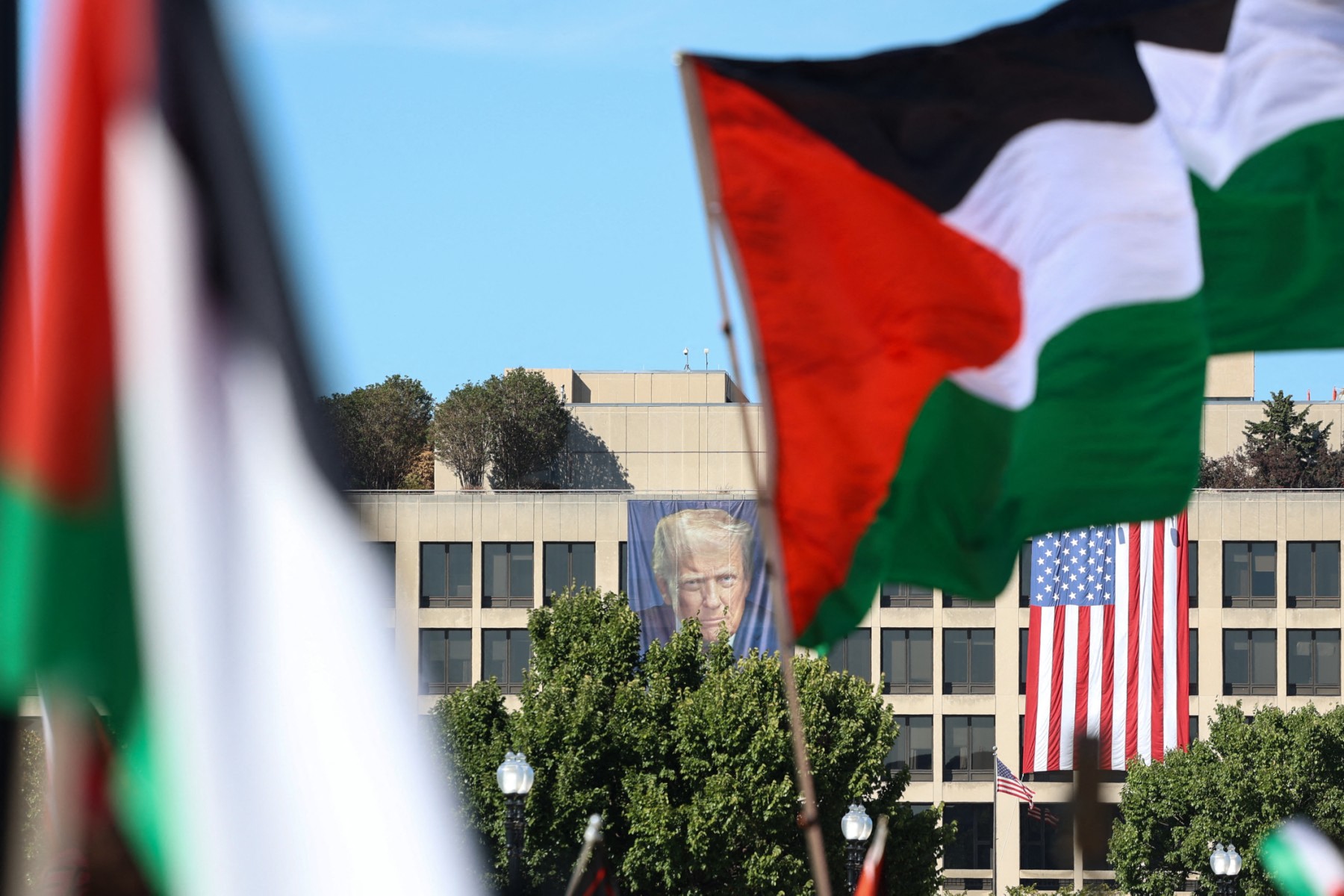
Photo ALEX WROBLEWSKI/AFP
An Eye on the Event
Author portrait
By Hisham Dibsi
Published Oct 24, 2026 - 03:28
Had my father not been forced to seek refuge in Lebanon and leave the city of Acre, which has no fear of the sea, I would today be actively engaged in election campaigns, like my cousins who hold Israeli citizenship. Instead, I carry a refugee identity document in Lebanon that offers me no opportunity to exercise my right to vote. My daughter, however, who holds American citizenship, argues with her Republican-leaning husband, pointing out that the Democrats are no better when it comes to either domestic or foreign policy. During election seasons, talk of national sovereignty, independence and prosperity abounds. Red and yellow lines are drawn to distinguish domestic from foreign policy, supposedly demonstrating the grandeur and nobility of national sentiment and an exceptional commitment to sovereignty.
Composed gaze
Author portrait
By Rami Rayess - Published Oct 24, 2026 - 02:43
News feature image
Photo RABIH DAHER/AFP
Political interests often produce the strangest alignments. Some of these are so illogical that they are difficult to understand or even comprehend. Yet they are very real. There is an enormous gulf between how politics is practiced and how it is understood in theory. This perhaps explains many of the phenomena we are witnessing in Lebanon today. Over nearly two decades, Lebanon has gone from being a country that liberated its territory from one of the region’s most powerful and bloodiest armies, without conditions, a peace treaty, or even an agreement on security arrangements, to a state where five hills were occupied, followed by some 60 villages. Their homes have been completely razed, and more than 200,000 residents have been displaced, leaving these communities almost entirely emptied, with little or no prospect of their return in the foreseeable future.
Decryption
Author portrait
By LevantTime . - Published Oct 24, 2026 - 01:10
News feature image
This photo montage created by AFP shows two armed Palestinians during an exchange of gunfire with Israeli forces, followed by Israeli soldiers gathered near their bodies after the incident, at a checkpoint in northern Hebron in the occupied West Bank on October 23, 2026. (Hazem Bader/AFP)
Israeli Prime Minister Benjamin Netanyahu announced a large-scale military operation in the West Bank on Friday, following an armed attack by two Palestinians on an Israeli army post near Hebron, in the south of the occupied Palestinian territory. Two soldiers were killed and three others wounded. Both attackers were shot dead. Visiting the scene, Benjamin Netanyahu immediately ordered the West Bank sealed off as part of an operation that, he said, would involve evacuating residents, systematically searching homes and destroying infrastructure that Tel Aviv considers linked to armed groups. With Israel's parliamentary elections just four days away, on Tuesday, could Netanyahu be seeking to exploit the Palestinian attack? The question arises in light of its repercussions. Had the attackers wanted to give him an electoral advantage, however small, they could not have chosen a better time.
More Articles
Sort By: NewestOldest
Leon XIV and the Lebanese Exception
By
Youssef Mouawad
Published

What a source of concern—and even of irritation—for Roman authorities, these Eastern Catholics do indeed generate! Had they vanished from the Levant, diplomatic relations between Rome and the Muslim countries of the Eastern Mediterranean would have been far smoother. That being said , things were never simple for Vatican diplomacy, on dealing deal with the Maronite community. Very early on, the Maronites asserted themselves politically as an autonomous entity rooted in a mountain stronghold, and what is more they never hesitated in insisting upon their distinctiveness. This set them apart from the other Christian communities of Syria and Iraq, which had long submitted to the rule of the majority and produced, for the most part, quiet individuals and compliant citizens.

The Pope in Lebanon: Without Peace, the “Message-Country” Will Not Survive

Pope Leo XIV is set to bring a powerful message to Lebanon: “Blessed are the peacemakers.” A unifying call, with deep religious resonance, that resonate cross its religious communities, while carrying a clear political weight for a country exhausted by decades of conflict – a nation for whom the time has come to leave the tunnels of violence behind and step into the light of peace. Firstly: Supporting the Christian Presence and Affirming Its National Role This message stems from the Holy See’s careful attention to what Lebanon has endured – and continues to endure – particularly its Christian population. For the Vatican, Lebanon is the most sensitive “laboratory” in the Middle East for Muslim–Christian coexistence, and a potential model of what John Paul II, three decades ago, described as a “message-country.”

/