

Videos
Reportage
'%3e%3cpath%20d='M29%2034.583C29%2031.4004%2027.7884%2028.3482%2025.6317%2026.0977C23.4751%2023.8473%2020.55%2022.583%2017.5%2022.583C14.45%2022.583%2011.5249%2023.8473%209.36827%2026.0977C7.2116%2028.3482%206%2031.4004%206%2034.583'%20fill='%23083D77'%20fill-opacity='0.12'/%3e%3cpath%20d='M17.5%2022.583C21.6421%2022.583%2025%2019.2251%2025%2015.083C25%2010.9409%2021.6421%207.58301%2017.5%207.58301C13.3579%207.58301%2010%2010.9409%2010%2015.083C10%2019.2251%2013.3579%2022.583%2017.5%2022.583Z'%20fill='%23083D77'%20fill-opacity='0.12'/%3e%3c/g%3e%3c/svg%3e)
By Maxime Pluvinet - Published Jun 2, 2026 - 14:41
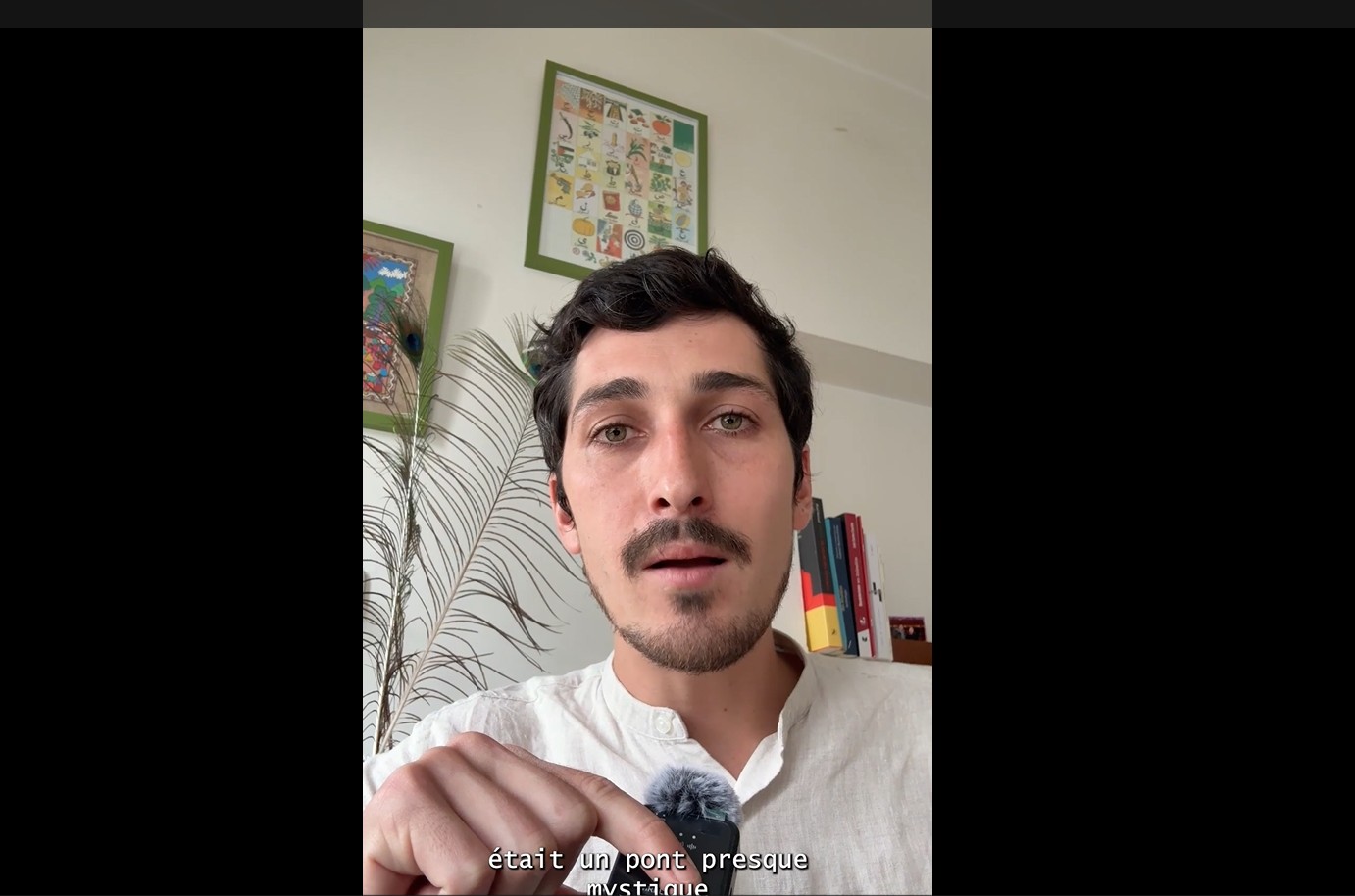
An emblematic figure of the Holy Valley of Qadisha in northern Lebanon, high in the mountains of Bsharri, Padre Dario Escobar passed away a few days ago at the age of 92. Born in Medellín, Colombia, in 1934, he chose to leave behind the comfort and privilege of his affluent family background to come to Lebanon in the early 2000s, join the Maronite Church, and live as a hermit at the Sanctuary of Our Lady of Hawqa in Qannoubine. Before embracing the hermit's life, he received a solid academic education in theology, psychology, and Biblical Greek in Colombia. He then devoted himself to contemplation and religious life in the solitude of the Qadisha mountains, which will preserve the memory of the hermit Escobar, who came from the distant land of Colombia. Report by Maxime Pluvinet.
s
Reportage
By Maxime Pluvinet - Published May 26, 2026 - 20:57
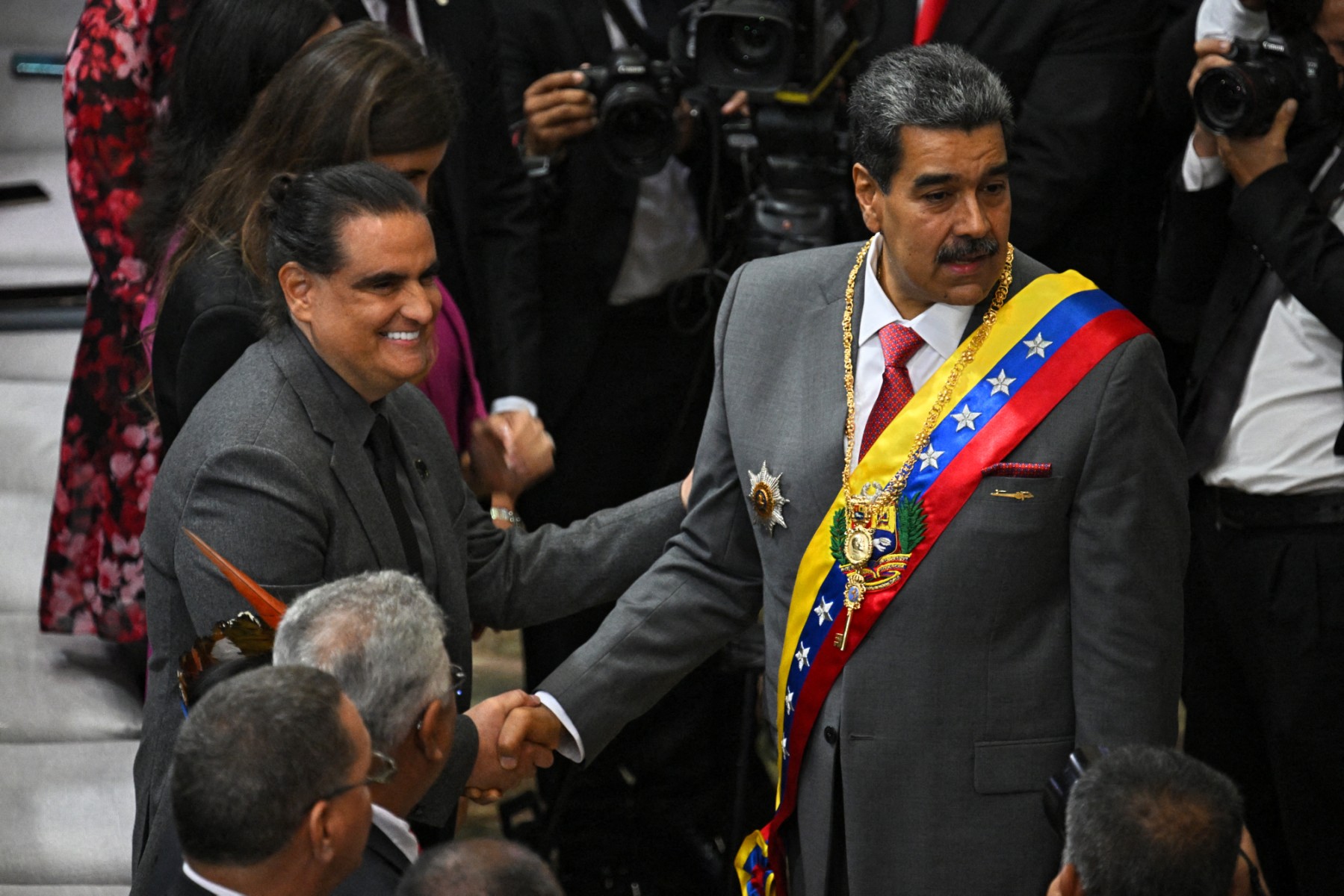
Alex Saab, a Colombian of Lebanese origin and key figure in Venezuelan government under Nicolás Maduro, was expelled to the United States five months after the ousted president's capture by the U.S. military, for his involvement "in various crimes in the United States of America, as is public, notorious and widely reported by the media," according to a statement from Venezuelan immigration authorities. Alex Naim Saab Moran had grown close to the Venezuelan government during the final years of Hugo Chávez's administration (1999-2013) and had come to manage a vast import network for Nicolás Maduro's government. He was considered a key intermediary for the regime as the country struggled to adapt to international sanctions. He was notably responsible for importing products for the social program providing subsidized food sales, known as Clap, which was marred by corruption accusations. Saab was arrested during a stopover in Cape Verde in 2020 and extradited to the United States in 2021, which accused him of diverting food aid and money laundering on behalf of Maduro. He was exchanged in December 2023 for ten Americans imprisoned in Venezuela. A release that Maduro, captured on January 3 by the U.S. military, had then called a "triumph." Saab was welcomed with great fanfare upon his return and was subsequently appointed minister. Delcy Rodríguez, former vice president under Nicolás Maduro, took the reins of power after his capture and sidelined Saab from the government, also removing his Italian wife Camila Fabri from her positions. Under pressure from Washington, she implemented numerous changes, adopting an amnesty law to release political prisoners and reforming the energy sector to open it to private investment.
02:08s
Reportage
By Maxime Pluvinet - Published Mar 28, 2026 - 15:00
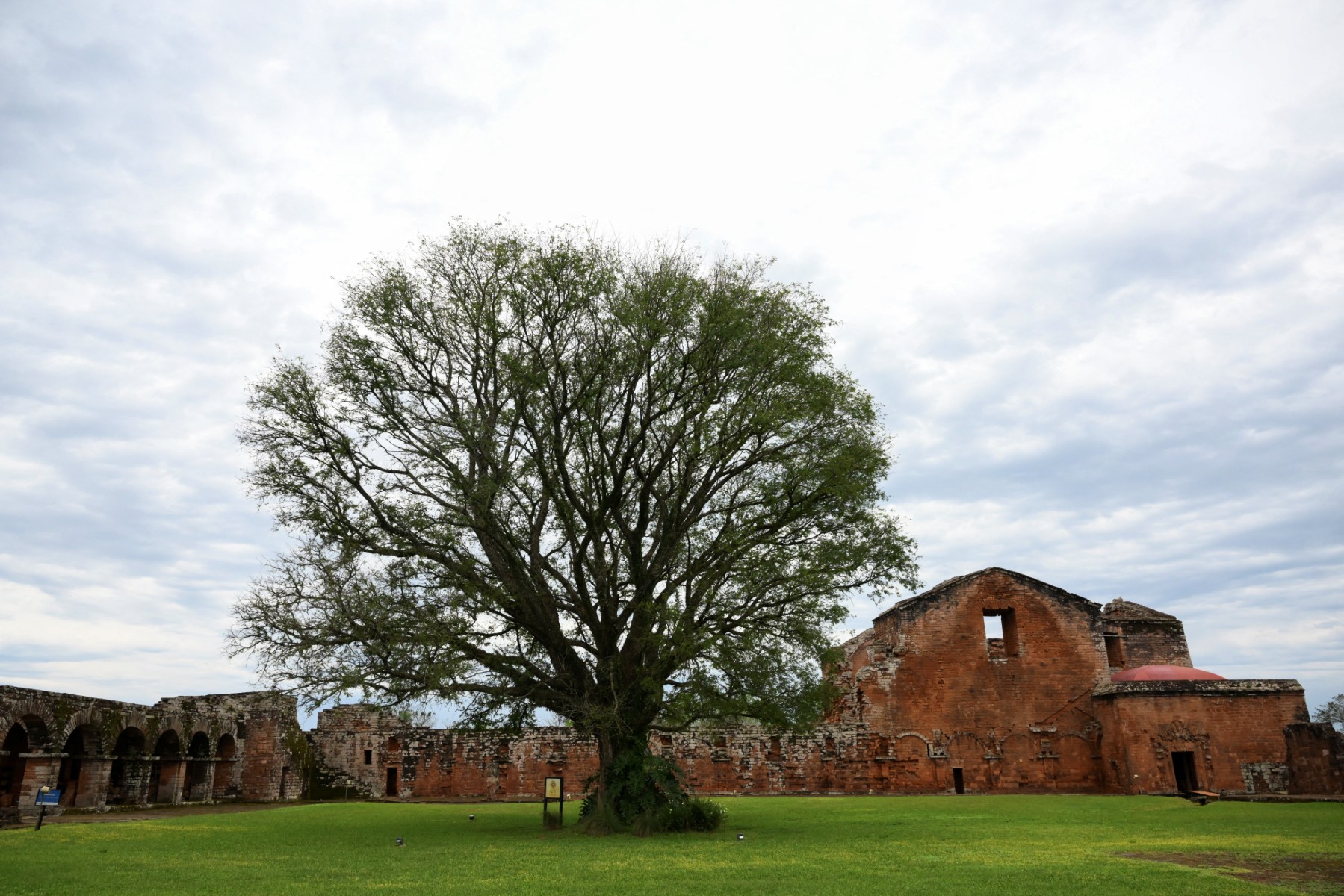
In the Argentine province of Misiones, at the remote crossroads of Argentina, Paraguay and Brazil, the remnants of Jesuit missions tell a story of cultural blending, resistance and singular social utopias. From the ruins of San Ignacio to present-day Guaraní communities, Levant Time traces the path left by Father Sélim Abou, former rector of Saint Joseph University, whose fieldwork sheds light–far beyond Latin America–on contemporary questions of identity and coexistence, reaching as far as Lebanon. On this March 19, Saint Joseph’s day–the patron saint of USJ–Levant Time presents Maxime Pluvinet and Miroslava Salazar’s report from Latin America, following in the footsteps of Father Sélim Abou. In the heat of the old mission lands, where red laterite roads dissolve into the forest and the Paraná River traces uncertain borders between Argentina, Paraguay and Brazil, fragments of history endure–never entirely erased by time. They are stones, voices, memories. And at times, human journeys that bridge worlds once thought irreconcilable. Father Sélim Abou, S.J., who died in Beirut in 2018, was one such figure, whose path extended well beyond national borders. A leading anthropologist, a key thinker on pluralism and Lebanese identity, and former rector of Saint Joseph University, he was also, for more than half a century, deeply connected to a remote corner of South America: Argentina’s Misiones province. n these settlements, a hybrid society took shape–neither fully European nor purely Indigenous–built on collective organization, an autonomous economy, and the central use of the Guaraní language. When the young Lebanese Jesuit Sélim Abou first encountered these ruins at Christmas in 1961, at the age of 33, the impact was immediate. Having arrived in Argentina to complete his training, he visited San Ignacio Miní, now designated a UNESCO World Heritage site. Standing before what he would later call “the silent testimony of stone,” he experienced a kind of intimate recognition: the sense of a dialogue between cultures made possible–fragile, yet real–confirming him in his Jesuit vocation. The moment proved revelatory. An intellectual heir to the anthropologist Roger Bastide and Father Albert de Jerphanion, who was killed at the outset of the Lebanese civil war, Father Abou found in the Jesuit-Guaraní experience a confirmation of his calling: to understand how plural identities might coexist without dissolving into one another. A Jesuit Utopia? More than sixty years later, in Posadas–the provincial capital looking out over the Paraná River–this memory endures in unexpected places. The Instituto Montoya, named after a celebrated pioneer of the Jesuit-Guaraní enterprise, became a second home for Sélim Abou. It was here that he began teaching in the 1960s and returned regularly over three decades. It is also here that many of his archives are preserved. In a quiet room on the upper floor of his Apostoles residence, amid photographs and original works by Sélim Abou, Dr. Marisa Micolis carefully handles documents accumulated over more than fifty years. A friend, colleague, and former student of “Father Abou,” she recalls a man for whom long-term perspective was a necessity. “Today,” she says, reflecting on the half-century she has devoted to education, “people think excellence appears out of nowhere. But human beings are made for the long term.” In one photograph, the young Jesuit smiles alongside his brother Habib. In another, an icon of the Virgin before which he prayed daily. Nearby lies a copy of his 1961 work on Arabic-French bilingualism–his first major contribution in Buenos Aires. To grasp what left such a deep mark on Father Abou, one must cross into Paraguay. In San Ignacio Guazú, Father Daniel, curator of the Jesuit museum, sums up the experience of the reductions without romanticizing them: “There is no perfect society. But compared with the world of its time, the Jesuit-Guaraní society genuinely created something new.” He recalls the figure of Roque González de Santa Cruz, a Jesuit born in Asunción in the 16th century and a fierce opponent of the encomienda system. Along with other missionaries, he advocated for Guaraní communities to exist as free societies, protected from the slave raids that devastated the region. This project was not an exercise in abstract utopia, but a historical compromise. The Guaraní gained a measure of autonomy; the Jesuits found fertile ground for evangelization. Between the two, an original culture emerged. Even today, in Paraguay, Guaraní is an official language–a direct legacy of these communities, where it was not only spoken but also written and taught alongside Spanish and Latin, as evidenced by the many printed works produced within the reductions themselves. In the church of Santa María de Fe, a small town near San Ignacio Guazú, a guide points out a sculpture of Saint George slaying a dragon. Here, however, the dragon takes the form of the aña, a figure of evil in Guaraní cosmology. On another motif, the passion fruit, an Indigenous symbol of fertility, converses with the Christian vine. Everywhere, traces of cultural hybridity remain–an experiment prematurely crushed by the expulsion of the Jesuits from the continent, following a political agreement between crowns: the sacrifice of an ideal for decidedly earthly interests, the last hopes of which are vividly dramatized in Roland Joffé’s 1987 film The Mission. 1978: The Heart and the Request Yet Father Sélim Abou’s connection with the Guaraní was not limited to a fascination with the past. It took tangible form in 1978, during a singular event: the transfer to Posadas of the relic of the heart of Roque González, the Paraguayan saint martyred in 1628 and founder of the city, commemorating his sacrifice. Members of the Mbya-Guaraní people came to venerate it. For them, this missionary was more than a religious figure–he was “a friend of their ancestors.” They made an unexpected request. In the forest, during a meeting with Bishop Jorge Kemerer and professors from the Instituto Montoya, the Pa’i (spiritual leader) Antonio Martínez was asked what his people needed. Three times, he replied that they needed nothing. But after Bishop Kemerer insisted, he clarified: “I want a school for my grandchildren. I don’t want them to be like me–without papers, without a language in common with you.” That statement marked a turning point. Thus was born an unprecedented project: the creation of Guaraní communities with bilingual schools in Fracrán and Perutí. Father Sélim Abou committed himself fully. For twelve years, he supported and documented the initiative, which he would describe as a “microscopic-scale revival” of the old reductions. But without nostalgia or illusion: the goal was not to replicate the past, but to invent a contemporary form of coexistence. Javier Villalba, chief of Perutí, recalls: “He built a bridge between himself and our grandparents. He was like an advisor… and even like a father.” Across the testimonies gathered, one trait recurs consistently: humility. Sélim Abou did not come to impose a model. He learned, observed, accompanied. He respected social structures, beliefs, and language. He lived among the people, sharing their daily lives. “He was like us,” Villalba recalls. From Misiones to Beirut: “Cultural Resistance” In Fracrán–today renamed in honor of Pa’i Antonio Martínez–the school still stands. Children there learn both Guaraní and Spanish. Catalino Martínez, grandson of the founding chief, emphasizes the initiative’s political significance: “My grandfather wanted our people to keep moving forward, even after his death.” The experience helped lay the foundations for local institutions, such as a Guaraní affairs office. It also left a subtler imprint: a way of thinking about development without erasing identity. For Father Sélim Abou, the experience resonated with his reflections on Lebanon. In a 2006 interview with France Culture, he highlighted the contrast between a Lebanon fragmented into communities and an Argentina striving to build a unified nation despite its diversity. In both cases, the same question arose: how can a society be built without denying differences? How can cultural specificities live and thrive without becoming the basis for a separate political agenda? For what Sélim Abou experienced here, in the forests of Misiones, he was simultaneously thinking about Lebanon. As an anthropologist of identities, he devoted his work to this central question. In Lebanon, the issue took on a dramatic dimension after the civil war and during the Syrian occupation. Between 1995 and 2003, while serving as rector of Saint Joseph University in Beirut, Sélim Abou became a leading voice in the intellectual resistance to Syrian tutelage. His annual speeches, eagerly anticipated, grew increasingly political in tone. In 2002, he denounced a “Syrianization” of Lebanon and a system that corrupted even the political language itself. That same year, he declared: “The occupation is the mother of the wounds from which Lebanon suffers.” But his response was not military. It was intellectual. In the face of repression against protests, Sélim Abou developed a key idea: that of “cultural resistance.” He urged students to write, to think, to express themselves differently, to rebuild a critical space capable of resisting domination. In one of his speeches, delivered on the occasion of St. Joseph’s Day, he cited editorials and articles by Issa Goraieb and Michel Hajji Georgiou in the pages of L’Orient-Le Jour to support his points. In his addresses, he warned of a danger deeper than political coercion: the destruction of discernment. He described a system that “perverts language,” “breaks social cohesion,” and “suspends rational discourse.” In other words, an occupation that works on minds as much as on territory, and that fosters mediocrity. This perspective was rooted in a broader conviction. As one of his contemporaries put it, Sélim Abou sought to answer a fundamental question: “How can we live together, equal in rights but different in our affiliations?” In the forests of Misiones as in the lecture halls of Beirut, he pursued the same intuition: that identities are not walls, but passageways. And that sometimes, it is at the margins of the world–in a school lost deep in the forest–that the most concrete forms of the universal are invented.
s
Politics
By Miroslava Salazar - Published Feb 26, 2026 - 13:28
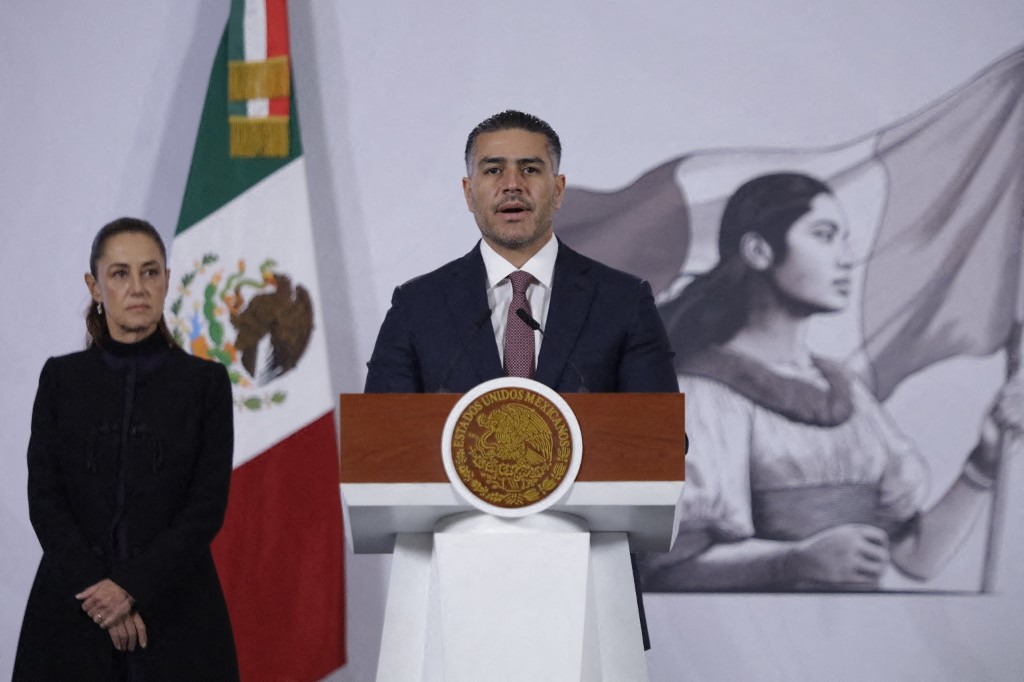
The Mexican army has killed Nemesio Oseguera “El Mencho”, leader of the Jalisco Cartel and Mexico’s most powerful drug trafficker, wanted by the United States with a $15 million reward. Analysis with Dr. Edgar Guerra, jurist Emiliano Alba, and Levant Time correspondents, Maxime Pluvinet and Miroslava Salazar. The Secretary of Security and Citizen Protection Omar García Harfouch (of Lebanese origin), accompanied by Claudia Sheinbaum, President of Mexico, during a press conference following the death of Nemesio Oseguera Cervantes, alias “El Mencho”, leader of the Jalisco cartel. (Gerardo Vieyra/NurPhoto via AFP) Sunday, February 22, 2026: Nemesio Oseguera Cervantes, alias “El Mencho”, leader of the Jalisco Nueva Generación (CJNG) Cartel, was killed by the Mexican army. The cartel's retaliation was almost immediate: roadblocks, vehicle fires, and acts of violence in the state of Jalisco as well as in several other regions of the country. According to mapping carried out by the Dataint platform, violent events were recorded in at least 22 states, with a particularly marked impact in Jalisco, Puebla, Michoacán, Tamaulipas, and Baja California. The reaction following the operation highlighted the cartel's true scale in many regions: its territorial control, its presence in both legal and illegal economies, and, above all, the solidity of its organizational structure and its capacity for immediate mobilization. This turning point can be compared to the arrest of Joaquín “El Chapo” Guzmán, which occurred on the same day twelve years earlier. “This is undoubtedly the most significant blow dealt to organized crime under President Claudia Sheinbaum's administration,” states Edgar Guerra, a specialist in organized crime, violence, and security, in an interview with Levant Time. The hundred-headed hydra The operation that led to the death of “El Mencho” is a double-edged sword. As Emiliano Alba, security and organized crime analyst, points out, in the short term, Claudia Sheinbaum's government can politically capitalize on this event as a victory in the fight against drug trafficking, thus sending a message to national public opinion and the United States: “Something has been done.” However, the structural effects are of a different nature. “Concretely, we will witness a new reorganization within the cartel. Violent internal conflicts for succession are to be expected,” explains Alba. Nemesio Oseguera held a central position within the CJNG and had no clearly designated successor. For Alba, the leader's fall represents a conjunctural vulnerability, but not a structural collapse. “It is a temporary operational weakness, but the organization remains,” he insists, recalling that the CJNG does not rely solely on a central figure, but on a consolidated apparatus, with territorial, financial, and political networks ensuring its continuity. The analyst emphasizes that historical experience shows that the strategy of “decapitation” of criminal organizations often produces counterproductive effects: “Cutting off the hydra's head makes others emerge.” Fragmentation, territorial struggles, and violence related to succession are well-known dynamics in Mexico. This observation is all the more relevant given that, according to Alba, the strategy of the Secretary of Security and Citizen Protection, Omar García Harfuch, had progressively moved away from targeted elimination of leaders to prioritize the dismantling of structures. “It was no longer about beheading cartels, but about attacking their political, financial, and territorial networks,” he specifies, referring to operations like Enjambre, targeting political alliances and institutional protection networks. Two scenarios emerge: either the CJNG continues its activities without its leader, or it descends into an internal war for control of power. In the latter case, the impact on public security would be direct. “We would see an increase in homicides,” warns specialist David Saucedo to AFP. The United States: the troublesome neighbor For Edgar Guerra, the international context is crucial. “One cannot understand the security policy of Claudia Sheinbaum's government without considering the pressure exerted by the United States. The Donald Trump administration exerted strong pressure on Mexico: fentanyl seizures, increased migration control, reinforced operational requirements. All of this is part of the same set of demands.” The Mexican government has also confirmed that the operation benefited from American intelligence support. “This is not just a Mexican or Jalisco problem. It is a global problem,” emphasizes Guerra. He adds: “The United States is among the main consumers of illicit drugs and one of the main producers of weapons. This fuels the economic and material incentives for drug trafficking. It is therefore a shared problem, but with clear structural responsibility on the American side.” A never-ending war The “war on drugs” is not new in Mexico. From Felipe Calderón's mandate to those that followed, direct confrontation with cartels has been a constant for almost twenty years. However, far from sustainably reducing violence, the country has gone through repeated cycles of criminal fragmentation, territorial recomposition, and expansion of illicit economies. According to the National Institute of Statistics and Geography (INEGI), 33,241 homicides were recorded in 2024, 71.8% of which were by firearms. Under Felipe Calderón (2006–2012), 122,462 assassinations were counted; under Enrique Peña Nieto (2012–2018), 157,158; and under Andrés Manuel López Obrador (2018–2024), 202,336. Faced with this reality, Alba believes that an exclusively confrontation-based approach is insufficient. “Strategies against organized crime must be comprehensive. It’s not just about fighting organizations, but about restoring state authority in these territories and ensuring the safety of the population. This goes far beyond the use of force.” Guerra shares this diagnosis: the problem is deeply institutional. “Politicians and local and regional officials protect these groups and have allowed their consolidation. Dismantling these protection networks will be essential.” To this is added a key factor: impunity. “Organized crime thrives in Mexico because impunity is structural. Without it, these organizations could not be sustained.” In this context, the death of “El Mencho” does not constitute a decisive break, but a new stage in a prolonged conflict. More than an end, it marks the beginning of an internal recomposition often synonymous with increased violence. As Alba summarizes: “We might witness a moment of calm, like a lull in the eye of the storm, but only in the short term. Then will come the reorganization.” Thus, what appears today as a political victory could herald a new phase of violent reconfiguration. The question is no longer whether there will be consequences, but which ones, where, and with what intensity. For millions of Mexicans, the doubt remains: is this the peace before the storm?
05:10s
Politics
By Vanessa Kallas - Published Feb 9, 2026 - 18:57
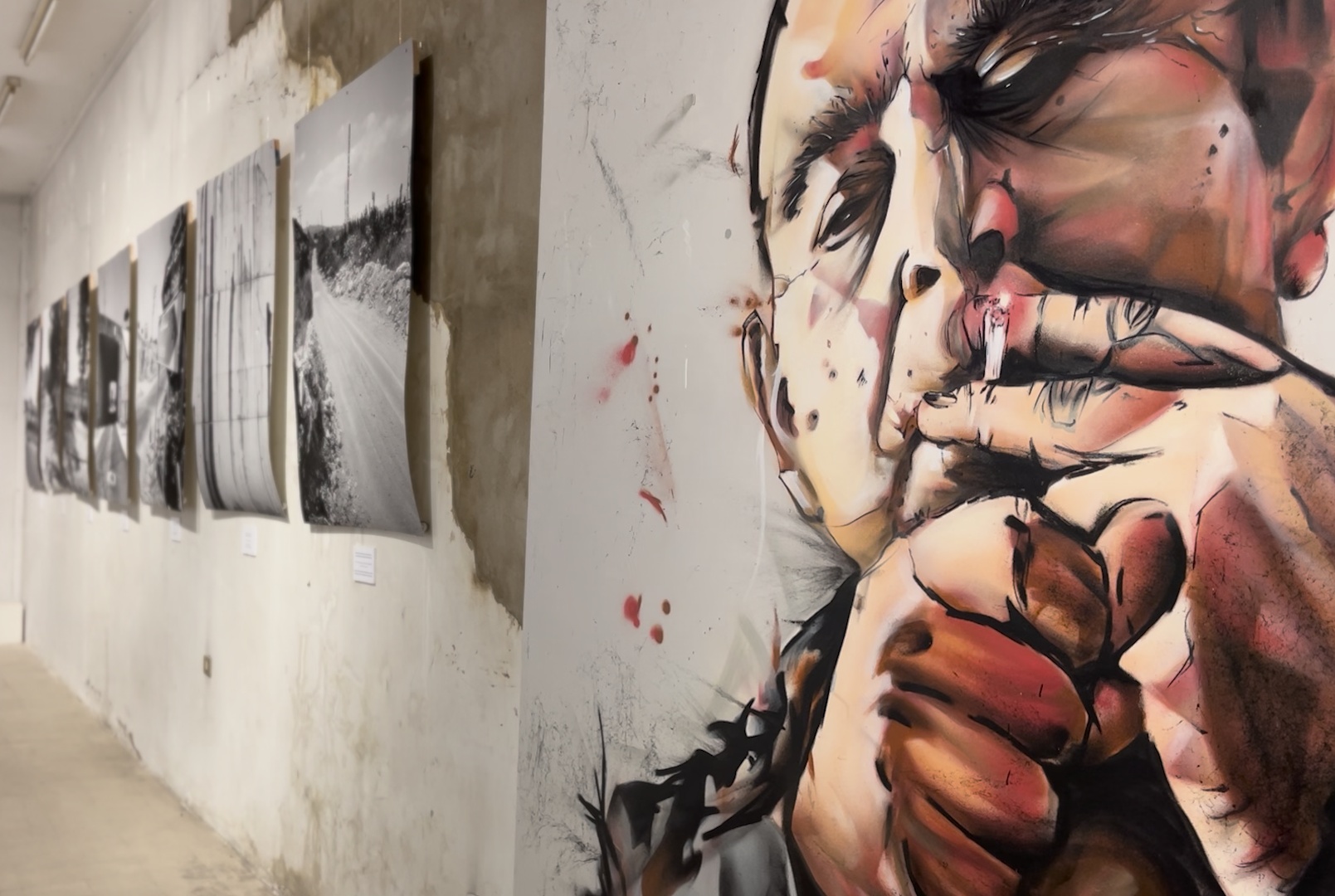
“To hope is to defy the future.” – Emil Cioran This quote, photographed by Édouard Elias, was written by journalist Samir Kassir on a piece of paper two weeks before his assassination in 2005. It is among many personal artifacts Elias has photographed to preserve the legacy of victims of political assassinations in Lebanon since that date. These portraits and relics will be showcased in the photo exhibition “Remaining”, on the occasion of the 5th commemoration of Lokman Slim's assassination. The exhibition will run from February 7 to March 3 at Union Marks, Burj Hammoud, from 2:00 pm to 8:00 pm. The inauguration took place in the presence of a large crowd and several prominent figures, including MPs Marwan Hamadé and Michel Moawad, and former minister May Chidiac. This exhibition is a collaboration between photographer and photojournalist Édouard Elias and journalist and filmmaker Katia Jarjoura, curator of the project. It is produced by the Lokman Slim Foundation, with the support of the French Institute. A Bridge Between Past and Present “Remaining” tells the story of 21 assassination victims, including political figures, security personnel, writers, journalists, witnesses, and survivors. The photographs range from images of their loved ones and objects that were precious to them to the places and crime scenes where the attacks took place, creating an atmosphere of nostalgia and empathy. Inspiration and Tribute Katia Jarjoura reflects on the personal connection that inspired the project. “This exhibition is first and foremost a tribute to my dear friend Lokman Slim, who was tragically killed in 2021, but also to other victims of political assassinations in Lebanon who fought for a free and sovereign Lebanon, and paid for it with their lives.” The Value of “Remaining” Édouard Elias reflects on the title “Remaining”: “After someone’s death, there is always a feeling of absence. Because justice has not been served, these people are caught in an in-between state. They are still present; we have not yet removed their memories, taken down the hat on the coat rack, or put away the watch on the bedside table.” “In a country where the judicial system is weak and most crimes go unpunished, art can respond to or help fill this failure,” adds Jarjoura. “Remaining” is in essence, a way of saying ‘they remain,’ and ‘we remain with them.’” A Shared Humanity and Visual Approach “Remaining” is told exclusively in black and white. Elias explains this stylistic choice: “I chose black and white because the photographs deal with absence, memory, and the timeless nature of those who have passed away. I wanted the work to be formal, without color effects or stylistic interventions, so that each person is placed on the same level.” Using everyday objects and familiar settings, Elias invites visitors to see the shared humanity of these families and to reflect on how closely their lives mirror their own. Since gaining independence in 1943, Lebanon has experienced over 200 political assassinations, the vast majority of which remain unpunished. The Lebanese Civil War (1975-1990) severely weakened state institutions, while the 1991 amnesty law entrenched a culture of impunity that continues to influence political life. The assassination of former Prime Minister Rafic Hariri in 2005, followed by the establishment of the Special Tribunal for Lebanon (STL), marked a turning point, revealing political murder as a tool of Syrian-Iranian influence and undermining both Lebanese sovereignty and the rule of law. Who Was Lokman Slim? Lokman Slim was a Lebanese publisher, filmmaker, and political activist known for his outspoken defense of human rights, civil liberties, and the rule of law. He co-founded UMAM Documentation and Research with his wife, Monika Borgmann, to preserve Lebanon’s collective memory and encourage public debate. A staunch critic of sectarianism and political violence, Slim was assassinated on February 4, 2021, in Addousiyeh, South Lebanon. “Remaining” is an urgent call for responsibility and justice, so that Lebanon’s future is not restrained, but embraced with hope.
02:31s
Politics
By LevantTime . - Published Jan 26, 2026 - 07:41
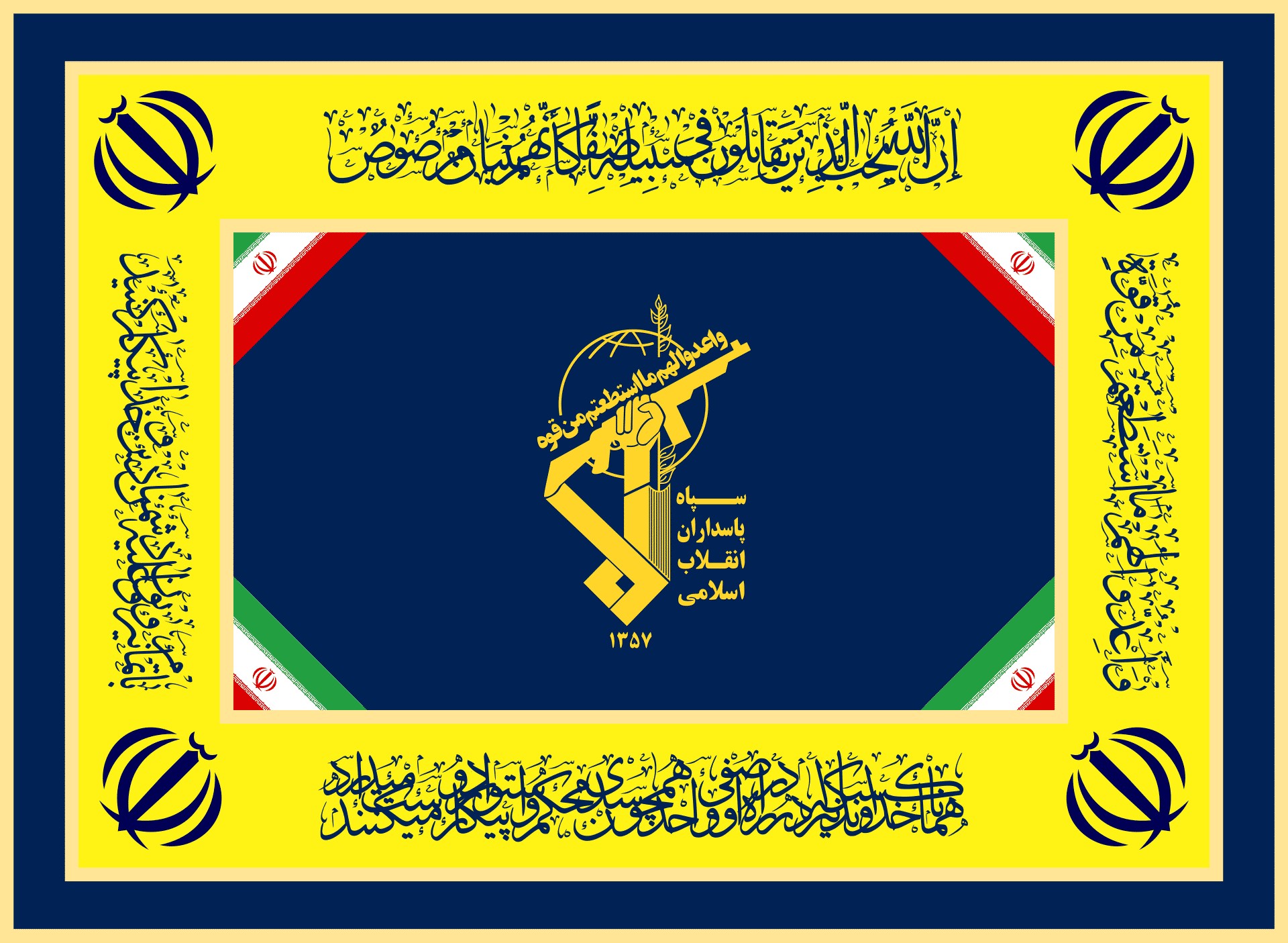
While the 47 members of the United Nations Human Rights Council expressed alarm in a resolution at "the unprecedented scale of the violent crackdown on peaceful protests by security forces" in Iran, High Commissioner Volker Türk condemned the security forces' firing of "live ammunition" at protesters, deploring the deaths of "thousands" of people, including children. At the heart of this repression are the Islamic Revolutionary Guard Corps (IRGC), the ideological arm of Iran's Supreme Leader, Ayatollah Ali Khamenei. The 'Pasdaran' ("guardians" in Farsi) are an extremely organized armed force, accused by Westerners of orchestrating and even participating in the crackdown on the protest movement. Who are they? The "Pasdaran" were created in 1979 by the Supreme Leader shortly after the Islamic Revolution "to propagate the ideals of the Islamic Revolution," recalls Clément Therme, an associate researcher at the International Institute for Iranian Studies, quoted by AFP. A Western diplomatic source who requested anonymity suggests a number approaching 200,000 men. Beyond ideology, "it's an armed force that functions like an elite army with land, sea, and aerospace capabilities, but it is better trained, better equipped, and better paid than the regular army," this source emphasizes. The IRGC also acts as Tehran's liaison with its allies in the region, such as the Lebanese Hezbollah or the armed groups of the Hashed al-Shaabi in Iraq. Constitutionally, all its leaders are appointed by the Supreme Leader. Last June, Ali Khamenei had appointed Mohammad Pakpour as the new head to succeed Hossein Salami, who was killed in Israeli airstrikes. He is a veteran of the Iran-Iraq War. What are their means? "It's an empire within an empire," emphasizes David Khalfa, noting that the "Pasdaran" own or control companies in all strategic sectors of the Iranian economy. "They have a quasi-monopolistic position," whether in infrastructure (ports, transport, dams, etc.), energy (gas and oil), technology, telecommunications, or the financial and banking sectors. Their military budget is estimated at between 6 and 9 billion dollars per year, approximately 40% of Iran's official military budget, according to data collected by the researcher. "They de facto control the Iranian economy". How do they operate? The Guardians have established a vast intelligence network that is "the most extensive and efficient of the Iranian regime," explains David Khalfa, a researcher at the Jean-Jaurès Foundation, quoted by AFP. They are capable of meticulously dismantling protest networks in record time, identifying protest leaders in a matter of minutes. They rely on a paramilitary militia (the Basij), recruited primarily from among young people, which acts as an ideological organization integrated into all institutions and strata of society. They are believed to number between 600,000 and 900,000 people, according to David Khalfa, based on cross-referenced data from various American think tanks. What role do they play in the current repression? "They play a central role in the repression because today, more than ever, they are the pillar of the Iranian regime, the pillar of its longevity, of its survival," analyzes David Khalfa. "They have set a political and operational line regarding the protests which is: zero tolerance," he adds. Hence a considerable number of people killed, at least 700 in two weeks, according to NGOs. Experts believe that at the beginning of the protests, the Guardians were probably in the background, relying on local security forces and the Basij. But "from the outset, they have been directing the repressive apparatus," "they coordinate the work of systematic repression," emphasizes David Khalfa. As the protests did not wane, they sent in their ground forces and special units, explains the researcher. And in a "strategy of denial" of their responsibility, "they act in civilian clothes," adds Clément Therme, so as not to be "directly attributed responsibility for human rights violations". A terrorist organization? As early as 2019, the United States listed the Revolutionary Guards as a terrorist organization by the State Department. European officials, including MEPs, have in recent days called on the European Union to increase pressure against Iranian authorities, demanding, among other things, that the IRGC also be included on the list of terrorist organizations. Germany, in particular, would be in favor of this, as the Quds Force, the elite unit of the Revolutionary Guards that operates abroad, is suspected of being behind an attack against a synagogue in 2021 on German soil, according to a diplomatic source.
02:57s