

Videos
Politics
'%3e%3cpath%20d='M29%2034.583C29%2031.4004%2027.7884%2028.3482%2025.6317%2026.0977C23.4751%2023.8473%2020.55%2022.583%2017.5%2022.583C14.45%2022.583%2011.5249%2023.8473%209.36827%2026.0977C7.2116%2028.3482%206%2031.4004%206%2034.583'%20fill='%23083D77'%20fill-opacity='0.12'/%3e%3cpath%20d='M17.5%2022.583C21.6421%2022.583%2025%2019.2251%2025%2015.083C25%2010.9409%2021.6421%207.58301%2017.5%207.58301C13.3579%207.58301%2010%2010.9409%2010%2015.083C10%2019.2251%2013.3579%2022.583%2017.5%2022.583Z'%20fill='%23083D77'%20fill-opacity='0.12'/%3e%3c/g%3e%3c/svg%3e)
By Maxime Pluvinet - Published Jan 6, 2026 - 11:12
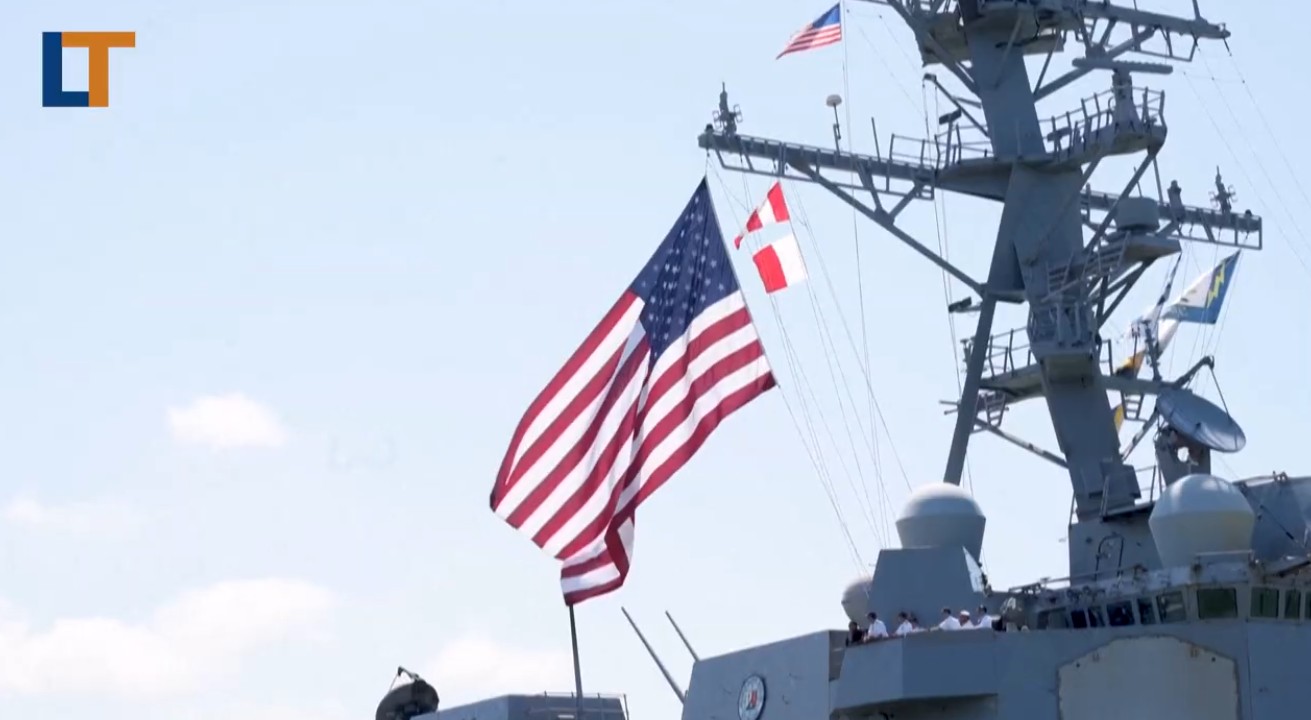
Welcome to Tropic Thunder, a five-part short series by Levant Time designed to help you understand the different reasons behind the current U.S. interventionism in the Caribbean. This series was completed 48 hours before the American attack on Venezuela. EPISODE 1 — Operation Southern Spear Over the past few months, the Caribbean Sea has once again become an area of heightened geopolitical tension. On August 14, the United States ordered a massive military deployment to the southern Caribbean, mobilizing U.S. Navy units, Marines, and air power, in what some analysts describe as the largest concentration of U.S. forces in Latin America in decades. Since November 13, the U.S. Secretary of War, Pete Hegseth, has officially launched the ongoing operation, known as Operation Southern Lance. By the end of December, as many as 15,000 personnel are deployed as part of this operation. Among the assets involved is a carrier strike group centered around the USS Gerald R. Ford, the largest aircraft carrier in the world, as well as a nuclear-powered submarine. One additional detail: the USS Ford had previously been deployed in the eastern Mediterranean due to the various conflicts in the Levant since 2023. Officially, U.S. President Donald Trump claims that this mobilization serves a clear priority: fighting drug cartels and organizations labeled as “narco-terrorists” operating in the Western Hemisphere. From Caracas, however, President Nicolás Maduro denounces what he describes as an attempt at regime change—an accusation Washington denies. Thus, while the fight against drug trafficking remains the stated justification, the buildup of naval, air, and ground forces near Venezuela’s coastline raises questions about Washington’s true strategic objectives, amid growing pressure on the government of Nicolás Maduro, which the United States considers an illegitimate regime. One final important point: the anti-drug offensive declared by Donald Trump claims to target cocaine trafficking routes. Yet while cocaine consumption is increasing in countries of the so-called Global North, in the United States it is primarily the opioid crisis—particularly the extremely potent fentanyl—that lies at the heart of an unprecedented public health emergency. This crisis caused tens of thousands of deaths last year alone. Fentanyl, a synthetic drug, is not produced in the Caribbean; it mainly originates in China.
02:00s
Politics
By LevantTime . - Published Dec 22, 2025 - 19:48
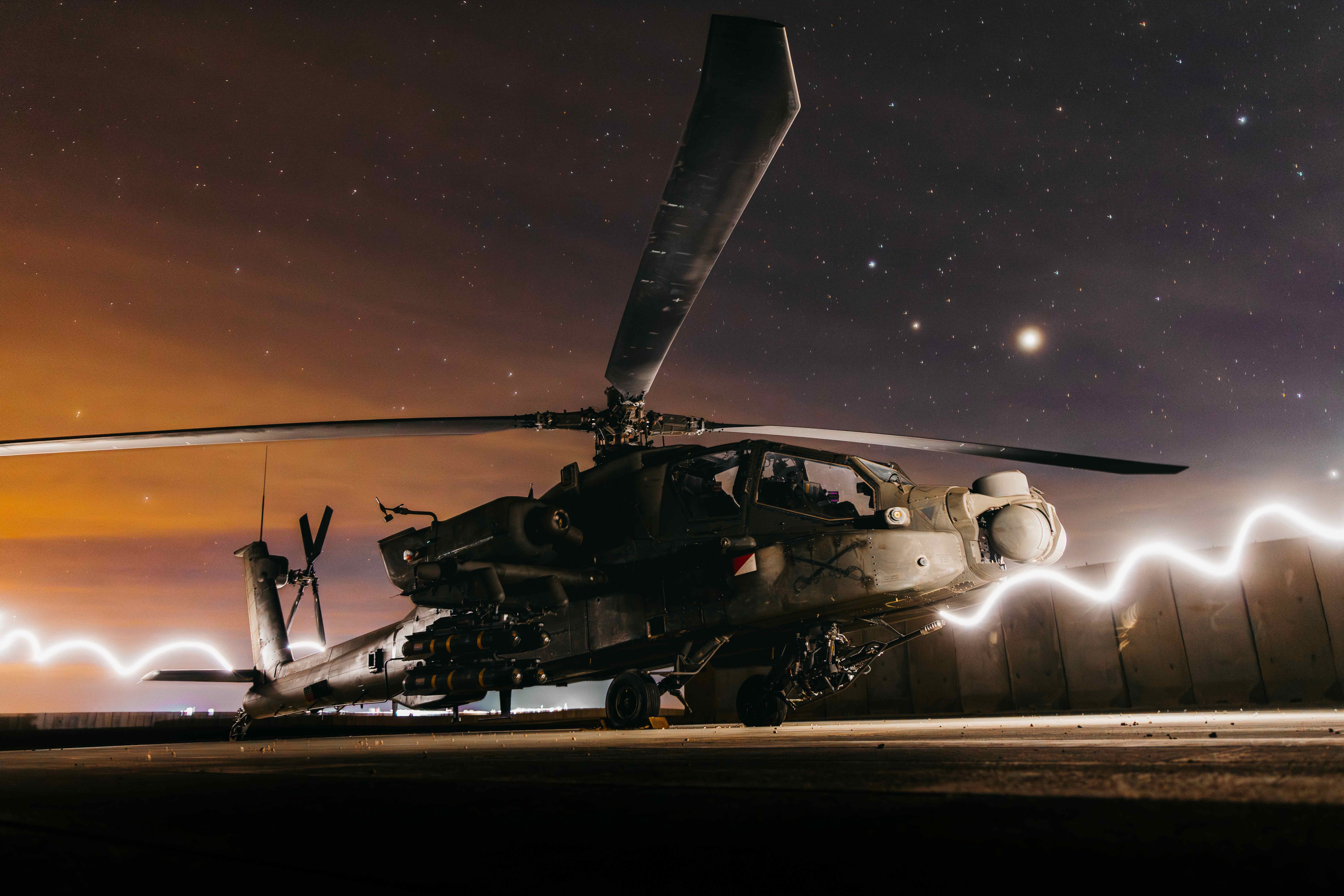
The American military operation against the jihadist group Daesh (Islamic State or IS) launched last Friday to Saturday night follows the attack perpetrated on Saturday, December 13, by the terrorist organization against American and allied forces in Syria. This attack was carried out by a member of the Syrian security forces, embarrassing the Damascus government, which is trying to get closer to the United States. While "more than 70 targets" were hit across the country, US President Donald Trump spoke of "very heavy reprisals". Pentagon chief Pete Hegseth announced on X that it was a "direct response" and a "declaration of vengeance" after the attack on Saturday that killed two American servicemen and a translator in Syria. The Syrian Observatory for Human Rights (SOHR) reported that at least five IS members were killed in the strikes in Deir Ezzor province. Among them was "the head of an IS cell" in charge of drones, added the NGO, which is based in the United Kingdom but has a vast network of sources in Syria. A member of the Syrian security forces is reportedly involved in the Daesh attack against US soldiers, thus embarrassing President Ahmad al-Chareh, who is trying to get closer to the United States and recently joined the Washington-led international anti-jihadist coalition. After dissolving the military and security bodies of Bashar al-Assad, whom he overthrew a year ago, interim President Ahmad al-Chareh integrated the Islamist groups allied with him, including foreign jihadists, into the new army. This is the first time such an attack has been reported in Syria since he came to power. Earlier, the spokesman for the Syrian Ministry of Interior had stated that the forces of the international coalition, led by Washington, had not heeded Damascus' warnings regarding a risk of Daesh infiltration. "There were prior warnings from the internal security command to partner forces" in the Palmyra region, spokesman Anwar al-Baba told state television. A Syrian military official, who requested anonymity, indicated that the firing broke out while Syrian and American officers were gathered at a Syrian security outpost in Palmyra. The United States Central Command (Centcom) announced from its headquarters in Tampa, Florida, that it had launched Operation « Hawkeye » (Hawk's Eye) on the orders of the commander-in-chief. « Centcom forces struck more than 70 targets in several locations in central Syria using fighter jets, attack helicopters, and artillery, » the command's statement said. « Jordanian armed forces also provided support with fighter jets. The operation used more than 100 precision munitions targeting known Daesh infrastructure and weapons sites, » the statement added. Jordanian Participation « This operation is crucial to prevent Daesh from inspiring terrorist plots and attacks against US territory, » said Admiral Brad Cooper, commander of Centcom. « We will continue to relentlessly pursue terrorists who seek to harm Americans and our partners throughout the region. » « Following the December 13 attack against US and Syrian service members, US forces and their partners conducted 10 operations in Syria and Iraq, resulting in the neutralization or capture of 23 terrorists, » the statement continued. The strikes targeted IS cells in the Homs, Raqqa, and Deir Ezzor regions, according to a Syrian security source. Neighboring Jordan said it had supported this operation aimed at "preventing extremist organizations from exploiting" southern Syria to launch attacks "threatening the security of its neighbors and the region". The Jordanian army expressed concern about "the reconstruction of IS forces". Israel, which also shares a border with Syria, for its part, affirmed that it had "apprehended" on Wednesday in the south of that country an "alleged terrorist affiliated" with IS who was brought into Israel. Nearly 80 Operations « Since July, US forces and their partners in Syria have conducted nearly 80 operations to eliminate terrorists, including Daesh elements, who posed a direct threat to the United States and its interests abroad, » the Centcom statement added. « Over the past year, Daesh has organized at least 11 plots or attacks against targets in the United States. In response, Centcom operations have resulted in the arrest of 119 terrorists and the death of 14 of them over the past six months, thus disrupting Daesh's efforts to reconstitute itself and inspire terrorist attacks globally, » the statement continued. « Last month, US service members from the Combined Joint Task Force – Operation Inherent Resolve collaborated with the Syrian Ministry of Interior to locate and destroy more than 15 sites housing Daesh weapons caches in southern Syria. The joint operation resulted in the destruction of over 130 mortars and rockets, numerous rifles, machine guns, anti-tank mines, and equipment used in the manufacture of improvised explosive devices. « We have now conducted several collaborative campaigns with the Syrian government to counter specific Daesh threats, » said Admiral Cooper. « These are tangible security gains that we can achieve on the ground through close cooperation with Syrian government forces. » What about the American contingent in Syria? « The deployment of our forces to eliminate these individuals strengthens the security of the United States and the region, » Cooper said. « We will continue to work closely with our Syrian partners to track down IS networks and prevent their resurgence. » During the war in Syria, triggered in 2011 by pro-democracy demonstrations, IS had controlled vast territories, including the Palmyra region, before being defeated by the international coalition in 2019. Despite its defeat, its fighters, having retreated into the vast Syrian desert, continue to carry out sporadic attacks. Donald Trump's return to power, generally skeptical of US troop deployments abroad, raises the question of maintaining this military presence. The Pentagon had announced in April that the United States would halve the number of American soldiers in Syria, whose current total strength is not officially known. According to the Syrian Observatory for Human Rights (SOHR), based in the United Kingdom but with a vast network of sources in the country, the visit of the American delegation to Palmyra "is part of a US strategy aimed at expanding its presence in Syria," particularly in desert areas. Present in Syria for several years, the Americans established a base in Al-Tanf in the south of the country in 2016, at the intersection of the borders of Syria, Jordan, and Iraq. They are also present in the provinces of Hasakah and Raqqa, to support the Syrian Democratic Forces (SDF), led by the Kurds of "Rojava" (Syrian Kurdistan). They are fighting pro-Iranian militias based in the Deir Ezzor region. The Syrian Democratic Forces (SDF), led by the Kurds and supported by the United States, hold a portion of the eastern bank of the Euphrates. They gained these territories by fighting with the support of the Washington-led coalition against Daesh. Indeed, the SDF were the spearhead of the fight against IS, which was driven from its strongholds in Syria in 2019, after a rapid rise in power in 2014 and the conquest of vast territories in that country and neighboring Iraq. Daesh was officially declared "defeated" in 2019 in Baghouz, on the Syrian-Iraqi border. The international coalition also has bases at the Al-Omar oil field, the largest in Syria, as well as at the Conoco gas field.
00:34s
Society
By Maxime Pluvinet - Published Dec 7, 2025 - 14:10
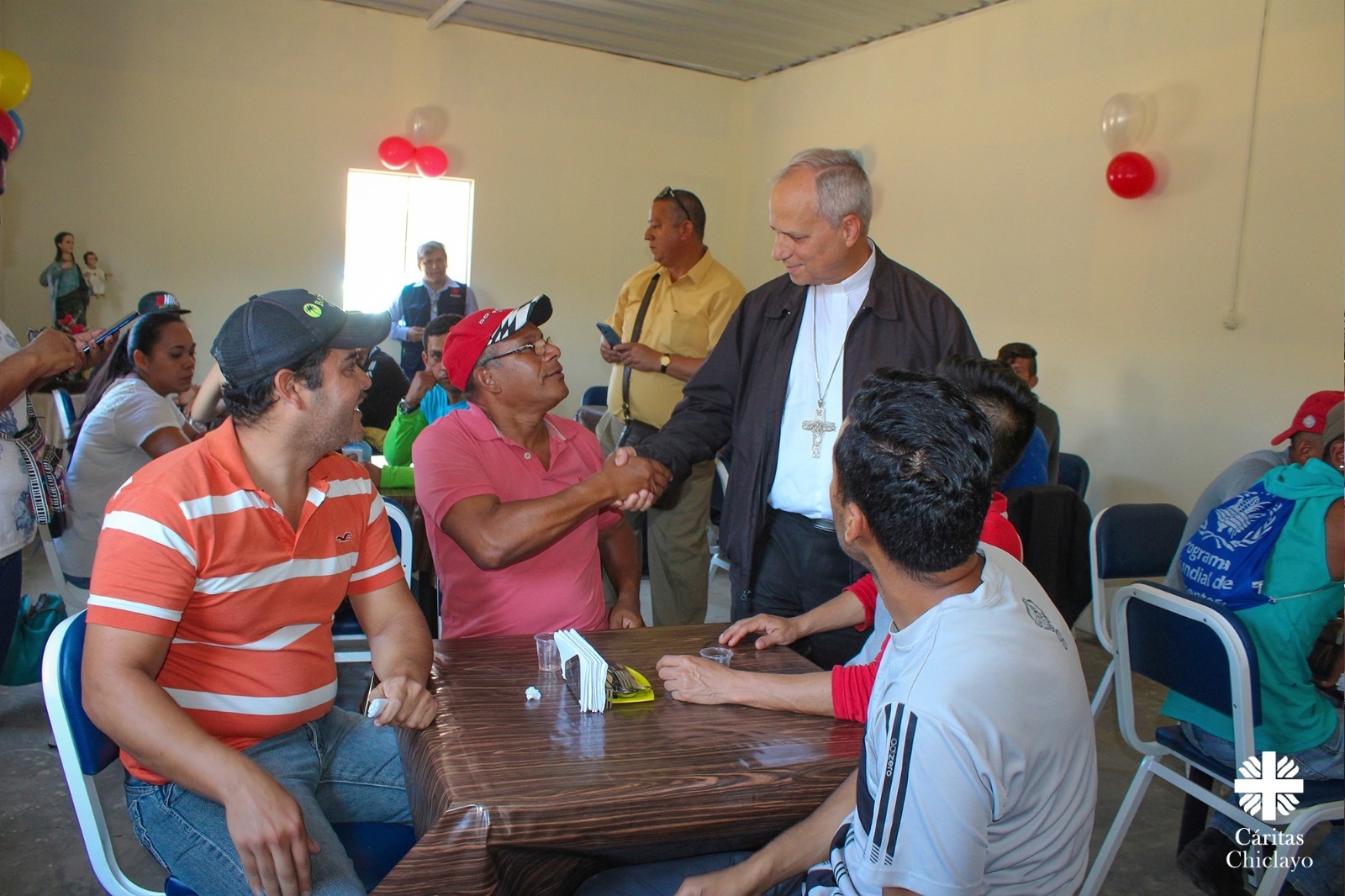
Lebanon is preparing for its first papal visit since Benedict XVI’s trip in 2012. But behind the figure of the Supreme Pontiff arriving this Sunday for an official visit lies another story: nearly four decades spent in Peru by Archbishop Robert Francis Prevost — now Pope Leo XIV — where he forged his pastoral mission. A small statue of Martin de Porres stands to the right of the altar in the Vianney parish on the outskirts of the Peruvian city of Chiclayo. The image of this 16th-century saint, born to an enslaved mother, resonates deeply with Lisbeth, a teacher and Venezuelan refugee. It was in this very church that she saw Archbishop Robert Prevost — today Pope Leo XIV — celebrate International Migrants Day, embodying the Church’s social doctrine through action. Lisbeth mentions other figures venerated in her country, such as Our Lady of Coromoto, patron saint of the Bolivarian Republic. She recalls seeing her icon leading a procession commemorating the Venezuelans’ exodus amid the political and economic collapse that has gripped Venezuela since 2017, compounded by U.S. sanctions. From Chiclayo, a metropolitan area of 600,000 inhabitants, Lisbeth is now a member of the Human Mobility and Anti-Trafficking Unit, a branch of Caritas Chiclayo — the Catholic Church’s humanitarian arm. Its founding owes much to the man who is now the leader of the global Church. “This was made possible thanks to the work of Mgr Robert Prevost,” Lisbeth says, remembering a man who was accessible and attentive to the needs of migrants in Chiclayo and beyond. She recalls “his deep concern about the massive Venezuelan migration here in Chiclayo.” The Venezuelan crisis was not only a baptism by fire for Archbishop Prevost; other crises with profound social impacts would confirm that he remained on the front lines, displaying essential qualities: closeness, accessibility, and an ability to listen. “I have an image in mind — you can find it on social media,” recalls Antonieta Pacheco Jara, coordinator for integral ecology at Caritas. “It was during Cyclone Yaku. He went out to the villages in boots. He approached people and he listened. That was essential for any work in inclusion, evangelization, synodality: he listened. He wasn’t just a religious authority giving orders from a comfortable seat. No — he was on the ground, listening.” ⸻ A Church as the People of God When Robert Francis Prevost was appointed bishop of Chiclayo, in northern Peru, in 2015, he had already known the country for three decades. Since 1985, he had risen from missionary to prior of the Augustinian Order — one of the religious orders that played a significant role in the “spiritual conquest” of the Americas during the colonial period. As bishop, Mgr Prevost was a man of action, say his collaborators, fully aligned with Pope Francis’s vision of a Church that is the “people of God.” Opposed to clericalism and committed to synodality, he entrusted laypeople — alongside religious men and women — with the most demanding tasks. He was highly active in pastoral initiatives rooted in the Church’s social doctrine, not just in sermons and speeches. As Augusto Reque of Caritas Chiclayo recalls, he was a “pastor who smelled of his sheep,” referencing a phrase Mgr Prevost once cited in a homily. Augusto, head of the Human Mobility Unit, remembers — with colleague Yolanda Díaz — one of their first encounters with the bishop. The moment revealed the convictions of the future pope, who chose a papal name tied to one of the pioneers of contemporary Vatican social teaching. That first meeting took place during a Mass celebrated by Archbishop Prevost, at their invitation, commemorating the assassination of Archbishop Óscar Romero — the Salvadoran prelate canonized by Pope Francis, murdered in 1980 by soldiers for opposing the violence of state repression during El Salvador’s civil war. A Man of Action Another episode — mentioned repeatedly during interviews in Chiclayo — illustrates Archbishop Prevost’s active social engagement : his role in addressing the scandal surrounding Sodalitium Christianae Vitae, an ultraconservative organization accused of sexual, physical, and psychological abuse against dozens of victims between 1971 and the 2000s. The book Mitad monjes, mitad soldados compiled testimonies from former members, reviving attention to complaints ignored for years. Following the publication of the investigation, Archbishop Prevost sided with the victims, implementing prevention measures in his diocese and supporting the forced resignation of Cardinal Cipriani after intervention by Pope Francis. Promoted in 2023 to Rome as prefect of the Dicastery for Bishops and president of the Pontifical Commission for Latin America, Prevost played a central role in the inquiry into Sodalitium. The Vatican report confirmed 98 victims, including 37 cases of sexual abuse, and exposed the complicity of certain clergy. Archbishop Prevost recommended dissolving the organization and removing its leaders, leading to the expulsion of compromised clerics and the definitive closure of all entities founded by Luis Fernando Figari. The case illustrates Prevost’s full alignment with Pope Francis and the Church’s social teaching. By acting transparently, protecting victims, and challenging corrupt power structures within the Church, he applied principles of justice, accountability, and defense of the vulnerable — core to the Argentine pontiff. These episodes represent only a fraction of Robert Prevost’s life in Peru — from his years as bishop to his broader four-decade ecclesial journey in the Andean nation. Many elements point to Peru as the laboratory where his mission took shape, strengthening his commitment to social doctrine. But it is now to Pope Leo XIV — no longer Robert Francis Prevost — that one must turn when seeking to understand Catholic social teaching through the lens of the Peruvian experience.
13:13s