Levant Time logo
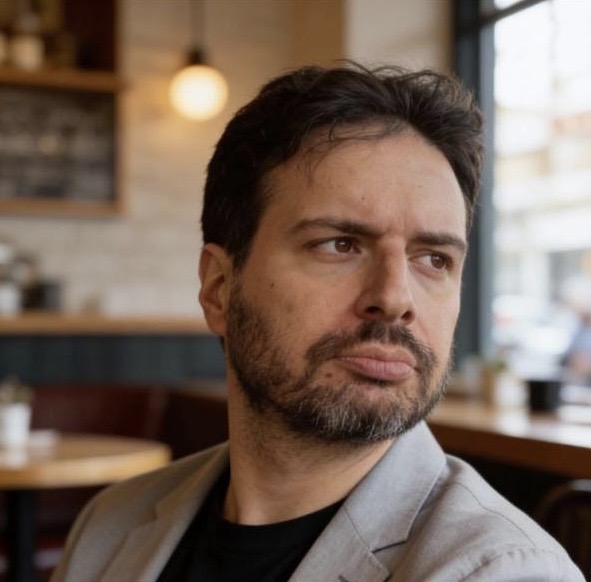
Michel Hajji Georgiou

Michel Hajji Georgiou

Political analyst

Writer, political analyst, and journalist, Michel Hajji Georgiou was director of programs for Voice of Lebanon – Achrafieh (radio and webTV) in 2023, co-founder and former editorial director of Ici Beyrouth (2021-2022), head of the local political desk at L’Orient-Le Jour for five years (2015-2019), a columnist, former editor-in-chief of its annual political supplement (2005-2011), as well as a senior journalist for twenty years (1999-2019) at this daily newspaper. Awarded the Collège Notre-Dame de Jamhour Philosophy Honor Prize in 1998, he received the Gebran Tueni / WAN Prize in 2007 and the Foundation for Human and Humanitarian Rights Prize in 2008 for his work in favor of freedom of expression and opinion. A founding member of several human rights associations and cultural foundations, including Media Against Violence and ALEF, he is notably the author of The Quiet Revolution, a collection of political texts by the late Samir Frangieh, as well as a collection of poetry, From This Broken Hill, dedicated to the memory of the Canadian poet and singer Leonard Cohen, and a forthcoming biography of the late Hassan Rifaï. He currently collaborates as a columnist and political analyst at Levant Time and maintains the blog BeirutUnbound.com.

Useful Enemy, Real Enemy
By
Michel Hajji Georgiou
Published
May 5, 2026 - 17:29

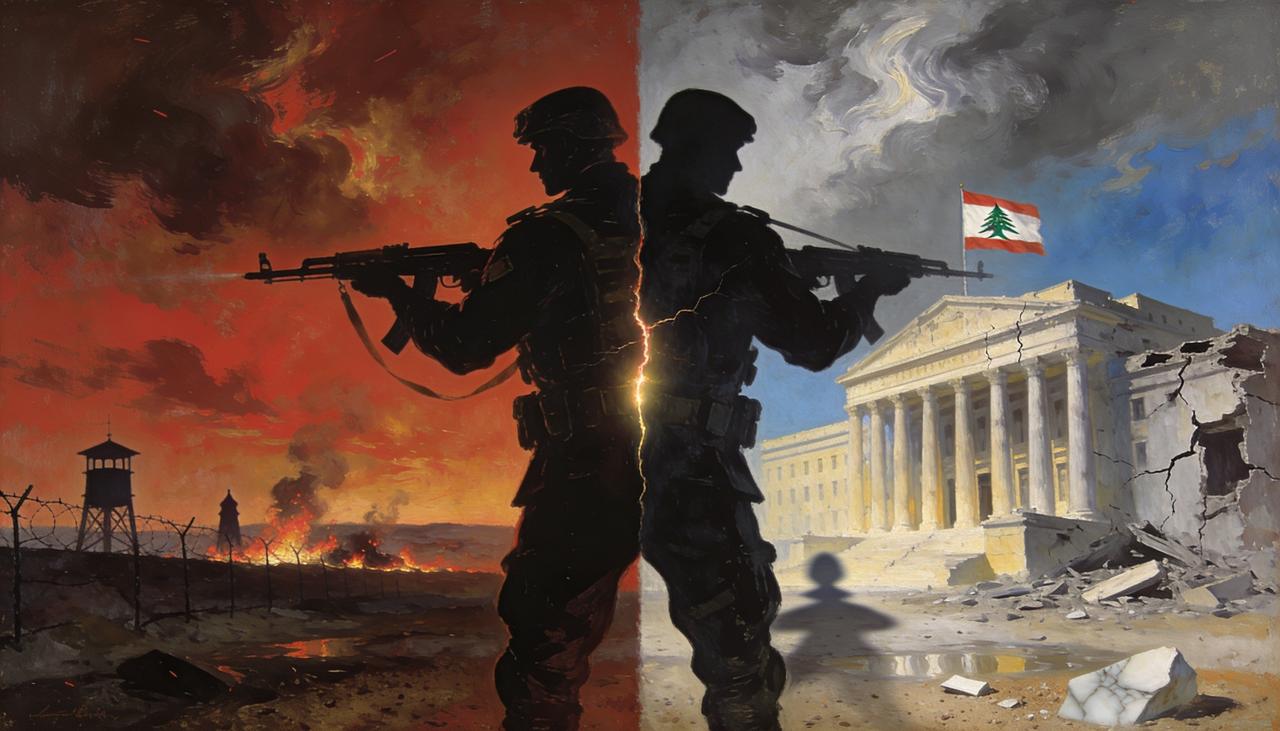
One should be grateful to Naïm Kassem for possessing neither the charisma, nor the eloquence, nor the virtù of his predecessor, Hassan Nasrallah. Over the years, and no doubt until his Syrian misstep, Nasrallah embodied in the Arab-Muslim mind a certain idea of intransigence in the face of Israel. His talents as a rhetorician had achieved a masterstroke — namely, making people forget that beneath his anti-imperialist harangues of «resistance», he himself constituted nothing less than the spearhead of an Iranian imperialist project, built on the blood of his Lebanese fellow citizens, from the Lebanese left to the pillars of March 14.
Behind the “Yellow Line”, the Shadow of “Greater Israel”?
By
Michel Hajji Georgiou
Published
Apr 26, 2026 - 18:02

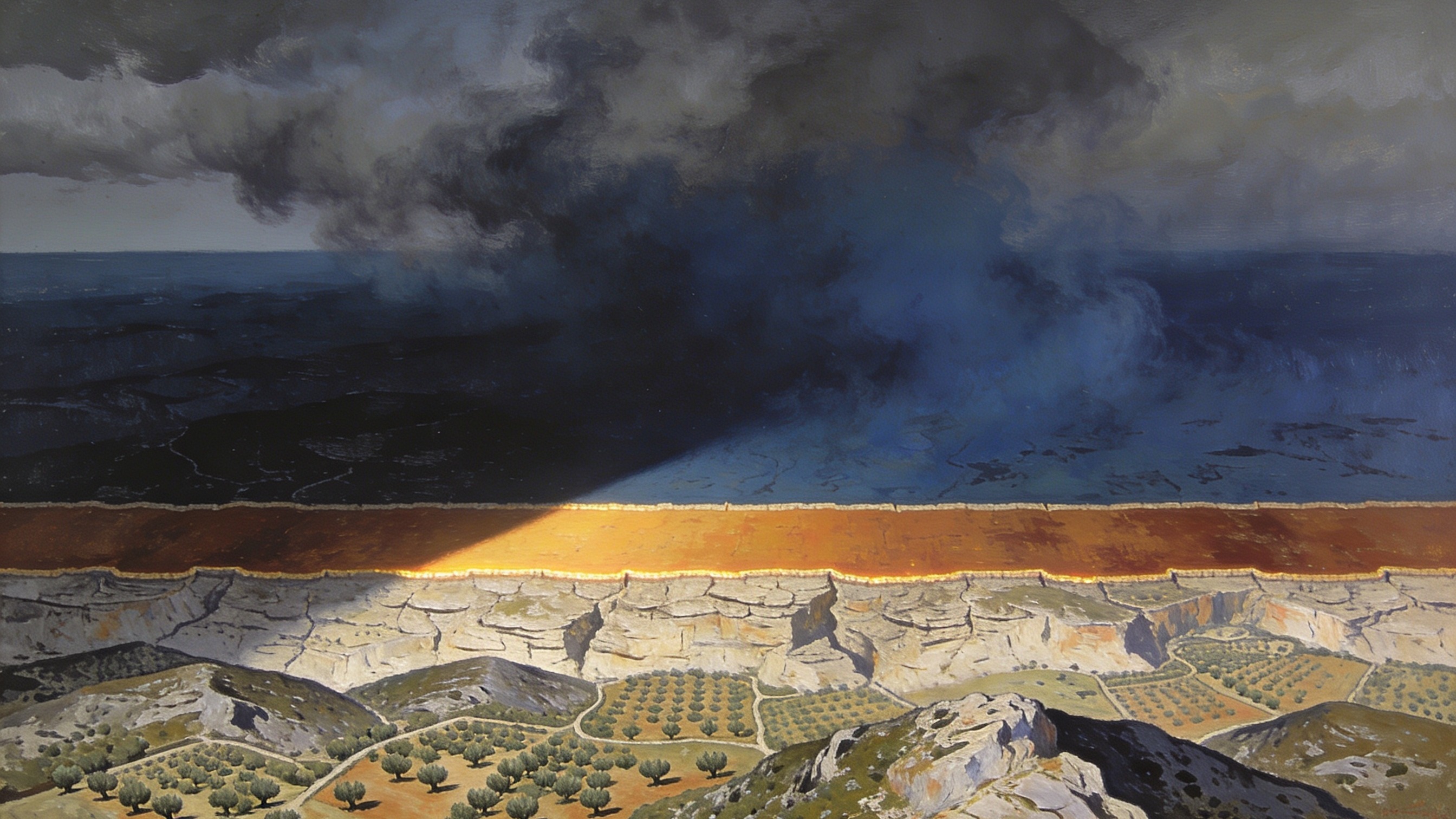
Editor's note: The following study is not meant to be read in one sitting, but in segments. The author apologizes in advance to the reader, but the academic approach followed could not allow for a split into several articles or a summary that would weaken its substance and nuances. Mea maxima culpa, therefore. In early April 2026, Israel circulated a “new” map of southern Lebanon, highlighting a zone of approximately ten kilometres north of the border inside Lebanese territory, coloured in yellow, representing the geographic space that its army has occupied since the beginning of its military offensive in March.

From Persepolis to Tehran: One and the Same Art of War
By
Michel Hajji Georgiou
Published
Apr 22, 2026 - 09:34

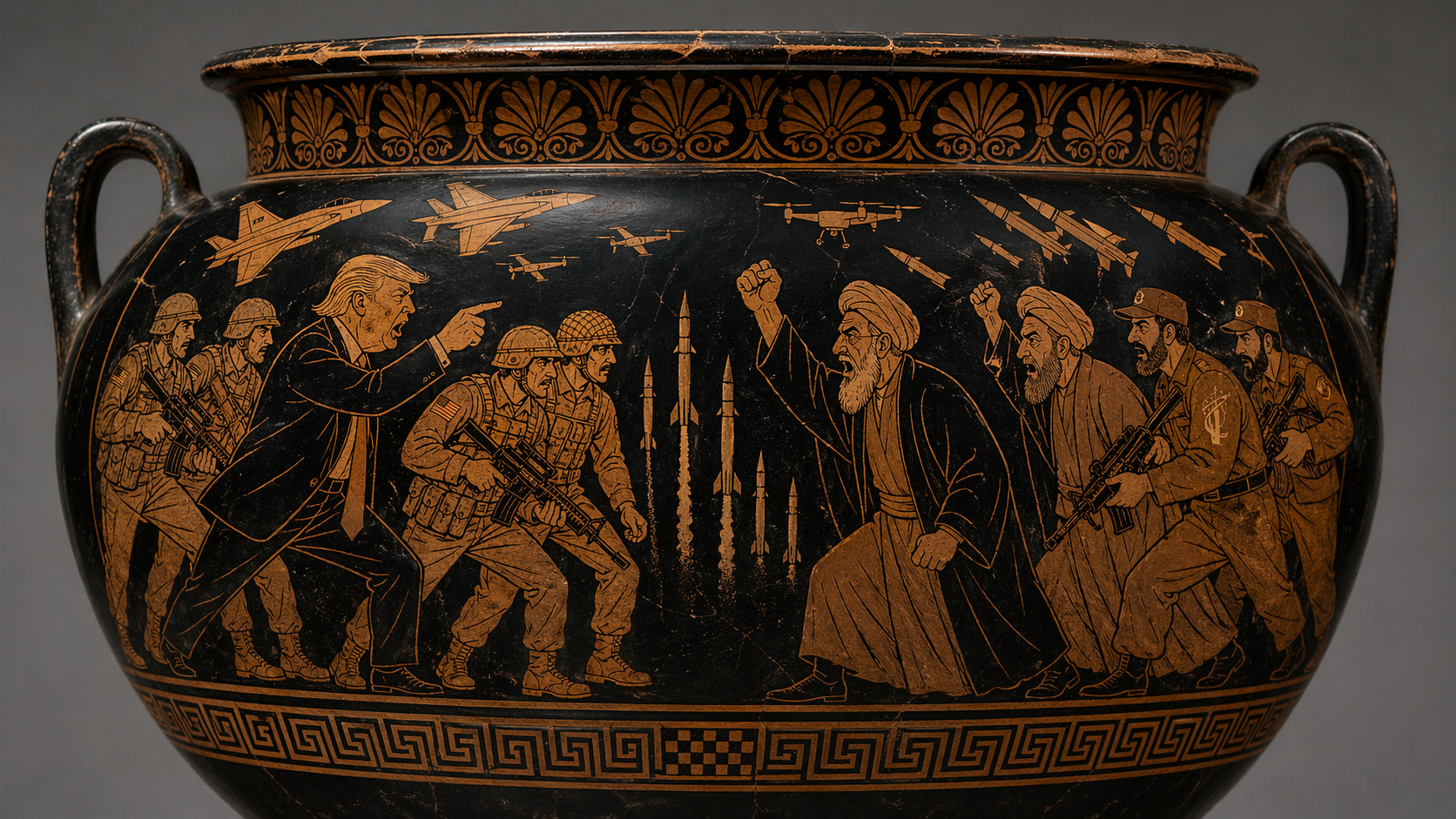
EDITOR'S NOTE: The study that follows, dedicated to a detailed analysis of the logic of war in the Persian-Iranian spirit and practice in the light of the current conflict with the United States, is not to be read in a single sitting, but in segments; the digital medium is no doubt ill-suited to the length of the text. It is more advisable to print the article and read it on paper. The author offers his apologies in advance to the reader for this inconvenience, but the academic approach followed cannot tolerate a break into several articles, or a summary that would dilute its substance and nuances. Therefore, mea maxima culpa .

The eternal return of tragedy?
By
Michel Hajji Georgiou
Published
Apr 19, 2026 - 21:50

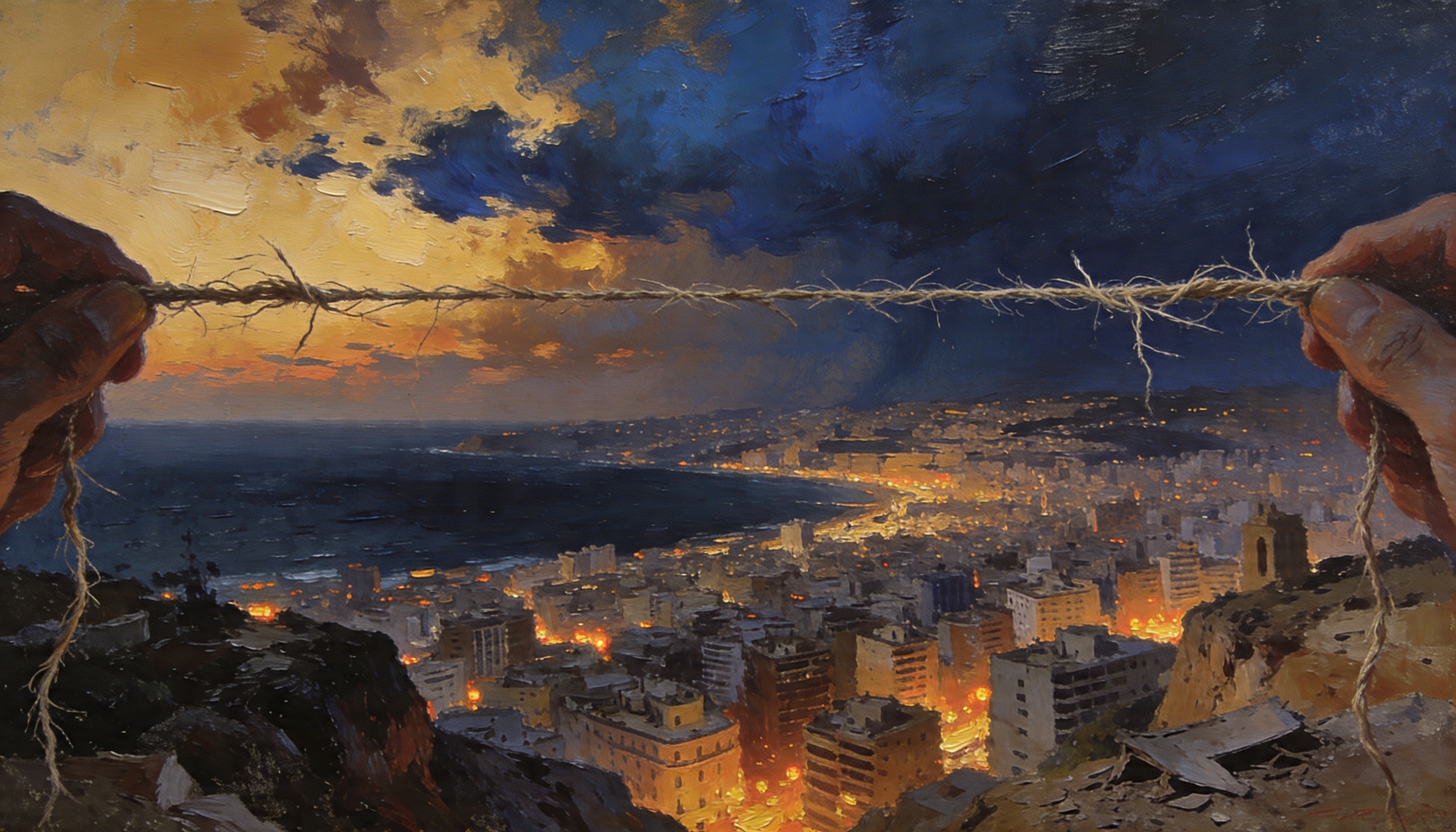
There is in the Lebanese-Israeli ceasefire concluded under American auspices a promise. But this promise is at once tenuous and taut, so fragile — like the thread of the Fates — that it seems capable of snapping at any moment. Lebanon has long learned to live on little and to transform the scraps of stability into the raw material of survival. So it welcomes this truce as a remission — though one knows, from experience, that it may in reality be nothing more than the prelude to a relapse. This is the whole of the Lebanese tragedy in its most harrowing expression. The ineluctable recurrence of misfortune, and its cyclical return, which the collective memory has never truly ceased to anticipate.

The Sayyed Who Showed the Way
By
Michel Hajji Georgiou
Published
Apr 18, 2026 - 05:22

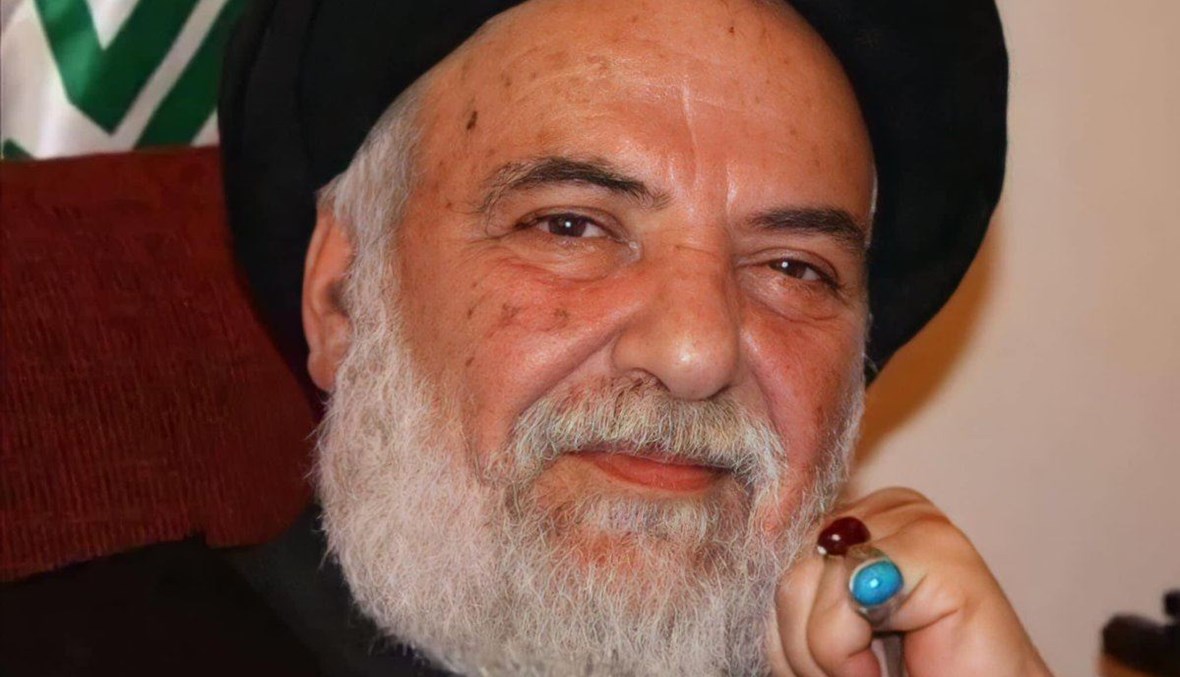
The spirit and legacy of the Ulama Mohammed Hassan al-Amine, leading authority of Lebanese-centered, statist, and Amelite Shiism, remain more relevant than ever, five years after his passing. Five years ago, on 10 April 2021, the Shia scholar Mohammed Hassan al-Amine died in Sidon of COVID contracted at the age of seventy-five. Lebanon had long been collapsing before his eyes — and it continued inexorably to come apart after him. Perhaps paradoxically magnanimous on this occasion, the Grim Reaper granted this wise and gentle man — as it had, nearly a decade earlier, to his friend Hani Fahs — the opportunity to be spared further suffering in the face of the appalling spectacle of the continuing agony of the Land of the Cedar, and, with it, of the Shia community. No doubt finitude made him a gracious and final bow by removing him from this world before his darkest prophecies began to be fulfilled with such precision. Or perhaps this is simply that ultimate consolation which allows us to survive the disappearance of the fundamental landmarks that had gradually underpinned an entire vision of politics founded on moderation, coexistence and peace.

Lebanon: Squaring the Circle?
By
Michel Hajji Georgiou
Published
Apr 12, 2026 - 23:20

While American and Iranian negotiators step back from the negotiating table, Hezbollah circles, despite the manifest contradictions within their directorate, are delighting in hurling wholesale accusations of treason at Joseph Aoun and Nawaf Salam. The timing of these attacks is not fortuitous. It is not without revealing a panic that one strives to conceal beneath the habitual garb of resistance rhetoric. For the first time since the 1990s, the Lebanese card has slipped from Hezbollah's grasp—and, by extension, from Tehran's. Which is not good news for the Hezb. Certainly, it retains the capacity to ignite hostilities in the country's streets, but it is increasingly isolated. In 2006, after 14 March 2005, it had resorted to a war, then to a coup de force to offset this handicap. But we are no longer in 2005, and this time the Hezb would be taking a risk by becoming mired in internal conflict. The result will be to plunge Lebanon into violence. The pacifist logic of 14 March has disappeared, and, unfortunately, the party will collide with grave tensions. Perhaps it is even seeking this. But no one ever emerges victorious from such a game with fire.

Mohammad Hussein Shamseddine, a Shia mind behind March 14
By
Michel Hajji Georgiou
Published
Apr 9, 2026 - 11:55

Forty days ago, Mohammed Hussein Shamseddine passed away. An exceptional mind, a Shia democrat, a thinker of the living together, and an inveterate supporter of preserving Greater Lebanon. This article is not so much a tribute as it is a precise testimony of everything this man—humble, discreet, and unknown to the general public—was and what he brought to the public debate. He is a calm, slender, taciturn man. Every day, in the early afternoon, he arrives at the March 14 general secretariat, settles in quietly and gives himself over to his reflections, his readings, his writings. A new initiative, no doubt, is taking shape, worked out with his fellow travellers Samir Frangieh and Fares Souaid. The ideas Frangieh puts to paper, in French or in Arabic, pass through Shamseddine's hands — he reflects, reciprocates, adds his comments and observations. The intellectual and political osmosis between the two men, intensely human, is total, and the result always substantial, carried by a philosophical, humanist, profound vision of conviviality.

Lebanon, the Urbicide of the Martyropaths
By
Michel Hajji Georgiou
Published
Apr 8, 2026 - 13:46

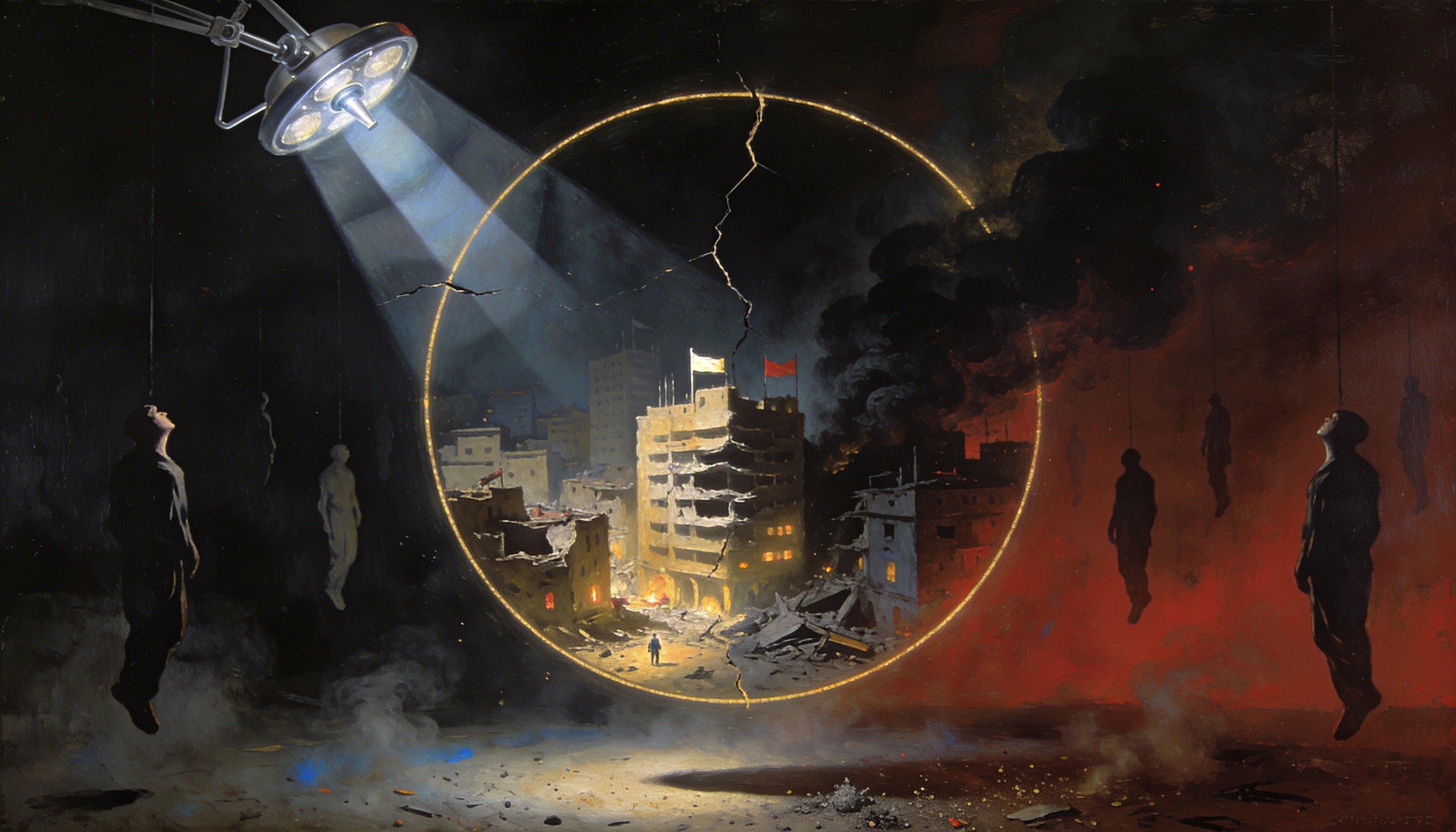
Recent "spillovers" of the war beyond the territorial boundaries that had delimited the conflict since its outset, with their attendant casualties, compel us to pause and reflect. Guerrilla Warfare by Ernesto "Che" Guevara, or Régis Debray's Revolution in the Revolution? , to cite only these two works, analysed at length, in the wake of the golden age of revolution in the 1960s, how irregular warfare, far from being reducible to a simple tactic of harassment waged by weak forces against a superior adversary, takes the form of a subtler and more disquieting undertaking, in which the civilian population no longer serves merely as a refuge or logistical relay, but becomes progressively the very stakes of the confrontation, one that the dynamic of violence never ceases to work upon and recompose according to its own logics.

Tel Aviv–Tehran: Bloody Mimicry and "Double Enemy" (2/2)
By
Michel Hajji Georgiou
Published
Mar 31, 2026 - 12:20

Lebanon has for years been subjected to this dual logic of violence and exclusion, that famous “escalation to extremes” — to borrow René Girard's expression, itself drawn from Clausewitz — punctuated by moments of objective collusion and a measured relaxation of hostility. It is the only country paying the price of a confrontation with Israel, no longer even in the service of an Arab cause, the just and legitimate Palestinian cause, but for the greater glory of the mullahs of Tehran. In that sense, Hezbollah's behaviour — having triggered three devastating wars in 2006, 2024 and 2026 — cannot be justified by any purported concern for confronting the Jewish state. Certain voices will invoke the villages of Shebaa and the Kfar Shouba hills to justify the continuation of the resistance, but that argument has been dismantled, maps in hand, since 2006, exposed as a fabrication designed to legitimise the continuation of the Hezbollah project and, at the time, as a pretext for justifying the perpetuation of Syrian occupation — namely, the struggle against Israel.

Tel Aviv–Tehran: Bloody Mimicry and "Double Enemy" (1/2)
By
Michel Hajji Georgiou
Published
Mar 31, 2026 - 12:01

The current conflict unfolding before our eyes in Lebanon is indeed a confrontation between Israel and Iran, and more specifically between Israel and Hezbollah. Setting aside any desire to demonise Hezbollah — and yet there is no shortage of valid reasons to do so, from political assassinations, kidnappings, extrajudicial executions, militia coups de force, humiliations of the army, the transformation of Lebanon into a regional hub for money laundering and drug trafficking, to massive contribution to corruption, and the list goes on — Hezbollah is, by its very nature, a branch of Iran's Revolutionary Guards grafted, since 1982, onto a marginalised Shia community abandoned by the Lebanese state.