Levant Time logo
Michel Hajji Georgiou

Michel Hajji Georgiou

Political analyst

Writer, political analyst, and journalist, Michel Hajji Georgiou was director of programs for Voice of Lebanon – Achrafieh (radio and webTV) in 2023, co-founder and former editorial director of Ici Beyrouth (2021-2022), head of the local political desk at L’Orient-Le Jour for five years (2015-2019), a columnist, former editor-in-chief of its annual political supplement (2005-2011), as well as a senior journalist for twenty years (1999-2019) at this daily newspaper. Awarded the Collège Notre-Dame de Jamhour Philosophy Honor Prize in 1998, he received the Gebran Tueni / WAN Prize in 2007 and the Foundation for Human and Humanitarian Rights Prize in 2008 for his work in favor of freedom of expression and opinion. A founding member of several human rights associations and cultural foundations, including Media Against Violence and ALEF, he is notably the author of The Quiet Revolution, a collection of political texts by the late Samir Frangieh, as well as a collection of poetry, From This Broken Hill, dedicated to the memory of the Canadian poet and singer Leonard Cohen, and a forthcoming biography of the late Hassan Rifaï. He currently collaborates as a columnist and political analyst at Levant Time and maintains the blog BeirutUnbound.com.

State and Communities in Lebanon: a Long History of Love and Hate (2/2)
By
Michel Hajji Georgiou
Published
Mar 27, 2026 - 22:31

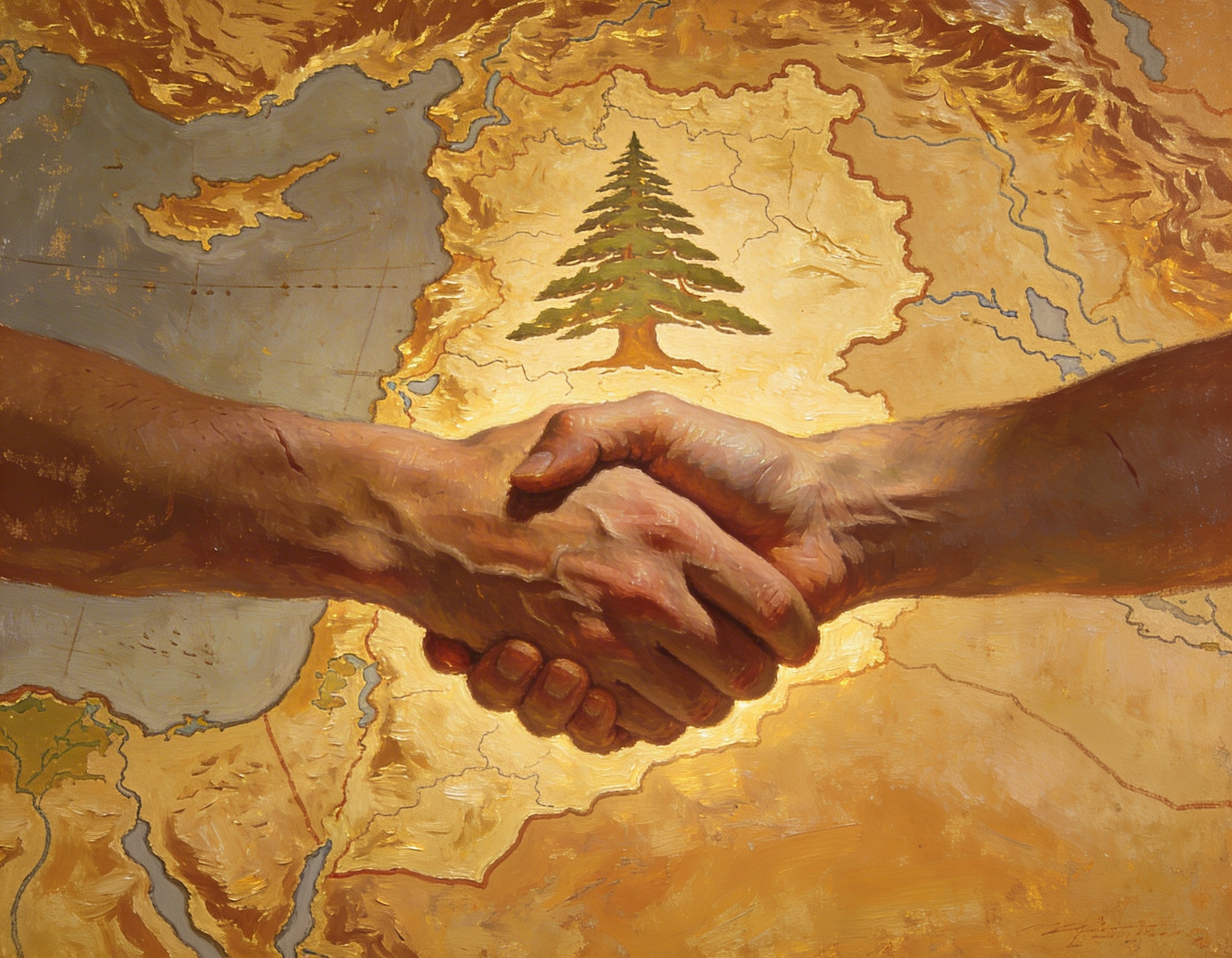
From the rubble of March 14, 2005, nothing emerged but further rubble, embodied most symbolically in the debris of the atomized port of Beirut on August 4, 2020. Hollowed out by wars, occupations and relentless waves of corruption, the Lebanese state has been transformed into a platform, its sovereign power usurped in turn by various de facto forces. With the state structure — even in the bygone time of its glory and splendor — Lebanon’s communities have all maintained a phantasmatic, almost libidinal relationship, shot through simultaneously with contempt, violence, something approaching BDSM. The Shiites, or the Journey to the End of De-statization

"Zaamat", "Jamaat" and the War Against Weber in Lebanon (1/2)
By
Michel Hajji Georgiou
Published
Mar 27, 2026 - 20:27

At a time when large swaths of Lebanese society are plunging into the hateful pitfalls of the friend-enemy divide, there is more reason than ever to reread Michel Seurat. The Barbarian State — his posthumous collection of articles devoted to the deconstruction of Assad's Syria — remains the most rigorous analytical landmark for anyone seeking to understand the deep structure of Arab politics, Lebanon's included. Drawing on Ibn Khaldun, recast here within a Deleuzian tradition, Seurat evokes the zaamat-state (the state of chiefs) and the jamaat-state (the state of communities) as constructions intrinsic to the Syrian stato-national model.

Save Lebanon
By
Michel Hajji Georgiou
Published
Mar 18, 2026 - 21:57

The conflict currently unfolding in Lebanon — and more broadly, across the Middle East — is doubly lethal. There are, of course, the victims first, the material damage, and their economic consequences for the world at large. But beyond that, a binary logic governs minds on both sides, and it appears far more destructive in the long run. In the usual rhetoric, wars are presented as the shortest path to resolving an intractable problem. Yet the results of the past century prove the opposite. Wars have generated a multitude of problems, whatever the justification for waging them. Military solutions are no longer sufficient to settle matters, and the political management of the post-war period — above all the American variety — has been catastrophic at best since Saigon.

When the Gods Make War
By
Michel Hajji Georgiou
Published
Mar 12, 2026 - 07:06

“In every generation they rise to destroy us, and the Holy One, blessed be He, saves us from their hands.” — The Passover Haggadah The conflict currently pitting Israel against Iran and its proxies extends far beyond the military and geopolitical framework in which some persist in confining it. The semiology deployed by both parties — the names given to operations, the expressions chosen to announce or respond to them — reveals a battle that is eminently religious and metaphysical in character, in which each military act claims to inscribe itself within the order of scriptural fulfillment. Where military operation names ordinarily obey a logic of propaganda designed to impress the enemy, the rhetorical ornamentation here plays an entirely different role, standing at the very heart of the war apparatus. It constitutes its essence, helping to explain why this conflict unfolds on a register altogether different from strictly diachronic, historical time.

There Can Be Only One
By
Michel Hajji Georgiou
Published
Mar 10, 2026 - 12:16

The recent remarks by Hezbollah’s deputy secretary-general, Mohammad Raad, and Mahmoud Komati, vice-president of the party’s Political Council, invite serious reflection on the political meaning of the conflict currently underway. Komati speaks of a “golden opportunity” for the State — built on what Hezbollah claims to have “proven” on the ground — to establish a deterrence equation that should now be consolidated. Raad turns his fire openly on the State itself, accusing it of refusing to become entangled in a conflict that his own party manufactured from nothing. The deputy secretary-general insists, stubbornly, on his will to liberate Lebanese territory from an occupation… that did not exist before his militia chose to open hostilities in order to avenge the Iranian spiritual guide.

The End of a Utopia
By
Michel Hajji Georgiou
Published
Mar 7, 2026 - 01:52

Conflict is the father of all things, the king of all things. Heraclitus Now that Hezbollah has set its mind on avenging the assassination of Ali Khamenei, many Lebanese appear to be discovering both the party’s dependence on Tehran and its frankly suicidal disposition. To have believed that a possible “Lebanonization” — some measure of moderation — was genuinely within reach was to have ignored the very nature of the party: a paramilitary organization emanating from, and directly commanded by, the Revolutionary Guards and the wali al-faqih ; and, above all, a Gnostic millenarian sect animated by a mystique of violence. An esoteric militia, in other words — akin to the Ismaili Assassins of the eleventh to thirteenth centuries — whose entire universe is collapsing at this very moment… and which will no doubt persist in denying its own demise until its very last breath.

What Must Be Saved
By
Michel Hajji Georgiou
Published
Mar 6, 2026 - 11:08

Open letter to Joseph Aoun, Nawaf Salam and Nabih Berri In truth, we know nothing, for truth lies at the bottom of the abyss Democritus of Abdera Messrs. Presidents, To say that Lebanon finds itself today facing a new major existential crisis — the result of a malicious streptococcus, Hezbollah, which was not, or could not be, treated in time — borders on truism. For what is unfolding today goes far beyond the familiar mechanics of Lebanese crises. This is no longer about yet another reshuffling of confessional balances, nor even another sequence of the interminable proxy war that others have waged on our soil. What is wavering this time, more than ever, amid the din of the Israeli invasion and the collapse of the Iranian hegemonic project, is the very substrate of Greater Lebanon — that fragile, often betrayed, but irreplaceable idea that allowed antagonistic communities to cohabit, to clash violently, and, at times, to recognize one another. Which is, in the end, the lot of any couple learning to live together.

What Must Be Saved
By
Michel Hajji Georgiou
Published
Mar 5, 2026 - 11:41

In truth, we know nothing, for truth lies at the bottom of the abyss Democritus of Abdera Messrs. Presidents, To say that Lebanon finds itself today facing a new major existential crisis — the result of a malicious streptococcus, Hezbollah, which was not, or could not be, treated in time — borders on truism. For what is unfolding today goes far beyond the familiar mechanics of Lebanese crises. This is no longer about yet another reshuffling of confessional balances, nor even another sequence of the interminable proxy war that others have waged on our soil. What is wavering this time, more than ever, amid the din of the Israeli invasion and the collapse of the Iranian hegemonic project, is the very substrate of Greater Lebanon — that fragile, often betrayed, but irreplaceable idea that allowed antagonistic communities to cohabit, to clash violently, and, at times, to recognize one another. Which is, in the end, the lot of any couple learning to live together.

Chronicle of a suicide foretold
By
Michel Hajji Georgiou
Published
Mar 2, 2026 - 04:35

Could it have been otherwise? Lebanon, which has been since 1973 the sole active front of every regional war, could it, for once, have remained outside an existential conflict for one of its political components — Hezbollah — insofar as the latter forms an integral part of the Iranian Revolutionary Guards, currently under Israeli-American fire in Tehran? No. Hezbollah thus magnificently ignored the international warnings relayed these past days by the Lebanese state, to the effect that its intervention in the ongoing war between Iran and the American-Israeli axis would provoke its annihilation and cost Lebanon dearly. As if the party wanted to deliver a resounding snub to the President of the Republic, Joseph Aoun, and to the Salam cabinet.

Wilayat el-Faqih: Khamenei and the Death of a Theological Fiction
By
Michel Hajji Georgiou
Published
Mar 1, 2026 - 13:33

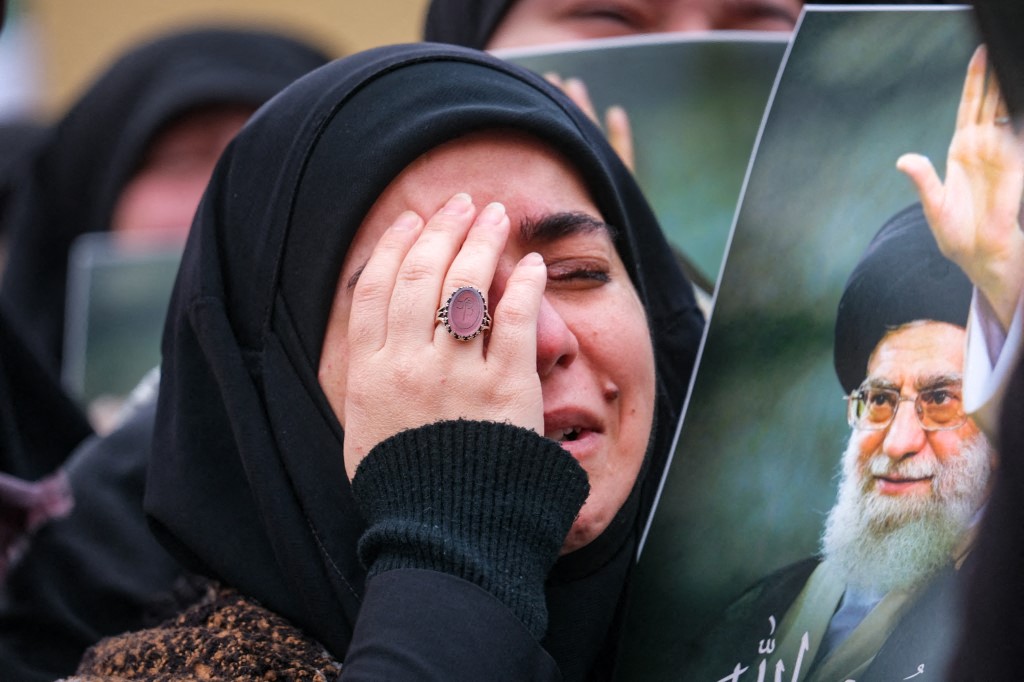
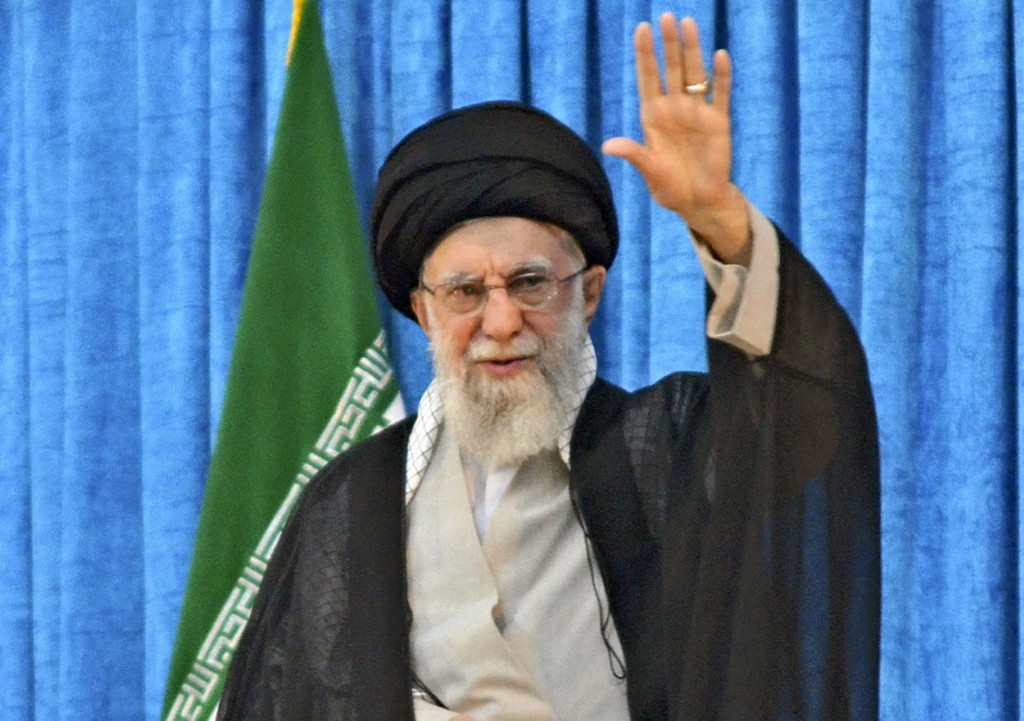
On February 28, 2026, joint American-Israeli strikes killed the Supreme Leader of the Islamic Republic of Iran, Ali Khamenei, aged 86, in his Tehran office. Iran declared forty days of national mourning, Netanyahu and Trump publicly proclaimed victory, while the Arab world — divided as it was over the dictator's figure — bore the wrath of the Revolutionary Guards. In certain streets of Tehran, fireworks erupted. It is worth pausing on this paradox to understand what, far beyond any single man, may well have breathed its last alongside him. It is particularly tempting to treat Khamenei's death as an act of war — one more episode in the spiral in which the United States and Israel have elected to play, simultaneously, the roles of surgeon-enforcer and arsonist. But to reduce the event to its military dimension would be to commit a serious error of perspective — precisely the error made by strategists who mistake the decapitation of a regime for the resolution of the contradictions that inhabit it. All the more so since Tel Aviv announced, from the very outset of the military operation, that its objective was the fall of the mullahs' regime.