Levant Time logo
Fady Noun

Fady Noun

Lebanon, Guardian of Hope
By
Fady Noun
Published
Apr 15, 2026 - 10:00

Caught between two rogue states, Lebanon has no choice but to appease the one closest to it geographically, the one on its border. It is the art of peace, as dictated by common sense. One need not be Sun Tzu to understand this, nor to understand that Lebanon belongs to the Arab world, not the Islamic world, and that, in this respect, it can rely on an Arab solidarity that has no equivalent in Iran’s militant Islamism. The Palestinian cause is, of course, sacred, and the dispossession of Palestine will remain a stain on the Arab world’s conscience. But this is no reason to sacrifice another sacred cause: that of Lebanon itself – this magnificent geographical and cultural jewel, this promise of religious freedom offered by history to the Maronite Church and, through it, to all Lebanese communities, the loss of which would be a sacrilege or, in the words of John Paul II, “one of the world’s regrets.”
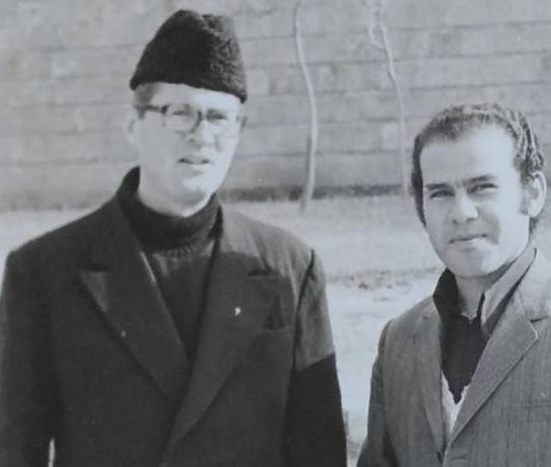
The Troubling Testament of Ghassibé Keyrouz, Right-Hand Man of Nicolas Kluiters, SJ (3/3)bla

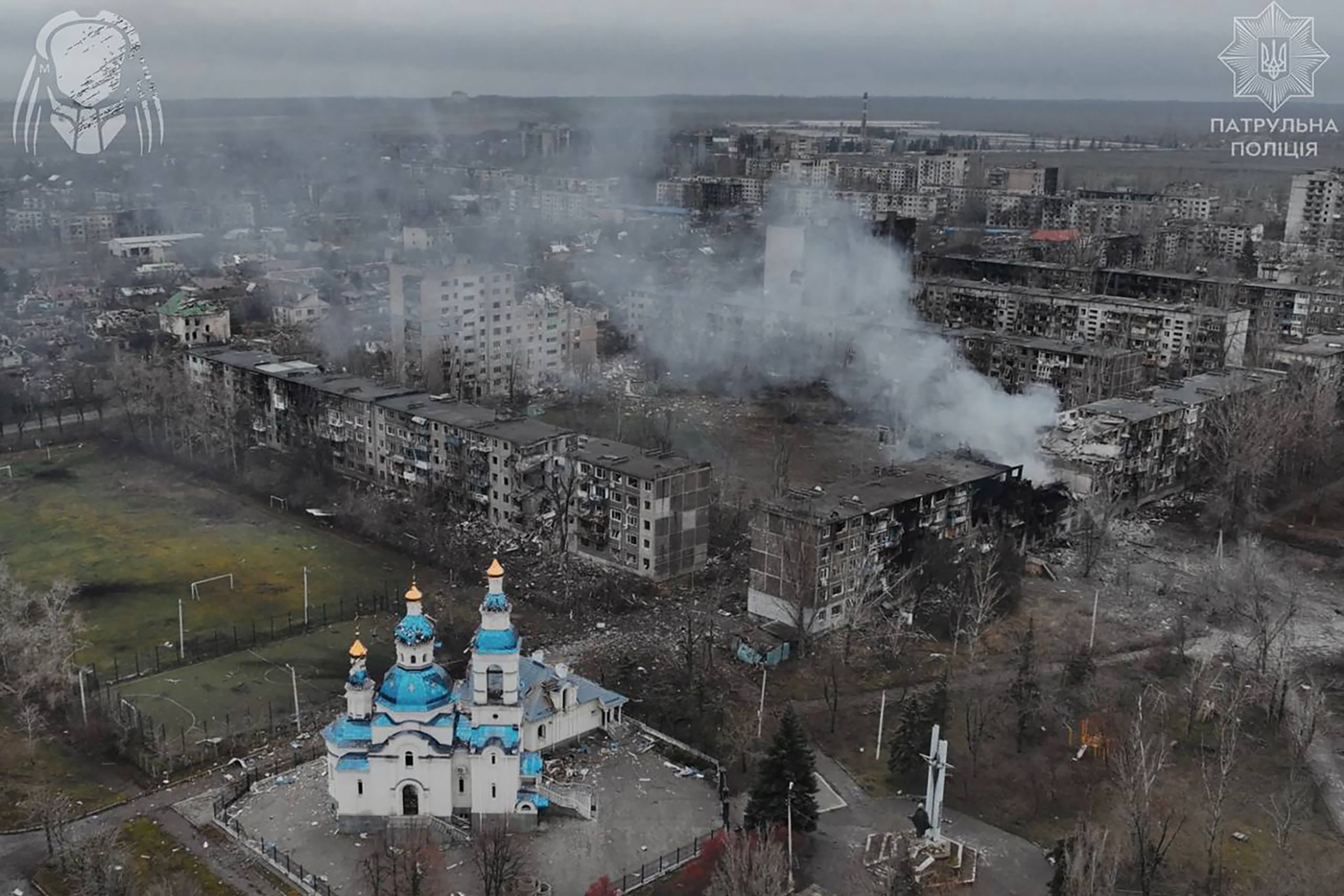
The feast of Saint Joseph (March 19), patron of the university that bears his name, brought to the mind of its new rector, Father François Boëdec, SJ, the memory of Alban de Jerphanion, the first Jesuit martyr of the seemingly endless war that erupted in Lebanon in 1975 – whose latest chapter, hoped to be the last, began unfolding in early March. Five other martyrs of that conflict fell after Father de Jerphanion. In tribute to their sacrifice, and with the publication of a new biography devoted to one of their holiest figures – the Dutch priest Nicolas Kluiters, whose cause for beatification is under way – this work is presented here, revealing previously unpublished details about the motivations of those who killed Father Nicolas. At the same time, it sheds light on the broader meaning of the gift he made to Lebanon, so that the country might endure as a model of “freedom and pluralism” for both East and West, at a moment when a heavily militarized nation threatens to strip it of a vital part of its territory, marked by the memory of Christ’s passage.

The Martyrdom of Nicolas Kluiters SJ, in Lebanon: Confronting Evil (2/3)

The feast of Saint Joseph (March 19), patron of the university that bears his name, brought to the mind of its new rector, Father François Boëdec, SJ, the memory of Alban de Jerphanion, the first Jesuit martyr of the seemingly endless war that erupted in Lebanon in 1975 – whose latest chapter, hoped to be the last, began unfolding in early March. Five other martyrs of that conflict fell after Father de Jerphanion. In tribute to their sacrifice, and with the publication of a new biography devoted to one of their holiest figures – the Dutch priest Nicolas Kluiters, whose cause for beatification is under way – this work is presented here, revealing previously unpublished details about the motivations of those who killed Father Nicolas. At the same time, it sheds light on the broader meaning of the gift he made to Lebanon, so that the country might endure as a model of “freedom and pluralism” for both East and West, at a moment when a heavily militarized nation threatens to strip it of a vital part of its territory, marked by the memory of Christ’s passage.

"Died So That Lebanon May Live", The Ultimate Sacrifice of Nicolas Kluiters SJ (1/3)

The feast of Saint Joseph (March 19), patron of the University that bears his name, brought back to the memory of its new rector, François Boëdec s.j., the recollection of Alban de Jerphanion, the first Jesuit martyr of the interminable war that broke out in 1975 in Lebanon, and a new episode of which, hopefully the last, opened in early March. Five other martyrs of this war fell after Father de Jerphanion. As a sign of homage, and with the publication of a new biography dedicated to one of their holiest figures, that of the Dutch priest Nicolas Kluiters, whose beatification process has begun, we present here this work, which includes unpublished details on the motivations of those who killed Father Nicolas. We also take this opportunity to highlight the general meaning of the gift he made to Lebanon, so that our homeland remains a model of "liberty and pluralism" for the East and the West, at the very moment when a militarized nation threatens to amputate an essential part of its territory bearing the memory of Christ's passage.

Lebanon and its Church in the Turmoil of Three Holy Wars
By
Fady Noun
Published
Mar 17, 2026 - 15:30

The Church in Lebanon is currently caught in the turmoil of three “holy wars”: two distinct forms of Islamic fundamentalism (Shia and Sunni), a Judaic fundamentalism, and an eschatological religious shift – “Christian Zionism.” These competing spiritual visions share a common focal point: Jerusalem, the ultimate city of peace. During his visit to Lebanon, Pope Leo XIV addressed the Lebanese people with the same message he has delivered to the world since his election – particularly to young Eastern Christians: “Be the architects of your own peace; be powerful levers for a peace between religions.” These words are intended for the men and women of a country that is an integral part of the Holy Land, and which, consequently, carries a mission of unity and communion.

Christians in Syria: “Spiritual Desertification” in the Cradle of Christianity (2/2)

In a first article examining the situation of Middle Eastern Christians, we outlined the demographic and social reality facing Syria’s Christian communities – one that was bleak in every respect. This second installment explores the spiritual, cultural, and historical stakes involved. Commenting on a report by L’Œuvre d’Orient on Syria’s Christian communities, completed in the summer of 2025 (see previous article), Bishop Hugues de Woillemont, the organization’s director, underscored the vital role Christian associative and charitable institutions continue to play across Syrian society, notably in the fields of reconciliation, women's empowerment, and education.

“Spiritual Desertification” in Syria: A Dire Reality (1/2)
By
Fady Noun
Published
Feb 25, 2026 - 13:33

A grave situation is quietly unfolding in the Middle East, the cradle of Christianity. The region is being emptied of its Christian population. Similar processes were observed in Iraq after the 2003 U.S. invasion and in the Holy Land. Now, Syria is facing the same reality. “The rupture is existential,” says Vincent Gelot, the representative for Lebanon, Syria, and Jordan of L’Œuvre d’Orient, a non-political organization affiliated with the French Catholic Church, which is currently campaigning to establish an International Day for Christians in the Middle East. Using Syria as an example, Vincent Gelot says, "In fourteen years of war (2011–2025), the country has lost nearly 80 percent of its Christian population." Reliable estimates suggest that between 300,000 and 400,000 Syrian Christians remain in a population of roughly 26 to 27 million, he adds. In Aleppo, only about one-sixth of the Christians who lived there before the 2011 war are still present.

"The insurrection of particularities": A disarmed Europe in the face of history

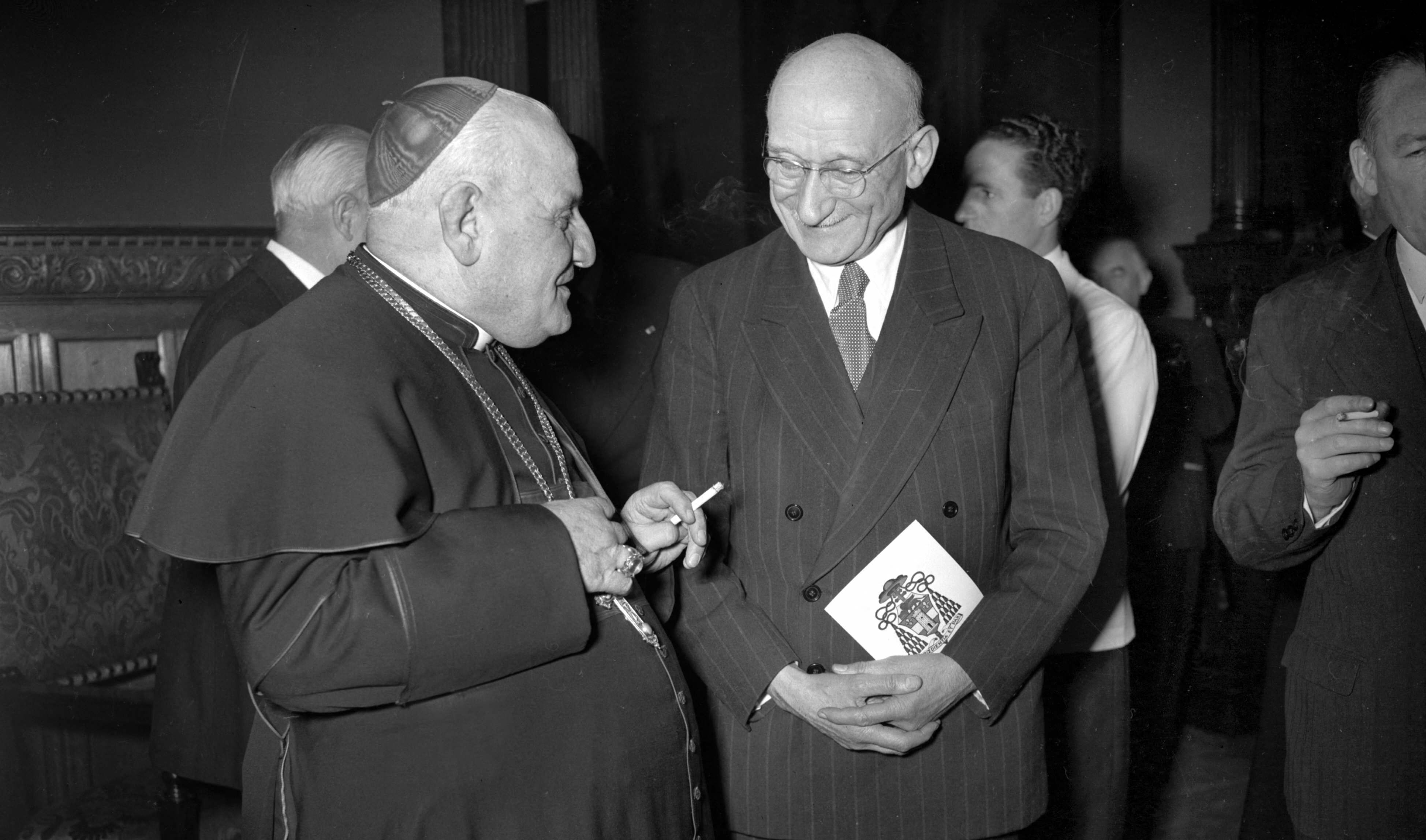
In the first part of this analysis, we began by contrasting the two visions of Europe as seen by its founders, in the aftermath of the Second World War, particularly Robert Schuman, and as it exists today, deprived of its founding impetus and obscuring its Christian and Greco-Roman roots. Here is the second part, based on an analysis by the philosopher Chantal Delsol, who has just published a book on the "Old Continent". In The Insurrection of Particularities, Chantal Delsol draws a severe conclusion of a gradual departure from this founding spirit. According to her, contemporary Europe has substituted an ideology of neutrality for heritage, administration for culture, and abstract individualism for Christian anthropology. By claiming to base itself exclusively on universal norms detached from all tradition, it has progressively delegitimized the concrete affiliations – nations, cultures, religions, ways of life – which nevertheless structured the European space.

The "Old Continent" between foundational memory and civilizational disarmament

The notion of the “Old Continent” refers to a Europe shaped by a long history, a plurality of peoples, and a singular spiritual depth. However, this Europe is not a fixed reality: it has been conceived, reconstructed, and reinterpreted according to different eras. Two visions allow us to measure its evolution and contemporary tensions: the one elaborated in the post-World War II period by Robert Schuman and Christian democracy; and the one described today by Chantal Delsol in L’Insurrection des particularités. Between these two moments, Europe has moved from a project of civilization based on reconciliation to an identity crisis marked by fragmentation and strategic impotence.

The Catholic Church’s Diplomatic Calibration in Conflicts: The Example of Venezuela

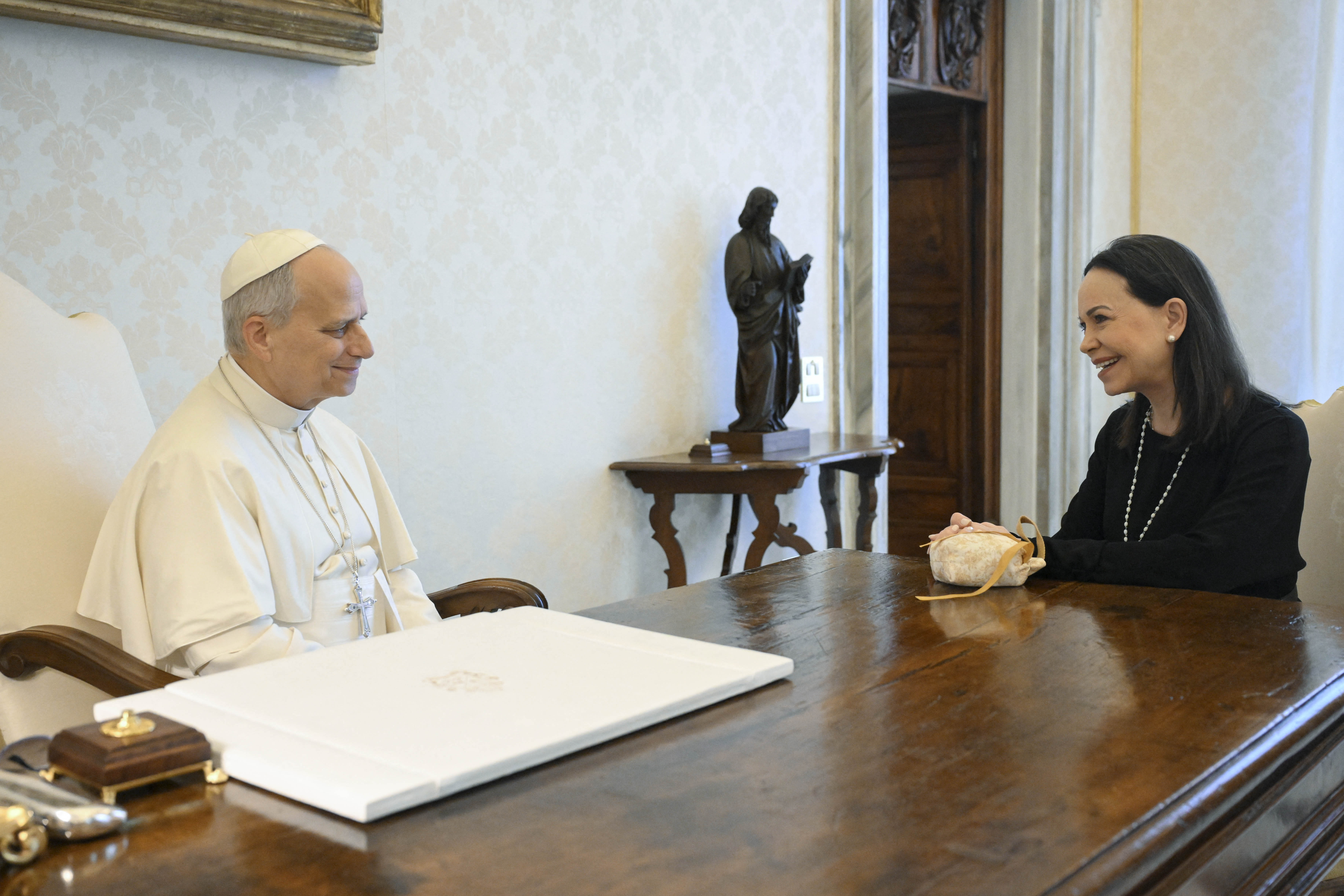
The irony of history is that the American show of force in Venezuela on the night of January 3-4 marked the beginning of a new episode of “planetary destabilization” against which Pope Leo XIV had warned a few days earlier, in his Message for the 59th International Day of Peace on January 1, 2026. “In relations between citizens and rulers,” the Sovereign Pontiff affirmed, “it has come to be considered a fault not to prepare sufficiently for war, to react to attacks, to respond to violence. Far beyond the principle of legitimate self-defense, this antagonistic logic is, on a political level, the most current factor in a planetary destabilization that is becoming more dramatic and unpredictable every day.”